
🩺 Medically Reviewed & Nutrition Verified by Dt. Mahi Patel (B.Sc. Clinical Nutrition & Dietetics) | Editorial Lead: Diet Dekho Clinical Nutrition Desk | Cross-referenced with ICMR & NIN Dietary Standards.
Meera sat in the waiting room of her clinic in Noida, clutching a lab report that felt heavier than a lead weight. At twenty-eight weeks pregnant, she expected to hear about her baby’s growth, not that her blood sugar was high. Like many expectant mothers, Meera felt an immediate wave of guilt, wondering if her evening biscuits caused this. Consequently, she needed a clear, actionable gestational diabetes diet chart that did not feel like a punishment or a chemistry experiment. What she discovered, and what this report will explore, is that managing blood sugar is less about restriction and more about making smarter, culturally relevant swaps that fit into a busy life.
A gestational diabetes diet chart is a structured eating plan designed to keep blood glucose levels stable by balancing complex carbohydrates, lean proteins, and healthy fats. It prioritizes high-fiber Indian whole grains like ragi or jowar and non-starchy vegetables while limiting refined sugars and flours. Following this plan helps ensure a healthy pregnancy and reduces risks for both mother and baby.
The Growing Metabolic Challenge for Expectant Mothers in India
Understanding why a gestational diabetes diet chart is necessary starts with looking at the broader picture of health in India. Currently, the country is navigating a significant metabolic shift. Recent data suggests that India is home to over 101 million people living with diabetes, and nearly 136 million are in the prediabetes stage. This environment directly impacts pregnancy outcomes because the physiological stress of gestation can unmask a hidden predisposition to blood sugar issues. Essentially, the prevalence of gestational diabetes in India is estimated at approximately 29.3% nationally. This means nearly one in three pregnant people will face blood sugar challenges during their journey, making GDM the most common complication of pregnancy in the country.

The Urban-Rural Shift in Diabetes Rates
Furthermore, the ICMR-INDIAB study provides a more granular look at these numbers. It shows that urban areas often see higher rates, around 15.3%, while rural areas are quickly catching up at 8.9%. This convergence of rural and urban rates reflects the deep penetration of processed foods and sedentary habits into every corner of the nation. What this means for your daily routine is that the environment and lifestyle changes associated with urbanization, such as long commutes and easy access to high-calorie snacks, are significant drivers of this condition.
| Region of India | Estimated GDM Prevalence (%) |
| Central India | 32.9% |
| North India | 31.4% |
| South India | 24.2% |
| East India | 17.9% |
| Northeast India | 16.6% |
| West India | 16.0% |
Data from various phases of national studies shows an alarming upward trend. For instance, GDM prevalence increased from 13.3% in the early 2010s to over 30% by 2020. This rise underscores the importance of a structured gestational diabetes diet chart for every expectant mother, regardless of her initial risk profile. The regional variations are also telling. Southern and Northern states consistently report higher prevalence rates, likely due to dietary habits that favor refined carbohydrates like white rice or maida-based breads.

Why Indian Women Experience Higher Risk Profiles
Several factors contribute to why we see such high numbers in our clinics. Genetics play a significant role, but the rapid nutritional transition in India is the primary culprit. Specifically, we have moved away from traditional high-fiber meals toward diets high in calories, saturated fats, and simple sugars. The cultural habit of encouraging pregnant people to eat for two often leads to excessive weight gain. Statistics show that 23% of women in India are already in higher weight, which significantly increases the likelihood of developing GDM.
Protecting Your Long-Term Health
The progression from prediabetes to full-blown diabetes happens much faster in Asian Indians than in other ethnic groups. This biological vulnerability means that even a small increase in blood sugar during pregnancy requires immediate attention. Therefore, I always tell my clients that your diet chart is your most powerful tool for protection. It is not just about the current nine months; it is about preventing a lifelong struggle with metabolic health. In addition, women in urban areas exhibit higher obesity rates, with generalized obesity prevalence at 28.6% nationally, placing them at a significantly greater risk for complications.
Moreover, the economic burden is another factor that cannot be ignored. The annual cost of diabetes management in India is projected to reach 12.8 billion by 2030. This staggering figure highlights why early intervention through a gestational diabetes diet chart is so vital. By managing sugar levels today, a household can save a significant portion of its future income that might otherwise go toward chronic disease management.

The Biological Mechanism of Pregnancy and Insulin
I know it is hard to find time to read medical journals, so let us simplify how GDM works. During pregnancy, your placenta produces hormones to help your baby grow. However, these hormones also cause insulin resistance. This means your body does not respond well to insulin unless it can be produced in larger amounts. Normally, the mother’s pancreas produces extra insulin to handle this resistance. On the other hand, if the pancreas cannot keep up, blood sugar levels rise, leading to GDM.
When the Pancreas Struggles to Keep Up
This condition typically develops during the second trimester (24 to 28 weeks) or the third trimester of pregnancy. It is a window into the mother’s future health. Research by Feig has shown that 40% of women who develop gestational diabetes will go on to develop Type 2 diabetes within the next 16 years. This might sound scary, but it is actually a wake-up call. By following a proper gestational diabetes diet chart now, you are not just helping your baby; you are resetting your own metabolic future.
How Diagnosis Happens in the Indian Context
In India, we primarily use the DIPSI (Diabetes in Pregnancy Study Group India) criteria. This is a simple, non-fasting test where you drink 75 grams of anhydrous glucose dissolved in 250 mL of water, and your blood is tested two hours later. If the result is 140 mg/dL or higher, GDM is diagnosed. This single-test procedure is particularly useful because it does not require a fasting state, making it more convenient for busy mothers.
Other international standards, like the IADPSG criteria, are even stricter. For example, they require fasting tests and check levels at one and two hours post-glucose. Under these criteria, a fasting level above 92 mg/dL, a one-hour level above 180 mg/dL, or a two-hour level above 153 mg/dL signals GDM. Regardless of which test your doctor used, the goal remains the same: keeping your sugar levels within a very narrow, safe range to protect your baby’s development.
The Risks of High Blood Sugar for the Baby
When blood sugar stays high, the extra glucose crosses the placenta. Consequently, the baby’s pancreas then has to work overtime to produce insulin to process that sugar. This can lead to macrosomia, or a very large baby, which increases the chances of a C-section and other birth complications. Unmanaged GDM also increases the risk of pre-eclampsia, preterm birth, and stillbirth.
For the offspring, the risks extend into childhood and adulthood. For instance, babies born to mothers with unmanaged GDM have a higher risk of developing obesity and Type 2 diabetes later in life, creating a vicious intergenerational cycle. This is why adoption of a healthy lifestyle before and during the first pregnancy is crucial to breaking this cycle.

The Essential Pillars of the Gestational Diabetes Diet Chart
Creating a meal plan that works isn’t about eating bland food. Instead, it is about understanding the three main components of your plate: carbohydrates, proteins, and fats. A healthy diet for a person with diabetes is low in total calories, free of trans fats, and nutritionally balanced.
Mastering Carbohydrates and the Glycemic Index
Carbohydrates have the biggest impact on your blood sugar. In a typical Indian diet, we often consume 55% to 60% of our calories from carbs. For GDM management, however, we need to be more strategic. Less than half the calories you eat should come from carbohydrates.
Specifically, the Glycemic Index (GI) measures how quickly a food raises your blood sugar. High-GI foods like white rice, white bread, and refined flour (maida) cause sharp spikes. In contrast, low-GI foods, which are high in fiber, release sugar slowly into the bloodstream. These are called complex carbohydrates and are healthy choices.
Choosing High-Fiber Swaps Over White Rice
| High-GI Foods to Limit | Low-GI Alternatives to Include |
| White Rice | Basmati Rice, Brown Rice, Red Rice |
| Maida (Refined Flour) | Whole Wheat (Atta), Besan, Ragi |
| Potatoes and French Fries | Sweet Potatoes, Leafy Greens, Carrots |
| Fruit Juices | Whole Fruits (Apple, Guava, Pear) |
| Sugary Biscuits and Sweets | Roasted Chana, Almonds, Walnuts |
A solid gestational diabetes diet chart should aim for 45% to 65% of total daily calories from complex carbohydrates, with a minimum intake of 130 grams per day. This minimum is essential because your baby needs glucose for brain development. The key is to avoid empty calorie patterns and focus on nutrient-dense sources.
The Role of Protein in Stabilizing Glucose
Protein is your best friend when you have GDM. Essentially, it helps slow down the absorption of carbohydrates, preventing those dreaded sugar spikes. Dietary protein is an important modulator of glucose metabolism. Research has shown that the substitution of 5% energy from vegetable protein for animal protein was associated with a 51% lower risk of GDM complications.
For my vegetarian clients, I recommend focusing on pulses, legumes, paneer, and curd. Furthermore, for those who eat meat, lean options like chicken and fish are excellent. However, avoid processed meats like bacon, sausages, or nuggets, as these are often linked to higher GDM risks.
Healthy Fats and Vital Micronutrients
Not all fats are equal. Therefore, you should limit saturated fats found in animal products like hamburger, bacon, and butter. Instead, focus on monounsaturated and polyunsaturated fats from sources like nuts, seeds, and healthy oils like canola, olive, or peanut oil.
Maintaining an ideal ratio of essential fatty acids is critical. Saturated fat intake should be restricted to less than 7% of total daily calories. Additionally, dietary cholesterol should be kept under 300 mg per day.

The 7-Day Indian Gestational Diabetes Diet Chart (Vegetarian)
This chart is designed for the typical Indian household, using ingredients found in every kitchen. It emphasizes small, frequent meals to keep energy levels steady. Therefore, you should eat three small- to moderate-sized meals and one or more snacks each day. Do not skip meals, as this can lead to hypoglycemia followed by a sharp spike later.
| Day | Breakfast (8:00 AM) | Mid-Morning (11:00 AM) | Lunch (1:30 PM) | Evening Snack (4:30 PM) | Dinner (8:00 PM) |
| Mon | 2 Besan Chillas with vegetables | 1 medium Apple + 4 Walnuts | 2 Multigrain Rotis + Spinach Dal + Cucumber Salad | 1 cup Buttermilk + Roasted Makhana | 1.5 cups Vegetable Dalia + 1 cup Curd |
| Tue | 1 cup Vegetable Oats Upma | 1 small Pear + 5 Almonds | 1 cup Brown Rice + Rajma + Mixed Cabbage Sabzi | 1 cup Sprouts Chaat (no potato) | 2 Jowar Rotis + Paneer Bhurji + Salad |
| Wed | 2 Moong Dal Idlis + Tomato Chutney | 1 cup Coconut Water + 1 Guava | 2 Missi Rotis + Leafy Vegetable (Sarson/Palak) + Dal | 1 cup Plain Yogurt with Chia Seeds | 1.5 cups Quinoa Khichdi with plenty of veggies |
| Thu | 1 Whole Wheat Toast with Paneer | 1 medium Orange + 2 Brazil Nuts | 2 Bajra Rotis + Chickpea (Chana) Curry + Raita | 1 cup Boiled Kala Chana with onion/lemon | 2 Whole Wheat Rotis + Lauki (Bottle Gourd) Sabzi |
| Fri | 1 cup Ragi Porridge (no sugar) | 1 cup Buttermilk + 1 Peach | 1 cup Basmati Rice + Soya Chunk Curry + Salad | 1 cup Roasted Peanuts | 2 Multigrain Rotis + Mixed Vegetable Gravy |
| Sat | 2 small Vegetable Uttapams | 1 Apple + 1 tsp Pumpkin Seeds | 2 Rotis + Masoor Dal + Stir-fried French Beans | 1 cup Lemon Water (no sugar) + 1 boiled Egg (if Veg-Egg) | 1 cup Vegetable Pulao (Brown Rice) + 1 cup Curd |
| Sun | 1 Paneer Paratha (less oil/ghee) | 1 cup Coconut Water + 5 Almonds | 2 Jowar Rotis + Cluster Beans Sabzi + Curd | 1 cup Sprouts Salad | 2 Rotis + Tofu Keema with peas + Salad |
Smart Breakfast Hacks for the 9-to-5 Mom
I know it is hard to find time to cook elaborate breakfasts before work. What this means for your daily routine is that you should embrace quick-prep options. For instance, soaking oats overnight or keeping a batch of idli batter ready can save you thirty minutes. Always pair your carb source with protein, like paneer or a bowl of curd, to ensure stability.
Moreover, morning blood sugar is often the most difficult to control due to hormonal surges. Therefore, never skip breakfast because it sets your glucose tone for the entire day. If you are a busy professional, keep hard-boiled eggs or roasted nuts in your bag for those times when a meeting runs long.
The Plate Model Logic for Home Cooks
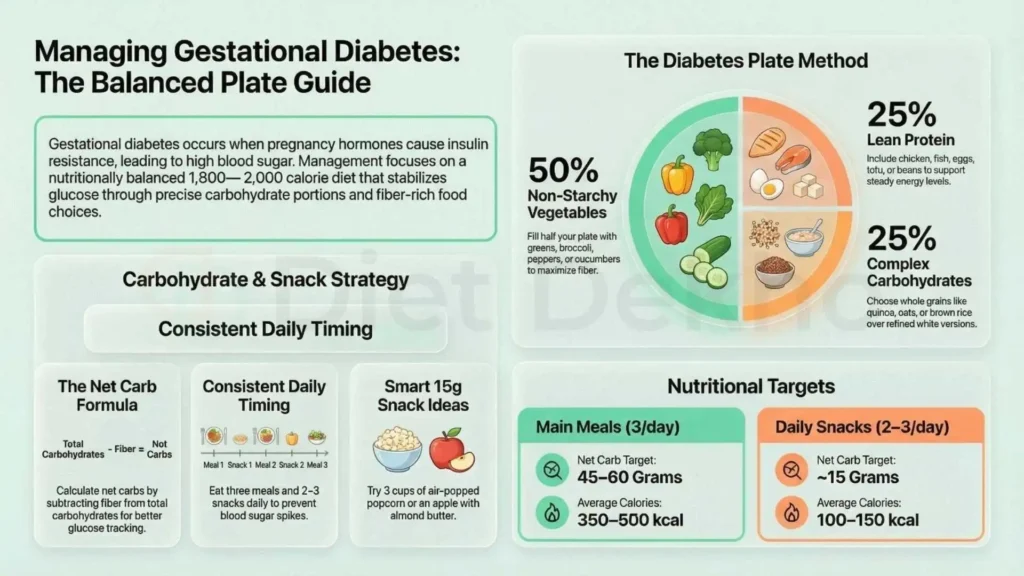
In Indian households, lunch and dinner are traditionally heavy on rice or rotis. To adapt this to a gestational diabetes diet chart, think about the plate model. Specifically, more than half of your plate should be filled with salad or vegetables at meals. One-quarter should be protein, and only the remaining quarter should be your grain.
Furthermore, aim for 3 to 5 servings of vegetables a day. One serving equals 1 cup of leafy green vegetables or half a cup of chopped raw or cooked vegetables. Dark green and deep yellow vegetables like spinach, broccoli, and peppers are excellent choices because they are high in fiber.

The 7-Day Indian Gestational Diabetes Diet Chart (Non-Vegetarian)
For those who include eggs and meat, your gestational diabetes diet chart can be even higher in high-quality protein. Consequently, this supports muscle health and provides better satiety.
| Day | Breakfast (8:00 AM) | Mid-Morning (11:00 AM) | Lunch (1:30 PM) | Evening Snack (4:30 PM) | Dinner (8:00 PM) |
| Mon | 2 Egg Omelette with peppers + 1 Roti | 1 Guava + 5 Almonds | 2 Rotis + Grilled Chicken + Salad | 1 cup Buttermilk + Roasted Chana | 1 cup Brown Rice + Fish Curry (small portion) |
| Tue | 1 cup Vegetable Poha with 1 boiled Egg | 1 Apple + 1 oz Cheese | 2 Multigrain Rotis + Chicken Stew with veggies | 1 cup Chicken Soup with clear broth | 2 Rotis + Egg Bhurji + Cucumber Salad |
| Wed | 2 Whole Wheat Toasts + Peanut Butter | 1 cup Coconut Water + Walnuts | 1 cup Basmati Rice + Prawns/Fish Curry + Salad | 1 cup Yogurt + Sunflower Seeds | 2 Jowar Rotis + Keema Matar (Lean minced meat) |
| Thu | 2 Besan Chillas + 1 boiled Egg | 1 Pear + 5 Cashews | 2 Missi Rotis + Chicken Curry (curd-based) | 1 cup Roasted Makhana | 1.5 cups Dalia with chicken chunks and veggies |
| Fri | 1 Paneer Paratha + 1 Egg White | 1 medium Orange + Almonds | 2 Rotis + Soya Curry + Raita | 1 cup Boiled Chana Chaat | 2 Rotis + Grilled Fish + Sautéed Beans |
| Sat | 1 cup Oats Upma + 1 boiled Egg | 1 cup Buttermilk + 1 Apple | 1 cup Brown Rice + Chicken keema + Salad | 1 cup Chicken clear soup | 2 Bajra Rotis + Egg Curry + Salad |
| Sun | 2 Scrambled Eggs + 1 slice Brown Bread | 1 Guava + 2 Walnuts | 2 Rotis + Tandoori Chicken (home-cooked) | 1 cup Sprouts salad | 2 Rotis + Fish Stew with bottle gourd |
Cooking Methods for Healthier Proteins
When following a non-vegetarian gestational diabetes diet chart, the way you cook is just as important as what you cook. Specifically, trim all visible fat from meat and remove the skin from chicken or turkey. Instead of deep-frying fish or chicken into pakoras, choose to bake, roast, broil, grill, or boil them.
In addition, these foods are excellent sources of B vitamins, protein, iron, and zinc. However, higher intake of animal protein, specifically red meat, was significantly associated with a greater risk of GDM complications. Therefore, substitute red meat with poultry, fish, nuts, or legumes wherever possible to maintain heart health.

Indian Superfoods and Specific Swaps for Better Control
Let’s simplify this further by identifying the heroes of the Indian kitchen that specifically help manage blood sugar. You do not need expensive diet foods to succeed.
Ragi and Ancient Millets
Ragi (Finger Millet) is a powerhouse of calcium and fiber. Unlike white rice, it has a lower glycemic index and takes longer to digest. Incorporating ragi rotis or ragi idlis into your gestational diabetes diet chart provides sustained energy. Similarly, Jowar and Bajra are excellent grains that prevent rapid glucose spikes. In contrast, avoid naan and paratha made from maida, as these have a high GI value.
Fenugreek (Methi) Seeds
Ancient wisdom often meets modern science in the kitchen. For instance, starting your day with water in which fenugreek seeds were soaked overnight can be highly beneficial. Methi seeds contain soluble fiber that slows down the absorption of carbohydrates. Consequently, you can also add fresh methi leaves to your rotis (Methi Thepla) for extra fiber and flavor.
Besan (Gram Flour) and Pulses
Besan is a staple that is surprisingly friendly for a gestational diabetes diet chart. Because it is made from chickpeas, it is much higher in protein and fiber than wheat or rice flour. Essentially, a besan chilla or a missi roti is a fantastic option that keeps you full for hours. Aim for 6 or more servings of grains, beans, and starchy vegetables a day, but ensure they are whole-grain and high-fiber.
Probiotics: Curd and Buttermilk
Probiotics are essential for gut health. Specifically, unsweetened curd or a glass of buttermilk (chaas) with a pinch of roasted cumin is the perfect way to aid digestion and provide protein. Low-fat or nonfat dairy products are recommended, aiming for 4 servings a day. Furthermore, avoid yogurt with added sugar or artificial sweeteners.
I know it is hard to find time to manage cravings when you are also dealing with pregnancy fatigue. Many of my clients struggle with a sweet tooth in the evenings, especially when the rest of the family is eating traditional Indian snacks.
Smart Swaps for Sweet and Salty Cravings
If you find yourself reaching for a biscuit or a piece of mithai, try these instead:
- A small bowl of plain yogurt with a few berries or a sprinkle of cinnamon.
- A handful of roasted fox nuts (makhana) or roasted peanuts.
- Roasted seeds like sunflower or pumpkin seeds for healthy fats.
- In addition, a small piece of 70% dark chocolate very occasionally can satisfy a deep craving.
Avoid Bombay mix or sev, as these are high in salt and fried fats. Similarly, stay away from diet biscuits and rusks, which are often just refined flour with hidden sugars.
The Fruit Serving Rule
Fruits are healthy, but they contain natural sugars. In a gestational diabetes diet chart, we recommend eating only one serving of fruit at a time. Specifically, avoid having fruit at breakfast, when cortisol levels make your blood sugar more sensitive. Choose whole fruits over juices for more fiber. Healthy choices include citrus fruits like oranges and grapefruits. On the other hand, avoid high-sugar fruits like mangoes and chikoo in large quantities.
Lifestyle Management: Beyond the Diet Chart
A gestational diabetes diet chart works best when paired with movement and proper monitoring. Think of them as the three legs of a stool; without one, the structure is unstable.
The Power of the Post-Meal Walk
One of the most effective ways to lower your blood sugar is a simple 10-to-15-minute walk after every major meal. For a busy professional, this might mean walking while taking a phone call. In addition, regular exercise reduces insulin resistance even if you do not lose weight. If your doctor says it is safe, include pregnancy-friendly exercises to help your body process glucose more efficiently.
Monitoring Your Daily Progress
Keep a blood glucose diary. This doesn’t have to be a chore. Just jot down what you ate and what your sugar reading was two hours later. Consequently, you will start to see patterns. For instance, you might find that while your neighbor can handle a small bowl of rice, it sends your sugar soaring. This personalized data allows you to tweak your gestational diabetes diet chart to fit your unique metabolism.
Hydration, Sleep, and Stress
Aim for 3 to 4 liters of water daily. Proper hydration supports metabolic functions and helps your kidneys flush out excess sugar. Additionally, aim for 7 to 8 hours of sleep. Lack of sleep can increase stress hormones like cortisol, which in turn raises blood sugar levels. Managing emotional stress is also vital. For instance, heavy work pressure can trigger sugar spikes by activating the body’s stress response.

Real-Life Lessons from the Indian Community
I have seen many women navigate this journey successfully. Take the story of Rushina, a professional in the food industry. When she was diagnosed, she felt helpless. But she began using hacks like walking while on work calls and asking for diabetic-friendly meals when traveling. She eventually reached 10,000 steps a day and successfully managed her GDM.
Then there is Vijoya, a homemaker from Noida. She found that by switching to a structured plan and incorporating yoga, she not only managed her pregnancy sugar but also lost weight safely and felt more positive than ever before. These stories show that while the diagnosis is a challenge, it is also an opportunity to build habits that last a lifetime.
Addressing Socio-Economic and Cultural Barriers
It is important to acknowledge that following a perfect gestational diabetes diet chart can be difficult due to cultural reasons. In many Indian households, the daughter-in-law is the last to eat, or there may be pressure to eat more for the baby.
Affordable Home-Grown Solutions
However, let’s simplify this. You do not need expensive health foods. Local, seasonal, and affordable Indian ingredients like sprouts, seasonal leafy greens, and local millets are actually superior for GDM management. If your family pressures you to eat more sweets or rice, share the information about the risks of high sugar. Most families are supportive once they understand that the diet is actually protecting the grandchild.
Long-Term Outlook: Preventing Type 2 Diabetes
The most important takeaway from your gestational diabetes diet chart is that it should not end when you leave the labor room. Because women with GDM have a 40% higher risk of Type 2 diabetes later in life, the postpartum period is critical.
Specifically, experts suggest that you should have a follow-up glucose test 6 to 12 weeks after delivery. Continuing the healthy eating patterns you developed focusing on fiber and staying active can reduce your risk of progression significantly. Lifestyle interventions can prevent the progression to Type 2 diabetes by about 30% to 60%. Think of GDM as an early warning system that allows you to save your future self from chronic illness.
Frequently Asked Questions (FAQs)
1. Can I eat rice if I follow a gestational diabetes diet chart?
Yes, but you need to be mindful of the type and portion. Opt for Basmati, brown, or red rice as they have a lower GI. Furthermore, limit your portion to about 1/2 to 3/4 cup of cooked rice and always pair it with a large serving of vegetables and a protein source.
2. Are artificial sweeteners safe to use in a pregnancy sugar chart?
Artificial sweeteners are generally considered safe in small quantities and do not raise blood glucose. However, some experts suggest avoiding them as they might negatively affect gut bacteria. It is often better to train your palate to enjoy the natural sweetness of food.
3. What should I do if I feel dizzy or shaky (low blood sugar)?
Dizziness or shakiness can be signs of hypoglycemia. If this happens, take a small portion of quick-digesting carbohydrate, such as 4 ounces of fruit juice or a tablespoon of sugar. Follow this up with a balanced snack once you feel better.
4. Why is my blood sugar high in the morning even if I ate a healthy dinner?
This is often due to the dawn phenomenon or hormonal changes overnight. To combat this, ensure your evening meal isn’t too late. A small protein-rich snack before bed, like a glass of milk or a few almonds, can also help stabilize levels through the night.
5. How many meals a day should I have on a GDM diet chart?
Consistency is key. You should aim for three moderate-sized meals and two to three snacks daily. Do not skip meals or snacks, as this causes your blood sugar to drop too low and then spike excessively when you finally eat.
Conclusion
Managing your health during pregnancy can feel like a full-time job. I know it is hard to find time to perfectly measure every gram, but remember that every small choice choosing a ragi roti over white bread or taking a ten-minute walk makes a massive difference. You are not alone in this journey, and with a structured gestational diabetes diet chart, you have the roadmap you need to thrive.
If you are feeling overwhelmed and need a plan tailored specifically to your taste buds and schedule, we are here to help. Let’s work together to make this your healthiest pregnancy yet.
Take the first step toward a worry-free pregnancy.
Contact Us
We understand how overwhelming nutrition and weight loss information can feel. With so many opinions and confusing advice online, it’s easy to feel stuck or unsure about what to do next.
At Diet Dekho, you never have to figure it out alone. You can contact us anytime with any questions or concerns. Our expert dietitians are available 24/7 to guide, support, and help you stay on track. Whether your goal is weight loss or building healthier habits, we’re here to make the journey simpler and more sustainable for you.
Disclaimer
This blog is intended to help readers make healthier food choices. Your health should always be the top priority. Before starting any restrictive or special diet, especially if you have a medical condition or health concern, please consult a doctor or a qualified dietitian. Each body responds differently to food and lifestyle changes. Always choose what is safe and suitable for you.
Medical & Nutritional Disclaimer: The nutritional charts and recommendations presented in this article are intended solely for educational and preventive wellness guidance. They are not a replacement for clinical consultation, personal diagnosis, or medical prescription. Always consult a qualified medical professional or certified clinical dietitian before making drastic modifications to your clinical diet routine.

Abhinav is the Founder of Diet Dekho, helping people manage weight and lifestyle health through simple, practical nutrition and personalized diet plans.