
I remember when my friend Priya called me, her voice trembling as she looked at her latest blood sugar report. She was six months pregnant and had just been told she had GDM. Like many of you, she felt overwhelmed, scared, and worried about what this meant for her baby. However, I want to tell you exactly what I told her: this is just a small bump in the road, and you can manage it beautifully with the right food. Navigating a gestational diabetes diet plan doesn’t mean you have to stop enjoying your meals; it just means we’re going to be a bit smarter about how we plate them.
A gestational diabetes diet plan focuses on balancing complex carbohydrates, lean proteins, and healthy fats to stabilize blood sugar. To simplify, it involves eating small, frequent meals every 2–3 hours. Prioritize low-glycemic foods like millets, pulses, and non-starchy vegetables while avoiding refined sugars and processed flours to ensure a healthy pregnancy.
Understanding the Why Behind Your Diet
Before we dive into the kitchen, let’s talk about what is actually happening in your body. During pregnancy, your placenta produces hormones that help your baby grow, but these same hormones can make it harder for your body to use insulin. Consequently, your blood sugar levels can rise higher than normal. In India, this is incredibly common, affecting nearly one in four pregnant people.
Specifically, South Asian women often have a unique thin-fat phenotype, meaning we might have higher internal fat even if we look lean. This metabolic profile makes us more sensitive to sugar spikes. Therefore, the goal of our gestational diabetes diet plan isn’t just to cut calories. Instead, we are looking to create a steady, slow release of energy that keeps both you and your baby safe.

The Pillars of Medical Nutrition Therapy
I know it’s hard to find time to track every gram of food when you’re busy with work or home chores. To make things easier, let’s look at the three main pillars of your daily nutrition. According to the National Institutes of Health (NIH), monitoring your carbohydrate intake is the most effective way to keep your levels stable.
1. Complex Carbohydrates over Refined Ones
Instead of reaching for white rice or maida (refined flour), we want to choose slow-release grains. These grains contain fiber, which acts like a buffer, slowing down how fast sugar enters your blood.
- Millets: Grains like Ragi (finger millet), Jowar (sorghum), and Bajra (pearl millet) are your new best friends.
- Whole Grains: Steel-cut oats, daliya (broken wheat), and brown rice are much better options than their polished counterparts.
2. The Power of Protein
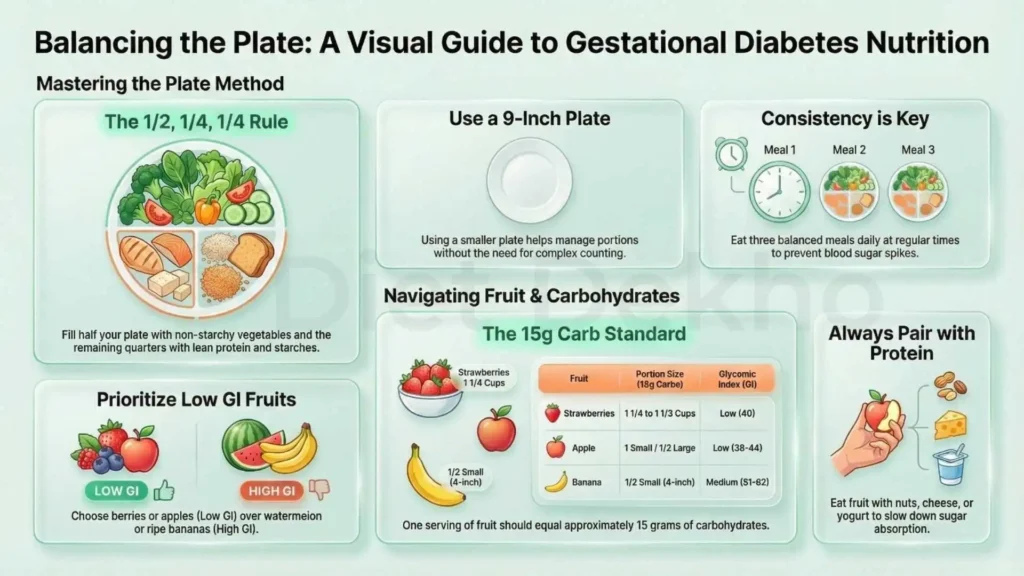
Every time you eat a carb, try to pair it with a protein. Actually, protein is like an anchor it keeps your blood sugar from sailing too high.
- Vegetarian: Paneer, curd, sprouts, and all types of dals (lentils).
- Non-Vegetarian: Eggs, grilled chicken, and small varieties of fish.
3. Healthy Fats and Fiber
Don’t be afraid of fats like nuts and seeds. These help you feel full and satisfied. Additionally, non-starchy vegetables should make up half of your plate at lunch and dinner.

Your 7-Day Indian Gestational Diabetes Diet Plan
Let’s simplify this with a practical week-long plan. I’ve designed this using ingredients you already have in your Indian kitchen. No fancy superfoods are required just honest, home-cooked goodness.
Day 1 to Day 3: Building a Routine
On Monday, start your morning with soaked almonds and walnuts. For breakfast, try two Moong Dal Chillas filled with spinach. Later, for lunch, enjoy two Jowar rotis with a big bowl of Lauki (bottle gourd) sabzi and a cup of curd.
Moving to Tuesday, let’s try vegetable Oats Upma for breakfast. Since you might feel a mid-morning slump, have a small apple with a teaspoon of peanut butter. For dinner, a bowl of Quinoa or Daliya Khichdi with plenty of peas and carrots works wonders.
On Wednesday, we can introduce Ragi Dosas. These are high in calcium, which is great for your baby’s bones. For your evening snack, some roasted Makhana (fox nuts) will keep those salt cravings away without spiking your sugar.

Day 4 to Day 7: Variety and Flavor
For Thursday, let’s go with a Besan Chilla and a boiled egg for extra protein. If you’re a non-vegetarian, Friday lunch could be a small portion of brown rice with a light fish curry.
As we reach the weekend, keep it simple. Saturday’s dinner could be Paneer Bhurji with a Multigrain roti. On Sunday, enjoy a small portion of Rajma with brown rice, but ensure you have a large side of cucumber and tomato salad first.
| Timing | Suggested Meal | Key Benefit |
| Early Morning | Soaked Almonds + Methi Water | Improves insulin sensitivity |
| Breakfast | Moong Dal Chilla or Ragi Dosa | Slow-release energy |
| Mid-Morning | 1 small Guava or Pear | High fiber, low GI |
| Lunch | 2 Millets Rotis + Veggies + Dal | Balanced macronutrients |
| Evening Snack | Roasted Chana or Buttermilk | High protein satiety |
| Dinner | Daliya Khichdi or Grilled Paneer | Easy to digest |
Foods to Approach with Caution
What this means for your daily routine is that we need to be mindful of hidden sugars. I know it’s tempting to grab a biscuit with your chai, but even sugar-free biscuits are often made of maida, which acts just like sugar in your body.
- Avoid: Soft drinks, packaged juices, white bread, and sweets like Mithai.
- Limit: Starchy vegetables like potatoes and very sweet fruits like mangoes or grapes.
- Switch: Replace honey or jaggery with cinnamon in your tea for flavor without the spike.
Harvard Health suggests that whole fruits are always better than juice because the fiber in the whole fruit protects your system from a rapid sugar rush.

Expert Advice and Helpful Tips
Expert Quote: Vegetables are not just food; they are medicine for the diabetic gut. The fiber in green leaves acts as a biological filter, slowing sugar absorption, notes Ms. Smita Jaiswal, Consultant Dietitian.
To make this journey easier, try these simple life-hacks:
- The 10-Minute Walk: A gentle stroll after lunch and dinner helps your muscles use up the extra sugar in your blood.
- Hydration is Key: Dehydration can sometimes cause your sugar readings to look higher than they are. Aim for 2.5 to 3 liters of water.
- Meal Prep: I suggest keeping some soaked moong dal batter or boiled sprouts in the fridge. This way, you always have a healthy snack ready when hunger strikes.

Frequently Asked Questions (FAQs)
1. Can I eat white rice on a gestational diabetes diet plan?
While white rice has a high glycemic index, you can occasionally have a very small portion if you mix it with a lot of fiber. However, it is much safer to switch to brown rice or millets like Jowar.
2. Is it safe to skip breakfast if my fasting sugar is high?
Actually, skipping meals is the worst thing you can do. It can cause your liver to release more sugar, making your levels even more unstable. Instead, have a small, protein-rich breakfast like an egg or paneer.
3. Can I use jaggery instead of white sugar?
Unfortunately, your body sees jaggery and sugar as almost the same thing. Both will cause a sharp rise in your levels. Therefore, it is best to avoid added sweeteners during this period.
4. What are the best snacks for GDM?
Great options include roasted chana, a handful of peanuts, Greek yogurt, or a slice of cheese with a few whole-wheat crackers. These provide protein and fat to keep you full.
5. Will my baby have diabetes because of GDM?
Managing your levels now significantly reduces the risk for your baby. By following a structured gestational diabetes diet plan, you are actively protecting your child’s future health.

Conclusion: You’ve Got This!
Managing your blood sugar is the greatest gift you can give to your unborn child. While it feels like a lot of work right now, remember that you are building healthy habits that will benefit your family for years to come. Focus on whole Indian grains, stay active with simple walks, and don’t be afraid to ask for help.
Your health journey doesn’t have to be a solo effort. Professional guidance can help you tailor these general principles to your specific body type and cultural preferences.
Take the first step toward a healthier pregnancy today.
Fill out our personalized assessment form to get a GDM meal plan created just for you by our expert clinical dietitians. Let’s manage your sugar so you can focus on the joy of motherhood.

Contact Us
We understand how overwhelming nutrition and weight loss information can feel. With so many opinions and confusing advice online, it’s easy to feel stuck or unsure about what to do next.
At Diet Dekho, you never have to figure it out alone. You can contact us anytime with any questions or concerns. Our expert dietitians are available 24/7 to guide, support, and help you stay on track. Whether your goal is weight loss or building healthier habits, we’re here to make the journey simpler and more sustainable for you.
Disclaimer
This blog is intended to help readers make healthier food choices. Your health should always be the top priority. Before starting any restrictive or special diet, especially if you have a medical condition or health concern, please consult a doctor or a qualified dietitian. Each body responds differently to food and lifestyle changes. Always choose what is safe and suitable for you.

Abhinav is the Founder of Diet Dekho, helping people manage weight and lifestyle health through simple, practical nutrition and personalized diet plans.