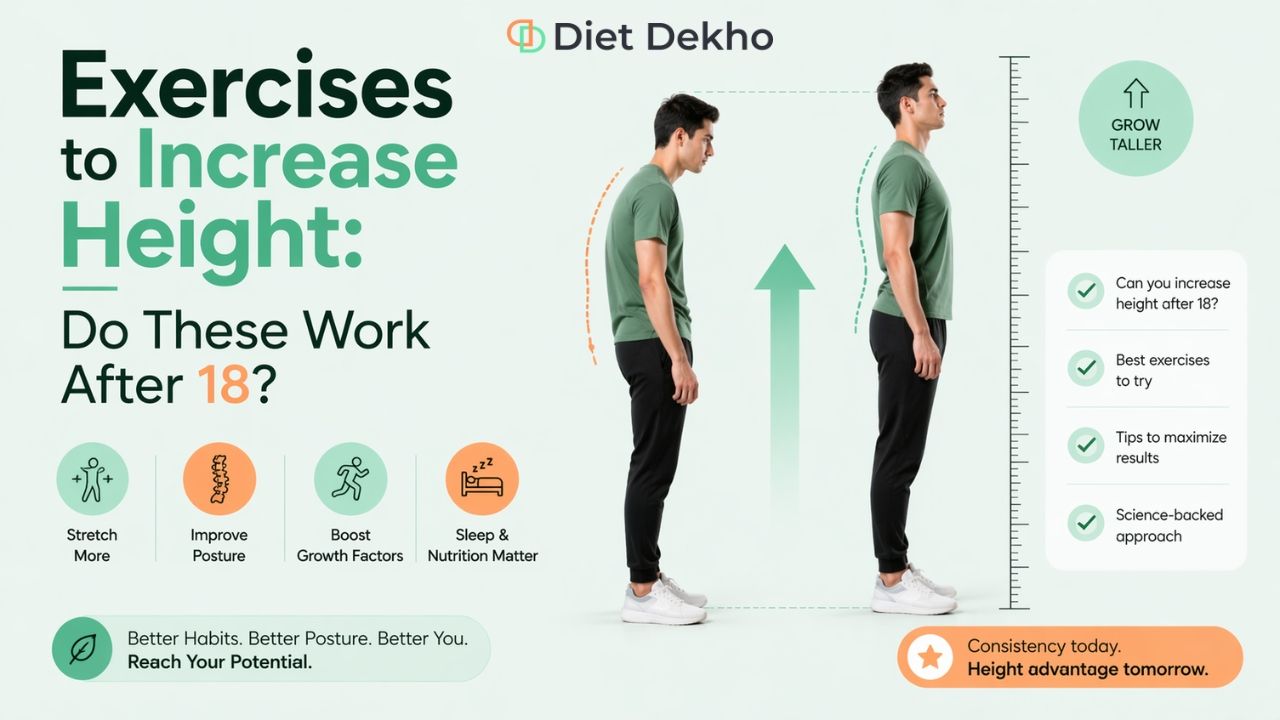
Rahul recently sat across from me, looking slightly deflated after a long day at his software firm. He asked a question I hear often: Can I still find exercises which increase height even though I’m already twenty-four? Like many of you, he felt that gaining even an extra inch would boost his presence during those high-pressure client meetings.
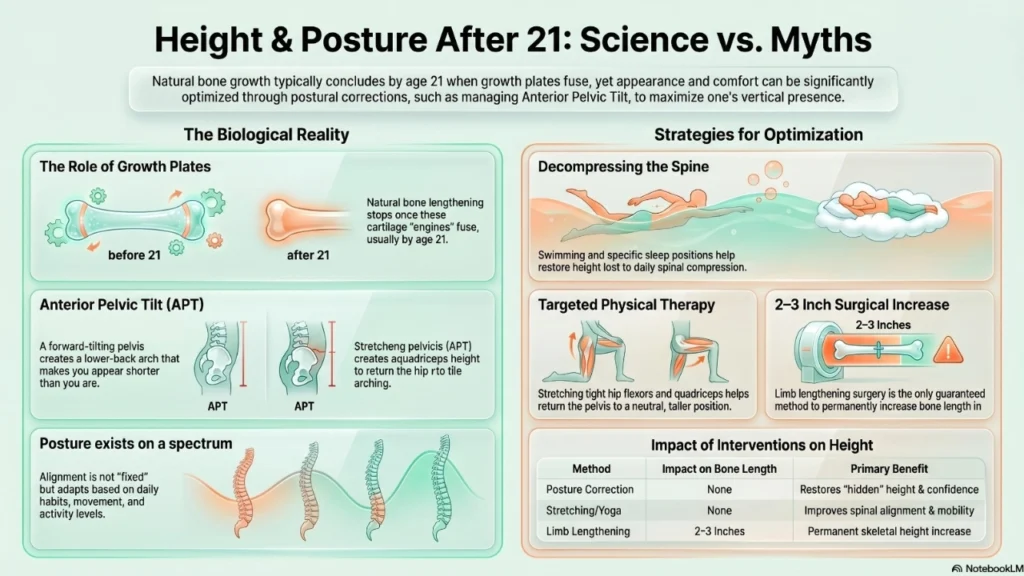
For most adults, actual bone growth stops between ages 18 and 21 once your growth plates fuse. However, you can still increase your apparent height by up to 2 cm through specific exercises which increase height that decompress your spine and correct postural slumping.
The Biological Reality of Growing Taller
Table of Contents
- 1 The Biological Reality of Growing Taller
- 2 Why Posture is Your Secret Height Weapon
- 3 The Role of Genetics and Environment
- 4 Specific Exercises That Offer Real Results
- 5 Essential Stretches for Posture Correction
- 6 The Busy Professional’s Desk Protocol
- 7 Nutrition: Building the Scaffold
- 8 Addressing the Diabetes and Bone Health Connection
- 9 The Impact of Sleep and Stress on Your Frame
- 10 Why You Should Avoid Height Growth Gimmicks
- 11 Real Stories: Small Changes, Big Presence
- 12 Frequently Asked Questions
- 13 Taking the Next Step for Your Health
- 14 Contact Us
- 15 Disclaimer
I know it’s hard to hear that your height is mostly fixed by the time you graduate college. What this means for your daily routine is that we need to shift our focus from growing bones to optimizing your frame. Your height is primarily controlled by the long bones in your legs and arms.
These bones grow through a process called endochondral ossification, which happens at the ends of the bones in areas called epiphyseal plates. During your teenage years, these plates are active and soft, allowing for rapid expansion. However, near the end of puberty, a surge in hormones specifically estrogen in folks causes these plates to harden and close.
Once these plates are fused, no amount of stretching can make the bone itself longer. Research from the National Institutes of Health (NIH) confirms that bone lengthening effectively hits zero between ages 18 and 20 for the vast majority of people. I don’t want you to waste money on magic pills that promise to reopen these plates; science tells us that’s just not how our bodies work.
Understanding the Growth Plate Timeline
Let’s simplify this by looking at when these biological gates usually close. It varies a bit based on your gender and your lifestyle during your younger years.
| Gender | Typical Start of Fusion | Complete Bone Union |
| Females | 14-16 years | 18-20 years |
| Males | 16-18 years | 19-21 years |
Even if the bones stop lengthening, the cartilage in your spine is a different story. Your spine is made of 33 vertebrae and dozens of spongy discs. These discs can compress and decompress, which is where we find our hidden height.

Why Posture is Your Secret Height Weapon
I’ve noticed that most busy professionals spend their days hunched over a laptop or looking down at a phone. This habit creates a permanent slump that hides your true height. When you correct this, you aren’t growing new bone; you are simply unfolding the height you already have.
Poor posture often leads to a condition called kyphosis (rounded shoulders) or anterior pelvic tilt (a protruding belly and arched back). These misalignments can make you look 1 to 2 inches shorter than you actually are. Think of your body like a piece of string; if it’s knotted and curled, it looks shorter than when it’s pulled taut.
Exercises which increase height through postural correction are the most effective way for an adult to see immediate results. By strengthening your core and back muscles, you provide a better scaffold for your spine to stay upright. This isn’t just about looking taller; it’s about reducing back pain and feeling more energized throughout your day.
The Impact of Daily Compression
Did you know that you are actually taller in the morning than you are at night? This is because gravity compresses the fluid-filled discs in your spine while you walk and sit during the day.
| Time of Day | Spinal State | Height Variation |
| Morning | Discs are hydrated and expanded | Maximum natural height |
| Afternoon | Gravity causes minor fluid loss | Slight reduction |
| Night | Maximum disc compression | Up to 1.5 cm loss |
Stretching and hanging exercises work by accelerating the rehydration of these discs. When you decompress the spine, you allow those spongy buffers to expand back to their full size. For a busy homemaker or a professional who is on their feet all day, this decompression is the key to maintaining that morning height into the evening.
The Role of Genetics and Environment
It’s tempting to compare ourselves to others, but height is deeply personal. Scientists have found that about 80% of your height is determined by the DNA you inherited from your parents. The largest genetic study to date, involving over 250,000 people, identified hundreds of gene variants that influence how tall we become.
The remaining 20% comes from your environment what you ate as a child, how much you slept, and your general health. If you are already over 18, we can’t change your genes, and we can’t go back in time to change your childhood nutrition. But we can optimize your current physical state.
Research from Harvard Health highlights that while you can’t grow bones, you can prevent the shrinkage that often starts in your 40s. By staying active and eating the right foods now, you are essentially locking in your height for the decades to come. This is especially important for my clients who are managing diabetes, as bone health can sometimes be overlooked in the focus on blood sugar.

Specific Exercises That Offer Real Results
Let’s get into the movements that actually help. Since you’re likely busy, I’ve picked exercises which increase height that you can do at home without any expensive gym equipment. These focus on spinal flexibility and core strength.
1. Hanging from a Bar
This is a classic for a reason. Hanging allows gravity to do the work for you. By suspending your body, you take the weight off your vertebrae and allow the discs to decompress.
Find a sturdy bar at a park or a home pull-up bar and simply hang with your arms relaxed. Try to hold this for 30 seconds at a time. What this means for your daily routine is a quick reset for your spine after sitting at a desk for four hours.
2. The Cobra Stretch (Bhujangasana)
This yoga pose is a favorite of mine for anyone with a desk job. It stretches the spine and opens up the chest. When you spend all day leaning forward, your chest muscles get tight and pull your shoulders forward.
Lie on your stomach and gently push your chest up while keeping your hips on the floor. This reverses the hunch and strengthens the muscles that help you stand tall. It’s one of the best exercises which increase height because it targets the very muscles that fail when we slouch.
3. Pelvic Lift (The Bridge)
The pelvic lift is great for correcting an anterior pelvic tilt. Many of us sit in a way that makes our pelvis tip forward, which makes our lower back arch too much and our stomach stick out.
Lie on your back with your knees bent and feet flat. Lift your hips toward the ceiling until your body forms a straight line from your shoulders to your knees. Hold this for 20 seconds. This strengthens your glutes and lower back, providing a stable foundation for a taller-looking frame.

Essential Stretches for Posture Correction
| Exercise | Primary Benefit | Duration/Reps |
| Cat-Cow | Mobilizes the spine and relieves tension | 10-15 cycles |
| Forward Bend | Stretches hamstrings and lower back | Hold 30 seconds |
| Wall Slides | Realigns shoulders and upper back | 10-12 reps |
| Chin Tucks | Corrects Tech Neck and head alignment | 10 reps |
I recommend doing these as a small movement break. I know it’s hard to find an hour for the gym, but these only take five minutes. You can even do chin tucks while you’re waiting for your morning tea to boil.
The Busy Professional’s Desk Protocol
If you’re working from 9 to 5, your chair is often your biggest enemy. To keep your height, we have to fight the desk slump. The goal isn’t to have perfect posture all day that’s impossible. The goal is to move frequently.
Try to set a timer for every 45 minutes. When it goes off, stand up and reach your arms toward the ceiling. This simple reach decompresses the spine and gets the blood flowing. Also, check your monitor height. If you’re looking down at your laptop, you’re training your neck to hunch. Use some books or a laptop stand to bring the screen to eye level.
I often tell my clients: Your best posture is your next posture. This means movement is more important than sitting perfectly still. Even fidgeting or shifting your weight helps keep your muscles from getting stiff and pulling your frame downward.

Nutrition: Building the Scaffold
Exercises which increase height only work if your body has the materials to maintain bone density. Even if we aren’t growing longer bones, we need stronger bones to prevent the micro-fractures that lead to height loss over time.
For my Indian clients, we have some incredible traditional foods that are better than any supplement. Ragi (finger millet) is the king of bone health. It has thirty-five times more calcium than white rice and is incredibly helpful for people managing diabetes because it releases energy slowly.
The Bone-Building Diet Plan
| Food Category | Examples | Why it Matters |
| Calcium Powerhouse | Ragi, Paneer, Curd, Milk | The structural building blocks of bone |
| Vitamin D Sources | Sunlight, Eggs, Mushrooms | Essential for absorbing the calcium you eat |
| Magnesium & Zinc | Almonds, Sesame Seeds, Walnuts | Supports bone mineralization and repair |
| Vitamin K & Fiber | Spinach, Methi, Whole Grains | Regulates bone turnover and gut health |
I suggest starting your day with a ragi porridge or a ragi dosa. It’s a simple switch that provides a massive boost to your skeletal integrity. If you’re lactose intolerant, soy milk or sesame seeds are great alternatives to dairy.
Addressing the Diabetes and Bone Health Connection
I want to speak specifically to those of you managing diabetes. High blood sugar can sometimes affect the quality of your bone matrix, making bones more brittle even if they look dense on a scan.
This is why staying active with low-impact exercises which increase height is so important. It’s not just about the inches; it’s about making sure your frame stays resilient. Ragi is particularly helpful here because it helps regulate blood sugar while providing that much-needed calcium. It’s a win-win for your health.
If you’re struggling to balance your blood sugar and your fitness goals, don’t feel overwhelmed. Let’s simplify this. Focus on one small change this week maybe replacing your afternoon biscuit with a handful of soaked almonds or a small bowl of curd with sesame seeds.
The Impact of Sleep and Stress on Your Frame
I know it sounds like a cliché, but sleep is when your body repairs itself. While growth hormone (GH) is most active during the puberty growth spurt, it continues to play a role in bone density and tissue repair throughout adulthood.
When you are chronically stressed, your body produces cortisol. High cortisol is like a bone thief it interferes with the cells that build new bone and can lead to a loss of density over time. Taking ten minutes before bed to do some gentle stretching or deep breathing can lower that cortisol and help your body maintain its structural health.
Why You Should Avoid Height Growth Gimmicks
You might see advertisements for limb-lengthening supplements or magnetic insoles that claim to trigger growth. As your dietitian, I’m telling you to save your money. There is no pill that can reopen a fused bone.
Surgical options like limb lengthening do exist, but they are incredibly painful and involve breaking the legs to grow new bone in the gap. They carry risks of infection and nerve damage and are usually only for extreme medical cases. For the average person, focusing on posture and nutrition is a much safer and more natural way to improve your stature.

Real Stories: Small Changes, Big Presence
I remember a client, Priya, a homemaker who felt her posture had suffered after years of lifting her children and working in the kitchen. She started a 10-minute routine of cobra stretches and wall slides every evening.
Within three months, she didn’t just look taller; she felt more confident. Her back pain vanished, and her clothes fit better because her spine was no longer compressed. This is the real power of exercises which increase height after 18. It’s a transformation of how you carry yourself in the world.
Frequently Asked Questions
Can I really increase my height after 18 with exercises?
While your bones won’t grow longer, you can gain up to 2 cm in apparent height. This happens by decompressing your spine and correcting common postural issues like slouching or a tilted pelvis. It’s about revealing your true, full height rather than growing new bone.
How long does it take to see results from height exercises?
If you are consistent with stretching and posture correction, you might notice you feel taller and more upright in as little as 2 to 4 weeks. However, maintaining these results requires making these movements a permanent part of your daily routine to fight the effects of gravity.
Is hanging from a bar safe for someone with back pain?
Hanging is generally safe and often recommended for relieving back pain because it decompresses the spine. However, if you have a history of disc issues or shoulder injuries, it’s best to start with a partial hang where your feet stay on the ground to control the tension.
Does ragi really help with height and bones?
Ragi is one of the best foods for your skeleton. It is incredibly rich in calcium, which is the main mineral in your bones. While it won’t make an adult grow taller, it prevents bone loss and keeps your spine strong, which is essential for maintaining your height as you age.
Are there any specific exercises which increase height for busy professionals?
Yes! Chin tucks and shoulder blade squeezes can be done right at your desk. These movements correct the tech neck and rounded shoulders that many office workers develop, helping you maintain your maximum stature even during a long workday.
Taking the Next Step for Your Health
I hope this helps you see that while we can’t change our biology after 18, we have a lot of control over how we present ourselves. Improving your height is a journey of self-care, better nutrition, and consistent movement.
If you’re feeling a bit lost on how to balance your diet especially if you’re managing a condition like diabetes alongside your fitness goals I’m here to help. We can create a plan that fits into your busy life and focuses on the foods that make you feel strong and confident.
Let’s simplify your journey together. You don’t have to do it alone.

Contact Us
We understand how overwhelming nutrition and weight loss information can feel. With so many opinions and confusing advice online, it’s easy to feel stuck or unsure about what to do next.
At Diet Dekho, you never have to figure it out alone. You can contact us anytime with any questions or concerns. Our expert dietitians are available 24/7 to guide, support, and help you stay on track. Whether your goal is weight loss or building healthier habits, we’re here to make the journey simpler and more sustainable for you.
Disclaimer
This blog is intended to help readers make healthier food choices. Your health should always be the top priority. Before starting any restrictive or special diet, especially if you have a medical condition or health concern, please consult a doctor or a qualified dietitian. Each body responds differently to food and lifestyle changes. Always choose what is safe and suitable for you.

Abhinav is the Founder of Diet Dekho, helping people manage weight and lifestyle health through simple, practical nutrition and personalized diet plans.