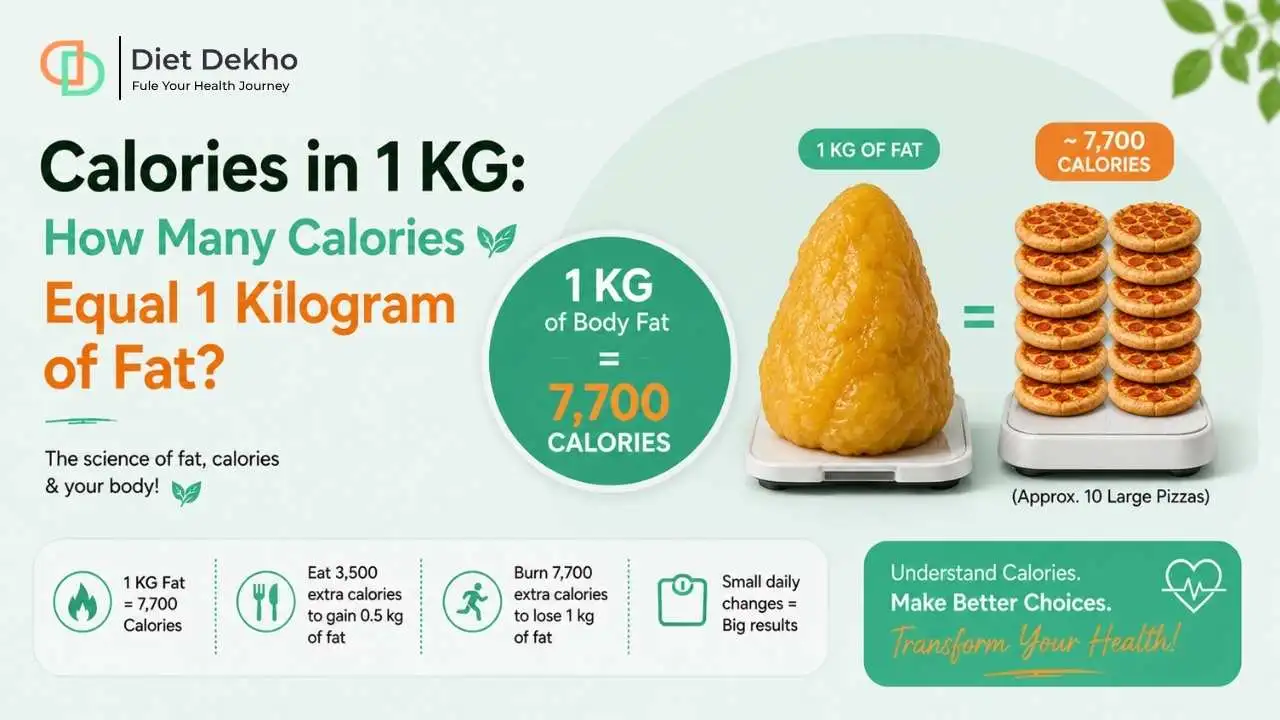
Imagine you are heading home after a long shift. You are exhausted. The thought of the gym feels impossible, but you still want to manage your health. You might wonder, 1 kg is how many calories, and how can a busy person like you actually burn it off? I know it is hard to find time between meetings and family, but understanding this simple number is your first step to success.
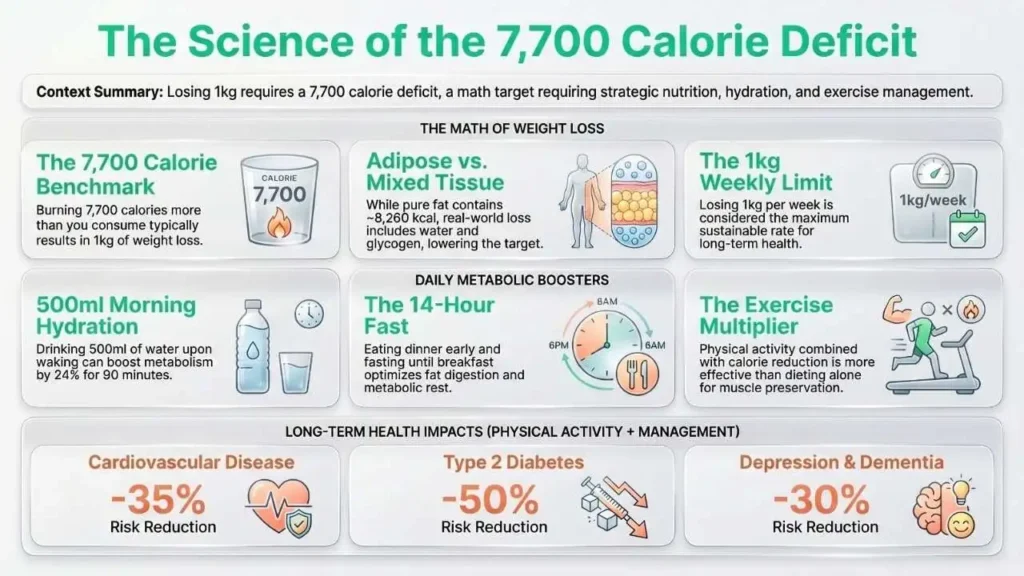
To lose 1 kilogram of body fat, you must create an energy deficit of approximately 7700 calories. This means you need to burn 7700 more calories than you eat over a period of time. A safe goal is losing 0.5 to 1 kg per week by maintaining a daily deficit of 500 to 750 calories.
The Science of the 7700 Calorie Rule
I often hear people ask why the math seems so complicated. Let’s simplify this together. In a lab, burning one gram of pure fat releases 9 calories. If our body fat were 100% pure oil, you would need to burn 9000 calories to lose a kilogram. But our bodies are much smarter and more complex than a bottle of cooking oil.
What this means for your daily routine is that the fat we see on our bodies is actually adipose tissue. This tissue is not just fat; it contains roughly 72% to 87% pure lipids. The rest is made of water, proteins, and the biological machinery that keeps your cells alive. Because of this mix, scientists have calculated that 1 kg of body fat equals about 7700 calories.
Knowing the difference between pure fat and body fat helps you set realistic goals. I know it sounds like a big number, but breaking it down into daily steps makes it feel much smaller. When you understand that 1 kg is how many calories, you stop chasing magic solutions and start trusting the math of your own body.
| Substance | Energy Content per Gram | Energy Content per Kilogram |
| Pure Dietary Fat | 9 text kcal | 9000 text kcal |
| Human Body Fat (Adipose) | approx 7.7 text kcal | 7700 text kcal |
| Carbohydrates/Protein | 4 text kcal | 4000 text kcal |

Why Indians Struggle with Fat Loss Math
Managing your weight in India comes with unique challenges. I know it’s hard to ignore the smell of fresh parathas or avoid the extra rice at dinner. Recent studies by the Indian Council of Medical Research (ICMR) show that most Indians get over 62% of their calories from carbohydrates. This is much higher than the recommended 45-55%.
When your diet is high in refined carbs like white rice and white flour, your body produces more insulin. High insulin levels act like a lock on your fat cells, making it very hard to burn those 7700 calories. What this means for your daily routine is that even if you eat less, the type of food you choose determines if your body burns fat or stores it.
Experts from AIIMS emphasize that our tropical climate and dietary patterns lead to central obesity-that stubborn belly fat we all struggle with. This fat is metabolically active and increases the risk of diabetes. Therefore, understanding 1 kg is how many calories is not just about the scale; it is about protecting your heart and kidneys.
The Impact of 10% Weight Loss on Diabetes
If you are managing diabetes, every calorie you burn has a double benefit. Clinical trials like the DiRECT study show that losing 10% to 15% of your body weight can actually put Type 2 diabetes into remission. By reducing that fat, your liver and pancreas can start working properly again.
I know it feels like a long journey, but just losing 1 kg-created by that 7700 calorie deficit-can significantly lower your fasting blood sugar. You are not just losing weight; you are giving your body a chance to heal.
Calculating Your Daily Energy Needs
To start losing that 1 kg, we first need to know how many calories your body burns while you are just resting. This is called your Basal Metabolic Rate (BMR). For many busy professionals, your BMR makes up the majority of your daily burn.
You can estimate your BMR using your weight, height, and age. For example, a woman’s formula is: 655.1 + (9.56 times textweight in kg) + (1.85 times textheight in cm) – (4.68 times textage in years). Once you have this number, you multiply it by an activity factor to find your Total Daily Energy Expenditure (TDEE).
| Activity Level | Multiplier (BMR x) | Description |
| Sedentary | 1.2 | Little or no exercise, desk job |
| Lightly Active | 1.375 | Light exercise 1-3 days/week |
| Moderately Active | 1.55 | Moderate exercise 3-5 days/week |
| Very Active | 1.725 | Hard exercise 6-7 days/week |
If your TDEE is 2000 calories, and you want to lose 1 kg in two weeks, you need a daily deficit of 500 calories (frac7700 text calories15.4 text days approx 500). This means eating 1500 calories a day. I know it sounds strict, but we can make it delicious with the right Indian food swaps.

The Hidden Power of Household Chores (NEAT)
You don’t need a gym membership to burn those 7700 calories. I know you’re busy at home, but those chores are actually a secret weapon called NEAT (Non-Exercise Activity Thermogenesis). NEAT is the energy you burn doing everything except sleeping, eating, or sports.
For homemakers and busy professionals, your daily movement can account for up to 30% of your total calorie burn. If you choose the stairs instead of the lift or mop the floor yourself, you are chipping away at that 1 kg goal every single day.
| Household Activity (30 mins) | Calories Burned (approx.) | Indian Life Equivalent |
| Mopping the Floor | 85-100 text kcal | Cleaning the living room |
| Washing Dishes by Hand | 40-75 text kcal | Cleaning up after dinner |
| Cooking & Chopping | 50-100 text kcal | Preparing a fresh meal |
| Walking While on Phone | 75-100 text kcal | Work calls or family chat |
| Climbing Stairs | 200-300 text kcal | Avoiding the lift |
What this means for your daily routine is that every bit of movement counts. Even fidgeting or tapping your feet while working at a desk can burn extra calories over time. I know it’s hard to find an hour for yoga, but can you find 10 minutes to walk after lunch? That is how you win.
Mastering the Indian Calorie Chart
One of the biggest struggles my clients face is knowing how many calories are in their favorite home-cooked meals. I want to give you a clear guide so you can track your progress toward that 7700 calorie goal without feeling lost.
A typical Indian meal of two rotis, a bowl of dal, and sabzi is about 400-500 calories. However, adding a spoonful of ghee or having a large bowl of rice can quickly double those numbers. Let’s look at the average counts for our staples.
| Common Indian Food | Portion Size | Estimated Calories |
| Roti (No Ghee) | 1 medium | 100 text kcal |
| Cooked White Rice | 1 small katori (150 text g) | 200 text kcal |
| Dal (Moong/Arhar) | 1 ladle (100 text ml) | 120 text kcal |
| Vegetable Sabzi | 1/2 bowl | 80-100 text kcal |
| Poha/Upma | 1 bowl (150 text g) | 300 text kcal |
| Idli (Plain) | 1 piece | 70 text kcal |
| Paneer Tikka | 1 skewer | 150 text kcal |
| Curd (Low Fat) | 1 katori (100 text g) | 80 text kcal |
I know it’s hard to change what you eat, but small swaps make a huge difference. If you switch from white rice to brown rice or millets, you get more fiber. Fiber keeps you full for longer, which means you won’t feel those mid-afternoon hunger pangs that lead to snacking.

The Role of Glycemic Index in Diabetes and Fat Loss
When you are trying to lose weight with diabetes, the Glycemic Index (GI) is your best friend. GI ranks how fast a food raises your blood sugar. High-GI foods like white bread and sugary snacks cause a spike and then a crash, making you feel hungry and tired.
Low-GI foods release energy slowly. This keeps your blood sugar stable and helps your body burn fat more effectively. I know it’s tempting to grab a biscuit with your tea, but switching to roasted chana or a handful of nuts will help you stay on track with your 7700 calorie deficit.
Top Low GI Swaps for Indians
- Swap White Rice for Brown Rice, Foxtail Millet, or Quinoa.
- Swap Maida for Whole Wheat, Bajra, or Jowar flour.
- Swap Potatoes for Sweet Potatoes or fibrous veggies like Lauki and Bhindi.
- Swap Fruit Juice for whole fruits like Guava, Apple, or Papaya.
What this means for your daily routine is that you can still enjoy your meals. You just need to choose smarter carbohydrates that don’t trigger fat storage.
A Sample 1500-Calorie Indian Plan for Busy Professionals
Creating a 500-calorie daily deficit is easier when you have a plan. I’ve put together this simple 1500-calorie day that focuses on high protein and low GI foods to help you reach that 1 kg goal. According to Harvard Health, a slow and steady approach is the most sustainable way to keep the weight off.
- Early Morning (8:00 AM): 1 glass of warm lemon water + 5 soaked almonds.
- Breakfast (9:00 AM): 2 Moong dal chillas with mint chutney + 1 cup of tea (no sugar).
- Mid-Morning (11:30 AM): 1 medium apple or a bowl of papaya.
- Lunch (1:30 PM): 2 whole wheat rotis + 1 bowl of dal + 1 cup vegetable sabzi + a large salad.
- Evening Snack (4:30 PM): 1 cup of green tea + a handful of roasted chana.
- Dinner (8:00 PM): 1 bowl of vegetable soup + 100g grilled paneer or chicken + sautéed veggies.
I know it’s hard to meal prep when you’re tired, but doing just a little bit of chopping on Sundays can save your whole week. This plan ensures you are getting enough protein (about 20-25% of your calories) which ICMR recommends for reversing diabetes risk.

Why Consistency Beats Intensity
I want to be honest with you-there will be days when you slip up. Maybe there’s a birthday at the office or a festival at home. I know it’s hard, but don’t let one meal ruin your progress. The 7700 calorie rule works on a weekly and monthly basis, not just hour by hour.
If you eat an extra 500 calories today, you can balance it by walking a bit more tomorrow or choosing a lighter lunch. The goal is sustainable health, not a crash diet. Rapid weight loss often just means you’re losing water, not the actual fat you want to target.
By focusing on slow, steady changes, you protect your muscle mass and keep your metabolism strong. This is how you avoid the yo-yo effect where you lose 2 kg and then gain 3 kg back.
Frequently Asked Questions
Is it possible to lose 1 kg in a week without exercise?
Yes, it is possible by creating a calorie deficit through diet alone. However, combining a healthy diet with light movement like walking or household chores is much more effective for your heart health and metabolism.
Why does 1 kg equal 7700 calories and not 9000?
While pure fat has 9 calories per gram, our body fat (adipose tissue) also contains water and protein. This dilutes the energy density, making 1 kg of body fat worth about 7700 calories.
Can a diabetic person follow a 1500-calorie diet?
Most sedentary adults with diabetes find a 1500-calorie plan helpful for weight loss. It is important to focus on low-GI foods and high protein to keep blood sugar stable. Always consult your doctor before starting a new plan.
How many calories do I burn by mopping or sweeping?
Mopping for an hour can burn around 170 calories, and sweeping can burn about 130 calories. These everyday activities are great ways to contribute to your 7700 calorie goal without going to a gym.
What is the best time to eat to lose weight?
Maintaining regular meal timings-like three main meals and two healthy snacks-helps prevent blood sugar spikes and keeps your energy levels steady throughout the day.

Conclusion
I hope this guide helps you see that losing weight is not a mystery-it’s a journey we can navigate together. Understanding that 1 kg is how many calories gives you the power to make small, informed choices every day. Whether it’s swapping your white rice for millets or taking a quick walk after dinner, every action brings you closer to your goal.
I know it’s hard to find time for yourself, but you deserve to feel healthy and energized. You can start today by simply making one better choice for your next meal. If you need more personalized guidance tailored to your health needs, we are here to support you.
Contact Us
We understand how overwhelming nutrition and weight loss information can feel. With so many opinions and confusing advice online, it’s easy to feel stuck or unsure about what to do next.
At Diet Dekho, you never have to figure it out alone. You can contact us anytime with any questions or concerns. Our expert dietitians are available 24/7 to guide, support, and help you stay on track. Whether your goal is weight loss or building healthier habits, we’re here to make the journey simpler and more sustainable for you.
Disclaimer
This blog is intended to help readers make healthier food choices. Your health should always be the top priority. Before starting any restrictive or special diet, especially if you have a medical condition or health concern, please consult a doctor or a qualified dietitian. Each body responds differently to food and lifestyle changes. Always choose what is safe and suitable for you.

Abhinav is the Founder of Diet Dekho, helping people manage weight and lifestyle health through simple, practical nutrition and personalized diet plans.