Imagine it is a Tuesday afternoon. You are balancing a high-pressure work deadline while mentally planning dinner for your family. You feel that familiar, heavy fatigue setting in, and you remember that jar of black resin your friend recommended for energy. But as you reach for it, a small worry stops you: what are the actual side effects of shilajit, and is it safe for your specific health needs?
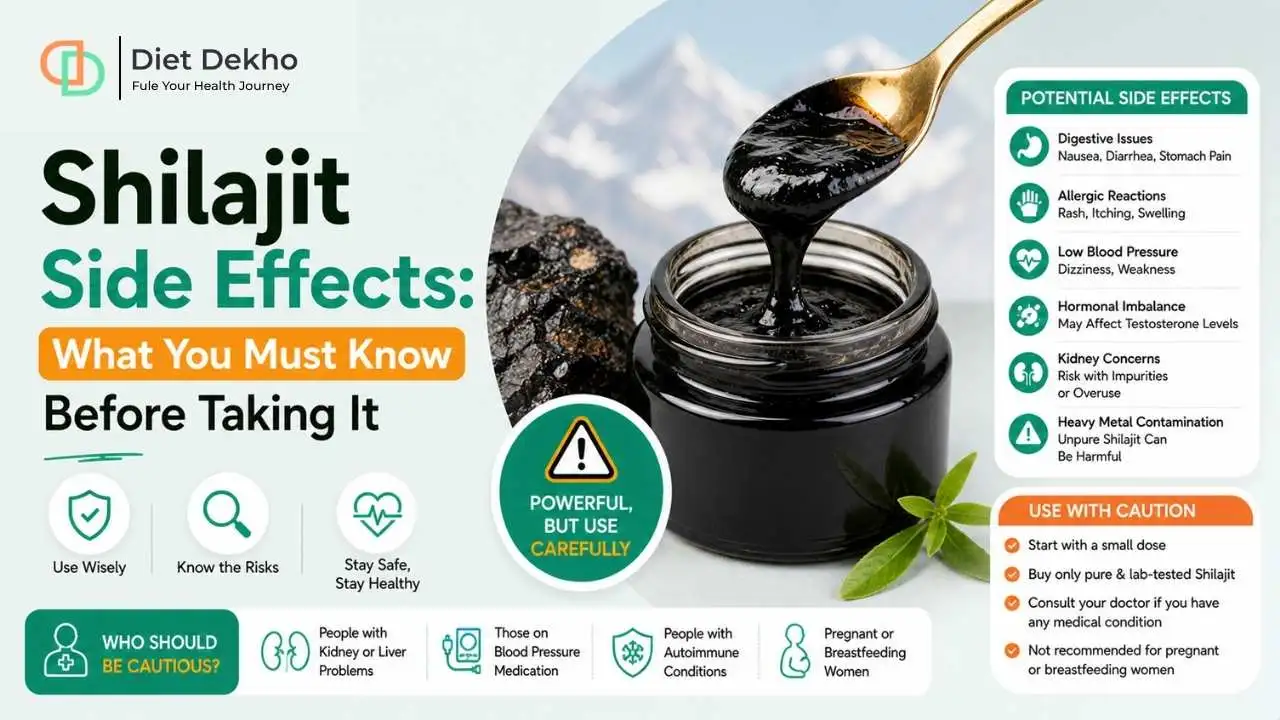
The side effects of shilajit typically include digestive upset like nausea or diarrhea, potential drops in blood sugar, and fluctuations in blood pressure. While generally safe when purified, unpurified shilajit poses risks of heavy metal toxicity (lead, arsenic) and increased uric acid, making medical consultation and third-party purity testing essential for anyone with pre-existing conditions like diabetes.
Why Busy Professionals and Homemakers are Turning to Himalayan Resin
I know it is hard to find time for a complicated wellness routine when your day is already packed from 6:00 AM to 10:00 PM. Many of my clients, from corporate managers to dedicated homemakers, come to me looking for a magic pill to help them keep up with the demands of modern life. They have heard shilajit called the Destroyer of Weakness and want to know if it can truly help them feel less like they are running on empty.
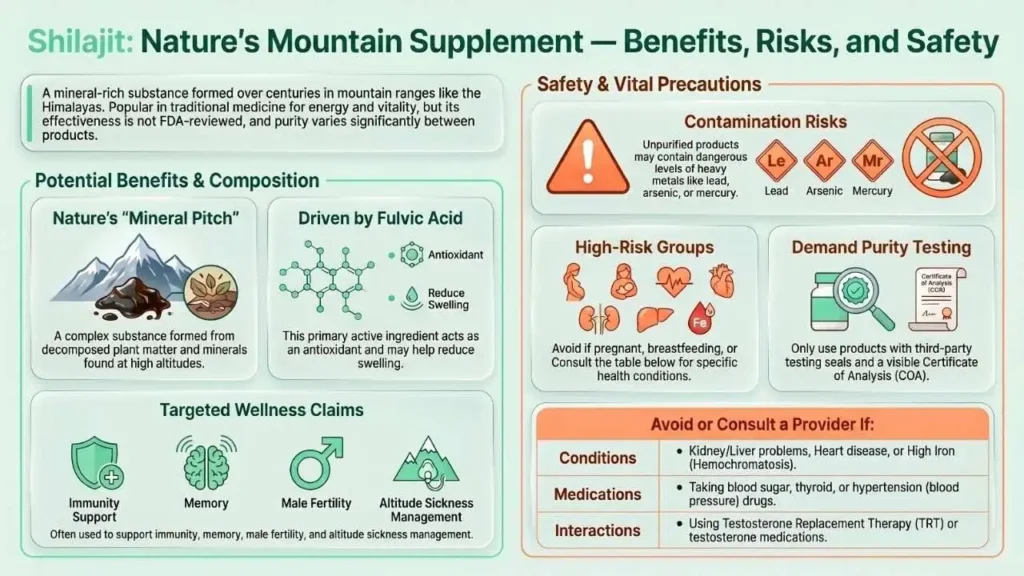
What this means for your daily routine is that shilajit is not just another vitamin; it is a potent, mineral-rich substance formed over centuries by the slow decomposition of plant matter in the high altitudes of the Himalayas. It contains over 84 minerals and a high concentration of fulvic acid, which helps your cells actually absorb nutrients and produce energy. But because it is so powerful, it carries risks that you need to understand before it becomes part of your morning tea.

When you first start taking this resin, your digestive system might have some strong opinions. It is very common for people to jump into a full dose because they want to feel better today, but your gut needs time to adjust to the dense mineral load.
Dealing with Nausea and Abdominal Discomfort
I often tell my friends that taking shilajit on an empty stomach is like trying to run a marathon without warming up-it might work, but you will probably feel it later. Many users report a nagging sense of nausea or even sharp abdominal pain if they take the resin without food. This happens because the fulvic and humic acids are highly bioactive and can be slightly irritating to the lining of a sensitive stomach.
Let’s simplify this: if you notice your stomach doing somersaults, try taking your dose after a light breakfast. The presence of food acts as a buffer, allowing the minerals to absorb more slowly and gently.
Changes in Bowel Movements
Another frequent conversation I have involves sudden changes in digestion, like loose stools or even temporary diarrhea. This is often part of the body’s initial detox response as it processes the influx of humic substances. While it might feel alarming, it usually settles within a few days. However, if it persists, it is a clear sign that your dose is too high or your body is struggling with the specific brand’s purity.
| Digestive Symptom | Likely Cause | Suggested Action Step |
| Nausea | Mineral density on an empty stomach | Take 30 mins after a meal |
| Diarrhea | Rapid electrolyte/mineral shift | Reduce dose by half for 3 days |
| Heartburn | Resin’s natural heating (Ushna) property | Mix with warm milk instead of water |
| Bloating | Incomplete dissolution of the resin | Ensure the resin is fully dissolved |

The Cardiovascular Connection: Blood Pressure and Heart Rate
For my non-gym audience who might be dealing with stress-related heart concerns, understanding how shilajit affects your circulation is vital. It is often praised for improving blood flow, but for those on medication, this can lead to unexpected side effects of shilajit.
The Danger of Low Blood Pressure
Shilajit has a documented hypotensive effect, meaning it helps relax your blood vessels to lower blood pressure. In the scientific world, this is linked to an increase in Nitric Oxide (NO), a molecule that tells your arteries to widen. While this sounds like a win for heart health, it can be dangerous if your blood pressure is already on the lower side or if you are taking antihypertensive drugs like Metoprolol or Amlodipine.
I have seen clients feel fine while sitting, only to experience a rush of dizziness or lightheadedness the moment they stand up to answer the door. This is called orthostatic hypotension, and it is a common reason people stop taking the supplement.
Monitoring Your Heart Rate
While rare, some individuals report an increased heart rate or palpitations after taking shilajit. This might be due to the energy-boosting properties of the resin or a reaction to impurities in low-quality products. If you feel your heart racing or skipping beats, it is time to stop and speak with a professional. Those with active heart disease should generally avoid shilajit because the safety data for compromised heart tissue is still limited.

Diabetes Management: A Double-Edged Sword
Many of you are looking for solutions tailored to a diabetes situation. Shilajit is traditionally used to help manage blood sugar because it can improve insulin sensitivity. But when you mix a natural blood-sugar lowerer with prescription meds like Metformin or Insulin, you risk a sugar crash.
Preventing Hypoglycemia
Hypoglycemia, or dangerously low blood sugar, is perhaps the most serious concern for my diabetic friends. If shilajit works too well alongside your medication, you might find yourself feeling suddenly shaky, sweaty, or confused in the middle of a meeting.
What this means for your daily routine is that you cannot just add shilajit and forget about it. You must be diligent with your glucose monitor, especially during the first two weeks.
| Medication Type | Potential Interaction with Shilajit | Precautionary Measure |
| Oral Hypoglycemics (Metformin) | Enhanced glucose-lowering effect | Monitor sugar levels 2x daily |
| Insulin | Increased risk of sudden hypoglycemia | Consult your GP for dose adjustment |
| Blood Thinners (Warfarin) | Potential increased bleeding risk | Avoid or use under strict supervision |

Hormonal Balance and the Testosterone Myth
You have probably seen advertisements claiming shilajit will turn you into a superhero overnight by boosting testosterone. While research does show that purified shilajit can increase total and free testosterone in men, the reality is more nuanced, especially for women.
For Men: Beyond the Energy Boost
In men, higher testosterone levels can improve mood and muscle recovery. However, if your body is not used to this shift, you might experience mood swings, increased acne, or even hair loss if you are genetically predisposed. It is a gradual process, and more is definitely not better when it comes to hormonal health.
For Women: Skin and Cycle Changes
For the busy homemakers reading this, shilajit can be a great way to support bone density and fight fatigue. But because it can nudge your hormones, some women notice their skin breaking out or their periods becoming a bit irregular. If you have conditions like PCOS or hormone-sensitive concerns, you should treat shilajit with the same caution you would any hormonal treatment.

The Hidden Danger: Heavy Metal Contamination
I want to be very blunt here because your safety is my priority. The biggest risk you face isn’t actually the shilajit-it’s the garbage that might be inside it. Since this resin is scraped off mountain rocks, it is naturally full of lead, arsenic, mercury, and cadmium.
Why Raw Resin is a Trojan Horse
Unpurified or raw shilajit is not just a little bit dirty; it can be toxic. Because shilajit contains fulvic acid, it is designed to carry minerals into your cells. If that resin contains lead, the fulvic acid acts like a Trojan horse, pulling that lead straight into your bloodstream and organs. This can lead to long-term damage to your brain, liver, and kidneys.
A recent study from 2025 found that many commercial shilajit products-even those with fancy packaging-still contained thallium levels that exceed safe limits. Thallium is a highly toxic heavy metal that can cause hair loss and nerve damage.
| Toxic Element | Safe Limit (USP) | Symptoms of Exposure |
| Lead (Pb) | le 10text ppm | Fatigue, irritability, kidney stress |
| Arsenic (As) | le 10text ppm | Skin changes, digestive distress |
| Mercury (Hg) | le 1text ppm | Brain fog, tremors, mood changes |
| Cadmium (Cd) | le 0.3text ppm | Bone pain, respiratory issues |
Kidney Stress and Uric Acid Concerns
If you have ever dealt with the pain of a gout flare-up, you know how important it is to watch your uric acid levels. Shilajit has been shown to potentially increase uric acid in the body.
Gout and Kidney Stones
For a busy professional who might already be dehydrated from too much coffee and not enough water, adding shilajit can be the tipping point for a gout attack. It also places a heavy mineral load on your kidneys. If your kidneys aren’t functioning at 100%, trying to filter out all those trace minerals can cause significant stress, leading to potential long-term damage.

Iron Overload: Why More Isn’t Always Better
Shilajit is a fantastic source of natural iron, which is why it is often recommended for people with anemia. But if you are someone who already has high iron levels-a condition called hemochromatosis-taking shilajit is like pouring gasoline on a fire.
Too much iron builds up in your liver and heart, causing oxidative stress that can age your organs prematurely. Always get a simple blood test to check your ferritin levels before you start a regular shilajit routine.
The Ayurvedic Secret: Shodhana (Purification)
In India, we have a long history of using shilajit, but we never use it raw. Traditional Ayurveda uses a process called Shodhana to make it safe for us to consume. I want you to look for the term Shudh Shilajit on your labels.
The Triphala Method
The gold standard for purification involves boiling the raw resin in a decoction of Triphala (three traditional fruits). This process does three things:
- It filters out physical impurities like sand and stones.
- It uses the natural tannins in Triphala to bind with and remove heavy metals.
- It disinfects the resin from fungi and bacteria.
If a brand cannot explain how they purify their resin, or if it is suspiciously cheap, it probably hasn’t been through this essential process.

Testing Your Shilajit at Home: 4 Simple Steps
I know it is hard to trust every label you see online. While lab tests are the only way to be 100% sure, you can do these simple kitchen tests to spot a fake or unpurified product.
1. The Water Test
Authentic shilajit resin is completely water-soluble. Drop a tiny bit into warm water. It should dissolve fully within 5-10 minutes, turning the water a rich, golden-brown color without leaving any grit or clumps at the bottom.
2. The Flame Test
Pure shilajit will not catch fire. If you hold a lighter to a small piece, it should bubble and expand into a fine ash. If it burns like plastic or produces thick black smoke, throw it away immediately-it likely contains petroleum-based fillers like coal tar.
3. The Alcohol Test
Unlike many fakes, real shilajit does not dissolve in alcohol. If you drop a piece into rubbing alcohol and it starts to break down or turn the liquid dark, it is likely adulterated.
4. The Temperature Test
Real resin is very sensitive to heat. It should get soft and sticky in your warm palm and turn brittle and glass-like if you put it in the freezer.
| Test Name | Real Shilajit Result | Fake/Impure Indicator |
| Water Solubility | Dissolves completely | Leaves sandy residue or clumps |
| Flame Test | Bubbles and turns to ash | Burns like plastic; black smoke |
| Alcohol Test | Does not dissolve | Dissolves or leaves a film |
| Pliability | Softens with body heat | Remains hard or feels like rubber |
How to Take Shilajit Safely: A Dietitian’s Guide
If you and your doctor decide that shilajit is right for you, the key to avoiding the side effects of shilajit is all in the timing and dosage.
Start with a Rice Grain Dose
I always tell my clients to start low and go slow. Begin with an amount the size of a single grain of rice (100-200text mg) for the first week. This allows your stomach and blood sugar to adjust without a massive shock to the system.
The Best Time of Day
For most busy professionals, taking shilajit in the morning on an empty stomach (if tolerated) provides the best energy boost for the workday. However, if you find it a bit too stimulating or if it makes you feel slightly anxious, taking it with warm milk in the evening can help with recovery and sleep.
The 8-Week Cycle
Your body isn’t meant to be on high-mineral supplements indefinitely. A good rule of thumb is to take shilajit for 6 to 8 weeks, then take a full 2-week break. This prevents any single mineral from building up to toxic levels and keeps your body from becoming dependent on the supplement for energy.
Expert Perspective: Long-term Human Trials
One of the most important things for you to know is that while shilajit has been used for 3,000 years, modern long-term human studies are still catching up. Most of our safety data comes from short-term trials (under 90 days).
In a notable 91-day study on rats, very high doses did cause some microscopic changes in the liver and intestines, reminding us that natural does not mean unlimited. In humans, a dose of 500text mg per day for 30 days was shown to be generally safe and effective for increasing antioxidant activity, but we still don’t know the impact of taking it every day for ten years.

Frequently Asked Questions (FAQs)
What are the most common side effects of shilajit I should watch for?
The most frequent side effects of shilajit are mild digestive issues like nausea, stomach cramps, or diarrhea. You might also notice a slight headache or dizziness as your body adjusts to the mineral density. If these don’t go away in a few days, you should reduce your dose or stop entirely.
Can shilajit be dangerous for people with high blood pressure?
Yes, it can be. Because shilajit has a natural ability to lower blood pressure, it can interact with your blood pressure medications and cause your readings to drop too low. This often leads to fainting spells or severe dizziness when standing up.
Who should absolutely not take shilajit?
You should avoid shilajit if you are pregnant or breastfeeding, have high uric acid (gout), have kidney disease, or suffer from iron overload disorders like hemochromatosis. It is also not recommended for children or people with active heart disease without strict medical supervision.
Does shilajit affect blood sugar levels for diabetics?
Shilajit can lower blood sugar by improving how your body uses insulin. If you are already taking diabetes medication, this combined effect can lead to hypoglycemia. Always monitor your sugar levels closely and talk to your doctor about potentially adjusting your medication.
How do I know if the shilajit I bought is pure?
Pure shilajit should dissolve completely in warm water, turn to ash (not burn) under a flame, and soften with the heat of your hand. Always look for a third-party Certificate of Analysis (COA) that proves the product has been tested for heavy metals like lead and mercury.
Conclusion: Putting Your Health First
I know you want to feel better and have more energy for your family and your career. Shilajit can be a wonderful part of that, but it is just one piece of the puzzle. It should never replace a balanced diet, proper hydration, and enough sleep.
Before you take that first dose, remember that natural is a powerful force. Be smart about your sources, listen to your body’s signals, and always keep your doctor in the loop. You deserve a solution that supports your health today and protects it for the future.
If you are struggling to manage your health and time, let’s simplify your routine together with a plan that actually works for your busy life.
Contact Us
We understand how overwhelming nutrition and weight loss information can feel. With so many opinions and confusing advice online, it’s easy to feel stuck or unsure about what to do next.
At Diet Dekho, you never have to figure it out alone. You can contact us anytime with any questions or concerns. Our expert dietitians are available 24/7 to guide, support, and help you stay on track. Whether your goal is weight loss or building healthier habits, we’re here to make the journey simpler and more sustainable for you.
Disclaimer
This blog is intended to help readers make healthier food choices. Your health should always be the top priority. Before starting any restrictive or special diet, especially if you have a medical condition or health concern, please consult a doctor or a qualified dietitian. Each body responds differently to food and lifestyle changes. Always choose what is safe and suitable for you.

Abhinav is the Founder of Diet Dekho, helping people manage weight and lifestyle health through simple, practical nutrition and personalized diet plans.