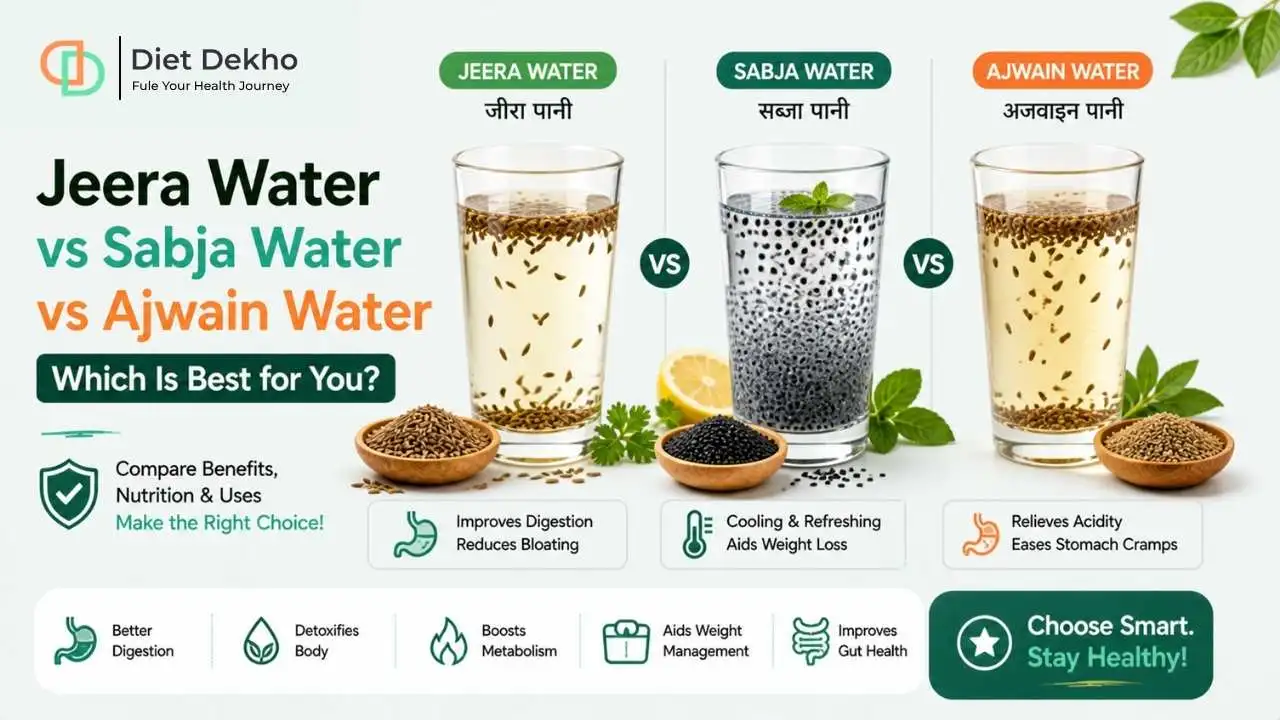
Have you ever stood in your kitchen after a long day, staring at your spice box and wondering if there is a simpler way to feel better? Perhaps you are managing a stubborn blood sugar level or just feeling that heavy, uncomfortable bloat after a quick lunch between meetings. When you try to jeera sabja ajwain water compare, you are looking for more than just a drink; you are looking for a small, manageable win for your health.
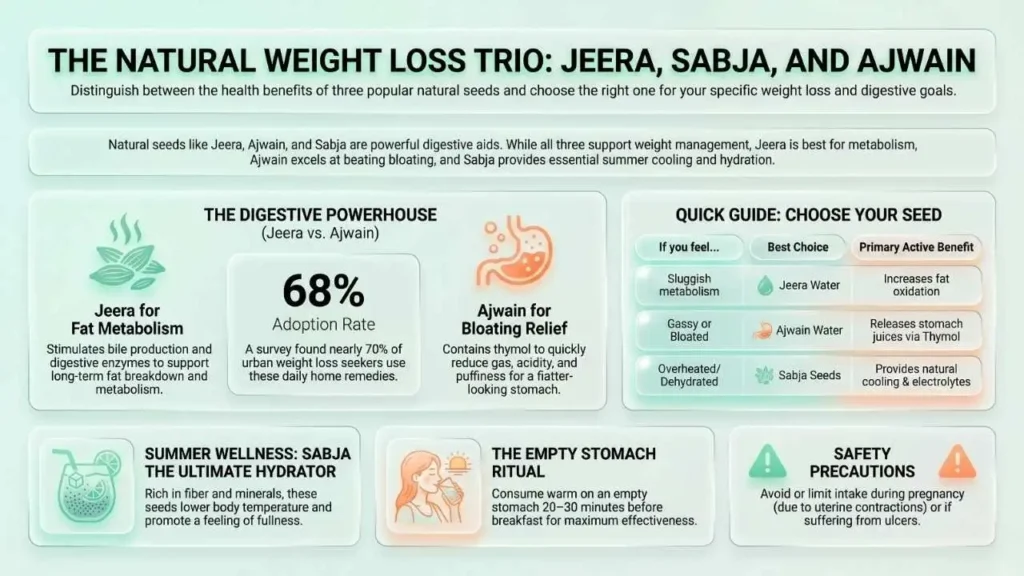
If you need a quick answer, here it is: jeera water is best for long-term metabolic health and insulin sensitivity. Ajwain water is your go-to for immediate relief from gas and heavy bloating. Sabja water is the winner for weight loss through satiety and cooling your body down. For the best results, match the seed to your specific health goal and the current season.
The Modern Indian Health Challenge
I know it is hard to find time for a perfect diet when your schedule is packed from morning to night. Whether you are a busy professional or a homemaker managing a hundred tasks, your health often takes a backseat. Recent data from the Indian Council of Medical Research (ICMR) shows a concerning trend. Currently, about 56.4% of the total disease burden in India is linked directly to what we eat and how little we move.
What this means for your daily routine is that small choices matter more than ever. Specifically, we are seeing a massive rise in lifestyle diseases across the country. Over 101 million Indians are currently living with diabetes. Furthermore, another 136 million are in the pre-diabetic stage, where simple changes can still turn things around. You do not need a complicated gym routine or expensive supplements to start making a difference today.
Let’s simplify this struggle together because many of us fall into the thin-fat category. This means you might look okay on the outside but carry hidden visceral fat around your organs. This hidden fat is a major driver of insulin resistance. Consequently, using functional foods like jeera, sabja, and ajwain is a way to use our traditional wisdom to fight these modern problems.
Table 1: At-a-Glance Comparison of Seed Waters
| Benefit Category | Jeera (Cumin) | Ajwain (Carom) | Sabja (Basil Seeds) |
| Primary Goal | Metabolism & Sugar Control | Gas & Fast Digestion | Weight Loss & Cooling |
| Key Compound | Thymoquinone | Thymol | Soluble Fiber |
| Thermal Nature | Mildly Warming | Strongly Warming | Cooling |
| Best Time | Early Morning | Post-Meal | 20 Mins Before Meal |
| Diabetes Role | Improves Sensitivity | Aids Digestion | Slows Sugar Spikes |
Deep Dive into Jeera Water: The Metabolic Hero
Jeera, or cumin, is a staple in almost every Indian meal. However, when you soak it in water, it becomes a potent tonic. Cumin contains bioactive compounds like cuminaldehyde and thymoquinone. These are not just fancy names; they are the workers that help your body process food better.
If you are struggling with your weight, jeera water works in a very clever way. It does not just burn fat like a magic pill. Instead, it stimulates your pancreas to release more digestive enzymes. This process speeds up the breakdown of carbohydrates and fats. When your digestion is efficient, you feel less heavy and your body uses energy better.
For my friends managing diabetes, jeera is particularly special. For instance, research has shown that cumin can help lower urea in the blood. This is important because urea can interfere with how your body responds to insulin. By keeping these levels in check, jeera water helps your cells become more sensitive to insulin again. This is exactly what we want for long-term blood sugar stability.
Understanding the Insulin Connection
I want you to think of insulin like a key that opens the doors of your cells to let energy in. In type 2 diabetes, that key often gets rusty. Cumin acts like a lubricant for that key. Actually, a major meta-analysis found that taking cumin significantly reduced fasting blood sugar levels in adults with metabolic issues.
What this means for your daily routine is that a simple glass of warm jeera water in the morning can set a better tone for the whole day. It helps prevent those sharp sugar spikes after breakfast. Additionally, it has a mild diuretic effect, which means it helps flush out excess salt and reduces that puffy feeling in your hands and feet.
One of the most reassuring things about jeera is how well-studied it is. Scientists at organizations like Harvard Health have highlighted how everyday spices can be secret weapons against inflammation. Cumin is rich in flavonoids, which act as antioxidants to protect your cells from damage caused by high sugar levels.
Ajwain Water: Your Instant Fix for Comfort
We have all been there-that feeling after a heavy lunch where your stomach feels like a balloon. This is where ajwain, or carom seeds, really shine. Ajwain contains a high amount of thymol. This compound is incredibly effective at relaxing the muscles in your digestive tract.
If you are a busy professional who often eats on the go, ajwain water is a lifesaver. It effectively speeds up the movement of food through your gut. This prevents the fermentation that leads to trapped gas and that painful stuck feeling. While jeera is a slow and steady metabolic worker, ajwain is your emergency relief team.
Many of my clients ask if ajwain helps with weight loss. It does, but in a different way than jeera. Specifically, ajwain helps clear out ama or metabolic waste. When your gut is clean and moving regularly, your metabolism naturally finds its rhythm. It also helps curb those sudden cravings for salty or fried snacks that often derail our health goals.
Table 2: Nutritional Breakdown of Ajwain Seeds
| Nutrient | Content per 100g | Benefit for You |
| Protein | 15-17% | Supports muscle repair |
| Fiber | High | Helps regular bowel movements |
| Thymol | 35-60% of oil | Anti-gas and anti-bacterial |
| Minerals | Calcium, Iron | Bone and blood health |
I often recommend ajwain water for anyone struggling with acidity. It might seem strange to use a spicy seed for acidity, but ajwain is actually alkaline once it enters your system. It helps neutralize stomach acid and provides a cooling sensation to the esophagus.
Sabja Water: The Satiety Secret
Now, let’s talk about sabja seeds, or sweet basil seeds. These are often the favorites of my non-gym audience because they do a lot of the heavy lifting for you. When you soak sabja seeds, they swell up and create a thick gel-like coating. This gel is packed with soluble fiber.
This fiber is a game-changer for weight loss and diabetes. When you drink sabja water before a meal, that gel fills up part of your stomach. Consequently, it sends a signal to your brain that you are already getting full. It is a natural way to reduce your portion sizes without feeling like you are starving yourself.
For those of us managing blood sugar, this gel acts like a filter. It slows down the absorption of sugar from your food into your bloodstream. This is why I tell my diabetic clients that if they are going to a party where they might eat some heavy food, drink a glass of sabja water first. It acts as a safety net for your glucose levels.
Table 3: Sabja vs. Chia Seeds – What You Need to Know
| Feature | Sabja Seeds (Basil) | Chia Seeds |
| Water Absorption | Up to 30 times weight | Up to 12 times weight |
| Thermal Effect | Very Cooling | Neutral / Slightly Warming |
| Best For | Acidity and Satiety | Omega-3 and Protein |
| Traditional Use | Indian/Asian drinks | Central American diets |
It is important to remember that sabja is exceptionally cooling. In Ayurveda, we use it to balance Pitta or excess heat. If you suffer from heat-related issues like skin rashes, burning during urination, or constant acidity, sabja is your best friend. However, because it is so cooling, I suggest you avoid it if you have a cold or a persistent cough.
Comparing the Three for Your Daily Routine
Choosing between these three depends entirely on what your body is telling you today. If you feel sluggish and your morning blood sugar is high, jeera is your priority. If you just finished a meal that was a bit too oily or heavy, reach for the ajwain. If you are trying to lose weight and constantly feel hungry, sabja is the answer.
I know it’s hard to choose just one. The good news is you don’t always have to. Many people find success in a mixed approach. For example, a busy professional might have jeera water in the morning to wake up the metabolism and then carry a bottle of water with soaked sabja seeds to sip during a stressful afternoon.
What this means for your daily routine is flexibility. You aren’t stuck with one choice forever. Moreover, you can adapt based on the weather too. During the hot Indian summer, sabja water can be a life-saver to prevent heatstroke and keep your energy up. In the cooler winter months, the warming properties of ajwain can protect your digestion from the heavier foods we tend to eat.
Table 4: Which One Should You Choose?
| If you feel… | Reach for… | Why? |
| Gassy and bloated | Ajwain Water | Thymol releases trapped gas |
| Hungry all the time | Sabja Water | Fiber creates a feeling of fullness |
| Sluggish metabolism | Jeera Water | Stimulates digestive enzymes |
| High blood sugar | Jeera + Sabja | One helps sensitivity, one slows absorption |
Special Advice for My Friends with Diabetes
Managing diabetes can feel like a full-time job. I want to reassure you that these seed waters are wonderful tools, but they work best when they support your doctor’s advice. Cumin is especially powerful. One study published by the National Institutes of Health (NIH) showed that cumin has anti-diabetic properties that can actually help manage metabolic syndrome.
However, there is a small warning I must give. Because jeera and ajwain are so good at lowering blood sugar, they can sometimes work too well if you are also taking strong medication like Metformin. This could cause your sugar to drop too low, which is called hypoglycemia. I recommend starting with a small amount and checking your sugar levels more frequently to see how your body reacts.
Let’s simplify the plan for you. If you have been struggling with your HbA1c levels, try adding jeera water to your morning routine for at least three weeks. Consistency is much more important than the amount you drink. Ultimately, one glass a day, every day, is better than five glasses once a week.
Table 5: Targeted Solutions for Common Struggles
| Struggle | Solution | How to Use |
| Evening Belly Swelling | Ajwain Water | Boil 1 tsp in water after lunch |
| Post-Meal Sugar Spike | Sabja Water | 10g soaked seeds before dinner |
| PCOS Related Weight | Jeera + Turmeric | Sipped throughout the morning |
| Internal Body Heat | Sabja Water | Mixed with plain water or coconut water |
Tips for the Busy Professional
I know your mornings are a race against the clock. Preparing these drinks shouldn’t be another chore. The easiest way to get your jeera water ready is to soak a teaspoon of seeds in a glass of water before you go to bed. In the morning, you can just strain it and drink it at room temperature-no boiling required! This is actually gentler on the stomach for many people.
If you work in an office, try the infusion bottle method. Fill a large water bottle and drop in a small amount of roasted jeera or a teaspoon of sabja seeds. By the time you reach your desk, the water is infused with nutrients. It keeps you hydrated and prevents that mid-afternoon slump where you might usually reach for a sugary tea or coffee.
For homemakers, these seeds are likely already in your kitchen. Instead of just using them in your tadka, try making a larger batch of digestive water in the morning. Boil jeera and ajwain together, let it cool, and keep it in a jug. Drink it instead of plain water during your busy afternoon. This keeps your digestion strong even if your meal times get shifted because of household work.
Safety and What to Avoid
While these are natural, your body needs time to adjust. I always tell my clients to avoid overdoing it. Drinking more than 2-3 glasses of concentrated jeera or ajwain water a day can actually cause heartburn or a bit of nausea. Your body is a delicate system-listen to it.
If you are pregnant, please be extra careful. Large amounts of jeera and ajwain can sometimes stimulate the uterus, which isn’t ideal during pregnancy. Stick to the small amounts used in regular cooking, and always check with your doctor before starting any daily medicinal drink.
Also, if you are planning any kind of surgery, stop your daily jeera water about two weeks beforehand. Cumin can slightly slow down how your blood clots, and we want you to be as safe as possible during your procedure. For most people, though, these are very safe and gentle ways to support your health.
Frequently Asked Questions (FAQs)
Which water is best for reducing belly fat quickly?
While there is no magic fix, when you jeera sabja ajwain water comparison, you’ll find that sabja water is often fastest for visible results because it reduces bloating and suppresses appetite. Jeera water helps more with the internal metabolic rate over a period of 3-4 weeks.
Can I mix jeera, sabja, and ajwain together in one drink?
Yes, but be mindful of the temperature. Jeera and ajwain are warming, while sabja is cooling. A common and effective blend is jeera and ajwain together for digestion. Adding sabja to this mix is safe, but it’s often better to have sabja separately before a meal for its fiber benefits.
Is it safe to drink ajwain water every day for gas?
It is generally safe to drink one glass of ajwain water daily, especially if you suffer from chronic indigestion. However, if you feel excessive internal heat or get mouth ulcers, you should take a break or switch to the cooling sabja water.
Does jeera water interact with diabetes medication like Metformin?
Yes, jeera water can enhance the effect of Metformin, potentially causing your blood sugar to drop lower than expected. If you are on medication, start with half a cup of jeera water and monitor your glucose levels closely.
Can I drink these waters at night before sleeping?
Jeera and ajwain water can be very helpful at night to prevent morning bloating and improve bowel movements the next day. However, avoid drinking them right before bed if you have a sensitive bladder, as they can have a mild diuretic effect.
Your Next Steps to a Healthier You
I hope this helps you feel more confident about using what is already in your kitchen to take control of your health. You don’t need to change your entire life overnight. Just pick one-maybe the jeera water for your sugar or the sabja for your weight-and try it for a week.
I know it is hard to find the right path when there is so much information out there. If you need a plan that is tailored specifically to your body and your lifestyle, we are here to help. Let’s make this simple and sustainable for you.
Ready to start your personalized health journey? Click here to fill out our quick form and let’s talk!
Contact Us
We understand how overwhelming nutrition and weight loss information can feel. With so many opinions and confusing advice online, it’s easy to feel stuck or unsure about what to do next.
At Diet Dekho, you never have to figure it out alone. You can contact us anytime with any questions or concerns. Our expert dietitians are available 24/7 to guide, support, and help you stay on track. Whether your goal is weight loss or building healthier habits, we’re here to make the journey simpler and more sustainable for you.
Disclaimer
This blog is intended to help readers make healthier food choices. Your health should always be the top priority. Before starting any restrictive or special diet, especially if you have a medical condition or health concern, please consult a doctor or a qualified dietitian. Each body responds differently to food and lifestyle changes. Always choose what is safe and suitable for you.

Abhinav is the Founder of Diet Dekho, helping people manage weight and lifestyle health through simple, practical nutrition and personalized diet plans.