Have you ever noticed how a single morning can set the tone for your entire week? Imagine a typical Wednesday in an Indian household: the pressure of the school run, back-to-back office meetings, and the subtle but constant worry about managing rising blood sugar levels. Amidst this whirlwind, a small pot of green leaves on the balcony often goes unnoticed, yet it holds the secret to navigating these challenges with grace. The tulsi leaves benefits offered by this sacred plant, known as Holy Basil, provide a natural, home-based solution for those seeking to steady their health without the need for complex gym routines or expensive supplements. This Incomparable One is not just a spiritual icon but a scientifically backed ally for anyone struggling to find balance in a demanding routine.
Tulsi leaves benefits include lowering blood sugar, reducing cortisol-related stress, and boosting the immune system through potent antioxidants like eugenol. As a natural adaptation, Holy Basil helps the body maintain balance during physical or emotional strain, supporting respiratory health and heart function while offering a simple, practical solution for daily wellness.
The Ancient Heritage and Modern Relevance of Holy Basil
The journey of Ocimum sanctum, popularly known as Tulsi, begins more than 3,000 years ago in the heart of the Indian subcontinent. For centuries, it has been referred to as the Queen of Herbs and the Elixir of Life. While its spiritual significance as a protector of the home is well-documented, modern research is now confirming what traditional healers have known for generations: this plant is a powerhouse of therapeutic compounds. For the busy professional or the dedicated homemaker, understanding the tulsi leaves benefits means recognizing that health does not always require a complete lifestyle overhaul; sometimes, it starts with a few leaves in a cup of water.
In the traditional system of Ayurveda, Tulsi is classified as a Rasayana-a substance that promotes longevity and rejuvenates the body’s tissues. It is unique because it addresses the person as a whole, rather than just targeting isolated symptoms. Whether someone is dealing with the wired but tired feeling of a long workday or the metabolic stress of early-stage diabetes, this herb acts as a gentle guide to help the system return to its natural state of equilibrium. What this means for your daily routine is a shift from reactive care to a proactive, nurturing rhythm that fits seamlessly into your morning tea ritual.
| Aspect | Traditional View (Ayurveda) | Modern Scientific View |
| Primary Status | The Incomparable One (Tulasi) | Potent Adaptogen |
| Energetics | Warming, Light, and Dry | Anti-inflammatory and Antioxidant |
| Core Function | Increases Prana (Life Force) | Modulates the HPA Axis and Cortisol |
| Daily Use | Spiritual and physical purification | Metabolic and immune support |

Understanding the Varieties: Rama, Krishna, and Vana
Not all Tulsi plants are identical, and choosing the right variety can help tailor the tulsi leaves benefits to your specific needs. In India, three main types are commonly used, each with a slightly different personality and chemical makeup.
Rama Tulsi (Green Leaf)
The Rama variety is characterized by its bright green leaves and a slightly sweeter, cooling flavor. It is often the variety found in home courtyards because it is hardy and approachable. For someone looking for a gentle way to cool the body and support digestion after a heavy meal, Rama Tulsi is the perfect choice.
Krishna Tulsi (Purple Leaf)
Krishna Tulsi, also known as Shyama Tulsi, is recognized by its dark purple leaves and a much more pungent, peppery aroma. Because it contains a higher concentration of essential oils, it is typically used for more acute health needs, such as clearing a stubborn cough or providing an intensive boost to the immune system during the monsoon season.
Vana Tulsi (Wild/Forest Leaf)
Vana Tulsi is the wilder cousin of the group, often growing tall with large, light green leaves and a distinct citrus-like scent. It is highly valued for its ability to clear mental fog and restore energy levels. If you find yourself hitting a 3 PM slump and reaching for a third cup of coffee, switching to a Vana Tulsi infusion can provide that needed lift without the caffeine jitters.
| Variety | Leaf Color | Flavor Profile | Best For |
| Rama | Green | Sweet, Mellow | Digestion and general relaxation |
| Krishna | Purple/Dark Green | Peppery, Sharp | Respiratory issues and acute immunity |
| Vana | Light Green | Lemon, Clove | Mental clarity and energy resurgence |

The Nutritional Powerhouse Hidden in Plain Sight
When we think of nutrient-dense superfoods, we often picture foreign berries or expensive imported seeds. However, the tulsi leaves benefits are backed by a nutritional profile that is surprisingly robust for a simple leaf. While we typically consume it in small amounts, those few leaves contribute essential vitamins and minerals that the body needs to function at its best.
A 100-gram serving of fresh Holy Basil leaves-though a large quantity for one sitting-provides a window into why it is so effective as a daily tonic. It is exceptionally high in Vitamin K, which is vital for bone health and proper blood clotting. It also contains significant amounts of Vitamin A and C, which act as primary antioxidants to protect your cells from the wear and tear of daily life.
| Nutrient | Amount per 100g | % Daily Value (Approx.) | Why it matters for you |
| Vitamin K | 415 mu g | 346% | Supports heart health and strong bones. |
| Vitamin A | 264 mu g | 29% | Keeps your vision sharp and skin glowing. |
| Vitamin C | 18 mg | 20% | The foundation of a resilient immune system. |
| Iron | 3.17 mg | 40% | Essential for energy and oxygenating the blood. |
| Calcium | 177 mg | 18% | Critical for muscle function and bone density. |
| Magnesium | 64 mg | 15% | Helps your muscles relax and eases stress. |
What this means for your daily routine is that even a few leaves added to your morning tea or chewed fresh can provide a micro-dose of these vital nutrients. It is a simple, low-calorie way to supplement your diet without adding any stress to your morning.

Metabolic Mastery: Managing Diabetes and Blood Sugar
For many of our clients at DietDekho, the most pressing concern is managing blood sugar levels without feeling like their entire life has to revolve around a medical chart. This is where the tulsi leaves benefits truly shine. Scientific research, including studies published by the National Institutes of Health (NIH), confirms that Holy Basil can be a game-changer for those dealing with Type 2 Diabetes or pre-diabetes.
The mechanism is fascinating yet simple. Tulsi helps the body process carbohydrates and fats more efficiently, which is vital for maintaining steady energy levels throughout the day. It acts on the pancreatic cells to enhance the secretion of insulin and improves the way your body’s cells respond to that insulin. In one pilot study, people who took Tulsi extract for eight weeks saw a 24.79% reduction in insulin resistance.
Real Results for Busy People
The beauty of using Tulsi for metabolic health is its accessibility. You don’t need a gym membership to start seeing these benefits.
| Metabolic Marker | Change with Tulsi Supplementation | Clinical Significance |
| Insulin Resistance | 24.79% Reduction | Significantly improves blood sugar control. |
| Body Weight | 1.98% Decrease | Supports natural weight management. |
| Triglycerides | Significant Improvement | Reduces risk factors for heart health. |
| Plasma Insulin | 28.49% Decrease | Indicates more efficient glucose processing. |
I know it’s hard to find time for a structured meal plan every day, but simply incorporating Tulsi can help mitigate the effects of an occasional high-carb meal. It is about finding those small, home-based wins that lead to long-term stability.
Stress and the HPA Axis: Finding Calm in the Chaos
If you have ever felt wired but tired-exhausted but unable to switch your brain off at night-you are likely experiencing a cortisol spike. Cortisol is the body’s primary stress hormone, and when it stays elevated for too long, it can lead to everything from belly fat to brain fog. The tulsi leaves benefits include a remarkable ability to balance this hormone naturally.
As an adaptogen, Tulsi helps your body adapt to stress rather than overreacting to it. It interacts with the Hypothalamus-Pituitary-Adrenal (HPA) axis-your body’s central command for stress-to bring things back to a state of calm.
A Moment of Alert Relaxation
Unlike some stress-relief solutions that make you feel drowsy, Tulsi promotes alert relaxation. This means you can handle a high-pressure meeting or a chaotic household without feeling sedated.
- Subjective Stress Reduction: Clinical trials show that Tulsi reduces symptoms of stress, including exhaustion and forgetfulness, by up to 70% in some individuals.
- Cortisol Regulation: Regular intake has been shown to lower hair cortisol levels, a marker of long-term stress exposure.
- Mood Elevation: It acts as a natural anxiolytic and antidepressant, comparable in some studies to the effects of mild sedatives but without the side effects.
What this means for your daily routine is a clearer mind and better decision-making. Let’s simplify this: instead of another cup of coffee that might make you more anxious, try a warm cup of Tulsi tea to steady your nerves and find your center.
Strengthening the Immune Shield
In Indian households, the first response to a sneeze or a scratchy throat is almost always a pot of Tulsi leaves on the stove. This is not just a grandmother’s tale; the tulsi leaves benefits for the immune system are supported by modern immunology.
Tulsi acts like a gentle shield, enhancing your body’s natural defenses against infections. It boosts the activity of Natural Killer (NK) cells and T-helper cells, which are your body’s primary soldiers against viruses and bacteria.
| Immune Component | How Tulsi Helps | Result for You |
| Natural Killer (NK) Cells | Increases activity and production. | Faster response to viral threats. |
| Antibody Production | Enhances the body’s memory of pathogens. | Long-term protection against seasonal flu. |
| Antioxidant Enzymes | Boosts glutathione and superoxide dismutase. | Protects cells from damage during illness. |
I know it’s frustrating when the kids bring a cold home and everyone gets sick. By making Tulsi a daily habit for the whole family, you are essentially providing everyone with a natural, built-in protective layer.
The Queen of Lungs: Respiratory Health
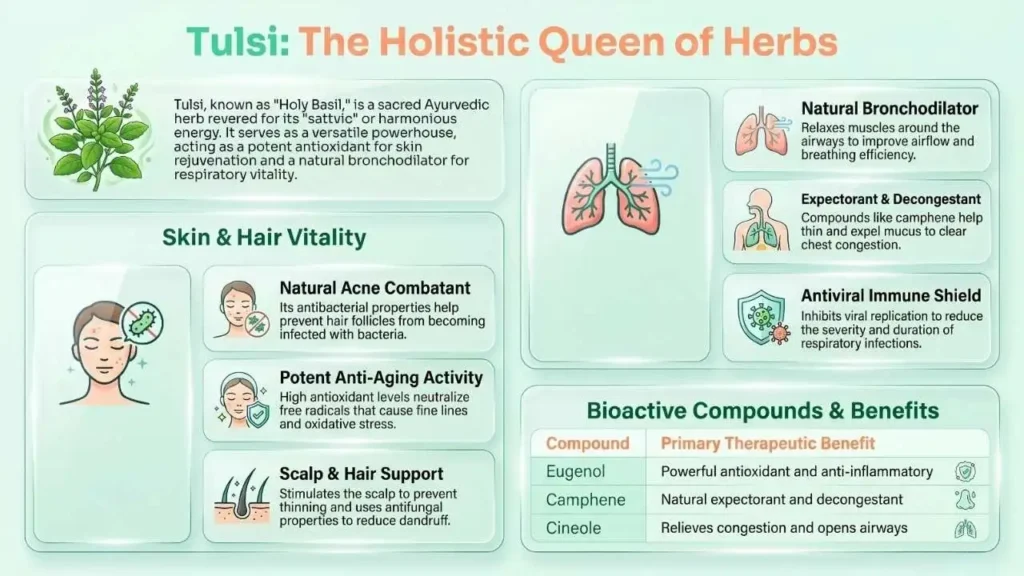
For anyone living in a city with high pollution levels or struggling with seasonal allergies, the tulsi leaves benefits for the respiratory system are invaluable. Holy Basil contains bioactive compounds like eugenol, camphene, and cineole that act as natural expectorants.
What this means for your daily routine is clearer breathing and less congestion. It helps to break up phlegm and soothe the irritation in your bronchial tubes, making it a reliable friend for those with asthma or chronic bronchitis.
- Clearing Congestion: Inhaling the steam from boiling Tulsi leaves can provide immediate relief for a stuffy nose.
- Soothing Sore Throats: Drinking a warm infusion with a bit of honey can coat the throat and reduce the duration of a cough.
- Pollution Protection: Its antioxidant properties help the lungs detoxify from the heavy metals and toxins found in urban air.
Let’s simplify this: instead of reaching for a chemical-laden cough syrup at the first sign of trouble, start with a natural Tulsi-ginger kadha. It handles the symptoms while also supporting the underlying health of your lungs.
Heart Health and Circulation
Heart disease remains a significant concern in India, but the tulsi leaves benefits extend to your cardiovascular system as well. Tulsi is rich in magnesium, which is a critical mineral for heart function because it helps the blood vessels relax and the muscles of the heart work more efficiently.
Scientific research has confirmed that Holy Basil can help lower blood pressure and improve the lipid profile, which are the two biggest risk factors for heart issues.
- Blood Pressure Regulation: It has a hypotensive effect, helping to bring high blood pressure into a healthier range.
- Plaque Prevention: The antioxidants in Tulsi inhibit the enzymes responsible for the buildup of plaque in the arteries.
- Cholesterol Balance: It specifically targets LDL (bad) cholesterol and triglycerides while supporting HDL (good) cholesterol.
What this means for your daily routine is a more resilient heart that can handle the pressures of a busy life. It is one of the most effective lifestyle choices you can make to support long-term heart health right from your kitchen.

Digestion and Metabolism: The Foundation of Wellness
In Ayurveda, digestion-or Agni-is considered the center of your health. If your digestion is sluggish, everything else feels off. The tulsi leaves benefits for the gut include stimulating the production of digestive enzymes and protecting the stomach lining from ulcers.
For the busy professional who often eats on the go, Tulsi can be a lifesaver. Drinking a cup of Tulsi tea after a meal helps reduce bloating and supports the body in turning food into steady energy rather than storing it as fat.
- Ulcer Protection: Studies show that Holy Basil oil can increase the protective mucus in the stomach and reduce acid secretion.
- Healthy Microbiome: It helps target harmful bacteria in the gut while promoting the growth of good bacteria.
- Liver Support: Tulsi has hepatoprotective properties, meaning it helps the liver detoxify and recover from the effects of a poor diet or environmental toxins.
I know it’s hard to always eat perfectly, but adding Tulsi to your day provides a buffer for your digestive system. It’s about working with your body to make life more sustainable and steady.
Radiant Skin and Oral Hygiene
We often spend a fortune on skincare products, but the secret to a glowing complexion might be sitting in that Tulsi pot. The tulsi leaves benefits for skin are primarily due to its blood-purifying properties. By helping the body flush out toxins, it clears up acne and blemishes from the inside out.
- Anti-Aging: The ursolic acid in Tulsi helps preserve collagen and improves skin elasticity.
- Oral Health: Holy Basil is a natural oral disinfectant. Using it as a mouthwash or chewing the leaves can kill 99% of bacteria in the mouth, preventing plaque and freshening breath.
- Hair Care: When applied to the scalp, Tulsi paste can help reduce dandruff and soothe an itchy scalp.
What this means for your daily routine is a simple, chemical-free way to look and feel your best. It is the ultimate beauty secret that has been used by Indian women for generations.
Practical Ways to Use Tulsi Leaves Every Day
I know you’re busy, and the last thing you need is a complicated health regimen. Let’s simplify the tulsi leaves benefits into a few easy habits you can start today.
The Morning Empty-Stomach Ritual
One of the oldest traditions in India is chewing three to five fresh Tulsi leaves first thing in the morning on an empty stomach. This activates your metabolism and provides an immediate boost to your immune system. Tip: If you’re worried about your teeth, you can swallow the leaves whole with a sip of water or infuse them into your tea instead.
The Classic Tulsi-Ginger Kadha
This is your go-to for when you feel a cold coming on or just need an energy lift.
| Ingredient | Amount | Benefit |
| Fresh Tulsi Leaves | 10-15 leaves | Immune and respiratory support. |
| Ginger | 1-inch piece (crushed) | Anti-inflammatory and digestive aid. |
| Black Pepper | 2-3 grains | Enhances absorption of other nutrients. |
| Water | 2 cups | Hydration and base for the decoction. |
How to make it:
- Boil the water and add the crushed ginger and Tulsi leaves.
- Let it simmer on medium flame for five to seven minutes until reduced by half.
- Turn off the heat and let it steep for another five minutes.
- Strain and add a teaspoon of honey or a squeeze of lemon if you like.
- Note: Never boil honey, as it loses its healthy enzymes. Add it only after the tea has cooled slightly.
Tulsi for the Busy Professional
If you really have no time to brew tea, consider Tulsi tablets or liquid drops. They offer the same tulsi leaves benefits in a convenient, on-the-go format that you can take at your desk.
Safety and What to Keep in Mind
While Tulsi is incredibly supportive, there are a few things to keep in mind to ensure you are using it responsibly.
- Pregnancy and Breastfeeding: Because Tulsi may trigger uterine contractions, it is best to avoid high doses or supplements if you are pregnant or trying to conceive.
- Surgery: Since it can slow blood clotting, stop taking Tulsi at least two weeks before any scheduled surgery.
- Blood Thinners: If you are on medications like Aspirin or Warfarin, consult your doctor first, as Tulsi has natural blood-thinning properties.
- Hypothyroidism: Holy Basil may slightly lower thyroxine (T4) levels, so keep an eye on your thyroid markers if you have an underactive thyroid.
What this means for your daily routine is being mindful of how your body feels. For most people, one to two cups of Tulsi tea daily is perfectly safe and highly beneficial.
Conclusion: A Small Step Toward a Steadier You
Taking care of your health doesn’t have to be another chore on your to-do list. The tulsi leaves benefits we have explored today show that nature has already provided a versatile, home-based tool to help us manage the metabolic and emotional stresses of modern life. Whether it’s stabilizing your blood sugar, clearing your mind after a long day, or simply protecting your family during the flu season, Holy Basil is a supportive friend you can rely on.
According to experts at Harvard Health and the National Institutes of Health (NIH), incorporating adaptogens like Tulsi is a scientifically sound way to build long-term resilience. I know it’s hard to find time for yourself, but you deserve this moment of calm.
Are you ready to take the first step toward a more balanced, healthier you? Let’s simplify your nutrition and find the solutions that work for your specific needs.
FAQs
1. Can I use Tulsi leaves for weight loss effectively?
Yes, tulsi leaves benefits for weight loss come from its ability to regulate cortisol levels and improve metabolism. High cortisol often leads to belly fat, and by balancing this stress hormone, Tulsi helps your body manage fat storage more naturally.
2. Is it safe to eat Tulsi leaves daily on an empty stomach?
For most people, chewing three to five leaves daily is a safe and healthy habit. However, because they contain a trace of mercury and are acidic, it is often better to swallow them whole or drink them as an infusion to protect your tooth enamel.
3. Does Tulsi help with diabetes specifically?
Absolutely. Clinical studies show that tulsi leaves benefits include reducing fasting blood glucose and improving insulin sensitivity. It is a fantastic natural adjunct for managing Type 2 Diabetes.
4. When is the best time to drink Tulsi tea?
Morning is ideal for boosting metabolism and immunity, while evening is perfect for stress relief and improving sleep quality. It is caffeine-free, so it won’t interfere with your rest.
5. How much Tulsi should I consume per day?
A general guideline is one to two cups of Tulsi tea or three to five fresh leaves daily. Consistency is more important than intensity-small daily amounts lead to the best long-term results.
Contact Us
We understand how overwhelming nutrition and weight loss information can feel. With so many opinions and confusing advice online, it’s easy to feel stuck or unsure about what to do next.
At Diet Dekho, you never have to figure it out alone. You can contact us anytime with any questions or concerns. Our expert dietitians are available 24/7 to guide, support, and help you stay on track. Whether your goal is weight loss or building healthier habits, we’re here to make the journey simpler and more sustainable for you.
Disclaimer
This blog is intended to help readers make healthier food choices. Your health should always be the top priority. Before starting any restrictive or special diet, especially if you have a medical condition or health concern, please consult a doctor or a qualified dietitian. Each body responds differently to food and lifestyle changes. Always choose what is safe and suitable for you.

Abhinav is the Founder of Diet Dekho, helping people manage weight and lifestyle health through simple, practical nutrition and personalized diet plans.