Rajesh, a busy software lead in Pune, often asks me why his cousin stays lean eating parathas while he gains weight just by looking at a ladoo. I know it’s hard to find time for the gym when you are juggling back-to-back Zoom calls, but the answer usually lies in your unique body type mesomorph, ectomorph, or endomorph traits. Understanding this blueprint is the first step toward managing your health without feeling like you are fighting your own biology every single day.
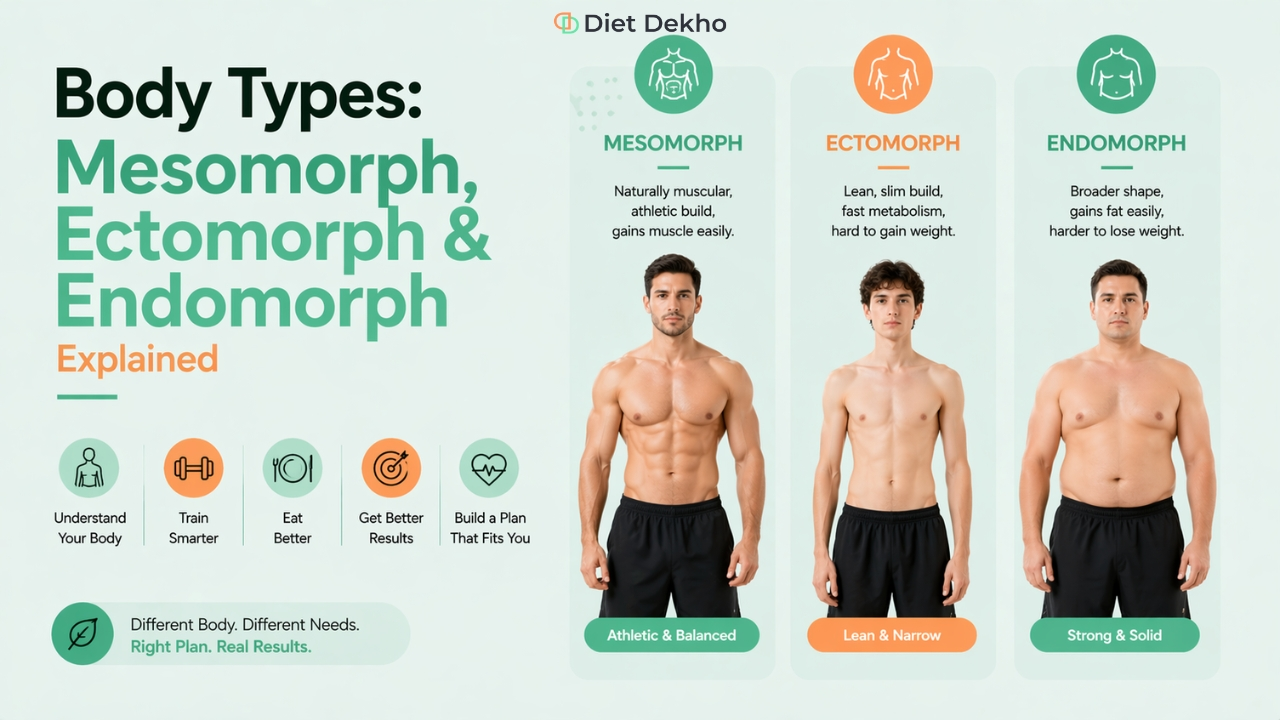
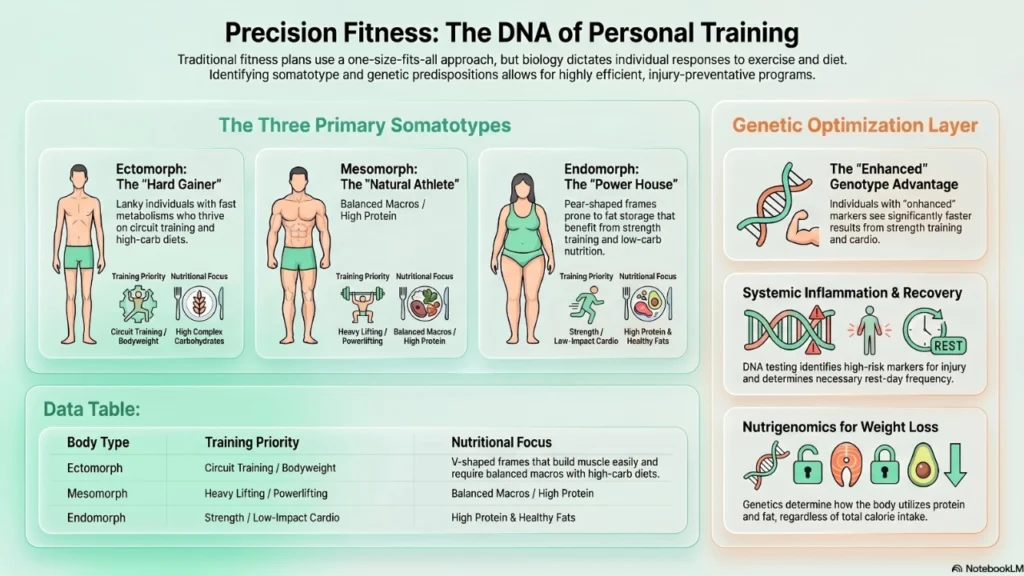
Human physiques fall into three categories called somatotypes: the body type mesomorph (athletic and muscular), the ectomorph (lean and long), and the endomorph (round and soft). Most people are a blend of these. Identifying your primary type helps you tailor your Indian diet and home movement to optimize metabolism, energy, and blood sugar levels.
Why Your Body Shape Matters for Your Health
Let’s simplify this: your body type isn’t just about how you look in a mirror. It actually dictates how you process carbohydrates, how easily you build muscle, and where you store fat. While the original theory started in the 1940s, modern science now uses these categories to help create personalized nutrition plans that actually work.
For many of my clients at DietDekho, knowing their type has been a lightbulb moment. It explains why certain one-size-fits-all diets failed them in the past. Consequently, once we align your meals with your natural frame, your energy levels often stabilize, and stubborn weight begins to move.

Deep Dive: The Athletic Body Type Mesomorph
If you have a body type mesomorph, you likely have a medium bone structure and a naturally athletic build. You probably find that you gain muscle fairly easily and can lose fat without extreme effort when you are consistent. Many athletes and fitness enthusiasts fall into this category because their bodies respond so quickly to training.
The Hidden Risks of the Mesomorph Frame
However, there is a catch. Because you might stay fit-looking with less effort, you might become complacent about your internal health. I see many mesomorph professionals in India who look athletic but carry high levels of hidden visceral fat around their organs. This happens when a sedentary lifestyle meets a diet high in processed office snacks.
What this means for your daily routine is that you cannot rely on your genetics alone. Even a body type mesomorph needs to watch for insulin resistance, especially as they cross the age of 30 and metabolism naturally begins to slow down.
Optimal Nutrition for the Mesomorph
To keep your metabolism firing, I recommend a balanced plate. Specifically, aim for a split of 40% complex carbohydrates, 30% protein, and 30% healthy fats. For an Indian kitchen, this means pairing a Jowar Bhakri with a solid portion of Moong Dal or grilled Paneer. Because your body is efficient at nutrient partitioning, these balanced meals will fuel your muscles rather than your fat stores.

The Ectomorph: More Than Just Being ‘Thin’
Next, we have the ectomorph. You likely have a light build with long limbs and small joints. People often call you a hardgainer because your fast metabolism acts like a high-heat furnace, burning through calories rapidly. While being naturally thin sounds like a blessing, it comes with its own set of metabolic hurdles.
Why ‘Skinny-Fat’ is a Major Concern for Indians
I want to be very clear here because this is vital for the Indian community. You can be thin on the outside but fat on the inside. Research from the National Institutes of Health (NIH) shows that South Asians often develop diabetes at much lower BMI levels than other populations. This skinny-fat phenotype occurs when an ectomorph has very low muscle mass and high visceral fat around the liver.
As Dr. Venkat Narayan from the Emory Global Diabetes Research Center notes, We don’t secrete enough insulin, so we don’t have the metabolic capacity to handle high glucose levels easily. If you are a thin professional who sits for 10 hours a day, you are at risk. Therefore, your goal shouldn’t be to lose weight, but to build lean muscle to act as a sink for blood sugar.
Fueling the Ectomorph Metabolism
If you are an ectomorph, you need more calories and a higher percentage of carbohydrates about 55% of your intake. I suggest adding calorie-dense Indian superfoods like almonds, walnuts, and ghee to your meals. Instead of three big meals, try five smaller ones to ensure your body has a constant supply of energy to prevent muscle breakdown.

The Endomorph: Mastering the ‘Storage’ Phenotype
Finally, we look at the endomorph. You likely have a soft, round build and a slower metabolism. Your body is genetically good at storing energy, which was a survival advantage for our ancestors during famines but is challenging in a world of 24/7 food delivery. You might feel that you gain weight just by smelling a samosa.
Managing Carbohydrate Sensitivity
Endomorphs are often more sensitive to insulin. Consequently, when you eat high-carb foods like white rice or sugary tea, your blood sugar spikes, and your body quickly stores that energy as fat. For my homemaker clients, I often suggest swapping white rice for Daliya or Millet Khichdi to provide a slower, steadier release of energy.
The Endomorph Strategy for Fat Loss
For an endomorph, a lower-carb, higher-protein approach works best. Specifically, aim for 35% protein, 40% fat, and only 25% carbohydrates. Focus on high-fiber vegetables like Palak (spinach), Lauki (bottle gourd), and Karela (bitter gourd) to keep you full without the insulin spike. Moreover, don’t forget that you are naturally strong! You actually build muscle faster than ectomorphs once you get moving.
Tailoring Your Indian Diet to Your Type
I know it is hard to follow complicated Western diet charts. Let’s simplify this by using what is already in your kitchen. Whether you are a body type mesomorph or an endomorph, the quality of your protein matters most.
Indian Superfoods for Muscle and Metabolism
- Paneer & Greek Yogurt: These provide slow-digesting casein protein, which is perfect for overnight muscle repair.
- Lentils (Dal): A staple that provides fiber and complex carbs. Always combine your dal with a whole grain like brown rice to get a complete protein profile.
- Soya Chunks: For my vegetarian friends, these are a protein powerhouse that helps maintain lean muscle during fat loss.
- Spices: Turmeric and ginger help reduce the inflammation often linked to visceral fat.
Smart Swaps for Busy Professionals
If you are a busy professional in a city like Pune or Mumbai, your food environment is often the enemy. Instead of ordering a vada pav during a 4 PM slump, keep roasted Chana or Makhana in your desk drawer. These provide the crunch you crave without the trans fats that drive diabetes risk.
Moving at Home: No Gym? No Problem.
You don’t need a fancy gym membership to fix your metabolism. In fact, research from Harvard Health emphasizes that precision nutrition works best when paired with consistent, everyday movement. For the Indian non-gym audience, I recommend micro-movements.
The 15-Minute Home Routine
Try this simple circuit in your living room. It takes less time than making a cup of chai:
- Squats (15 reps): Targets your largest muscle groups to burn the most glucose.
- Wall Push-ups (10 reps): Excellent for upper body strength without needing equipment.
- Plank (30 seconds): Builds core stability and protects your back from long hours of sitting.
- Surya Namaskar (5 rounds): A full-body flow that improves flexibility and heart health.
What this means for your daily routine is that consistency beats intensity. Even 15 minutes of movement daily can significantly improve your insulin sensitivity and reduce that dangerous belly fat.
Summary: Your Path to a Healthier Build
I’ve shared a lot of science today, but here is the heart of it: your body type is a guide, not a life sentence. Whether you are a body type mesomorph, a linear ectomorph, or a sturdy endomorph, you have the power to change your health outcomes through small, consistent choices.
- Mesomorphs: Stay disciplined with your diet to avoid hidden visceral fat.
- Ectomorphs: Focus on bulking up with protein and strength moves to fight the skinny-fat risk.
- Endomorphs: Limit refined carbs and embrace your natural strength.
I know it’s hard to make these changes alone. If you’re looking for immediate, simple, and trustworthy dietary solutions tailored to your specific situation, let’s start today.
Take the first step toward a healthier you by filling out our consultation form here

Frequently Asked Questions
1. How can I identify my primary body type?
You can usually tell by your bone structure and how your body responds to food. A body type mesomorph has a medium frame and broad shoulders. Ectomorphs are thin with small joints, and endomorphs are wider with a rounder shape. Most people are a mix.
2. Can an ectomorph have diabetes?
Yes. In India, the skinny-fat phenotype is common. This means a thin person has high internal fat and low muscle, which significantly raises the risk of Type 2 diabetes despite a normal weight.
3. What is the best Indian breakfast for a mesomorph?
A body type mesomorph does well with a balance of protein and complex carbs. Try a Moong Dal Chilla with vegetables or eggs with whole-wheat toast. This provides steady energy for your busy morning.
4. Is it possible to change your body type over time?
You cannot change your bone structure (genetics), but you can change your body composition. By building muscle and losing fat, an endomorph or ectomorph can achieve a more mesomorphic or athletic appearance and metabolic profile.
5. How much water should I drink on a high-protein diet?
If you are increasing protein to build muscle, you must stay hydrated. Aim for at least 9-13 cups (about 3 liters) of water daily to help your kidneys process the protein and keep your energy high.

Contact Us
We understand how overwhelming nutrition and weight loss information can feel. With so many opinions and confusing advice online, it’s easy to feel stuck or unsure about what to do next.
At Diet Dekho, you never have to figure it out alone. You can contact us anytime with any questions or concerns. Our expert dietitians are available 24/7 to guide, support, and help you stay on track. Whether your goal is weight loss or building healthier habits, we’re here to make the journey simpler and more sustainable for you.
Disclaimer
This blog is intended to help readers make healthier food choices. Your health should always be the top priority. Before starting any restrictive or special diet, especially if you have a medical condition or health concern, please consult a doctor or a qualified dietitian. Each body responds differently to food and lifestyle changes. Always choose what is safe and suitable for you.

Abhinav is the Founder of Diet Dekho, helping people manage weight and lifestyle health through simple, practical nutrition and personalized diet plans.