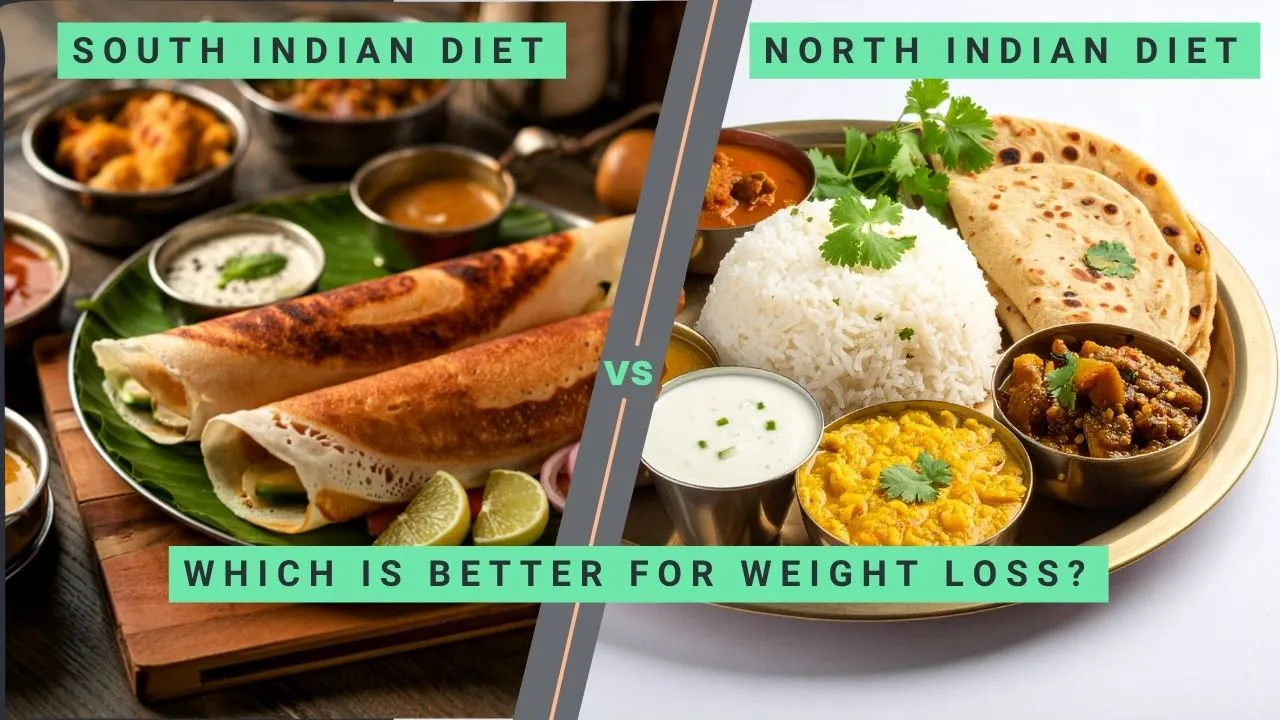
Imagine standing in front of your kitchen counter at 7:00 AM, feeling that familiar tug of exhaustion. You have a meeting in an hour, the kids need their tiffins, and all you want is a solution that doesn’t involve a complicated gym routine or starving yourself. You might wonder if your traditional habits are holding you back, leading to a frustrating north south indian diet comparison in your head every time you choose between a paratha and an idli.
The north south indian diet comparison shows that neither is perfect, but both can work if you focus on portion sizes and smart ingredient swaps. South Indian meals are often lighter and steamed, while North Indian diets offer more protein through lentils and wheat, yet the winner depends on how much refined flour or white rice you cut out.
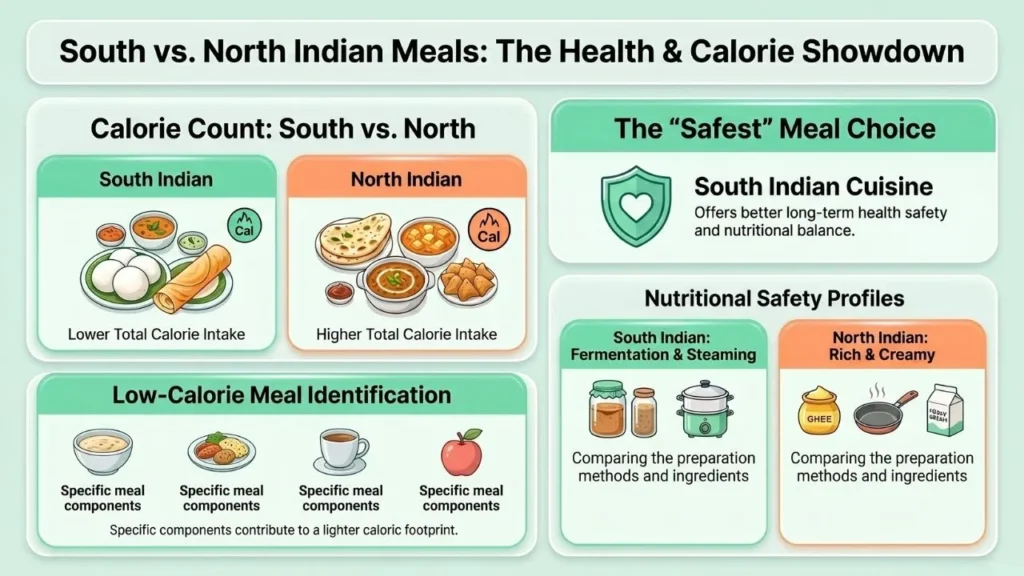
The Modern Indian Health Crisis and the Need for Regional Clarity
I see so many of my clients struggling with the same cycle of weight gain and fatigue. It isn’t just about willpower; it’s about a rapidly changing food environment that has made our traditional staples more processed and calorie-dense than ever before. What this means for your daily routine is that the comfort food we grew up with might now be the primary driver of the rising rates of diabetes and obesity we see across the country.
The statistics are quite sobering when we look at the national landscape. Recent findings from the Indian Council of Medical Research (ICMR) suggest that approximately 62% of our daily calories come from carbohydrates, mostly from low-quality sources like polished white rice and refined wheat. For a busy professional or a homemaker, this often translates to hidden hunger-where you feel full but your body is actually starving for real nutrients.
Obesity isn’t just a number on the scale anymore; it’s a significant public health burden. By 2060, the economic cost of higher weight and obesity in India is projected to reach a staggering ₹1544 trillion. This isn’t just a distant economic figure; it represents years of life lost to chronic conditions like heart disease and metabolic syndrome. I know it’s hard to find time to research all of this, so let’s break down how your regional choices impact these risks.

| Health Metric in India (2021-2022) | Prevalence Statistic | Implications for Management |
| Generalized Obesity (BMI ≥ 25 kg/m²) | 254 Million Individuals | High risk for cardiovascular stress |
| Abdominal Obesity (Waist ≥ 90cm M / 80cm F) | 351 Million Individuals | Leading cause of insulin resistance |
| Type 2 Diabetes Prevalence | 11.4% of Population | Requires strict carbohydrate quality control |
| Prediabetes Prevalence | 15.3% of Population | Reversible through regional diet tweaks |
Decoding the North Indian Plate: Wheat, Dairy, and Density
If you grew up in a North Indian household, your life likely revolves around the golden wheat fields and the rich dairy traditions of the plains. I often tell my friends that the North Indian diet is like a warm hug-it’s heavy, comforting, and deeply satisfying. However, when we look at it through the lens of a north south indian diet comparison, we see that this heaviness can be a double-edged sword for weight loss.
Wheat is the undisputed king of the North. Traditionally, our grandmothers used stone-ground whole wheat, which was packed with fiber and minerals. Today, most professionals rely on commercially milled atta or, worse, refined maida used in restaurant naans and roomali rotis. When the fiber is stripped away, the wheat kernel’s endosperm remains-essentially just starch that spikes your blood sugar as quickly as a soda would.
The Paratha Trap and Saturated Fat
Let’s talk about the breakfast table. A typical paratha stuffed with potatoes or paneer is a staple for busy professionals because it’s fast and keeps you full. But here is the reality: a single paratha cooked with generous amounts of ghee or butter can contain upwards of 250-300 calories. If you’re eating two or three of these, you’ve consumed half your day’s calorie requirement before you’ve even left for work.
What this means for your daily routine is that the fats we use in the North-butter, desi ghee, and vanaspati-can contribute to high levels of saturated and trans fats. The ICMR-NIN 2024 guidelines warn that we should restrict added fats and oils significantly, yet in many North Indian homes, fats are used as a primary flavor enhancer.
The Protein Advantage of the North
On the positive side, North Indian cuisine is incredibly rich in plant-based proteins. Dals like Rajma (kidney beans), Chole (chickpeas), and Urad (black gram) are nutritional powerhouses. When prepared correctly-meaning without a thick layer of oil on top-these legumes provide the satiety you need to avoid mid-afternoon snacking.
| North Indian Staple | Calories (Approx.) | Protein Content | Weight Loss Modification |
| Butter Chicken (1 bowl) | 400 – 500 kcal | 25g | Switch to Tandoori Chicken |
| Dal Makhani (1 bowl) | 350 – 450 kcal | 12g | Switch to Yellow Moong Dal |
| Stuffed Paratha (1 pc) | 250 – 300 kcal | 6g | Use minimal oil; add more veggies |
| Paneer Tikka (5 pcs) | 200 – 250 kcal | 15g | Excellent high-protein snack |
I know it’s hard to give up the rich gravies, but simply switching from cream-based Makhani styles to tomato and onion-based Bhurji or Tarka styles can save you 200 calories per meal.
Exploring the South Indian Soul: Rice, Millets, and Lightness
When we shift our north south indian diet comparison to the South, the landscape changes to one of coconut palms, fermented batters, and a deep-rooted rice culture. Many people assume South Indian food is healthier because it involves a lot of steaming. While it’s true that a steamed Idli is generally lower in fat than a fried Poori, the sheer volume of rice consumed in the South presents its own set of challenges.
The South Indian diet is fundamentally high in carbohydrates. From morning Dosa to afternoon curd rice and evening Uttapam, white rice is the constant companion. As an expert, I have to be honest: white rice is a refined cereal. Polishing rice removes the husk and the bran, leaving behind a grain that is easy to digest but very high in its glycemic index.
The Magic of Fermentation and Millets
However, South India has a secret weapon that the North is only just rediscovering: millets. Millets like Ragi (finger millet), Jowar (sorghum), and Bajra (pearl millet) are much higher in fiber and micronutrients than polished rice. What this means for your daily routine is that a Ragi Mudde or a Millet Dosa will keep you full for four hours, whereas white rice might leave you reaching for a snack in two.
Fermentation is another biological advantage. The process of fermenting rice and lentil batter for Idli and Dosa increases the bioavailability of B vitamins and creates probiotics that are excellent for gut health. A healthy gut is a cornerstone of weight loss, as it helps regulate inflammation and metabolic hormones.
Coconut: Friend or Foe?
We can’t talk about South Indian food without mentioning coconut. In regions like Kerala and coastal Karnataka, coconut oil and grated coconut are in almost every dish. While coconut provides medium-chain triglycerides (MCTs) that can boost metabolism, it is extremely calorie-dense.
| South Indian Staple | Calories (Approx.) | Fiber Content | Weight Loss Modification |
| Steamed Idli (2 pcs) | 80 – 100 kcal | Low | Use millet batter for more fiber |
| Plain Dosa (1 pc) | 120 – 150 kcal | Low | Add a sprout stuffing |
| Vegetable Sambar (1 bowl) | 100 – 120 kcal | High | Add extra drumsticks and pumpkin |
| Coconut Chutney (2 tbsp) | 80 – 100 kcal | Moderate | Swap for tomato or mint chutney |
If you’re a busy homemaker, I suggest using coconut as a garnish rather than a primary ingredient. This simple change allows you to keep the flavor you love while cutting down on the total fat content of the meal.

The Science of Satiety: Fiber and the Harvard Perspective
To truly understand which diet is better, we need to look at how these foods interact with our biology. Research from Harvard Health emphasizes that fiber is the secret ingredient for sustainable weight loss. Adults should ideally aim for 14 grams of fiber for every 1,000 calories consumed. Unfortunately, most Indians eat less than half of that amount because of our reliance on refined grains.
Fiber works in two main ways. Soluble fiber, found in oats and legumes common in North Indian dals, turns into a gel in your stomach, slowing down digestion and making you feel full longer. Insoluble fiber, found in the skins of vegetables and whole grains like millets, adds bulk to your stool and prevents that bloated feeling that many professionals complain about after a long day at the desk.
According to a study published by Harvard University, replacing white rice with whole grains like brown rice or bulgur can lead to significant long-term weight management. What this means for your daily routine is that the quality of your grain is more important than the region it comes from. Whether it’s a whole-wheat roti or a brown-rice idli, the fiber content is what will determine your success.
| Grain Quality Comparison | Fiber per 100g | Glycemic Index | Satiety Rating |
| Refined White Flour (Maida) | < 1g | High | Poor |
| Polished White Rice | < 1g | High | Poor |
| Whole Wheat Atta | 10 – 12g | Medium | Good |
| Ragi (Finger Millet) | 15 – 18g | Low | Excellent |
Diabetes and the Indian Phenotype: A Regional Perspective
As a dietitian, I often talk to clients about the Asian Indian Phenotype. This is a fancy way of saying that even if we aren’t heavy in the traditional sense, we tend to carry more fat around our bellies and less muscle on our arms and legs. This visceral fat is metabolically active and directly increases our risk of Type 2 Diabetes.
The ICMR-INDIAB study recently revealed that the prevalence of diabetes is rising faster in urban areas, regardless of whether you are in the North or the South. However, the primary culprits differ. In the North, the heavy consumption of saturated fats and sugar-laden sweets like Gulab Jamun and Halwa drives insulin resistance. In the South, the sheer volume of polished rice creates constant blood sugar spikes.
Managing Your HbA1c with Regional Food
If you’re dealing with diabetes, your HbA1c level (which measures your average blood sugar over three months) is your most important metric. For a healthy individual, this should be below 5.6%. To keep this number in check, you must focus on what I call Carb Partitioning.
Instead of a plate full of rice or three rotis, I want you to visualize your plate differently. Half of it should be non-starchy vegetables like Lauki (bottle gourd), Tori (sponge gourd), or spinach. One-quarter should be protein (like dal, paneer, or lean meat), and only the final quarter should be your regional grain.
| Diabetic Status | HbA1c Range | Action Plan |
| Non-Diabetic | ≤ 5.6% | Maintain with a balanced regional diet |
| Prediabetic | 5.7% – 6.4% | Focus on high-fiber millet swaps immediately |
| Diabetic | ≥ 6.5% | Strict portion control; consult your doctor |
I know it’s hard to find time for tests, but monitoring these levels is the only way to know if your north south indian diet comparison is actually working for your unique biology.

Practical Solutions for Busy Professionals and Non-Gym Goers
I hear this every day: I don’t have an hour for the gym. Guess what? You don’t need it. While exercise is great for your heart, weight loss is primarily driven by what happens in your kitchen and how much you move throughout the day in non-structured ways. This is called NEAT (Non-Exercise Activity Thermogenesis).
The Power of NEAT and Post-Meal Walking
For a busy professional, NEAT means taking a call while standing, choosing the stairs over the elevator, or walking to a colleague’s desk instead of sending an email. These small movements can burn an extra 300 to 500 calories a day-equivalent to a 45-minute jog!
One of my favorite hacks for my clients is the 15-minute post-meal walk. Research shows that walking for just 15 to 20 minutes after your largest meal can reduce your post-meal blood sugar spike by up to 30%. If you’re a homemaker, this could mean pacing while you’re on the phone or doing a few rounds of the living room after lunch. It’s simple, it’s free, and it works.
Home-Based Movements for the Homemaker
If you’re at home most of the day, you have a gym right under your nose.
- Kitchen Squats: Do 10 squats while waiting for the pressure cooker whistle.
- Counter Push-ups: Use the kitchen counter for incline push-ups while the tea is brewing.
- Stair Climbing: Make it a point to go up and down the stairs five times in a row once a day.
These exercise snacks prevent your metabolism from slowing down and help you maintain muscle mass as you lose fat.

The Protein Gap: Why Both Diets Often Fail
The most startling thing I found in the recent NIH research is that the vast majority of Indians-rich or poor-are protein deficient. Most of us get only 6-8% of our calories from protein, when we should be aiming for closer to 20-30%.
Protein is non-negotiable for weight loss. It is the most satiating macronutrient; it tells your brain you are full and prevents the dreaded sugar crash that leads to overeating later in the day. Whether you follow a North or South Indian diet, if you don’t close this protein gap, your weight loss will be much harder than it needs to be.
| Protein Source | Protein per 100g | Best For | Regional Use |
| Soya Chunks | 52g | Muscle maintenance | North/Modern |
| Paneer (Low Fat) | 18 – 20g | Satiety | North |
| Moong Dal | 24g (raw) | Easy digestion | Both |
| Eggs | 13g | Breakfast | Both |
| Fish (Basa/Mackerel) | 18 – 22g | Omega-3s | South/Coastal |
What this means for your daily routine is that every single meal must have a dedicated protein source. A bowl of rice and sambar is not enough; you need to add a cup of thick dal, a piece of fish, or a serving of paneer to make it a fat-burning meal.

A Day in the Life: Regional Meal Plans for Weight Loss
Let’s simplify this. I’ve put together two sample plans that fit into a 1200-1400 calorie window, which is typically the sweet spot for weight loss for most Indian adults.
The North Indian Weight Loss Day
- Early Morning: 1 glass of warm water with lemon (to wake up the digestive system).
- Breakfast: 1 Moong Dal Chilla stuffed with grated vegetables and a small bowl of low-fat curd.
- Mid-Morning: 1 Guava or a small handful of roasted makhana (fox nuts).
- Lunch: 1 Multigrain Roti + 1 bowl of seasonal vegetable curry (like Bhindi or Tori) + 1 bowl of yellow dal + large salad.
- Evening: 1 cup of Ginger Tea (without sugar) + 1 boiled egg or a handful of roasted chana.
- Dinner: 1 bowl of vegetable Daliya (cracked wheat) or 1 roti with a large bowl of Lauki (bottle gourd) sabzi.
The South Indian Weight Loss Day
- Early Morning: 1 glass of Fenugreek (methi) water (excellent for blood sugar control).
- Breakfast: 2 Millet Idlis with a large bowl of vegetable-rich sambar (skip the coconut chutney).
- Mid-Morning: 1 serving of Papaya or 1 glass of fresh coconut water.
- Lunch: 1/2 cup Brown Rice or Foxtail Millet + 1 bowl of Rasam + 1 cup of Poriyal (stir-fry veggies) + 1 piece of grilled fish or a cup of sundal.
- Evening: 1 glass of thin buttermilk with curry leaves and ginger.
- Dinner: 1 Adai (protein-rich lentil dosa) with a small portion of vegetable stew.
Addressing Common Myths in the North South Indian Diet Comparison
I hear a lot of misinformation as a dietitian. Let’s clear up a few things that might be confusing you.
Myth 1: Ghee is bad for weight loss. Ghee is actually a source of healthy fats and butyric acid, which supports gut health. The problem is the quantity. Half a teaspoon on your roti is fine; frying your paratha in it is not.
Myth 2: Bananas make you fat. Bananas are a great source of potassium and quick energy. However, if you’re trying to lose weight, stick to one small banana a day and avoid the very ripe, sugary ones. They are far better than a packet of biscuits.
Myth 3: Gluten-free is necessary for weight loss. Unless you have celiac disease or a gluten sensitivity, you don’t need to quit wheat. The key is switching from refined maida products to whole-grain atta. Whole wheat is a great source of fiber and B vitamins.
Myth 4: Fruit juices are a healthy snack. Juices, even fresh ones, strip away the fiber and leave you with concentrated sugar. Always prefer the whole fruit. It takes longer to eat, makes you feel fuller, and keeps your insulin levels stable.

Expert Tips for Sustaining Your Weight Loss Journey
Weight loss is a journey, not a sprint. I want you to be patient with yourself. Small, consistent changes lead to lasting results. If you have a cheat meal on Sunday, don’t beat yourself up. Just get back to your routine on Monday morning.
The 80/20 Rule
I encourage my clients to follow the 80/20 rule: eat clean, home-cooked, regional meals 80% of the time, and allow yourself to indulge in your favorite treats (like a samosa or a small piece of mithai) for the other 20%. This prevents the feeling of deprivation that leads to indulge eating.
Mindful Eating
What this means for your daily routine is putting away the phone while you eat. Chew your food slowly. It takes about 20 minutes for your stomach to tell your brain it’s full. When we eat while watching TV or scrolling, we tend to consume 20-30% more calories without even realizing it.
Hydration and Sleep
Never underestimate the power of a good night’s sleep. Poor sleep increases ghrelin (the hunger hormone) and decreases leptin (the fullness hormone), leading to intense sugar cravings the next day. Aim for 7-8 hours of quality rest and drink at least 8-10 glasses of water to keep your metabolism humming.

Frequently Asked Questions
Which South Indian food is best for weight loss?
The best South Indian foods for weight loss are steamed items like Idli, fiber-rich millets like Ragi or Jowar, and vegetable-heavy dishes like Sambar and Poriyal. These provide nutrients without excessive calories or fats, especially when compared to fried vadas.
Is North Indian food too oily for weight loss?
Traditional North Indian food can be high in oil and ghee, but it doesn’t have to be. By choosing tandoori or roasted options over deep-fried ones and using yellow dals instead of creamy ones, you can make a North Indian diet very effective for shedding pounds.
How do I manage a north south indian diet comparison for my diabetes?
Focus on the glycemic index. Swap white rice and refined wheat for whole grains and millets. Ensure half your plate is filled with fiber-rich vegetables to slow down sugar absorption. Monitoring your HbA1c is also crucial for long-term health.
Can a busy professional lose weight without a gym?
Absolutely. Focus on increasing your daily movement through NEAT (walking more, standing during calls) and prioritize protein-rich, home-cooked meals. A 15-minute walk after lunch and dinner can be a game-changer for your metabolism.
Is curd rice good for weight loss?
Curd rice is great for gut health, but it can be high in simple carbs. To make it weight-loss friendly, use brown rice or millets instead of white rice and add grated carrots or cucumbers for extra fiber.

Conclusion: Your Path to a Healthier You
Choosing between a North Indian and a South Indian diet for weight loss isn’t about picking a winner. It’s about looking at your plate with a new perspective and making those small, smart swaps that fit your busy life. Whether you’re a professional in a high-pressure job or a homemaker managing a busy household, your health is your most valuable asset.
The north south indian diet comparison teaches us that flavor and health can go hand in hand. You don’t have to give up your culture to find your confidence. Start today by adding one more serving of vegetables to your lunch or taking that 15-minute walk after dinner. You’ve got this!
I know taking the first step is the hardest part. If you’re feeling overwhelmed and want a plan tailored specifically to your body, your tastes, and your schedule, we’re here to help.
Ready to transform your health with a plan that actually works?
Contact Us
We understand how overwhelming nutrition and weight loss information can feel. With so many opinions and confusing advice online, it’s easy to feel stuck or unsure about what to do next.
At Diet Dekho, you never have to figure it out alone. You can contact us anytime with any questions or concerns. Our expert dietitians are available 24/7 to guide, support, and help you stay on track. Whether your goal is weight loss or building healthier habits, we’re here to make the journey simpler and more sustainable for you.
Disclaimer
This blog is intended to help readers make healthier food choices. Your health should always be the top priority. Before starting any restrictive or special diet, especially if you have a medical condition or health concern, please consult a doctor or a qualified dietitian. Each body responds differently to food and lifestyle changes. Always choose what is safe and suitable for you.

Abhinav is the Founder of Diet Dekho, helping people manage weight and lifestyle health through simple, practical nutrition and personalized diet plans.