
🩺 Medically Reviewed & Nutrition Verified by Dt. Mahi Patel (B.Sc. Clinical Nutrition & Dietetics) | Editorial Lead: Diet Dekho Health Team | Aligned with ICMR-NIN Clinical Dietary Guidelines.
Imagine the heavy exhaustion that settles in after a long day at the office or the quiet worry that follows a high reading on your glucose monitor. I know it is hard to navigate these changes while juggling a career or a household, but finding a reliable chart of diabetic diet is the first step toward reclaiming your energy. Many of my clients at DietDekho feel the same way-overwhelmed by data but hungry for simple, effective solutions.
A chart of diabetic diet focuses on balancing macronutrients-specifically 50–55% carbohydrates, 15–20% protein, and 20–30% healthy fats-while prioritizing low-glycemic index foods. This approach replaces refined grains with whole millets, legumes, and high-fiber vegetables to prevent glucose spikes. By using the plate method and controlling portions, individuals can manage blood sugar effectively and reduce long-term health risks.
The Evolving Landscape of Diabetes in India
The prevalence of diabetes across the Indian subcontinent has transformed into a critical public health challenge over the last three decades. Recent data from the ICMR-INDIAB study paints a sobering picture of our metabolic health, revealing that nearly 101 million people in India are currently living with diabetes, while another 136 million are in the prediabetic stage. This suggests that nearly one in four individuals is either already managing the condition or is at high risk of developing it.
Regional Health Variations
What this means for your daily routine is that metabolic health is no longer a distant concern. The burden of this epidemic is not distributed evenly across the country, showing significant regional variations. Southern and western states, including Tamil Nadu, Goa, and Kerala, exhibit the highest prevalence rates. Consequently, residents in these areas often require a more disciplined chart of diabetic diet to manage the historical shifts in dietary patterns and urbanization.
The Shift to Processed Foods
However, rural areas are catching up quickly, with rates much higher than previously reported. This shift is largely driven by a nutrition transition where traditional, fiber-rich diets are being replaced by high-calorie, nutrient-poor options. Therefore, regardless of where you live, understanding the composition of your starch is vital. Unhealthy diets contribute substantially to this burden, particularly the heavy reliance on low-quality carbohydrates.
| Health Parameter | Current National Average | Recommended Target | Risk Impact |
| Diabetes Prevalence | 11.4% | < 5% | High morbidity risk |
| Prediabetes Rate | 15.3% | < 5% | Future diabetes surge |
| Carbohydrate Energy % | 62.3% | 50% – 55% | Insulin resistance |
| Protein Energy % | 12% | 15% – 20% | Muscle wasting |
| Hypertension Comorbidity | 35.5% | < 20% | Cardiovascular strain |

Understanding the Glycemic Index and Its Impact
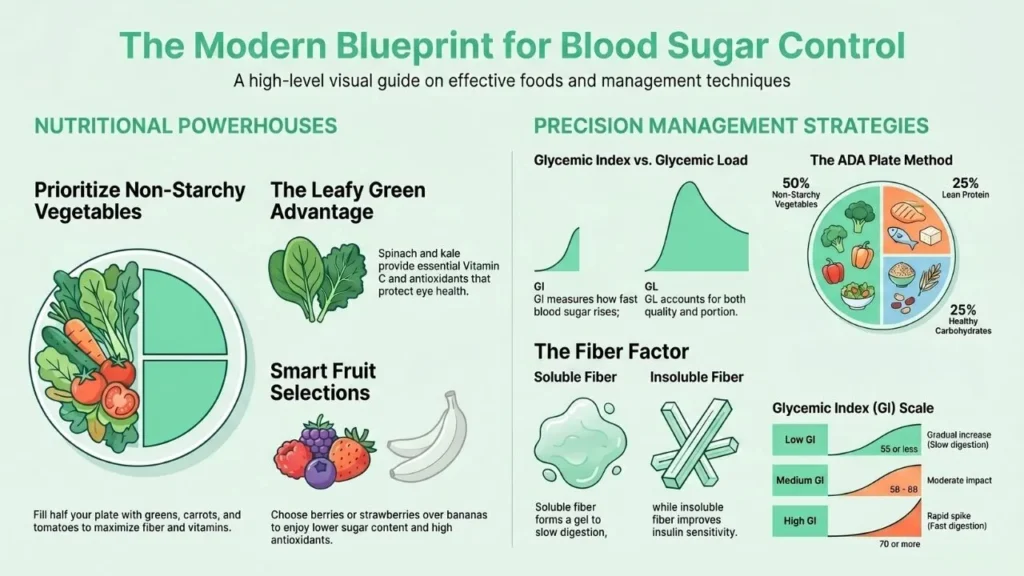
When we talk about managing blood sugar, the most powerful tool in your kit is the Glycemic Index or GI. This system ranks carbohydrate-containing foods by how quickly they boost blood glucose levels after consumption. Specifically, foods high on the scale cause a rapid roller-coaster spike in insulin and sugar. Harvard Health explains that low GI foods lead to a slower rise, providing steady energy that supports your pancreas.
Smart Swaps for Daily Meals
Most staples in a traditional Indian kitchen, such as white rice and maida-based parathas, sit high on the GI scale. However, you do not have to give up your favorite comfort foods forever. Instead, let’s simplify this by focusing on smart swaps. By choosing minimally processed grains, you can align your kitchen with a healthy chart of diabetic diet without feeling deprived.
| High GI Food (Avoid/Limit) | Low GI Alternative (Choose) | Benefit of the Swap |
| White Rice | Brown Rice / Basmati Rice | Higher fiber content |
| White Bread | Whole-Grain / Stone-ground Bread | Slower sugar release |
| Cornflakes | Bran Flakes / Steel-cut Oats | Sustained satiety |
| Baked Potato | Sweet Potato / Yam | Better glycemic response |
| Fruit Juice | Whole Fruit (Apple/Pear) | Essential fiber intake |
The Role of Cooking Methods
One interesting thing about the GI is that it is not a fixed number. For example, adding something acidic like lemon juice, or a healthy fat like nuts, can slow down the conversion of starch to sugar. Consequently, a traditional meal of dal and roti is often better than eating a plain roti alone. Moreover, using the GI is especially important for the non-gym audience who may not have high physical activity levels to help burn off excess glucose.

The ICMR 2024 Dietary Framework for Indians
The Indian Council of Medical Research has recently updated its dietary guidelines to specifically target the rising NCD burden. These 17 guidelines are designed to help you build a balanced plate that prevents sharp spikes. One of the most significant changes is the limit on cereals and millets. Specifically, the ICMR suggests that these should contribute no more than 45% of your total calories.
Increasing Protein and Pulse Intake
For many of us who grew up eating multiple rotis at every meal, this is a major shift. To make up for the reduction in grains, the guidelines emphasize increasing the intake of pulses and legumes to about 15% of your daily energy. This adjustment is crucial because protein helps maintain muscle mass. Furthermore, it provides better satiety, which prevents mid-day cravings.
| ICMR Guideline Theme | Practical Recommendation | Why It Matters |
| Diversity | Eat a variety of food groups | Ensures micronutrient balance |
| Grains Limit | Cereals < 45% of calories | Prevents excessive starch load |
| Protein Focus | Include pulses and legumes daily | Supports muscle and satiety |
| Fat Quality | Limit saturated and trans fats | Protects heart health |
| Sugar/Salt | Limit sugar < 10%; Salt < 5g | Manages BP and glucose |
Adapting Traditional Recipes
I know it’s hard to change lifelong habits, but the guidelines also offer practical tips for adapting recipes. Instead of deep-frying your snacks, they recommend steaming or sautéing with minimal oil. For homemakers, this might mean switching from pakoras to a healthy moong dal chilla. Additionally, reading food labels is vital. Many packaged foods marketed as healthy are actually high in hidden sugars.

The Plate Method: A Visual Guide for Busy Lives
For a busy professional or a homemaker managing a large family, counting calories is simply not realistic. That is where the Plate Method comes in. This is a visual strategy recommended by the National Institutes of Health (NIH) to help you control portions without any special tools. It simplifies your chart of diabetic diet by focusing on proportions.
Filling Your Plate
To start, take a standard 9-inch dinner plate. Mentally divide the plate into sections. Fill exactly half of the plate with non-starchy vegetables. Because these are rich in fiber and vitamins, they act as your free foods. Think of leafy greens, beans, or cabbage. Meanwhile, the remaining half of the plate is split into two quarters for protein and complex carbs.
| Plate Section | Content | Examples |
| 1/2 Plate | Non-Starchy Vegetables | Palak, Bhindi, Lauki, Salad |
| 1/4 Plate | Lean Protein | Dal, Paneer, Eggs, Tofu, Fish |
| 1/4 Plate | Complex Carbohydrates | Brown Rice, Whole Wheat Roti, Millets |
| Side | Healthy Fat/Dairy | 1 tsp Oil, Curd, Buttermilk |
Managing Family Dinners
What this means for your daily routine is that you can still enjoy family dinners. If the family is having rice and curry, you simply fill half your plate with a large bowl of vegetable sabzi first. Subsequently, add a small serving of rice and a generous portion of dal. By limiting the starch to just one-quarter, you naturally keep your glucose levels in a safer range.

Carbohydrate Quality: Beyond White Rice and Wheat
In India, our relationship with carbohydrates is deep-seated. However, the landmark STARCH survey has shown that our high intake of refined cereals is a primary driver of the diabetes epidemic. White rice, in particular, accounts for nearly 48% of the daily calorie intake for many Indians. Therefore, choosing better alternatives like millets is a powerful way to enhance your chart of diabetic diet.
The Power of Millets
Millets like ragi, jowar, and bajra have a much lower glycemic index than refined wheat. They release glucose gradually, which helps avoid dangerous spikes. I know it’s hard to switch overnight. Consequently, a practical step is to start by mixing them. You can add 25% ragi flour to your regular whole wheat atta to increase fiber without drastically changing the ure.
| Grain Type | Benefits for Diabetics | Best Way to Use |
| Ragi | High calcium and fiber | Dosa, Porridge, Roti |
| Jowar | Gluten-free and low GI | Bhakri or Khichdi |
| Bajra | Rich in iron and protein | Winter Rotis with Methi |
| Barley (Jau) | Contains beta-glucan | Added to Atta or as Daliya |
| Oats | Improves insulin sensitivity | Savory Poha or Upma |
Protein: The Underappreciated Hero
One of the most common mistakes in the Indian diet is the lack of adequate protein. On average, Indians derive only about 12% of their energy from protein. However, for someone with diabetes, protein is vital because it does not raise blood sugar levels directly. In fact, including a source of protein at every meal-even breakfast-is a game-changer for energy stability.
Vegetarian and Non-Vegetarian Sources
For vegetarians, pulses like moong dal and chickpeas are excellent sources. To get the most benefit, you should combine different plant proteins or include dairy sources like paneer. Meanwhile, lean proteins like skinless chicken and fish are ideal for non-vegetarians. Fish like mackerel are particularly good because they contain omega-3 fatty acids that protect your heart.
Functional Foods: Methi, Amla, and Jamun
In our Indian heritage, we have access to natural ingredients that support metabolic health. Modern science is now validating these practices. Ingredients like fenugreek (methi) and amla have shown significant anti-diabetic properties in clinical trials. Specifically, recent studies have confirmed that consistent fenugreek supplementation can lower fasting blood glucose levels significantly.
| Functional Food | Bioactive Benefit | Clinical Effect |
| Fenugreek (Methi) | Soluble fiber & saponins | Lower HbA1c & fasting glucose |
| Amla (Gooseberry) | High Vitamin C & Polyphenols | Protects pancreatic beta cells |
| Jamun | Anthocyanins | Significant FBG reduction |
I know it is hard to get past the bitter taste of methi. However, soaking a teaspoon of seeds overnight and drinking the water is one of the most effective home-based solutions you can start today. These functional foods act as your metabolic assistants, working in the background to make your body more efficient.

The 7-Day Indian Diabetic Meal Plan
Let’s put all this theory into a practical rotation. This chart of diabetic diet is designed to be simple enough for a homemaker to cook for the whole family and portable enough for a professional to take to the office.
Monday: The Moong Dal Start
- Early Morning: Warm water with soaked methi seeds + 5 soaked almonds.
- Breakfast: 2 Moong dal chillas stuffed with spinach + small bowl of curd.
- Lunch: 2 whole wheat rotis + 1 bowl of mixed dal + lauki sabzi + fresh salad.
- Dinner: 1 multigrain roti + paneer bhurji with capsicum + 1 bowl of steamed cabbage.
Tuesday: The Millet Focus
- Early Morning: 1 cup herbal tea (no sugar) + 2 walnuts.
- Breakfast: 1 bowl of vegetable oats upma with carrots and beans.
- Lunch: 1 jowar bhakri + 1 cup chickpea curry + large green salad.
- Dinner: 1 whole wheat roti + 1 bowl of masoor dal + stir-fried bhindi.
Wednesday: South Indian Flavors
- Early Morning: Warm lemon water + 5 almonds.
- Breakfast: 2 Ragi idlis with vegetable-loaded sambar.
- Lunch: 2 bajra rotis + 1 bowl of methi-dal + roasted baingan bharta.
- Dinner: Large bowl of vegetable soup + grilled tofu + sautéed beans.
Thursday: Simple and Satisfying
- Early Morning: 1 tsp soaked chia seeds in water.
- Breakfast: Vegetable poha made with peanuts and carrots.
- Lunch: 2 whole wheat rotis + 1 bowl of rajma + steamed cauliflower.
- Dinner: 1 small bowl of millet khichdi with plenty of vegetables + curd.
Friday: Protein-Rich Rotation
- Early Morning: Warm water with amla juice.
- Breakfast: 1 Paneer-stuffed whole wheat paratha (minimal oil) + mint chutney.
- Lunch: 1-2 jowar rotis + fish curry (tomato base) + sautéed green beans.
- Dinner: 2 small whole wheat rotis + 1 bowl of tuvar dal + pumpkin sabzi.
Saturday: Exploring Alternatives
- Early Morning: 5 soaked almonds + 1 walnut.
- Breakfast: Besan chilla with grated zucchini + bowl of curd.
- Lunch: 1 small bowl of vegetable pulao (brown basmati) + mixed veg raita.
- Dinner: Grilled paneer with stir-fried bell peppers and broccoli.
Sunday: The Mindful Treat
- Early Morning: Warm water with methi seeds.
- Breakfast: Upma made with rava and plenty of mixed vegetables.
- Lunch: 2 whole wheat rotis + 1 bowl of dal makhani (no cream) + lauki sabzi.
- Dinner: Moong dal khichdi + steamed spinach + small bowl of curd.

Managing Diabetes in Special Situations
Life doesn’t happen in a vacuum, and there will be times when your regular chart of diabetic diet needs adjustment. Whether it is a pregnancy diagnosis or a festive celebration, being prepared is half the battle. Specifically, during festivals, 30% of patients go easy on their diet, leading to spikes. Therefore, planning a fiber-rich buffer before a big meal is essential.
Pregnancy and Gestational Diabetes (GDM)
If you are managing diabetes during pregnancy, the quality of carbohydrates is paramount for the health of both the mother and the baby. I know it’s stressful, but focusing on unprocessed grains like jumbo oats can help manage glucose without compromising nutrition. Furthermore, avoid skipping meals to prevent both high and low blood sugar episodes.

Frequently Asked Questions (FAQs)
What is a diabetic diet chart Indian style?
A chart of diabetic diet in an Indian con is a meal plan that balances staples like rotis and dals with high-fiber vegetables. It emphasizes portion control and low GI foods to prevent blood sugar spikes while maintaining traditional flavors.
Which Indian foods are best for blood sugar control?
The best foods include whole grains (ragi, bajra), legumes (moong dal), and non-starchy vegetables (lauki, bhindi). Additionally, functional foods like methi seeds provide significant metabolic support according to recent clinical evidence.
Can I eat fruits if I have diabetes?
Yes, fruits are important for fiber. However, you should choose low-GI fruits like apples, berries, and guava. Moreover, always prefer whole fruits over juices to ensure you get the fiber that slows sugar absorption.
What snacks are safe for an Indian diabetic patient?
Healthy snacks include roasted chana, walnuts, almonds, and sprouts chaat. Conversely, you should avoid biscuits and fried snacks, as these are high in refined flour and unhealthy fats.
Conclusion
Managing your blood sugar is a journey that requires compassion for yourself. I know it’s hard to change the way you have eaten for decades, but these small choices are the most powerful medicine you have. By focusing on a chart of diabetic diet that prioritizes whole grains and lean proteins, you are giving your body the tools it needs to thrive.
What this means for your daily routine is that you can be the architect of your own health. Start today by making one small change-perhaps adding a bowl of salad before your lunch. These steps will lead to more energy and a more vibrant life. For a personalized plan that fits your unique schedule, let us help you create a roadmap to wellness
Contact Us
We understand how overwhelming nutrition and weight loss information can feel. With so many opinions and confusing advice online, it’s easy to feel stuck or unsure about what to do next.
At Diet Dekho, you never have to figure it out alone. You can contact us anytime with any questions or concerns. Our expert dietitians are available 24/7 to guide, support, and help you stay on track. Whether your goal is weight loss or building healthier habits, we’re here to make the journey simpler and more sustainable for you.
Disclaimer
This blog is intended to help readers make healthier food choices. Your health should always be the top priority. Before starting any restrictive or special diet, especially if you have a medical condition or health concern, please consult a doctor or a qualified dietitian. Each body responds differently to food and lifestyle changes. Always choose what is safe and suitable for you.
Medical & Nutritional Disclaimer: The meal charts and dietary recommendations provided in this article are for informational and educational purposes only. They do not substitute for individual clinical advice, medical diagnosis, or personalized glycemic management. Consult your healthcare provider or a registered clinical dietitian before altering your diabetes medication or food routine.

Abhinav is the Founder of Diet Dekho, helping people manage weight and lifestyle health through simple, practical nutrition and personalized diet plans.