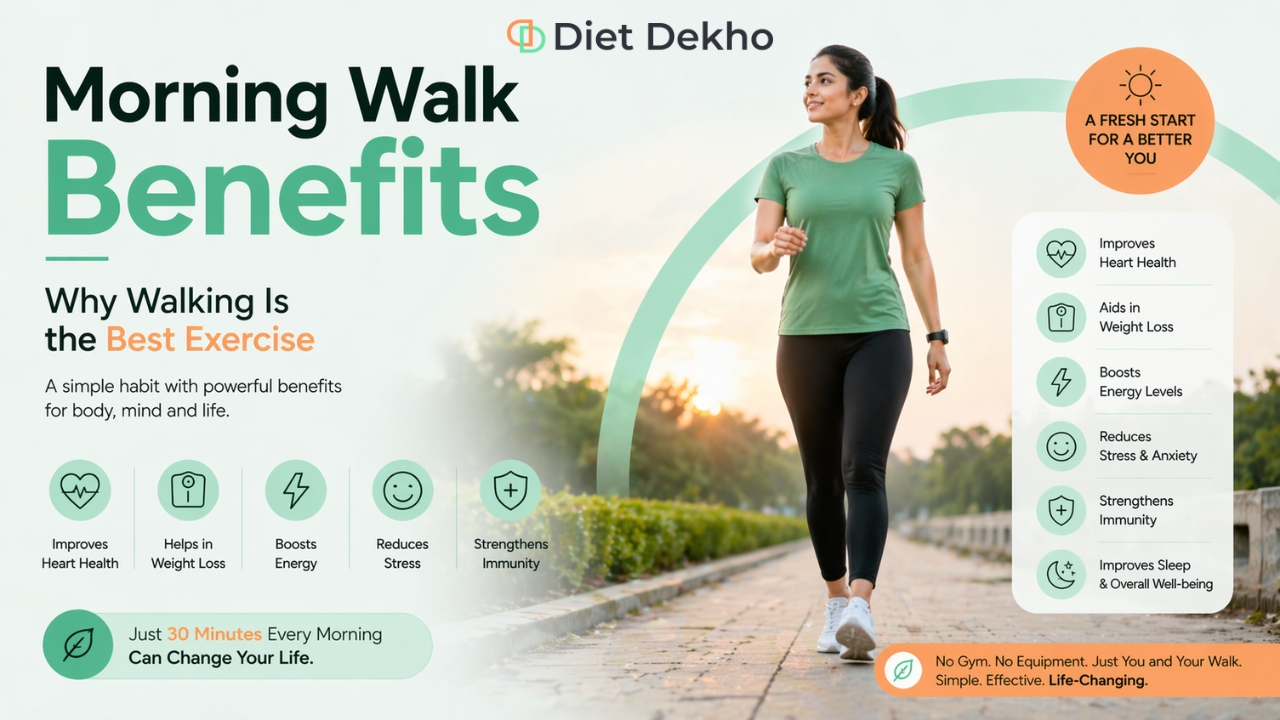
Imagine a typical morning in a bustling Indian household. Meera, a dedicated homemaker in her late thirties, begins her day at 5:30 AM. Between preparing breakfast, getting her children ready for school, and managing household accounts, the idea of a structured workout feels like a distant luxury. Like millions of others, Meera struggles with constant fatigue and a growing concern about her family’s history of diabetes. She often wonders if there is a simple, no-cost solution that fits into her chaotic schedule. For many navigating similar pressures, the simple habit of walking in the morning emerges not just as an exercise, but as a critical tool for metabolic survival and mental restoration.
Walking in the morning is a highly effective, low-impact aerobic activity that improves glycemic control, boosts cardiovascular health, and regulates circadian rhythms. By enhancing insulin sensitivity and facilitating natural Vitamin D synthesis, this routine serves as a primary preventive measure against type 2 diabetes and chronic inflammation, making it an ideal solution for busy professionals and homemakers.
The Silent Crisis: Contextualizing the Indian Diabetes Epidemic
The health landscape of India is currently undergoing a profound transition. The latest data from the International Diabetes Federation (IDF) reveals a staggering reality: 1 in 9 adults in India is living with diabetes. This condition is no longer a concern reserved for the older people; it is a silent killer sweeping across all age groups, with a sharp rise in high blood glucose reports starting as early as age 30. The ICMR-INDIAB study highlights that over 101 million people are already affected, while another 136 million are in the prediabetic stage.
This epidemic is largely driven by rapid urbanization and the resulting sedentary lifestyles. Estimates suggest that nearly 57% of individuals with diabetes in India remain undiagnosed, often realizing their condition only when complications arise. For the urban professional or the busy homemaker, the transition from a traditional, active lifestyle to one dominated by desk-bound work and processed foods has created a metabolic environment where the body struggles to process energy effectively.
Table 1: Comparative Diabetes Prevalence and Projections in India
| Metric | Current Status (2024-2025) | Projected Status (2045-2050) | Source |
| Total Diabetic Population | 101 Million | 134.2 – 147.2 Million | n/a |
| Prediabetic Population | 136 Million | 35.7 Million (IGT specific) | n/a |
| Undiagnosed Adults | 43.9 Million (57%) | Increasing burden without screening | n/a |
| Global Rank | 2nd (After China) | Expected to maintain high burden | n/a |
| Adult Population Affected | 11.1% | 1 in 8 adults (Global projection) | n/a |
The implications of these numbers are profound. When 1 in 2 people tested show high blood sugar levels, it signifies that the collective metabolic health of the nation is at a breaking point. This context makes the pursuit of an accessible exercise like walking in morning a necessity rather than an option.

Physiological Mechanisms: How Walking Restores Metabolic Balance
The effectiveness of walking as the best exercise is rooted in its ability to intervene at the cellular level. For an individual with insulin resistance, the body’s cells become deaf to the signals of insulin, leading to elevated sugar levels in the blood. Physical activity, particularly aerobic movement, provides an alternative pathway for glucose management.
The GLUT-4 Pathway and Insulin-Independent Uptake
One of the most significant insights from recent physiological research is the role of muscle contractions in glucose transport. Both insulin and exercise stimulate the translocation of GLUT-4 transporter proteins to the cell membrane. What this means for the daily routine is that the act of walking allows muscles to pull sugar from the bloodstream even when insulin levels are low or when the body is resistant to insulin.
This process creates an additive effect. When an individual engages in walking in the morning, the glucose uptake triggered by muscle contraction can last for hours after the activity has ended. This long-tail effect is crucial for maintaining stable energy levels throughout the day and preventing the sugar crashes that often lead to unhealthy snacking.
Table 2: Physiological Markers and Post-Walking Improvements
| Parameter | Improvement Mechanism | Health Outcome | Source |
| Insulin Sensitivity | GLUT-4 Translocation | Lower Fasting Glucose | n/a |
| Systemic Inflammation | Reduction in Adipokines | Improved Vascular Health | n/a |
| Blood Pressure | Enhanced Circulation | Reduced Heart Strain | n/a |
| Visceral Fat | Fat Oxidation (Fasted State) | Reduced Waist Girth | n/a |
| HbA1c | Chronic Glucose Regulation | 0.3% – 0.7% Reduction | n/a |
Fat Oxidation in the Fasted State
For those specifically focused on weight management, the timing of the walk offers a unique advantage. Walking on an empty stomach in the morning kickstarts the metabolism, allowing the body to utilize stored fats more effectively than after a meal. A study by Nottingham Trent University found that exercising in a fasted state can help individuals burn around 70% more fat. This is particularly relevant for the Indian demographic, where expanding girth or central obesity is a primary driver of type 2 diabetes.

Cardiovascular Protection: A Shield for the Heart
The relationship between walking and heart health is well-documented by global authorities. For individuals with diabetes, the risk of heart disease is significantly higher than for the general population. However, regular walking serves as a powerful preventive tool.
Mortality Reduction and Step Counts
Research from Harvard Health indicates that taking an extra 4,000 steps per day even at a leisurely pace can significantly lower the odds of dying from heart disease. For those who can maintain a brisker pace, the benefits are even more pronounced. Brisk walking (2 to 3 mph) is associated with a 15% lower risk of diabetes, while walking faster than 4 mph can reduce that risk by 39%.
This dose-response relationship suggests that while any movement is better than none, increasing the intensity or duration can provide a compounding interest effect on health. Women with diabetes who walk for at least four hours a week have been shown to cut their risk of heart disease by 40%.
Table 3: Walking Intensity and Heart Health Risks
| Walking Intensity | Speed Estimate | Risk Reduction (CVD/Diabetes) | Source |
| Casual | < 2 mph | Baseline Improvement | n/a |
| Brisk | 2 – 3 mph | 15% Lower Risk | n/a |
| Fast | 3 – 4 mph | 24% Lower Risk | n/a |
| Very Fast | > 4 mph | 39% Lower Risk | n/a |
| Consistent (Weekly) | 150 Minutes | 4x Likely to Normalize Sugar | n/a |
The mechanism behind this protection is multifaceted. Walking improves blood circulation, strengthens the heart muscle, and helps maintain healthy cholesterol levels by raising HDL (good cholesterol) and lowering LDL (bad cholesterol).

The Psychological Horizon: Mental Clarity and Stress Reduction
In a high-pressure professional environment or a demanding household, mental exhaustion is often more debilitating than physical tiredness. Walking in the morning offers a psychological reset that is essential for emotional resilience.
Neurochemical Enhancement
The physical act of walking triggers the release of endorphins, serotonin, and dopamine. These neurochemicals are the body’s natural antidepressants. Serotonin, in particular, helps regulate the sleep cycle and boosts mood, while dopamine is linked to decreased stress levels. For someone struggling with the brain fog often associated with metabolic issues, a morning walk provides immediate mental clarity.
Cognitive Preservation and Creativity
Beyond mood, walking is a fundamental tool for cognitive health. Studies have shown that regular walkers have better memory and a lower risk of dementia and Alzheimer’s disease. A study of older men found that walking just a quarter-mile daily resulted in significantly fewer cases of cognitive decline.
Furthermore, walking has been shown to boost creativity by up to 60%. The forward movement of the body encourages forward-thinking and problem-solving, making it an invaluable habit for professionals who need to solve complex problems during their workday.
Sunlight and Vitamin D: The Circadian Connection
India faces a unique paradox: despite abundant sunlight, Vitamin D deficiency affects up to 100% of the population in some regions. This deficiency is linked to bone pain, immune dysfunction, and mood disturbances.
Optimizing Vitamin D Synthesis
While the midday sun (11 AM to 2 PM) provides the strongest UVB rays for Vitamin D production, it also carries the highest risk of skin damage and heat stroke in a tropical climate. Experts suggest that early morning sun (6:30 AM to 9:30 AM) is essential for resetting the body’s internal clock, even if the UVB rays are milder.
For most Indians, 15 to 30 minutes of sun exposure on the face, arms, and legs, at least twice a week, can suffice to maintain adequate levels. This natural exposure is far more effective than indoor, filtered light, which has negligible impact on Vitamin D levels.
Table 4: Sunlight Exposure and Health Benefits
| Time Window | UV Characteristics | Primary Benefit | Source |
| 6:30 AM – 9:30 AM | Mild UV | Circadian Rhythm Reset; Alertness | n/a |
| 10:30 AM – 3:30 PM | Strong UVB | Maximum Vitamin D Synthesis | n/a |
| Winter Months | Weaker UVB | Requires longer exposure (up to 2 hrs) | n/a |
| Darker Skin Tones | Higher Melanin | Requires 2-3x longer exposure | n/a |

Understanding the benefits is only half the battle; implementing a routine in an Indian city presents significant challenges. From poor walkability to cultural expectations, the barriers are real but manageable.
Gendered Constraints and Household Demands
For many Indian women, the unpaid housework and childcare burden serve as primary constraints on their mobility. Societal norms often emphasize good wife behavior, which prioritize the needs of the family over personal health activities. This psychosocial pressure can induce guilt in women who consider taking time for themselves in the morning.
Urban Infrastructure and Pollution
Large cities like Delhi and Bangalore present environmental hurdles. High AQI levels in the early morning can sometimes make outdoor walking counterproductive for respiratory health. Additionally, the presence of stray dogs and the lack of safe sidewalks can make the streets feel dangerous rather than peaceful.
Table 5: Common Barriers and Practical Solutions for Indians
| Barrier | Specific Concern | Strategic Solution | Source |
| Time Scarcity | Morning Chores | Split into 10-min bouts after meals | n/a |
| Air Pollution | High Smog (Early AM) | Walk in the afternoon or indoors | n/a |
| Safety/Dogs | Unsafe Streets | Use a treadmill or a walking pad | n/a |
| Joint Pain | Osteoarthritis | Use supportive shoes; low-impact walking | n/a |
| Summer Heat | Dehydration | Walk before 8 AM; carry electrolytes | n/a |
The Indoor Alternative: Bringing the Walk Home
When the outdoors are uninviting, the home can become an effective fitness center. For a non-gym audience, indoor walking is a transformative solution.
Treadmill and Walking Pad Routines
Using a walking pad or treadmill allows for a controlled climate and the ability to multitask. A 15-minute high-energy indoor workout involving marching in place, heel taps, and side steps can get the heart rate up without needing a vast space. These micro-workouts are particularly useful for busy professionals who can take a walking break during long virtual meetings.
Dr. V. Mohan’s Expert Perspective
Dr. V. Mohan, a leading authority on diabetes in India, emphasizes that sitting is the new smoking. He dispels the myth that diabetes cannot be prevented, noting that at the pre-diabetic stage, lifestyle changes can completely halt the progression of the disease. His ABCD mantra A1c, Blood pressure, Cholesterol, and Diet/exercise serves as a simple roadmap for health.

Comparative Analysis: Walking vs. High-Intensity Training
A common question for those starting their health journey is whether walking is enough compared to a gym workout or jogging. While jogging burns more calories per minute, walking is often more sustainable for those with existing health complications.
Sustainability and Injury Prevention
A study comparing brisk walking with individualized medical fitness programs for type 2 diabetics found no significant difference in HbA1c improvements between the two. However, high-intensity workouts often lead to higher dropout rates due to overuse injuries. For a person over the age of 35, low-impact exercise like walking is often the best friend because it puts minimal stress on the joints while still providing metabolic benefits.
Table 6: Exercise Comparison for Diabetes Management
| Exercise Type | Glycemic Impact | Injury Risk | Sustainability | Source |
| Brisk Walking | Improves Sensitivity | Very Low | Very High | n/a |
| Jogging/Running | High Fat Burn | Moderate | Moderate | n/a |
| Gym (Resistance) | Builds Muscle | Moderate | Moderate | n/a |
| Yoga | Reduces Stress | Low | High | n/a |
Seasonality and Safety: Walking in the Indian Climate
Adapting to the Indian weather is crucial for maintaining a year-round habit. The extreme heat of summer and the unpredictability of the monsoon require tactical changes.
Summer Survival
In the peak of summer, it is essential to walk during the cool of the night that lingers in the early morning. Dehydration can happen rapidly, making it vital to drink water before the walk and potentially add a pinch of salt and sugar (electrolytes) to the water bottle.
Monsoon Adaptations
During the rains, indoor options or walking in covered park canopies become necessary. It is important to stay consistent; missing a few days due to weather can easily turn into a broken habit. Using reflective gear is also essential if walking in the low visibility of a rainy morning.

Conclusion: Taking the First Step
The journey to health is not a sprint; it is a series of consistent, small steps. For the Indian professional or homemaker, walking in morning represents the most accessible, high-reward habit available. It tackles the root causes of the diabetes epidemic, sedentary behavior and obesity while providing a necessary reprieve for the mind.
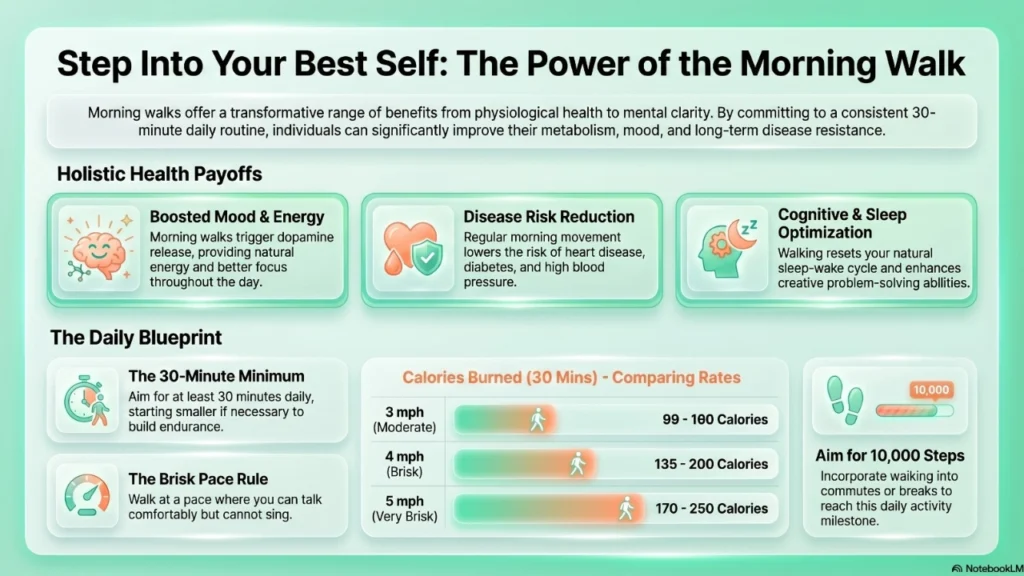
By understanding the physiological mechanisms, from GLUT-4 translocation to Vitamin D synthesis, we can see that a 30-minute walk is more than just movement. It is a biological reset. For those who feel overwhelmed, remember that even a 10-minute walk after a meal is a victory for your health.
Recommendations for Action:
- Start with a 10-minute walk tomorrow morning, right after waking up.
- Aim to increase this to 30 minutes of brisk walking within a month.
- If the weather or city infrastructure is a barrier, embrace indoor walking or a walking pad.
What this means for your daily routine is that you don’t need a gym membership or expensive gear to reclaim your health. You just need your shoes and the willingness to take that first step.
For more personalized advice on managing your diet and activity levels, please fill out our contact form at Diet Dekho to speak with an expert dietitian today.

Frequently Asked Questions (FAQs)
What is the best time for walking in the morning to get Vitamin D in India?
For Vitamin D synthesis, the most effective time is between 10:30 AM and 3:30 PM when UVB rays are strongest. However, for a safer experience that also resets your circadian rhythm, the early morning sun (6:30 AM to 9:30 AM) is highly recommended, especially for those with sensitive skin.
How does walking in the morning help a person with diabetes?
Walking triggers muscle contractions that allow your cells to absorb sugar from the blood without needing extra insulin. This improves insulin sensitivity and helps lower fasting blood sugar levels and long-term HbA1c markers.
Can I see health results from just 10 minutes of walking?
Yes. Research shows that even short, 10-minute bouts of walking after meals can significantly improve 24-hour glycemic control. The key is consistency and ensuring these short bursts add up to at least 150 minutes per week.
Is walking in the morning better than going to the gym for weight loss?
For many, walking is better because it is a low-impact activity with a much lower risk of injury, making it easier to maintain over years. While the gym may burn calories faster, a consistent morning walk is often more sustainable for a long-term healthy lifestyle.
What should I do if the air pollution is high in my city during the morning?
If the AQI is in the unhealthy range, it is better to walk indoors using a walking pad or follow a 15-minute indoor walking routine. You can also shift your walk to the late morning or afternoon when smog levels often decrease slightly in many urban areas.
Contact Us
We understand how overwhelming nutrition and weight loss information can feel. With so many opinions and confusing advice online, it’s easy to feel stuck or unsure about what to do next.
At Diet Dekho, you never have to figure it out alone. You can contact us anytime with any questions or concerns. Our expert dietitians are available 24/7 to guide, support, and help you stay on track. Whether your goal is weight loss or building healthier habits, we’re here to make the journey simpler and more sustainable for you.
Disclaimer
This blog is intended to help readers make healthier food choices. Your health should always be the top priority. Before starting any restrictive or special diet, especially if you have a medical condition or health concern, please consult a doctor or a qualified dietitian. Each body responds differently to food and lifestyle changes. Always choose what is safe and suitable for you.

Abhinav is the Founder of Diet Dekho, helping people manage weight and lifestyle health through simple, practical nutrition and personalized diet plans.