Have you ever wondered how your body knows exactly how to stop a minor scrape from bleeding or how it ensures that the calcium from your glass of milk actually reaches your bones instead of clogging your arteries? Finding a consistent source of food rich in vitamin k is often the missing piece of the puzzle for many people struggling with bone density or fluctuating blood sugar levels. While many of us focus on Vitamin D or Calcium, this silent worker acts as the traffic controller for your internal health, directing minerals to the right places while keeping your circulatory system clear and flexible.
Food rich vitamin k primarily includes green leafy vegetables like spinach, kale, and mustard greens (Vitamin K1), as well as fermented foods like curd and natto (Vitamin K2). This essential nutrient activates proteins responsible for blood clotting, bone mineralization, and preventing arterial calcification. For optimal health, adults should consume between 90-120 mcg daily, ideally paired with healthy fats to maximize absorption.
The Biological Foundation of Vitamin K
Table of Contents
- 1 The Biological Foundation of Vitamin K
- 2 The Indian Perspective: Insufficiency and the Triage Theory
- 3 Diabetes and Metabolic Health: The New Frontier
- 4 Bone Health: The Manager of Calcium
- 5 Heart Health: Protecting the Arteries
- 6 The Indian Food Matrix: Local Sources of Vitamin K
- 7 Cooking Science: Maximizing Bioavailability
- 8 ICMR Guidelines and the RDA for Indians
- 9 Special Considerations: Newborns and the Elders
- 10 Practical Solutions for Busy Professionals and Homemakers
- 11 Safety and Medication Interactions
- 12 Frequently Asked Questions
- 13 Conclusion: Take Control of Your Health Today
- 14 Contact Us
- 15 Disclaimer
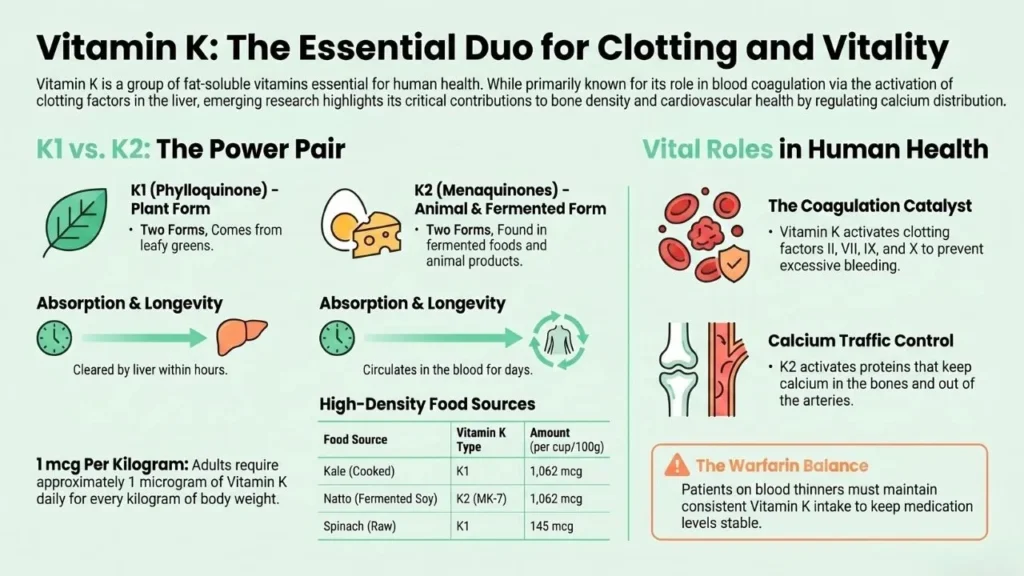
To understand the necessity of this nutrient, one must examine its role as a fundamental coenzyme. Vitamin K is a fat-soluble vitamin that the body requires for the synthesis of specific proteins involved in hemostasis and bone metabolism. Unlike many other vitamins, Vitamin K functions through a unique chemical process called \gamma-carboxylation. This process involves the enzyme \gamma-glutamyl carboxylase, which uses Vitamin K as a cofactor to modify glutamate residues on specific proteins. This modification allows these proteins to bind with calcium ions, effectively switching on their biological functions.
The Vitamin K Cycle and Protein Activation
The body utilizes a specialized Vitamin K cycle to maximize the efficiency of the small amounts of this vitamin found in human tissues. Once a Vitamin K molecule has assisted in a carboxylation reaction, it becomes oxidized. A separate enzyme then reduces it back to its active form, allowing it to be reused multiple times. This cycle is the target of certain medications, such as blood thinners, which interrupt the recycling process to prevent excessive clotting in high-risk patients.
The proteins activated by this cycle are categorized into those that manage blood health and those that manage tissue health. Prothrombin, also known as Factor II, is perhaps the most critical for immediate survival, as it is the primary protein required for blood coagulation. Beyond the liver, where clotting factors are made, Vitamin K-dependent proteins like Osteocalcin and Matrix Gla Protein (MGP) serve as the guardians of the skeletal and cardiovascular systems.
The Taxonomy of Vitamin K: K1 vs. K2
While often discussed as a single entity, Vitamin K exists in several distinct forms that vary in their chemical structure and physiological impact. Identifying the right food rich vitamin k requires understanding these differences.
- Vitamin K1 (Phylloquinone): This is the primary dietary form, found mainly in green plants. It is characterized by a phytyl side chain and is the form most directly involved in blood clotting.
- Vitamin K2 (Menaquinones): These are produced primarily by bacteria and are found in fermented foods and animal products. They are identified by the length of their side chains, ranging from MK-4 to MK-13.
- Vitamin K3 (Menadione): A synthetic form sometimes used in animal feed but generally not recommended for direct human supplementation due to potential toxicity.
| Property | Vitamin K1 (Phylloquinone) | Vitamin K2 (Menaquinones) |
| Common Sources | Spinach, Broccoli, Kale, Plant Oils | Natto, Curd, Cheese, Meat, Eggs |
| Primary Destination | Liver | Bones, Blood Vessels, Tissues |
| Half-Life | 1–2 hours (Short) | Up to 72 hours (Long, especially MK-7) |
| Absorption Rate | Low from plants (4–17%) | High from fermented sources |
| Main Benefit | Immediate blood clotting | Long-term bone and heart health |

The Indian Perspective: Insufficiency and the Triage Theory
In the con of Indian nutrition, recent pilot studies have revealed a concerning trend. While most Indians consume enough food rich vitamin k to support blood clotting-meaning clinical deficiency is rare-many suffer from insufficiency. This status means the body has just enough Vitamin K to manage life-sustaining liver functions but not enough to support long-term health in the bones or heart.
Understanding the Triage Mechanism
The Triage Theory suggests that when nutrient intake is low, the human body prioritizes short-term survival over long-term health. Because Vitamin K is essential for preventing hemorrhage, the liver effectively captures the majority of incoming Vitamin K1 to produce clotting factors. Extrahepatic tissues, such as the bones and arteries, are left with the remnants. This hierarchy explains why an individual might not show any outward signs of deficiency (like bruising) while their bones are gradually thinning or their arteries are slowly calcifying.
A study conducted on healthy Indian volunteers and diabetic patients found that Vitamin K2 (MK-7) levels were consistently low across both groups, despite Vitamin K1 levels being in the normal range. This suggests that the standard Indian diet, while rich in greens, may be lacking in the fermented or animal-based sources that provide Vitamin K2, which is more effective at reaching non-liver tissues.

Diabetes and Metabolic Health: The New Frontier
For the busy professional or homemaker managing Type 2 Diabetes, food rich vitamin k takes on a new level of importance. Emerging clinical evidence suggests that Vitamin K, particularly K2, plays a direct role in improving insulin sensitivity and glucose metabolism.
The Osteocalcin Pathway
The primary mechanism for this benefit is the protein Osteocalcin. When activated by Vitamin K, Osteocalcin does more than just strengthen bone; it enters the bloodstream and acts as a hormone. Research indicates that carboxylated Osteocalcin stimulates the beta cells of the pancreas to release more insulin. Simultaneously, it prompts fat cells to release adiponectin, a hormone that enhances the body’s ability to use insulin effectively.
A randomized controlled trial observed that supplementing with Vitamin K2 (MK-7) for six months led to significant reductions in fasting blood glucose (13.4%), serum insulin (28.3%), and HbA1c (7.4%) in diabetic patients. These results highlight the potential for Vitamin K to serve as a supportive nutritional therapy for glycemic control.
| Metabolic Metric | Effect of Vitamin K2 Intervention | Significance |
| Fasting Glucose | 13.4% Reduction | Improved baseline stability |
| Serum Insulin | 28.3% Reduction | Lowered insulin resistance |
| HbA1c | 7.4% Reduction | Better long-term sugar control |
| Adiponectin | Increased Levels | Enhanced fat metabolism |
Gut Microbiome and Metablolic Regulation
The relationship between Vitamin K and diabetes may also be mediated by the gut microbiome. Certain bacteria in the human intestine are capable of synthesizing Vitamin K2. Studies show that Vitamin K2 intervention can alter the composition of gut microbiota, increasing the production of secondary bile acids and short-chain fatty acids (like butyrate). These compounds are known to improve the host’s immune-inflammatory response and increase the concentration of GLP-1, a hormone critical for blood sugar regulation.
For individuals with diabetes, this means that consuming high-fiber food rich vitamin k, such as leafy greens, supports both direct vitamin intake and the health of the internal vitamin factory in the gut.

Bone Health: The Manager of Calcium
Many people focus exclusively on calcium for bone strength, but without the managerial role of Vitamin K, that calcium is largely ineffective. Vitamin K is essential for producing healthy bone tissue and preventing the weakening of the skeletal structure over time.
Preventing Fractures
Low blood levels of Vitamin K have been consistently linked with low bone density and an increased risk of hip fractures. The Nurses’ Health Study observed that women who consumed at least 110 mcg of Vitamin K daily were 30% less likely to break a hip compared to those consuming less. Even more strikingly, eating just one serving of a green leafy vegetable a day was found to cut the risk of hip fracture in half when compared to eating only one serving a week.
The D3 and K2 Synergy
I know it’s hard to keep track of multiple supplements, but if you are taking Vitamin D, you must pay attention to Vitamin K. Vitamin D significantly increases the absorption of calcium from your diet into your blood. However, it does not control where that calcium ends up. Without adequate Vitamin K2 to activate Osteocalcin, that absorbed calcium might remain in your bloodstream or deposit in your soft tissues instead of your bones. This is why modern clinical advice increasingly recommends taking Vitamin D and K2 together-they work as a team to ensure calcium reaches its proper destination.

Heart Health: Protecting the Arteries
Perhaps the most life-saving role of food rich vitamin k is its ability to protect the cardiovascular system. Heart disease is often driven by the hardening of the arteries, a process where calcium builds up in the blood vessel walls. This calcification makes the arteries stiff, increases blood pressure, and forces the heart to work harder.
Matrix Gla Protein (MGP)
Vitamin K is the only nutrient that activates Matrix Gla Protein (MGP), the most powerful inhibitor of arterial calcification currently known. MGP acts like a magnet, binding to calcium in the vessel walls and removing it so that the arteries remain flexible and clear.
Research suggests that high intake of Vitamin K2-but not necessarily K1-is associated with a lower risk of heart disease. Because K2 stays in the blood longer and reaches the vascular tissues more effectively, it is the preferred form for protecting the heart.
| Cardiovascular Factor | Role of Vitamin K | Long-term Impact |
| Arterial Stiffness | Activates MGP to clear calcium | Maintains healthy blood pressure |
| Plaque Formation | Delays progression of atherosclerosis | Reduces heart attack risk |
| Elasticity | Protects elastin in blood vessels | Prevents premature vascular aging |
| Blood Flow | Ensures clear pathways | Improves overall circulation |

The Indian Food Matrix: Local Sources of Vitamin K
For an Indian audience, traditional cuisine offers numerous opportunities to consume food rich vitamin k without needing expensive or foreign ingredients. The 2024 ICMR guidelines recommend a significant increase in vegetable intake, emphasizing that 100g of our daily 400g quota should consist of green leafy vegetables.
Indian Leafy Greens (The K1 Powerhouses)
Indian markets are filled with seasonal greens that are nutritional champions. Let’s simplify your shopping list with these local staples:
- Spinach (Palak): One cup of raw spinach provides about 145 mcg, meeting 121% of your daily value. Cooking it increases the concentration; half a cup of cooked spinach can contain over 400 mcg.
- Mustard Greens (Sarson): A winter favorite, sarson is exceptionally rich in Vitamin K1 and minerals like magnesium and potassium that support heart health.
- Fenugreek (Methi): Widely available and affordable, methi leaves are a food rich vitamin k that also helps in managing diabetes, making it a double-win for many Indian families.
- Drumstick Leaves (Moringa): Native to India, these leaves are a true superfood. They contain Vitamin K alongside high doses of Vitamin A, Vitamin C, and Calcium. In South India, adding these to sambar or dal is a traditional and effective way to boost nutrition.
- Amaranth (Chaulai): These greens are often overlooked but provide excellent amounts of Vitamin K to support blood circulation and bone strength.
- Bathua (Chenopodium): Often found in winter parathas and raitas, Bathua is another potent source of Vitamin K1.
The K2 Challenge in India
While Vitamin K1 is easy to find in sabzis, Vitamin K2 is less abundant in the typical Indian vegetarian diet. Most Vitamin K2 comes from fermentation.
- Curd (Dahi): While common, the Vitamin K2 content in homemade curd is relatively modest.
- Fermented Foods: Traditional items like idli, dosa, dhokla, and appam utilize fermentation, which can produce small amounts of menaquinones, though levels vary significantly based on the bacterial strains used.
- Cheese: Aged cheeses contain Vitamin K2, as the bacteria used in the ripening process synthesize it.
- Animal Products: For non-vegetarians, liver, eggs (specifically the yolk), and fatty fish provide modest amounts of Vitamin K2 in the MK-4 form.
| Indian Vegetable | Vitamin K (mcg per serving) | Daily Value (%) |
| Cooked Spinach (1/2 cup) | 444 | 370% |
| Mustard Greens (1/2 cup) | 416 | 347% |
| Raw Spinach (1 cup) | 145 | 121% |
| Kale (1 cup) | 113 | 94% |
| Broccoli (1/2 cup) | 110 | 92% |
| Okra (Bhindi – 1/2 cup) | 16 | 13% |
Cooking Science: Maximizing Bioavailability
What this means for your daily routine is that how you cook your greens is just as important as the quantity you eat. Vitamin K is relatively stable to heat, but it is tightly bound to the plant’s cellular structures.
The Role of Healthy Fats
Because Vitamin K is fat-soluble, your body cannot absorb it effectively without the presence of dietary fat. If you eat a plain, boiled spinach salad without any oil, you may only absorb a tiny fraction of the available vitamin. Adding just a teaspoon of healthy oil-like mustard oil, olive oil, or even a little ghee-can dramatically increase the absorption rate.
Healthy Cooking Methods
Research comparing different preparation styles has shown that some methods are better than others for preserving nutrition:
- Steaming: This is often the best method. It softens the plant fibers to release more Vitamin K without drowning it in water where other nutrients might be lost.
- Microwaving: Surprisingly, microwaving for a short duration with very little water is an effective way to retain Vitamin K in vegetables like spinach and chard.
- Sautéing: Quickly cooking greens in a pan with a bit of garlic and oil is excellent for both taste and nutrient uptake.
- Pressure Cooking: This common Indian technique is effective because the shorter cooking time helps preserve water-soluble vitamins, and the sealed environment prevents nutrient loss through evaporation.
I know it’s tempting to boil your greens for a long time to make them soft, but try to avoid excessive boiling, which can cut the overall antioxidant and vitamin levels nearly in half.
ICMR Guidelines and the RDA for Indians
The Indian Council of Medical Research (ICMR) has updated its Recommended Dietary Allowances (RDA) to reflect the increasing burden of lifestyle diseases like diabetes and heart disease in India. The current recommendations focus on achieving a balanced plate to prevent chronic conditions.
Recommended Intake Levels
While the specific Vitamin K requirement can vary based on individual metabolic needs, the general guidelines provide a safe target for the majority of the population.
| Age / Group | Recommended Vitamin K (mcg/day) |
| Infants (7–12 months) | 2.5 |
| Children (1–3 years) | 30 |
| Children (9–13 years) | 60 |
| Teens (14–18 years) | 75 |
| Adult Men (19+ years) | 120 |
| Adult Women (19+ years) | 90 |
| Pregnant/Lactating Women | 90 |
It is worth noting that for individuals over 50 years of age, maintaining a consistent level of Vitamin K intake is even more critical. A survey involving over 5,000 individuals showed that a medium-to-high level of Vitamin K intake was associated with a significantly reduced risk of bone loss and osteoporosis in women aged 50 and above.

Special Considerations: Newborns and the Elders
Vitamin K is uniquely important at the very beginning and in the later stages of life.
The 1000-Day Nutrition Window
For newborns, Vitamin K is a life-saving necessity. Babies are born with very low levels of this vitamin because it does not cross the placenta efficiently during pregnancy. Furthermore, breast milk is naturally low in Vitamin K. To prevent a rare but dangerous condition called Vitamin K Deficiency Bleeding (VKDB), which can cause bleeding in the brain, a single Vitamin K injection is routinely given to infants at birth. This bridge provides protection until the baby’s gut bacteria can start producing its own Vitamin K and they transition to solid foods.
The Elders and Cognitive Health
New research suggests that Vitamin K may also protect the aging brain. Beyond its role in bone and heart health, low Vitamin K status in older adults has been linked with an increased risk of early death and limited mobility. Some studies suggest that Vitamin K-dependent proteins are present in the brain and heart, potentially slowing the progression of age-related cognitive decline and atherosclerosis.

Practical Solutions for Busy Professionals and Homemakers
Let’s simplify this-you don’t need a complicated diet to get enough food rich vitamin k. If you’re a busy professional or a homemaker managing a household, small, consistent habits are much more effective than extreme changes.
The Plate Method for Daily Meals
The simplest way to ensure you’re getting enough Vitamin K is to follow the ICMR Plate Method. Imagine your dinner plate divided into sections:
- Half the plate: Fill this with non-starchy vegetables. At least one of these should be a green leafy vegetable like sautéed spinach or methi.
- One-quarter: Dedicate this to a lean protein source like dal, paneer, or eggs.
- One-quarter: Use this for complex carbohydrates like a small whole-wheat roti or a small bowl of brown rice.
Meal Prep Hacks
I know it’s hard to find time to cook fresh greens every day. Here are three professional hacks to help you stay on track:
- Prep Your Greens: On Sundays, wash and chop your spinach, mustard greens, or moringa. Store them in an airtight container or even freeze them. This makes it easy to throw a handful into your dal or omelet during a busy weekday morning.
- The Smoothies Boost: If you don’t like the taste of cooked greens, add a handful of raw spinach or a teaspoon of moringa powder to a fruit smoothie. You’ll get all the Vitamin K without the bitter taste.
- Smart Snacking: Keep roasted chana or fox nuts (makhana) at your desk. While not as high as greens, these provide fiber and trace minerals that support your overall nutritional profile.
Safety and Medication Interactions
While food rich vitamin k is vital, some people need to be cautious about their intake.
The Warfarin Paradox
If you are taking a blood thinner like Warfarin (Coumadin), you must be careful. Warfarin works by interfering with the Vitamin K cycle to slow down blood clotting. A sudden, massive increase in Vitamin K (like eating three cups of spinach in one day) can counteract the medicine and increase the risk of a blood clot. Conversely, a sudden drop in Vitamin K can make the blood too thin.
The most important thing for patients on blood thinners is consistency. You don’t have to avoid greens; you just have to eat about the same amount every day so your doctor can adjust your medication accurately.
Other Potential Interactions
- Antibiotics: Long-term use of antibiotics can kill the good bacteria in your gut that help produce Vitamin K.
- Weight-loss Drugs: Medications like Orlistat reduce fat absorption, which can also decrease the absorption of fat-soluble vitamins like K.
- Cholesterol Medications: Certain bile acid sequestrants used to lower cholesterol can interfere with how your body absorbs Vitamin K.

Frequently Asked Questions
Which food rich vitamin k is best for a vegetarian Indian diet?
Spinach (Palak) and Fenugreek (Methi) are the best sources. Moringa (drumstick leaves) is another powerhouse that is widely available across India. These provide Vitamin K1, which supports both blood and bone health.
Can Vitamin K help reverse my diabetes?
While Vitamin K is not a cure, clinical studies show it can significantly improve insulin sensitivity and lower HbA1c levels. It works by activating proteins that help your body use sugar more effectively.
How do I know if I have a Vitamin K deficiency?
A severe deficiency is rare but can cause easy bruising, frequent nosebleeds, or heavy menstrual cycles. A more common insufficiency might not show any symptoms until much later in life, manifesting as bone thinning or heart issues.
Do I need to take a Vitamin K supplement?
Most people can get enough Vitamin K1 from a balanced diet rich in vegetables. However, if you have bone density concerns or take high-dose Vitamin D3, a Vitamin K2 (MK-7) supplement may be beneficial. Always consult your dietitian or doctor first.
Is it safe to eat Vitamin K rich foods during pregnancy?
Yes, it is highly recommended. Vitamin K supports the mother’s bone health and is vital for the baby’s early development. ICMR recommends 90 mcg daily for pregnant people.
Conclusion: Take Control of Your Health Today
Making room for food rich in vitamin k in your daily diet is one of the simplest yet most profound steps you can take for your long-term wellness. Whether you are a busy professional juggling meetings or a homemaker caring for your family, these small nutritional choices build a foundation of resilience. By choosing local greens, adding healthy fats for absorption, and being consistent with your intake, you are actively protecting your heart, strengthening your bones, and supporting your metabolic health.
Remember, you don’t have to do this alone. Your health journey is a partnership between you and the right information. Start with one small change-perhaps a bowl of palak dal or a handful of methi in your paratha today.
If you are ready to create a personalized nutrition plan tailored specifically to your health needs, our experts at DietDekho are here to guide you. Take the next step towards a healthier you by visiting
Contact Us
We understand how overwhelming nutrition and weight loss information can feel. With so many opinions and confusing advice online, it’s easy to feel stuck or unsure about what to do next.
At Diet Dekho, you never have to figure it out alone. You can contact us anytime with any questions or concerns. Our expert dietitians are available 24/7 to guide, support, and help you stay on track. Whether your goal is weight loss or building healthier habits, we’re here to make the journey simpler and more sustainable for you.
Disclaimer
This blog is intended to help readers make healthier food choices. Your health should always be the top priority. Before starting any restrictive or special diet, especially if you have a medical condition or health concern, please consult a doctor or a qualified dietitian. Each body responds differently to food and lifestyle changes. Always choose what is safe and suitable for you.

Abhinav is the Founder of Diet Dekho, helping people manage weight and lifestyle health through simple, practical nutrition and personalized diet plans.