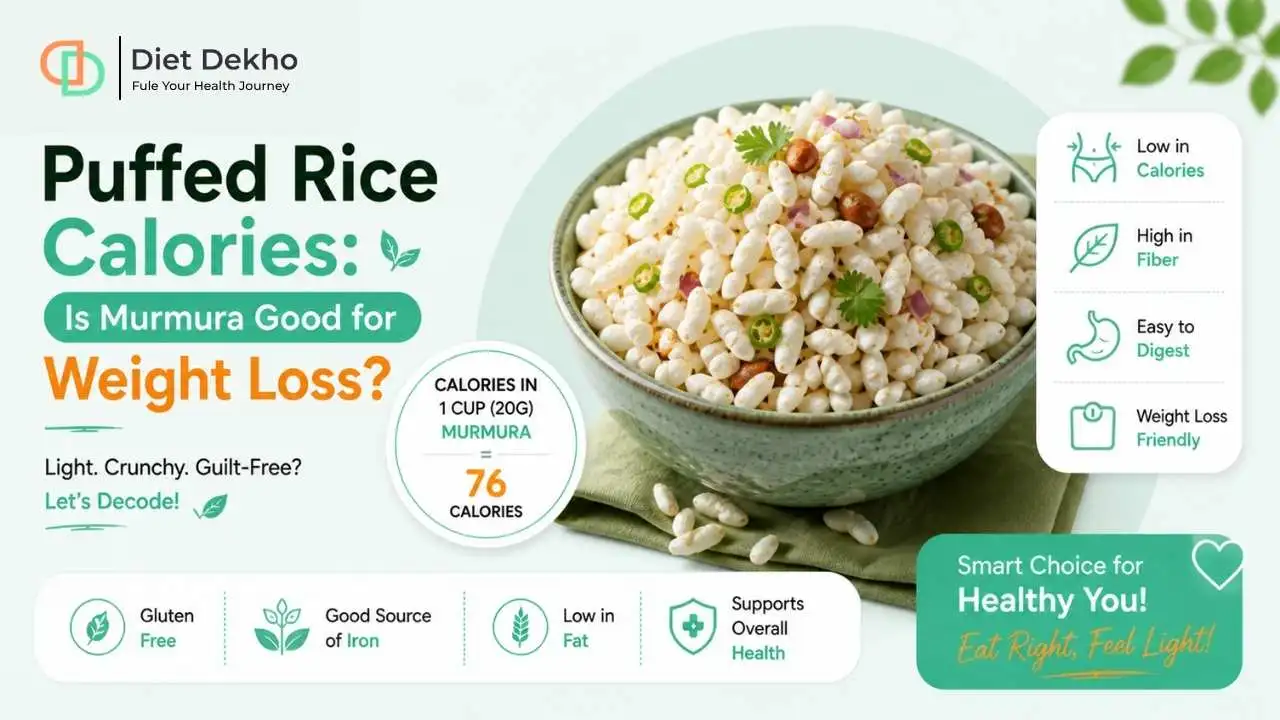
Imagine it is 4:00 PM on a Tuesday. You are a busy professional finishing a long meeting or a homemaker finally sitting down after a morning of chores. That familiar hunger pang hits, and your hand reaches for the nearest snack. You see a bowl of murmura and wonder about the calories in puffed rice and if this light, crispy snack is actually helping you stay on track with your health goals.
Plain murmura is a low-calorie, fat-free snack that can support weight loss when used for volume eating. However, with a high glycemic index of 85-90 and low fiber, it can cause blood sugar spikes. To lose weight effectively, you must pair it with protein-rich sprouts or peanuts to stay full and avoid energy crashes.
Understanding the Hidden Science of the Crunch
When we talk about the calories in puffed rice, we are not just looking at a number on a packet. We are looking at a food that has undergone a massive physical transformation. Puffed rice starts as a standard grain of rice, but through the application of high pressure and steam, the starch inside essentially explodes. This process, known as gelatinization, turns the dense, crystalline structure of the rice into a porous, airy lattice that we love for its crunch.
What this means for your daily routine is that you can eat a large volume of food for a very small amount of energy. For someone who is struggling with portion control, this is a huge win. You get the psychological satisfaction of eating a full bowl while only consuming a fraction of the energy you would get from a handful of fried chips.
However, we need to be careful. Because that starch is now so open and airy, your digestive enzymes can break it down almost instantly. Think of it like paper vs. a log; paper burns much faster. This rapid breakdown is why murmura provides quick energy but might leave you searching for another snack just an hour later.
| Serving Size | Approx. Weight | Calories (kcal) | Carbs (g) | Protein (g) |
| 1 Tablespoon | 4g | 16 | 3.6 | 0.26 |
| 1 Standard Cup | 14g | 55 – 60 | 12 – 13 | 1.0 |
| Small Bowl (Katori) | 25g | 100 | 22.4 | 1.6 |
| Large Bowl (Bhel portion) | 40g | 161 | 35.9 | 2.6 |
| 100g (Reference) | 100g | 367 – 402 | 89 – 93 | 6.3 – 7.5 |

The Calorie Breakdown: Why Volume Matters
I know it is hard to find time to weigh your food every day, but understanding the calories in puffed rice requires us to look at the difference between weight and volume. If you look at the table above, you will notice that 100g of murmura has about 400 calories. That sounds high, right? But here is the catch: 100g of puffed rice is a massive amount-it would fill up nearly seven or eight cups!
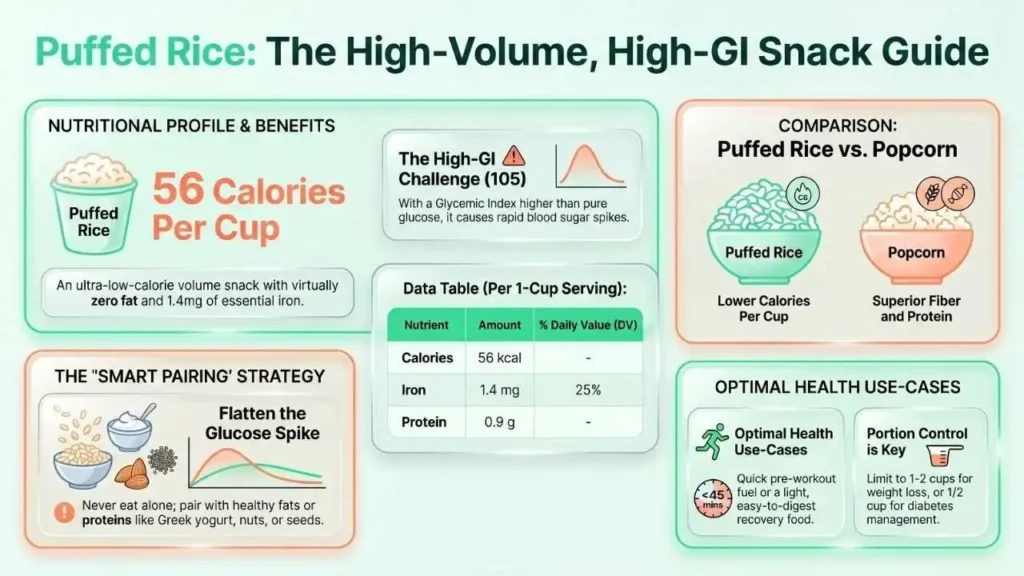
In a real-life scenario, most of us only eat about one or two cups at a time. This provides roughly 56 to 112 calories, which is incredibly low compared to a single digestive biscuit (70 calories) or a small packet of potato chips (150+ calories).
For the non-gym audience or busy professionals, this volume snacking is a secret weapon. It allows you to satisfy the urge to chew and crunch during a stressful workday without overloading your system with excess energy that your body would otherwise store as fat.
Macronutrients: What is Actually Inside Your Murmura?
Let’s simplify this. Murmura is almost entirely carbohydrate. It has virtually zero fat and zero cholesterol, which is great for your heart. But it also lacks two things you desperately need for weight loss: fiber and protein.
| Nutrient (Per 100g) | Murmura Value | Function in Your Body |
| Carbohydrates | 89.7g | Quick energy but raises blood sugar fast |
| Protein | 6.5g | Not enough to build muscle or keep you full |
| Fat | 0.5g | Very heart-friendly; helpful for low-fat diets |
| Fiber | 1.5g | Too low to prevent hunger pangs |
| Iron | 1.3 – 10mg | Essential for energy and fighting fatigue |
What this means for your daily routine is that if you eat murmura alone, you are essentially giving your body a shot of pure energy. Without fiber or protein to slow things down, that energy arrives all at once, which is why your blood sugar spikes.
The Glycemic Index Challenge for Diabetics
If you are managing diabetes, the calories in puffed rice are only half the story. The more important number is the Glycemic Index (GI). The GI measures how fast a food turns into sugar in your blood. Pure glucose is 100. Murmura? It ranks between 85 and 105.
This is even higher than white bread or table sugar! For a diabetic person, eating a large bowl of plain murmura on an empty stomach is like inviting a sugar roller coaster. You get a sharp spike, followed by an insulin surge, and then a crash that leaves you feeling shaky, tired, and hungry again.
As the Harvard Health Publishing notes, choosing more nutritious carbohydrate-based foods… and balancing them with a little bit of protein or healthy fat… will release the carbohydrate into your bloodstream slowly. This is the golden rule for anyone with blood sugar concerns.
Why the Puffing Process Changes Everything
In my years as a dietitian, I’ve noticed a common misconception: people think because it’s just rice, it acts like rice. But the puffing process actually makes the starch more bioavailable. This means your body doesn’t have to work hard to digest it. While that’s great if you’re recovering from a stomach flu, it’s not ideal for someone trying to keep their insulin levels stable.
For my friends with PCOS or insulin resistance, I often suggest being extra cautious. High GI foods can worsen hormonal imbalances by keeping insulin levels chronically high. But don’t worry, we don’t have to ban murmura. We just have to change how we eat it.

Is Murmura Good for Weight Loss? The Expert Verdict
The answer is a conditional Yes. Murmura is an excellent tool for weight loss because of its low caloric density, but it is not a magic food.
If you use it to replace a high-fat snack like samosas or fried bhujia, you are making a fantastic choice. You are cutting hundreds of calories out of your day. But if you eat murmura thinking it will keep you full until dinner, you might find yourself overeating later because it lacks the staying power of protein and fiber.
Expert dietitian Parmeet Kaur explains that weight gain isn’t about one food, but about patterns: Weight gain happens when you consume more calories than your body needs on a regular basis. So, the goal is to make murmura work for you, not against you.
Myths vs. Truths about Puffed Rice
- Myth: You can eat unlimited murmura because it is mostly air.
- Truth: While it is low in calories in puffed rice per cup, the high GI can trigger insulin, which is a fat-storage hormone. Portions still matter.
- Myth: It is a zero-nutrition food.
- Truth: Fortified murmura is actually a decent source of iron and B vitamins, which are crucial for keeping your energy levels up.
- Myth: It is better than makhana for weight loss.
- Truth: Makhana usually wins for long-term weight loss because it has more protein and fiber, though murmura is cheaper and lower in calories by volume.
The Smart Pairing Framework: A Dietitian’s Secret
Let’s simplify this. If you want to enjoy murmura without the sugar spike or the quick hunger, you need to use the Plus-One rule. Never eat murmura alone. Always add something from one of these three categories:
1. The Protein Boost
Protein is the most satiating nutrient. It tells your brain, I’m full. Adding a handful of roasted chana (chickpeas) or peanuts to your murmura changes the entire metabolic response.
Try this: Mix 1 cup of murmura with 1/4 cup of roasted chana. This provides a complete protein profile and keeps you satisfied for hours.
2. The Fiber Fill
Fiber acts like a sponge, slowing down the absorption of sugar.
Try this: Add finely chopped onions, tomatoes, and cucumbers. This turns a simple snack into a Diet Bhel that is rich in micronutrients and hydration.
3. The Healthy Fat Slow-Down
Fats take the longest to digest. A tiny bit of healthy fat can flatten the blood sugar curve.
Try this: A drizzle of cold-pressed mustard oil or a few crushed walnuts. This adds flavor and ensures that the calories in puffed rice are released slowly into your system.
| Snack Combination | Satiety Level | Weight Loss Rating | Why? |
| Plain Murmura | Low | 5/10 | Quick hunger return |
| Murmura + Peanuts | Medium | 7/10 | Added fats and protein |
| Murmura + Sprouts | High | 9/10 | Excellent fiber and protein |
| Murmura + Roasted Chana | High | 9/10 | Balanced macronutrients |

Practical Recipes for Busy Professionals and Homemakers
I know you don’t have hours to spend in the kitchen. Here are three ways to use the calories in puffed rice effectively without a lot of effort.
The 5-Minute Power Bhel
This is my favorite for homemakers who need a quick lunch or professionals who are working from home.
- Take 2 cups of murmura.
- Add a bowl of sprouted moong or boiled chickpeas (you can prep these on Sunday!).
- Throw in a chopped tomato and onion.
- Season with lemon juice, chaat masala, and a pinch of rock salt.
- Why it works: The sprouts provide the protein and fiber that the murmura lacks, making it a complete, energizing meal.
The Office-Ready Dry Chivda
Instead of reaching for a packet of biscuits at work, keep this in your drawer.
- Dry roast 4 cups of murmura with a teaspoon of turmeric and a pinch of hing.
- Add roasted peanuts, curry leaves, and a few almonds.
- Store in an airtight container.
- Why it works: It’s a low-calorie, crunch-satisfying snack that won’t give you a sugar crash during your 3:00 PM meeting.
Murmura Upma (Susla)
For a light breakfast that doesn’t feel heavy, try this South Indian favorite.
- Briefly rinse murmura in a colander (don’t soak it, or it will turn into mush!).
- Sauté mustard seeds, curry leaves, green chilies, and onions in a little oil.
- Add the damp murmura, turmeric, and some roasted peanut powder.
- Squeeze a fresh lemon on top.
- Why it works: It’s incredibly easy on the stomach and provides the quick energy you need to start your day.

When to Eat Murmura for Best Results
Timing is everything. As an experienced dietitian, I always tell my clients that when you eat is just as important as what you eat.
Morning and Mid-Day: The Energy Window
This is the best time for murmura. Because it is a high-GI carb, your body is better equipped to handle the glucose spike during the day when you are active. Whether you are running errands or sitting at a desk, your brain and muscles will use that glucose for energy.
Pre-Workout: The Quick Fuel
If you are going for a 30-minute walk or a light workout, a small bowl of murmura is actually a great idea. It provides fast-digesting carbs to fuel your movement without making you feel heavy or bloated.
Night-Time: The Caution Zone
I recommend avoiding murmura as a late-night snack. According to Ayurvedic principles and modern nutrition science, eating high-starch foods at night can lead to weight gain because your metabolism slows down while you sleep. If you must have it, keep the portion very small-around 1/2 cup-and pair it with a few walnuts.

Murmura vs. The Competition: Which Snack Wins?
In the world of Indian snacking, we have so many choices. Let’s see how the calories in puffed rice stack up against other popular options.
| Snack (50g) | Calories | Protein | Fat | The Dietitian’s Verdict |
| Murmura (Plain) | 201 | 3.2g | 0.2g | Best for volume/light snacking |
| Roasted Chana | 182 | 9.5g | 2.5g | Best for hunger control and muscle |
| Makhana | 175 | 4.5g | 0.1g | Best for antioxidants and low GI |
| Poha (Dry) | 180 | 3.5g | 0.6g | Good breakfast base, similar to murmura |
| Potato Chips | 268 | 3.2g | 17.5g | Avoid! High in inflammatory oils |
The Case for Roasted Chana
If your goal is aggressive weight loss, roasted chana is your best friend. It has nearly triple the protein of murmura. Protein has a higher thermic effect, meaning your body burns more calories just trying to digest it. However, murmura is much cheaper and easier to find, making it a more practical everyday choice for many families.
The Case for Makhana
Makhana is the premium version of murmura. It has a lower GI and more minerals, but it can be expensive. If you are on a budget, don’t feel bad about choosing murmura-just remember to add those sprouts and peanuts!
A Note for Homemakers: Healthy Family Habits
What I love about murmura is that it is a family-friendly food. It’s safe for kids, the older people, and everyone in between. For the homemakers reading this: you can use murmura to sneaky-load vegetables into your family’s diet.
When you make bhel for the kids, use 50% murmura and 50% finely chopped carrots, cucumbers, and pomegranate seeds. They get the crunch they want, and you get the peace of mind knowing they’re getting their vitamins. For the older people who might have trouble chewing, murmura is light and easy to digest, making it a gentle source of energy.
Managing Your Daily Routine with Murmura
I know it’s hard to stay consistent when life gets busy. What this means for your daily routine is that you need a plan.
- Step 1: Buy plain, unsalted murmura. Avoid the pre-made Diet Mixtures from the store, as they often have hidden oils and excessive salt.
- Step 2: Spend 10 minutes on Sunday roasting a big batch of chana or peanuts.
- Step 3: Portion out your murmura into small 1-cup containers.
- Step 4: When hunger strikes, grab one container and add your pre-roasted protein.
Small, mindful steps like these are what lead to sustainable weight loss. You don’t have to be perfect; you just have to be a little bit better than yesterday.
Expert Quotes on Murmura and Weight Loss
As celebrity nutritionist Rujuta Diwekar famously says, Rice is not fattening… If you are trying to lose weight, you don’t need to eliminate rice. She advocates for eating local, traditional foods in the right combinations.
Similarly, the National Institute of Nutrition (NIN) emphasizes that Combining cereals with pulses in the ratio of 3:1 will improve the quality of protein in a meal. This is exactly why the Murmura + Chana combination is so effective. It’s not just a snack; it’s a nutritionally complete pairing.

Frequently Asked Questions
1. How many calories in puffed rice are in 1 cup?
A standard cup of plain puffed rice contains approximately 55 to 60 calories. This low calorie density makes it an excellent choice for those looking to manage their weight without feeling deprived of volume.
2. Is murmura safe for people with diabetes to eat daily?
While you can eat murmura, it has a high glycemic index (85-105) which can cause blood sugar spikes. It is best to limit portions to 1/2 cup and always pair it with protein like roasted chana or fiber-rich vegetables to slow sugar absorption.
3. Does eating murmura at night cause weight gain?
Eating high-carbohydrate, high-GI foods like murmura at night is generally not recommended for weight loss. Your body’s metabolism slows down during sleep, making it more likely that the quick energy from murmura will be stored as fat.
4. Can I replace my lunch with a large bowl of bhel puri?
While bhel is low in calories, it lacks the sustained protein and healthy fats needed for a complete meal. Using it as a meal replacement may lead to early hunger and overeating later. It is much better as a mid-day snack.
5. Is store-bought murmura namkeen healthy for weight loss?
Most store-bought murmura mixtures are fried in refined oils and loaded with salt and sugar. These can contain 400-600 calories per cup! It is always healthier to buy plain murmura and roast it at home with minimal oil.

Conclusion: Finding Your Balance
We’ve covered a lot today, from the calories in puffed rice to the complex world of the glycemic index. But if there is one thing I want you to take away, it is this: Murmura is a wonderful, budget-friendly, and culturally rich food that can be part of your health journey.
It is a supportive tool for weight loss because it lets you eat more for less energy. But like any tool, it works best when used correctly. By adding a little protein, loading up on veggies, and being mindful of your portions, you can turn this humble snack into a metabolic powerhouse.
I know it’s hard to navigate all the conflicting health advice out there. But remember, you don’t have to do this alone. If you’re struggling with your weight or managing your sugar levels and need a plan that actually fits into your busy life, let’s talk.
Ready to simplify your health journey?
Our expert dietitians are here to create a personalized, easy-to-follow plan just for you. No jargon, no impossible diets-just real food for real people.
Contact Us
We understand how overwhelming nutrition and weight loss information can feel. With so many opinions and confusing advice online, it’s easy to feel stuck or unsure about what to do next.
At Diet Dekho, you never have to figure it out alone. You can contact us anytime with any questions or concerns. Our expert dietitians are available 24/7 to guide, support, and help you stay on track. Whether your goal is weight loss or building healthier habits, we’re here to make the journey simpler and more sustainable for you.
Disclaimer
This blog is intended to help readers make healthier food choices. Your health should always be the top priority. Before starting any restrictive or special diet, especially if you have a medical condition or health concern, please consult a doctor or a qualified dietitian. Each body responds differently to food and lifestyle changes. Always choose what is safe and suitable for you.

Abhinav is the Founder of Diet Dekho, helping people manage weight and lifestyle health through simple, practical nutrition and personalized diet plans.