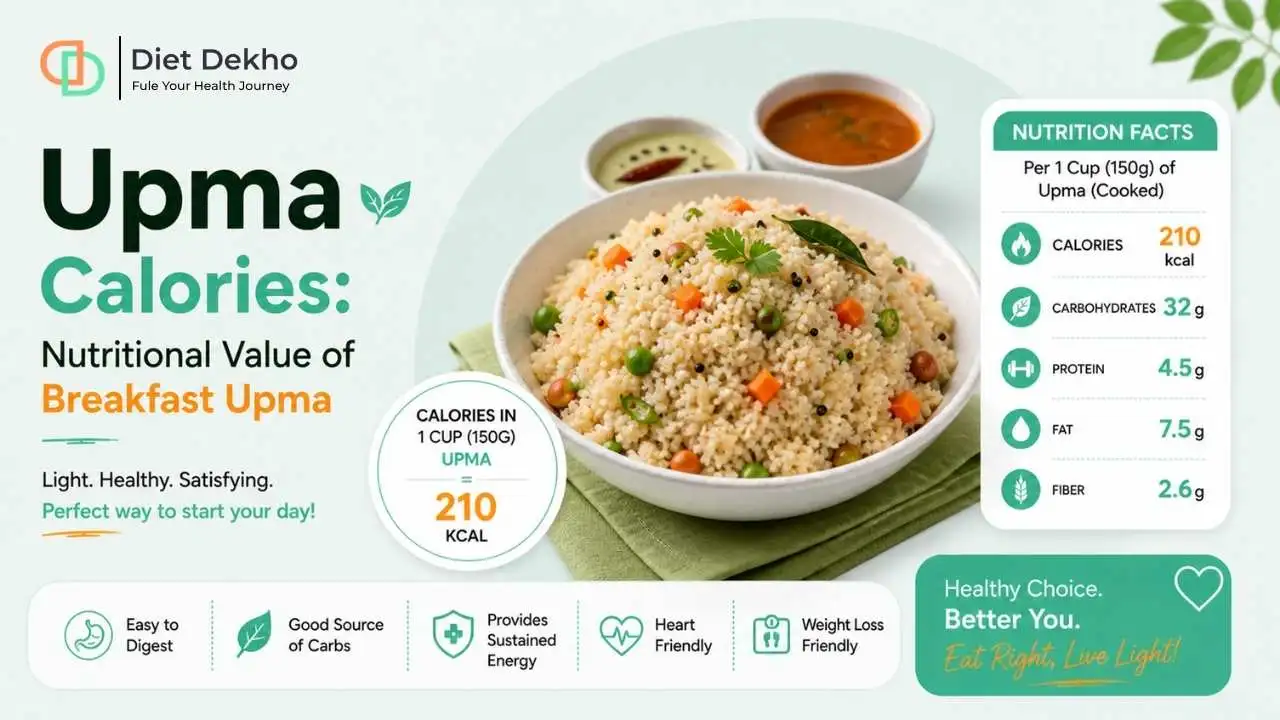
Do you often find yourself staring at your breakfast plate during the morning rush, wondering if your favorite meal is helping or hurting your health goals? I know it is hard to find time for elaborate meal planning when you are juggling a career and a household. Many of my clients at DietDekho ask the same thing: how do upma calories actually fit into a daily routine designed for weight loss or diabetes management? While the aroma of tempering mustard seeds feels like home, we must look closer at the science behind this staple to ensure it supports your journey toward a healthier lifestyle.
Upma is a calorie-dense Indian breakfast. A standard medium bowl (200g) of semolina upma contains approximately 416 calories, with 76g of carbohydrates, 13g of protein, and 8g of fat. However, you can significantly reduce upma calories by substituting refined rava with whole grains like oats or dalia. Adding fiber-rich vegetables also improves satiety and helps you manage blood sugar levels effectively.
The Energy Architecture of Semolina-Based Breakfasts
Your choice of base grain and cooking fats primarily determines the caloric footprint of your breakfast. Semolina, or rava, is a dense source of energy. Because of this, it requires careful portioning, especially for those with sedentary lifestyles. In fact, research indicates that the quantity you consume is the most critical factor in determining the total caloric load of your meal.
Granular Breakdown of Caloric Density
Producers derive semolina from the endosperm of durum wheat. This refining process strips away much of the bran and germ, leaving a grain that is high in complex carbohydrates. While this makes rava easy to digest, it also results in a higher energy density per gram than whole wheat flour. Consequently, your morning portion can add up much faster than you might realize.
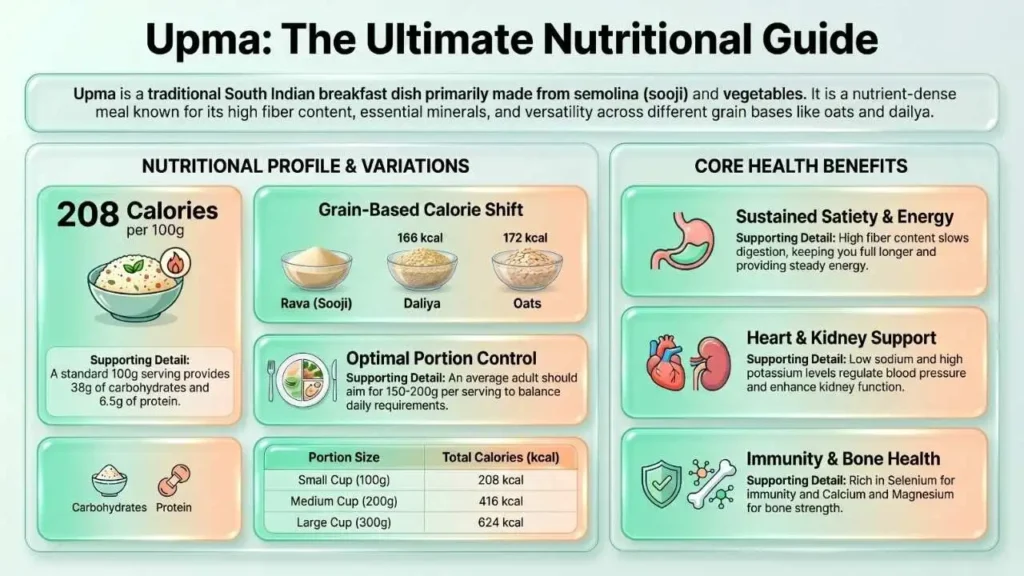
The following table shows how upma calories scale based on the serving size you choose for your meal.
| Quantity of Cooked Upma | Total Calories (kcal) | Carbohydrates (g) | Protein (g) | Fat (g) | Dietary Fiber (g) |
| Small Cup (100g) | 208 | 38 | 6.5 | 4 | 3 |
| Medium Cup (200g) | 416 | 76 | 13 | 8 | 6 |
| Large Cup (300g) | 624 | 114 | 19.5 | 12 | 9 |
As the data shows, a large serving can consume over 30% of the recommended daily calories for an average adult woman. For a sedentary woman, the daily requirement is roughly 1,660 calories. Moving from a medium cup to a large cup adds an extra 208 calories. Specifically, this is equivalent to a brisk 45-minute walk.
Comparative Caloric Analysis of Grain Variations
Let’s simplify this by looking at alternatives. One of the most effective ways to ease your weight-loss journey is to substitute refined grains with whole-grain options. The caloric content of your meal shifts significantly when you change the base ingredient. While semolina is the traditional choice, grains like dalia, oats, and millets offer a much better nutritional profile for long-term health.
| Type of Upma (per 100g) | Calories (kcal) | Protein (g) | Fat (g) | Carbohydrates (g) | Fiber (g) |
| Rava (Semolina) Upma | 208 | 6.5 | 4 | 38 | 3 |
| Oats Upma | 172 | 6.3 | 5 | 26 | 4 |
| Dalia (Broken Wheat) Upma | 167 | 5 | 3 | 30 | 5 |
| Jowar (Sorghum) Upma | 134 | 4.1 | 2.5 | 24 | 3.5 |
| Ragi (Finger Millet) Upma | 116 | 3.8 | 4.5 | 15 | 3.2 |
| Poha (Flattened Rice) | 130 | 2.5 | 2.6 | 25 | 0.7 |
The evidence is clear. Dalia upma provides nearly 20% fewer calories than rava upma. Furthermore, it offers 66% more fiber. For a busy person, these small swaps mean your daily routine becomes a tool for health instead of a source of stress.

The Diabetic Dilemma: Managing Postprandial Spikes
For my friends managing type 2 diabetes, the concern extends beyond simple upma calories. You must also consider how quickly those calories affect your blood glucose levels. Semolina has a moderate to high Glycemic Index (GI). This metric measures how fast a carbohydrate-containing food raises your blood sugar.
Understanding the Glycemic Index of Semolina
The GI of semolina is approximately 66. However, your preparation method can push this number as high as 78. High-GI foods cause rapid spikes in blood sugar. These spikes are risky for those with insulin resistance or poorly controlled glucose levels. Because refining removes the fiber, your body absorbs the sugar in the intestines much faster.
Moreover, the starch in semolina undergoes gelatinization during cooking. This process makes the starch more accessible to your digestive enzymes. Therefore, the softer and mushier you cook your upma, the faster the glucose enters your bloodstream. I want to reassure you that you do not need to eliminate upma entirely. Instead, we can modify its structure to provide more stable energy.
Strategies for Lowering the Glycemic Load
Experts at organizations like National Institutes of Health (NIH) suggest that specific portion hacks can moderate the glycemic impact of your meals.
- The Balanced Plate Rule: Your plate should ideally consist of 50% non-starchy vegetables, 25% protein, and only 25% semolina.
- Pulse Integration: Adding black gram (urad dal) or moong dal to the rava can reduce the GI by 15-20%.
- Veggie Loading: Incorporating high-fiber vegetables like carrots and beans can drop the GI to approximately 55.
- Protein Padding: Consuming your upma with curd or a boiled egg slows down gastric emptying. Consequently, this leads to a flatter glucose curve.
What this means for your daily routine is a shift from deprivation to intelligent pairing. For instance, adding a large bowl of sautéed vegetables to a small portion of rava makes the meal both satisfying and safe.

Satiety and the Science of Fullness
A common challenge with a semolina-only breakfast is the lack of long-lasting satiety. Refined rava is low in fiber. Therefore, your body digests it quickly. This often leaves you feeling hungry again within two hours of eating. This hunger gap usually leads to mid-morning snacking on high-calorie biscuits, which can hurt your weight-loss efforts.
The Role of Dietary Fiber in Weight Management
Fiber is the part of plant foods that your body cannot digest. It adds bulk to your stomach and slows the absorption of fats. The harvard.edu suggests that women should aim for 25 grams of fiber daily. Unfortunately, the average intake in modern diets is often as low as 14 grams.
A fiber-rich diet helps you maintain a healthy weight by promoting feelings of fullness. In fact, the POUNDS Lost study found that fiber intake was a primary predictor of weight loss. For you, adding vegetables isn’t just about vitamins. It creates physical volume that helps your brain feel satisfied on fewer calories.
Protein Density and Hormonal Regulation
Protein is the most satiating macronutrient. It triggers the release of hormones that tell your brain to stop eating. While rava upma provides about 6.5g of protein per 100g, this is usually not enough for a standalone weight-loss meal.
You can easily increase the protein content of your upma with these home-based solutions:
- Add roasted peanuts for healthy fats and protein. However, remember to control the portion as they are calorie-dense.
- Mix in boiled sprouts or paneer cubes to add a chew that promotes mindful eating.
- Serve it with a side of Greek yogurt. Research suggests that high protein at breakfast curbs appetite for the rest of the day.

Metabolic Bioactives: The Hidden Power of Spices
The traditional Indian tadka used in upma is more than just a flavor booster. It is a sophisticated way to deliver metabolic support. Spices like mustard seeds, curry leaves, and ginger contain compounds that influence your digestion and fat metabolism.
Mustard Seeds and Digestive Stimulation
Mustard seeds are a powerhouse of minerals like magnesium and selenium. Ayurveda recognizes mustard seeds for their warming qualities and stimulating effects on digestion. These seeds enhance your Agni, or digestive fire, making it easier for your body to break down food.
The active compound in mustard is called sinigrin. During digestion, it converts to allyl isothiocyanate (AITC). This compound has antimicrobial properties and may improve your circulation. Furthermore, clinical evidence suggests that mustard seed extracts may help lower blood sugar levels when used alongside standard medication.
Curry Leaves and Lipid Profiles
Curry leaves contain carbazole alkaloids, specifically mahanimbine. Research has linked these compounds to anti-obesity effects. These leaves are not just for decoration. They are rich in antioxidants that combat oxidative stress.
Specifically, a pilot study involving higher weight women found that combining curry leaf powder with exercise led to significant reductions in body weight and BMI. The fiber in curry leaves also supports your gut health. Consequently, this promotes the growth of beneficial bacteria that play a role in your metabolic function.
Ginger and Turmeric: Anti-Inflammatory Support
Ginger acts as a natural digestive aid by stimulating saliva production. This makes it easier for your body to absorb nutrients from your meal. Similarly, turmeric contains curcumin, which has potent anti-inflammatory properties. Chronic inflammation often drives obesity and insulin resistance. Therefore, including these spices in your breakfast provides cumulative health benefits.

ICMR-NIN 2024 Guidelines: A New Framework for Indian Health
The Indian Council of Medical Research (ICMR) recently updated their dietary guidelines to address rising health issues in India. These guidelines provide a scientific blueprint for structuring your traditional meals.
Shifts in Recommended Intake
The 2024 guidelines suggest a significant increase in vegetable intake. They also recommend reducing your reliance on refined grains.
| Nutritional Aspect | 2011 Guideline | 2024 Guideline | Significance for Upma |
| Vegetable Intake | 300g / day | 400g / day | Use a 1:2 ratio of grain to veggies. |
| Green Leafy Veg | 50g / day | 100g / day | Add spinach or fenugreek to your upma. |
| Whole Grains | General advice | 50% of cereal intake | Replace suji with whole wheat dalia. |
| Dietary Fiber | General advice | 25-30g / day | Use high-fiber grain substitutes. |
The ICMR-NIN My Plate for the Day recommends that half of your plate should consist of fruits and vegetables. For your upma, this means your bowl should have an equal or larger volume of sautéed vegetables compared to the grain.

Upma vs. Poha: The Weight-Loss Comparison
Many of you face a daily choice between upma and poha. Both are staples, but they offer different advantages for your metabolic goals.
Caloric and Macronutrient Differences
Poha is generally lower in calories and fat than traditional upma. This makes it a lighter option if you are prioritizing low energy density.
| Metric (per 100g cooked) | Upma (Suji) | Poha (Rice) | Expert Insight |
| Calories | ~150-208 | ~130-150 | Poha is lighter in energy density. |
| Protein | ~3-6.5g | ~2.5g | Upma is better for muscle health. |
| Iron | Moderate | High | Poha provides more dietary iron. |
| Satiety | High | Moderate | Upma keeps you full longer. |
If you are a busy professional needing to power through a hectic morning, upma is often the better choice. Its protein and complex carbohydrates provide a steady release of energy. However, if your main goal is to keep calories low, vegetable-loaded poha may have a slight edge.
Ayurvedic Wisdom: Balancing your Constitution
Ayurveda views food as information for your body’s unique constitution. Upma is a heavy food. Because of this, it can be challenging for certain body types to digest.
Kapha, Pitta, and Vata Considerations
- Kapha: If you struggle with weight gain and sluggishness, you should be cautious with large portions of upma. Instead, choose upma made with ragi or bajra. These are lighter and more drying.
- Pitta: If you experience acidity or heat, moderate your use of mustard seeds and chilies. You can use cooling garnishes like fresh coriander to balance the heat.
- Vata: If your digestion is irregular, you can benefit from the warm nature of upma. Adding a small amount of ghee helps ground your energy and improves nutrient absorption.

Practical Home Solutions for Busy Professionals
Transitioning to a healthier diet does not have to be an all-or-nothing effort. Let’s look at some simple ways to fit health into your busy routine.
Time-Saving Hacks
- Pre-Roasting Rava: Dry-roasting a large batch of semolina or dalia over the weekend saves you 10 minutes on busy mornings.
- Frozen Veggie Mixes: Keep a bag of frozen peas and carrots in your freezer. This allows for instant veggie-loading without extra chopping.
- One-Pot Millets: Use a pressure cooker to make millet-based upma. This significantly reduces your cooking time while boosting fiber.
Mindful Portioning
I recommend using a standard measuring cup. Aim for 1/2 cup of cooked grain and fill the rest of your bowl with vegetables. This is a simple way to control upma calories without feeling like you are missing out.

Frequently Asked Questions
Is upma calories 1 bowl suitable for a weight-loss diet?
A single bowl of traditional rava upma can contain over 400 calories. Consequently, it might be too high for some plans. However, you can reduce this to 200-250 kcal by using dalia and adding more vegetables.
Can a diabetic person eat suji upma every day?
I do not recommend consuming refined suji upma daily. It has a moderate glycemic index and can cause blood sugar spikes. Instead, you should rotate it with lower-GI options like oats upma or moong dal chilla.
What is the healthiest way to cook upma?
The healthiest method involves dry-roasting the grain and using minimal oil. Specifically, you should add a variety of non-starchy vegetables and incorporate a protein source like curd.
Why are curry leaves and mustard seeds important in upma?
Beyond flavor, these ingredients provide metabolic benefits. Mustard seeds stimulate your digestion. Similarly, curry leaves contain alkaloids that support your fat metabolism and lipid profiles.
How does the protein in upma compare to poha?
Upma made with semolina has more protein (approx. 6.5g per 100g) than poha (2.5g). For this reason, it is a more muscle-building option, especially if you add nuts or pulses.
Conclusion and Strategic Recommendations
The analysis of upma calories shows that this dish can be a nutritional powerhouse if prepared correctly. For the busy professional or homemaker, the path forward involves modification rather than elimination. By shifting to whole grains like dalia or oats, you lower the energy density of your meal. Furthermore, you dramatically increase its satiety value.
The 2024 ICMR-NIN guidelines remind us that our plates must evolve. Transforming your upma with seasonal vegetables and protein-rich curd aligns with these goals. Long-term health is built on small, consistent steps. Choosing to measure your portions and prioritizing fiber are actions you can start following today.
Let’s work together to create a dietary plan that fits your life. Connect with our experts today for personalized guidance.
Contact Us
We understand how overwhelming nutrition and weight loss information can feel. With so many opinions and confusing advice online, it’s easy to feel stuck or unsure about what to do next.
At Diet Dekho, you never have to figure it out alone. You can contact us anytime with any questions or concerns. Our expert dietitians are available 24/7 to guide, support, and help you stay on track. Whether your goal is weight loss or building healthier habits, we’re here to make the journey simpler and more sustainable for you.
Disclaimer
This blog is intended to help readers make healthier food choices. Your health should always be the top priority. Before starting any restrictive or special diet, especially if you have a medical condition or health concern, please consult a doctor or a qualified dietitian. Each body responds differently to food and lifestyle changes. Always choose what is safe and suitable for you.

Abhinav is the Founder of Diet Dekho, helping people manage weight and lifestyle health through simple, practical nutrition and personalized diet plans.