I know exactly how it feels when you come home after a long day, exhausted from meetings or household chores, only to find yourself staring at the fridge with a sense of dread. Meera, a busy teacher I recently spoke with, felt the same way; she was terrified that her late-night snacking was ruining her diabetes management. However, by adding more zero calorie food options to her late-night routine, she finally found a way to stay full and healthy without the heavy burden of guilt.
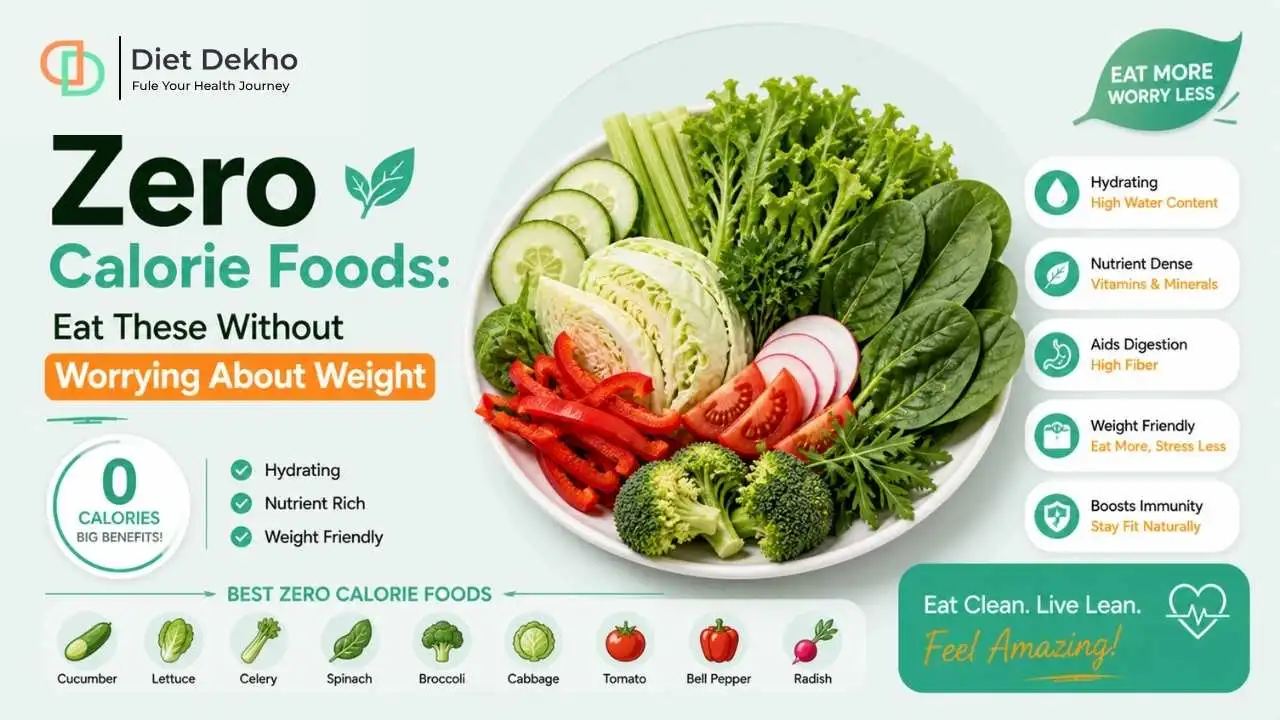
A zero calorie food is a nutrient-dense, high-volume item-like cucumber, celery, or leafy greens-that provides very few calories while requiring significant energy to digest. These foods help you stay full and stabilize blood sugar by providing bulk and fiber. Therefore, they allow you to eat satisfying portions without exceeding your daily energy limits.
The Secret of Volume Eating in Your Daily Routine
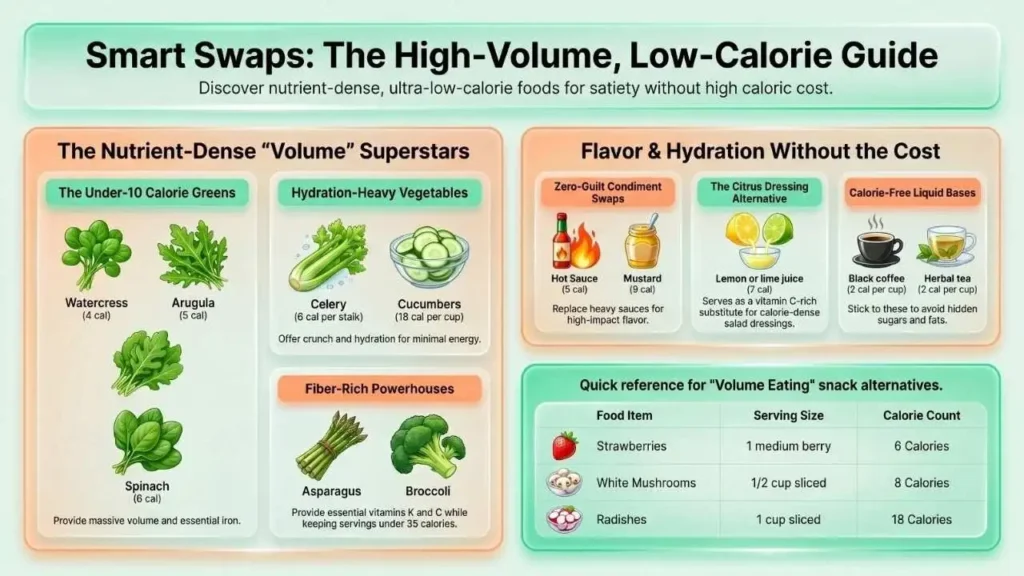
What this means for your daily routine is that the volume of food you eat matters more than the weight of it. Your stomach contains special sensors called mechanoreceptors. These sensors tell your brain when you are full based on how much the stomach stretches. Consequently, when you eat foods that are heavy but low in calories, you trigger these sensors early in the meal.
Let’s simplify this concept of energy density. Imagine a single small biscuit. It might have the same number of calories as two whole cucumbers. While the biscuit is gone in two bites, the cucumbers take time to chew and fill your stomach completely. By choosing high-volume, low-calorie foods, you can eat a genuinely large portion and still stay within your target for the day.
Why the Indian Plate Needs a Balance Check
I understand that rice and roti are the heart of our meals. They are tied to our culture and our childhood memories. Nevertheless, the latest research from the National Institutes of Health and the ICMR shows a sobering reality. Most Indians get a staggering 62% of their daily calories from low-quality carbohydrates like white rice and refined wheat.
This study, which analyzed over 18,000 adults, found that people eating the most carbohydrates had a 30% higher risk of developing type 2 diabetes. What this means for you is that simply switching from white rice to whole wheat isn’t enough. Instead, we need to reduce the total amount of grains and increase the space on our plate for vegetables. This is where the concept of a zero calorie food becomes your best friend in the kitchen.
| Metric | Current Status (2022-2025) | Future Projection (2032-2050) |
| Obesity Prevalence | 223 million adults | 17.4% of women |
| Diabetes Rate | 11.4% | Rising steadily |
| Economic Cost | 28.95 billion | 839 billion by 2060 |
| Prediabetes | 15.3% | High risk of conversion |
Best Zero Calorie Food Options Found in Your Local Subzi Mandi
Let’s talk about the vegetables sitting in your fridge right now. These aren’t just side dishes; they are powerful tools for weight management. For example, the humble Lauki (bottle gourd) is over 90% water. A bowl of Lauki soup or curry is only about 80 to 100 calories but provides immense volume that stretches your stomach.
Similarly, the cucumber is a hydration hero with only 16 calories per 100 grams. I always tell my clients to keep a bowl of sliced cucumbers on the dining table. If you eat a few slices before your main meal, you naturally eat less of the heavy rice or roti. This is called pre-loading, and it is a simple way to manage your portions without feeling restricted.
Lauki: The Hydration King of Indian Kitchens
Bottle gourd is rich in water and fiber, making it exceptionally light on the stomach. Because it is so easy to digest, it helps people feel full without feeling heavy or uncomfortable. In most Indian homes, we cook it as a simple sabzi or add it to dal. When you prepare it with minimal oil and mild spices like cumin and turmeric, it becomes an ideal tool for weight loss.
Cucumber: Your Pre-Meal Satiety Tool
Because cucumbers are mostly water, they are extremely low in calories. A half-cup of slices contains only about 8 calories. Furthermore, keeping them chilled improves their texture and makes them more satisfying. Many of my clients find that thinly slicing them for more crunch per bite helps manage mindless grazing during long work hours.
Spinach and Cabbage: The Fiber Powerhouses
Spinach provides only 23 calories per 100 grams but is loaded with iron and magnesium. Additionally, it adds massive volume to your meals without increasing your calorie intake. Cabbage is another excellent choice because it has more chew than lettuce, which makes it feel more substantial. It works well when you want volume and texture in your salads or stir-fries.
| Vegetable | Calories per 100g | Key Nutrients | Metabolic Benefit |
| Lauki | 14 kcal | Vitamin C, Fiber | Hydrating, easy to digest |
| Palak (Spinach) | 23 kcal | Iron, Vitamin K | Supports bone health |
| Cauliflower | 25 kcal | Vitamin C, Folate | Excellent rice substitute |
| Cabbage | 25 kcal | Vitamin K, Fiber | Satiating, high volume |
| Mushrooms | 22 kcal | Selenium, Protein | Meaty texture, low calorie |
Debunking the Myth of Negative Calorie Foods
I’ve heard many people talk about negative calorie foods, and I want to be honest with you. The idea that you burn more calories digesting a food than the food itself provides is mostly a myth. While it sounds wonderful in theory, even the lowest calorie foods like celery still provide a small net gain of energy to the body.
However, the thermic effect of food (TEF) is real. This is the energy your body uses to chew, digest, and process nutrients. Protein has the highest thermic effect, using up to 30% of its calories just for processing. Most zero-calorie options are rich in fiber and water, which also require energy to move through your system. While they aren’t negative, their impact on your weight is negligible compared to processed snacks.
According to a 2022 study in the American Journal of Clinical Nutrition, high-water vegetables like celery and lettuce produce a net-zero impact due to their digestion energy cost. In essence, swapping out heavy sides for a zero calorie food like a green salad is the most effective way to stay in a deficit without feeling like you are starving.
Managing Diabetes with High-Volume Veggies
If you are living with diabetes, every meal can feel like a math problem. I know how stressful it is to watch your glucose levels after eating. What this means for your daily routine is that you should prioritize foods that don’t cause insulin spikes. Vegetables like broccoli and leafy greens have a very low glycemic index.
Fibre is your secret weapon here because it slows down the absorption of sugar into your bloodstream. When you combine a small portion of dal with a large portion of spinach or cabbage, you prevent that sugar crash that makes you crave sweets an hour later. It’s not about giving up your favorite foods; it’s about changing the proportions on your plate to favor healthier choices.

Expert Advice from India’s Leading Nutritionists
Celebrity nutritionist Rujuta Diwekar often highlights that our traditional food wisdom is priceless. She suggests that if your diet is limited to foods with English names like avocado or quinoa, rather than items from your local cuisine, it might not be sustainable.
There is nothing we need to stay fit, healthy and lose weight that is not available in our kitchen or the local grocery store, Diwekar explains. Consequently, focusing on Ghar ka Khana-the food we grew up with-is the key to long-term success. She also advises that mealtimes should bring comfort, not confusion. If you find yourself constantly planning whether to eat that second roti, your diet has already taken away your peace of mind.
The Harvard Longevity Connection
Interestingly, eating less could actually help you live longer. Research from Harvard Health shows that calorie restriction can activate longevity genes called sirtuins. These enzymes help your mitochondria-the tiny power plants in your cells-stay healthy as you age. This isn’t about starving yourself; it’s about providing your body with high-quality nutrients without the excess energy that causes oxidative stress.
In studies on various species, those on a calorie-restricted diet had significantly lower rates of cancer and heart disease. While we are still learning how this applies to humans, the message is clear: a diet rich in high-volume, low-calorie options supports your body at a cellular level. It is truly an investment in your future health.

Practical Meal Prep for Busy Professionals
I know how hard it is to cook healthy when you get home late. Let’s simplify this. One of my favorite hacks is to spend just 30 minutes on Sunday pre-chopping your vegetables. Wash your spinach, slice your cucumbers, and grate your carrots. When they are ready in the fridge, you are much more likely to add them to your meal.
Another great tip is to use your freezer. Frozen vegetables are often just as nutritious as fresh ones because they are frozen at the peak of ripeness. You can throw a handful of frozen peas or broccoli into your dal or khichdi without any extra prep time. This makes it so much easier to bulk up your meals even on your busiest days.
High-Volume Indian Snack Ideas
| Snack | Preparation Tip | Calorie Count |
| Roasted Makhana | Roast on low flame with chaat masala | ~100 kcal per bowl |
| Sprout Chaat | Mix with onion, tomato, and lemon | ~120 kcal per bowl |
| Cucumber Raita | Use low-fat curd and grated cucumber | ~60 kcal per serving |
| Masala Papad | Roast (don’t fry) and top with veggies | ~66 kcal per piece |

Overcoming Bloating and Fiber Cravings
When you start eating more fiber-rich vegetables, you might notice some bloating or gas. I want to tell you that this is normal! Your gut bacteria are adjusting to the new, healthy fiber. The best way to avoid this is to increase your intake slowly. Start with one extra serving of vegetables a day and drink plenty of water to help the fiber move through your system.
If you find yourself craving sweets, it might be a sign that you aren’t eating enough throughout the day. Instead of fighting the craving, try having a small bowl of strawberries or a slice of watermelon. These provide the sweetness you want with very few calories and a lot of hydration. Ultimately, it’s about being kind to yourself while staying on track.
Success Stories: Real People, Real Health Gains
I want to share the story of Tanushree, a 36-year-old mother who lost 37kg at home. She didn’t use expensive gym equipment. Instead, she simply returned to traditional Indian foods and practiced mindful portion control. She used household items as weights and focused on home-cooked meals.
Another inspiring example is Rajyalakshmi, a homemaker from Hyderabad who lost 14kg. She struggled with thyroid issues and back pain, which made exercise difficult. By working with a dietitian to adjust the timing and types of food she ate, she was able to reclaim her health. Their stories prove that you don’t need extreme methods; you just need the right habits and a little guidance.

The Expert’s Final Advice for Your Journey
I know it’s hard to change the way you eat, especially when you are busy taking care of everyone else. But remember, your health is the foundation for everything you do. By choosing a zero calorie food for your snacks or bulking up your meals with gourds and greens, you are making a choice to feel better, have more energy, and manage your weight for the long term.
You don’t have to be perfect. You just have to be consistent. Start by making one small change today-maybe a bowl of Lauki soup before dinner or swapping your afternoon biscuit for some cucumber slices. Over time, these small steps will lead to a big transformation in your health and your life. I am here to support you every step of the way.
If you are looking for a personalized plan that fits your busy life and addresses your specific health needs, let’s work together to find a solution that truly works for you.

Frequently Asked Questions
Can I lose weight by only eating zero calorie food?
While these foods are excellent for weight loss, I don’t recommend eating only them. Your body needs protein, healthy fats, and some carbohydrates to function properly. Use these options to bulk up your meals and stay full, but ensure you are still getting a balanced range of nutrients for energy and muscle health.
Which vegetables are best for people with diabetes?
Leafy greens like spinach and gourds like Lauki are incredible for diabetes management. They are very low in calories, high in fiber, and help prevent blood sugar spikes. Always consult your doctor, but filling your plate with these will generally help stabilize your glucose levels.
Is there such a thing as a negative calorie food?
Scientifically, no. Every food provides some energy. However, foods like celery and cucumber are so low in calories that the net impact on your weight is negligible. They are the closest thing we have to a free food in our diet and are perfect for mindless snacking.
How do I stop bloating when eating more vegetables?
Bloating usually happens because your gut isn’t used to high fiber. I suggest you start slow. Add one vegetable-rich meal a day and gradually increase. Also, make sure you are drinking enough water, as fiber needs water to pass through the digestive tract smoothly.
Are pickles considered a zero calorie food?
Pickles are very low in calories, usually around 10-15 per serving. However, they are often high in sodium (salt). If you have high blood pressure or are prone to water retention, enjoy them in moderation. They are a great way to curb a salty craving without the calories of chips.
Contact Us
We understand how overwhelming nutrition and weight loss information can feel. With so many opinions and confusing advice online, it’s easy to feel stuck or unsure about what to do next.
At Diet Dekho, you never have to figure it out alone. You can contact us anytime with any questions or concerns. Our expert dietitians are available 24/7 to guide, support, and help you stay on track. Whether your goal is weight loss or building healthier habits, we’re here to make the journey simpler and more sustainable for you.
Disclaimer
This blog is intended to help readers make healthier food choices. Your health should always be the top priority. Before starting any restrictive or special diet, especially if you have a medical condition or health concern, please consult a doctor or a qualified dietitian. Each body responds differently to food and lifestyle changes. Always choose what is safe and suitable for you.

Abhinav is the Founder of Diet Dekho, helping people manage weight and lifestyle health through simple, practical nutrition and personalized diet plans.