I want you to picture a typical Tuesday morning in an Indian household. You are likely rushing to get the kids ready for school, or perhaps you are a professional finishing a presentation before your first meeting. You grab a quick cup of chai and maybe a rusk or a biscuit, promising yourself a real breakfast later. By 11 AM, you feel that familiar crash-your energy vanishes, your focus blurs, and you feel a strange sense of hunger that isn’t quite satisfied by more tea. If you are managing diabetes, this isn’t just about tiredness; it’s about that hidden spike in your sugar levels that makes your doctor look worried during your check-ups. Transitioning to the best vegan protein diet isn’t about following a global trend or deprivation; it is about finding a sustainable way to keep your energy steady and your blood sugar in check without spending hours in the kitchen.
The best vegan protein diet focuses on high-fiber, low-glycemic plant proteins like lentils, soy, and millets to stabilize blood sugar. By combining pulses with whole grains and seeds, you ensure a complete amino acid profile that improves insulin sensitivity. This approach manages diabetes naturally while providing steady energy for busy Indian professionals and homemakers.
Why Your Current Diet Might Feel Like a Rollercoaster
I know it is hard to find time for yourself when everyone else depends on you. What I see most often in my practice at DietDekho is that we tend to rely on easy carbs-white rice, maida, or potatoes-because they are quick. But for someone with diabetes, these foods are like pouring fuel on a fire. They digest almost instantly, sending your glucose levels sky-high. This triggers your body to release a burst of insulin, which eventually leads to a sugar crash. You end up feeling exhausted and craving more sweets.
Switching to a plant-based protein framework changes this dynamic. Plant proteins are almost always packaged with fiber. Think of fiber as a slow-motion button for your digestion. It prevents that sudden flood of sugar into your blood. When you choose the best vegan protein diet, you are essentially giving your body a steady drip of energy rather than a sudden, overwhelming surge. Research published by Harvard Health indicates that people following a healthy plant-based diet have a 23% lower risk of developing type 2 diabetes. For those already managing the condition, it helps lower HbA1c levels and reduces the need for heavy medication.
Let’s Simplify the Science of Plant Protein
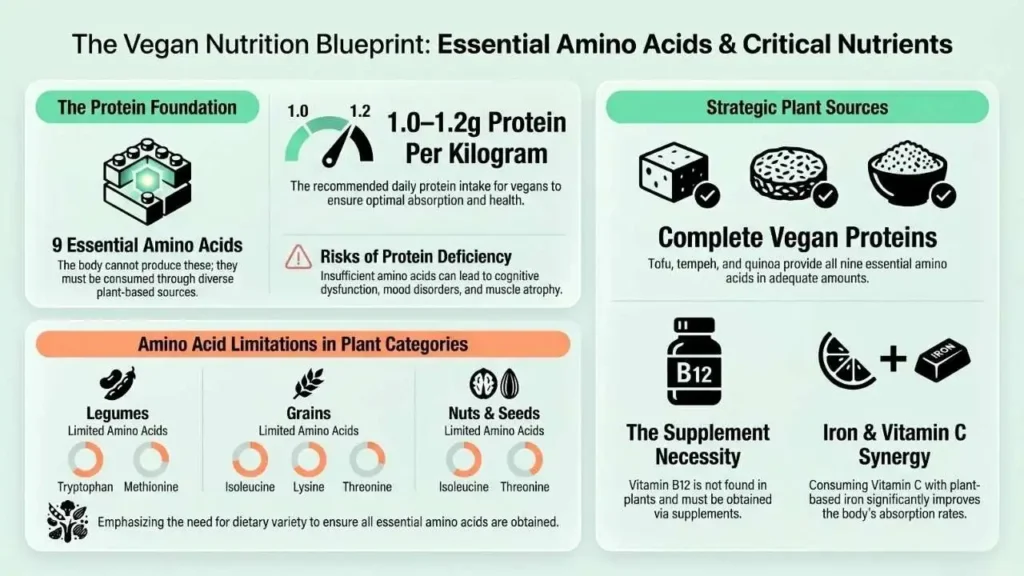
You might have heard people say that vegan protein is incomplete. This can sound scary, as if you’re missing out on some vital building block. Let’s simplify this. Proteins are made of 20 different amino acids. Our bodies can make 11 of them, but we must get the other nine from our food. While meat has all nine in one go, plants usually have some but not others.
What this means for your daily routine is quite simple. You don’t need to worry about getting every amino acid in every single bite. If you eat a variety of foods throughout the day, your body is smart enough to pool them together. For example, rice is low in an amino acid called lysine but high in methionine. Lentils are exactly the opposite-high in lysine and low in methionine. When you eat them together (like in a comforting bowl of dal-chawal) or even across different meals, they complement each other perfectly.
| Plant Protein Type | Primary Amino Acid Contribution | Common Indian Source |
| Legumes & Pulses | Lysine | Moong Dal, Chana, Rajma |
| Grains & Millets | Methionine, Cysteine | Bajra, Jowar, Brown Rice |
| Soy Products | Complete (All 9) | Tofu, Soya Chunks, Tempeh |
| Nuts & Seeds | Varied | Almonds, Walnuts, Chia Seeds |
For someone not going to the gym but just trying to stay healthy, the National Institute of Nutrition (NIN) recommends about 0.8g to 1g of protein per kilogram of body weight. If you weigh 60 kg, that is roughly 48g to 60g of protein a day. It sounds like a lot, but I’ll show you how easily we can hit that target using our own Indian kitchen staples.
The Soy Secret: Your Most Powerful Tool
If there is one thing I want you to stock up on, it is soy. It is one of the few plant foods that is a complete protein, rivaling the quality of animal products. For a busy homemaker or professional, soya chunks (Nutrela) are a lifesaver. They are affordable, have a long shelf life, and are incredibly high in protein. Just 50g of soya chunks give you about 25g of protein-that is nearly half your daily requirement in one meal!
Tofu is another excellent option, especially if you miss paneer. While paneer is great, tofu is lower in saturated fat and has zero cholesterol, which is a bonus for heart health. It takes on the flavor of whatever you cook it with. You can make a Tofu Bhurji just like you’d make a paneer one. For an even bigger health boost, try tempeh. It is fermented soy, which makes it much easier on your gut. Since gut health is closely linked to how your body handles sugar, tempeh is a top-tier choice for the best vegan protein diet.

Dals and Pulses: The Heart of the Indian Kitchen
I know you probably already eat dal, but let’s look at how we can make it work harder for your sugar control. Not all dals are created equal. For a diabetic diet, moong dal is a hero because it is very easy to digest and has a low glycemic impact. Chickpeas (chole) and kidney beans (rajma) are also fantastic because they are loaded with fiber. A single cup of cooked rajma has about 15g of protein and 15g of fiber.
The trick I always tell my clients is to focus on the sprout. Sprouting your moong or chana increases the vitamins and makes the protein easier for your body to absorb. It also reduces the gas or bloating that some people feel when they eat a lot of lentils. A simple sprouted moong salad with some lemon juice and black salt is a perfect 4 PM snack when you’re tempted to reach for fried biscuits.
| Indian Pulse/Legume | Protein (per 100g cooked) | Glycemic Index (GI) | Top Benefit |
| Moong Dal | 8-9g | 38 (Low) | Extremely easy to digest |
| Chickpeas (Chole) | 8-9g | 28 (Low) | High in resistant starch |
| Kidney Beans (Rajma) | 8g | 19 (Low) | Excellent for heart health |
| Soya Chunks | 25g (per 50g) | Very Low | Highest protein yield |
| Black Chana | 7-8g | 28-33 (Low) | Rich in iron and fiber |

Sattu: The Poor Man’s Superfood
I want to introduce you to something that is often overlooked but is actually a metabolic powerhouse: Sattu. Made from roasted Bengal gram, sattu is essentially a natural protein powder. It has a very low glycemic index of around 28, which means it won’t cause those scary sugar spikes.
For a busy professional, a sattu drink is the ultimate fast food. You just mix two tablespoons of sattu in water with a bit of roasted cumin powder (jeera), black salt, and lemon. It’s cooling, filling, and gives you about 6-7g of high-quality protein instantly. It is far better than any commercial diet shake that is often full of hidden sugars and artificial flavors.
The Magic of Millets and Ancient Grains
Let’s talk about your roti. Most of us are used to eating wheat or rice. While they aren’t bad, they can be tough on your blood sugar. I recommend swapping at least one meal’s worth of wheat for millets like Bajra (pearl millet), Jowar (sorghum), or Ragi (finger millet). These are slow carbs. They take longer to break down, which means they keep you full for hours.
Ragi is especially good for women because it is packed with calcium. Jowar is very high in fiber, which helps clean your system. If you want something even more modern, Quinoa is a great pseudocereal that is a complete protein and can be used exactly like rice in a pulao or khichdi.
| Grain/Millet | Protein per Cup (Cooked) | GI Category | Key Micronutrient |
| Bajra | 11g | Moderate | Magnesium (for insulin) |
| Ragi | 7-8g | Low-Moderate | Calcium (for bones) |
| Jowar | 8-9g | Low-Moderate | Dietary Fiber |
| Quinoa | 8g | 53 (Low) | All 9 Amino Acids |
| Brown Rice | 5g | 50-55 (Low) | Manganese |

Nuts and Seeds: The Tiny Powerhouses
I know it’s tempting to snack on something crunchy when you’re stressed. Instead of namkeen, let’s use nuts and seeds. Walnuts and almonds are great for heart health and provide healthy fats that actually help your body use insulin better.
Don’t forget the seeds! Chia seeds and flaxseeds are rich in Omega-3 fatty acids, which reduce inflammation. Inflammation is like a quiet fire in the body that makes diabetes worse. Adding just a spoonful of seeds to your morning oats or daliya can make a big difference over time. Hemp seeds are also emerging as a fantastic source of protein for the best vegan protein diet, providing 10g of protein in just three tablespoons.
Bioavailability: Getting the Most from Your Food
One thing we don’t talk about enough is how our body actually uses the protein we eat. This is called bioavailability. In plant proteins, the fiber and certain anti-nutrients can sometimes block protein absorption. But our traditional Indian cooking methods already have the solution!
Soaking your dals and grains overnight doesn’t just make them cook faster; it breaks down phytic acid, which allows your body to absorb more minerals and protein. Fermenting (like we do for idli and dosa) also makes the nutrients more available. And the tadka or tempering with spices like turmeric, ginger, and garlic isn’t just for taste-it helps with digestion and reduces inflammation.

Practical Meal Prep for the Busy Indian
I know it’s hard to imagine cooking complex meals every day. Let’s simplify this for your daily routine. You don’t need to cook from scratch every time.
- The Sunday Boil: Spend 30 minutes on Sunday boiling a large batch of chickpeas, rajma, or whole moong. Store them in the fridge. Now, during the week, you can just toss them into a salad, a quick stir-fry, or a light gravy.
- The Base Masala: Make a big batch of onion-tomato paste and freeze it in an ice-cube tray. One cube is enough to start a healthy vegetable or dal preparation in minutes.
- The Pre-Mix: Keep a jar of sattu or a homemade powder of roasted nuts and seeds ready. If you’re running late for work, a quick shake will keep your sugar stable until lunch.

Managing Night-Time Spikes and Sleep
A common struggle I hear about is the morning sugar spike. Often, this happens because of what you ate for dinner or the lack of protein to stabilize your sugar overnight. A light, high-protein dinner is key. Think of a tofu stir-fry with lots of green veggies or a bowl of lentil soup (rasam or dal) with a small portion of millets.
Avoid heavy, carb-rich meals late at night. If you feel hungry before bed, a small handful of walnuts or a glass of warm unsweetened almond milk with a pinch of turmeric can be very soothing and won’t spike your levels.
7-Day Steady-Sugar Vegan Protein Plan
This plan is designed for the Indian palate, focusing on foods you can find at your local grocer.
| Day | Breakfast (8-9 AM) | Lunch (1-2 PM) | Evening Snack (4-5 PM) | Dinner (8-9 PM) |
| Mon | Moong Dal Chilla with Mint Chutney | Brown Rice + Rajma + Cucumber Salad | Roasted Chana | Soya Chunk Curry + Sautéed Palak |
| Tue | Vegetable Oats Upma with Almonds | 2 Jowar Rotis + Mixed Dal + Lauki | 1 Small Guava + Walnuts | Tofu Bhurji + Stir-fried Beans |
| Wed | Sprouted Moong Chaat | Millet Khichdi with Veggies | Coconut Water | Veggie Stew + 1 Ragi Roti |
| Thu | Besan Chilla with Veggies | 2 Bajra Rotis + Chole + Salad | Roasted Makhana | Lentil Soup + Grilled Tofu |
| Fri | Poha with Peanuts and Peas | 1 Cup Quinoa Pulao + Dal Fry | Sattu Drink (Namkeen) | Bhindi Masala + 1 Multigrain Roti |
| Sat | Ragi Dosa with Coconut Chutney | 2 Rotis + Masoor Dal + Cabbage | Sprouts Salad | Tofu & Veggie Stir-fry |
| Sun | Daliya Porridge with Seeds | Brown Rice + Chana Masala + Salad | Handful of Almonds | Vegetable Soup + Steamed Moong |
Addressing the Myths: Soy and Kidney Health
I want to clear up two big myths that often scare people away from the best vegan protein diet.
First, there is the fear that soy is bad for hormones. Scientific evidence shows that having 1-2 servings of soy a day is perfectly safe and actually helps lower bad cholesterol and improve insulin sensitivity.
Second, many people worry that high protein will hurt their kidneys. For a healthy person, this isn’t true. For someone with diabetes, plant proteins are actually gentler on the kidneys than animal proteins like red meat or heavy dairy. Of course, always talk to your doctor if you have advanced kidney issues, but for most of us, these plant sources are a safer bet.

Looking Ahead: Trends for 2026
As we look toward 2026, the focus is moving away from fake meats and toward authentic plant-based eating. People are going back to traditional grains like Horse Gram (Kulthi) and Fava beans because they are naturally nutritious.
What this means for you is that you don’t need to buy expensive, imported superfoods. Your local market has everything you need. The vegan revolution in India is really just a return to our roots-eating more dals, more local vegetables, and fewer processed foods.
Making the Change Today
I know it’s daunting to change how you eat. But remember, it’s not about being perfect. It’s about making one better choice at a time. Maybe today, you just swap your morning biscuit for a handful of almonds. Tomorrow, you try a moong dal chilla instead of white bread toast.
These small steps add up. By following the best vegan protein diet, you aren’t just managing a number on a blood test; you are giving yourself more energy to play with your kids, more focus for your work, and a generally happier, lighter feeling. You’ve got this!

Frequently Asked Questions
Q1: Can the best vegan protein diet really provide enough protein for a non-gym person?
Absolutely. By including a variety of dals, soya, nuts, and seeds, you can easily hit the 50-60g of protein recommended for the average adult. You don’t need supplements if your plate is balanced with pulses and whole grains.
Q2: Is sattu better than vegan protein powder for diabetes?
For most people, sattu is a fantastic whole-food alternative. It is rich in fiber and has a very low glycemic index, which protein isolates often lack. It keeps you fuller for longer and is much more affordable.
Q3: Won’t eating more dal increase my uric acid?
This is a common concern. However, recent research suggests that plant-based purines in dals are less likely to trigger gout or high uric acid than those in meat or seafood. Staying hydrated and choosing dals like moong is usually very safe.
Q4: How do I handle social gatherings where there are no vegan options?
It can be tricky! My advice is to have a small protein-rich snack (like a handful of nuts) before you go. At the party, look for dal, roasted snacks, or vegetable-based dishes. Don’t be afraid to ask for simple changes, like a roti without ghee.
Q5: Are millets safe for everyone with diabetes?
Yes, most millets have a lower GI than white rice and are very safe. However, portion control is still important. Even healthy food can spike sugar if eaten in very large quantities. Aim for about 1/4th of your plate to be grains.
Conclusion and Next Steps
Starting your journey toward the best vegan protein diet is one of the kindest things you can do for your body. We have explored how simple swaps-like choosing sattu over sugary drinks or millets over white rice-can transform your energy levels and stabilize your blood sugar. I know you’re busy, but by using the meal prep tips we discussed, you can make this lifestyle fit into your schedule rather than fighting against it.
If you are feeling overwhelmed and want a plan tailored specifically to your health goals and kitchen habits, I am here to help. Let’s work together to find a path that feels like a natural part of your life, not an extra chore.
Take control of your health today by reaching out for a personalized consultation:
Contact Us
We understand how overwhelming nutrition and weight loss information can feel. With so many opinions and confusing advice online, it’s easy to feel stuck or unsure about what to do next.
At Diet Dekho, you never have to figure it out alone. You can contact us anytime with any questions or concerns. Our expert dietitians are available 24/7 to guide, support, and help you stay on track. Whether your goal is weight loss or building healthier habits, we’re here to make the journey simpler and more sustainable for you.
Disclaimer
This blog is intended to help readers make healthier food choices. Your health should always be the top priority. Before starting any restrictive or special diet, especially if you have a medical condition or health concern, please consult a doctor or a qualified dietitian. Each body responds differently to food and lifestyle changes. Always choose what is safe and suitable for you.

Abhinav is the Founder of Diet Dekho, helping people manage weight and lifestyle health through simple, practical nutrition and personalized diet plans.