Nina’s morning usually begins before the sun rises in a small, bustling kitchen in Delhi, where the scent of boiling milk and toasted wheat fills the air. For twenty-seven years, her identity has been tied to the food she serves her family, yet recently, that same kitchen has felt like a prison. Between managing her household duties and navigating the stress of her work, Nina was diagnosed with Type 2 Diabetes, leaving her overwhelmed by complicated medical advice. Like many of my clients at DietDekho.com, she asked a single, urgent question: what can I eat right now to stop these sugar spikes? Consequently, I told her that the most powerful tool in her arsenal is the strategic use of zero carbohydrate food to reset her metabolism and take the pressure off her insulin-producing cells.
Choosing zero carbohydrate food allows your body to enter a state called ketosis, where it burns fat for fuel instead of sugar. This approach involves prioritizing pure proteins like eggs and chicken, healthy fats such as ghee or coconut oil, and non-starchy vegetables. By eliminating refined grains and sugars, you can effectively stabilize blood glucose and lose weight.
The Physiological Imperative of Carbohydrate Restriction in South Asians
I know it’s hard to hear that the rice and roti we grew up with might be contributing to our health struggles, but the science behind the Asian Indian Phenotype helps explain why we are so sensitive. Specifically, we tend to have a higher percentage of body fat and lower muscle mass compared to people in the West, even if our weight seems normal. Moreover, when we eat a diet where 62% to 68% of our calories come from carbohydrates, our bodies struggle to process that massive glucose load. What this means for your daily routine is that every time you sit down to a meal of white rice or paratha, you are asking your pancreas to do more work than it might be capable of handling.
The Impact of Traditional Starch on Beta Cells
In India, we see a unique challenge where post-meal blood sugar levels are often more dangerous than fasting levels. Furthermore, this is because our traditional diet relies so heavily on polished white rice, which accounts for nearly half of the calories in some regions. When you switch to a protocol emphasizing zero carbohydrate food, you essentially stop the flood of glucose at the source. This isn’t just about weight loss; it’s about giving your beta cells a much-needed rest so they don’t reach a point of complete exhaustion.
| Metabolic Factor | Traditional Indian Diet Impact | Zero/Low Carb Diet Impact |
| Primary Fuel Source | Glucose (Sugar) | Ketones (Fat) |
| Insulin Requirement | High (Leads to resistance) | Low (Improves sensitivity) |
| Post-Meal Spikes | Severe (Linked to heart disease) | Minimal to none |
| Triglyceride Levels | Often Elevated | Significant Reduction |
| Weight Distribution | Centered in the abdomen | Targeted fat loss |
Understanding the Science of Ketosis and Insulin Suppression
Let’s simplify this metabolic process so it doesn’t feel like a textbook lecture. Think of your body like a hybrid car. Usually, it runs on electricity (carbohydrates), which is easy to get but runs out quickly. When you run out, you feel that 4 PM crash or hunger pang. However, by focusing on zero carbohydrate food, you are forcing the car to switch over to its gas tank (stored body fat). This transition is called ketosis, and it happens when your carbohydrate intake drops low enough-usually below 50 grams per day-that your liver starts producing ketones from fat to feed your brain.
How Ketones Stabilize Your Brain Energy
The beauty of this system is that once you are fat-adapted, those energy crashes often disappear. For instance, I’ve seen busy professionals go from needing three cups of sugary chai to stay awake to having sustained focus all through their afternoon meetings. Additionally, this happens because ketones are a much more stable fuel source for the brain than the roller coaster of glucose. Therefore, making this switch can feel like a mental upgrade. However, I know it’s hard to find time to track every gram, which is why I always suggest starting with a simple list of foods that are naturally free of carbohydrates.
Modern Evidence for HbA1c Reduction
When we talk about diabetes management, we often focus on the daily numbers, but the real goal is lowering your HbA1c. This measurement tells us how much sugar has stuck to your red blood cells over the last three months. In South Asian populations, even a modest decrease in HbA1c of 0.5% can significantly reduce the risk of complications like kidney disease or nerve damage. Consequently, clinical data suggests that ultra-low-carb interventions can lead to reductions in HbA1c of up to 2.0% in the short term, which is often more effective than many oral medications.
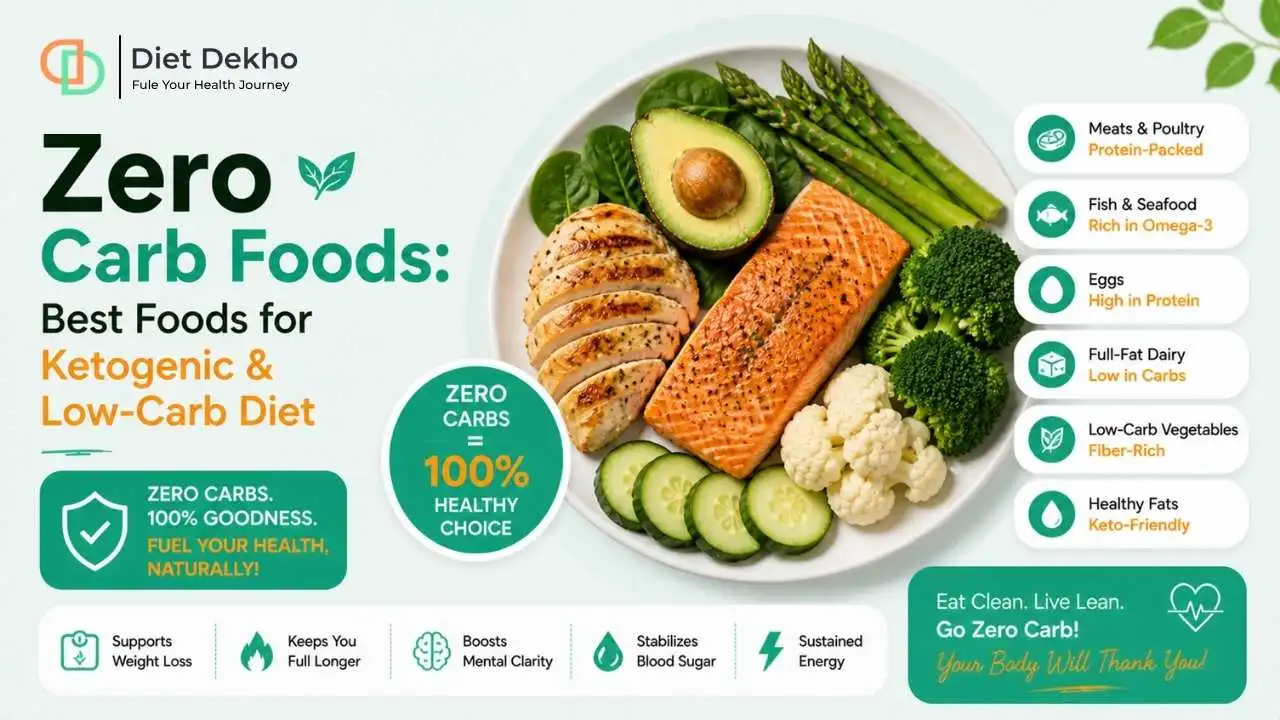
When you’re standing in your kitchen or at a restaurant, I want you to have a clear green light list in your head. Pure proteins and fats are the gold standard here. I know it’s hard to change your shopping habits, but focusing on these staples will make your transition much smoother. Consequently, you will find that these foods provide better satiety than their high-carb counterparts.
Why We Recommend Animal-Based Proteins
For my non-vegetarian clients, this part is relatively straightforward. Most fresh meats are naturally 100% free of carbohydrates. This includes chicken, mutton, and fish, which are staples in many Indian regions. Therefore, a piece of tandoori chicken or a grilled fish fillet is an ideal safe food that won’t touch your blood sugar.
However, you must be careful with how these are prepared. Specifically, in many Indian restaurants, they might use gram flour (besan) or cornstarch to thicken the gravies or as part of the marinade. This is where those hidden carbs sneak in. I always tell my friends to ask for dry preparations like tikka or kababs, which are usually just marinated in yogurt and spices.
- Eggs: The ultimate keto superfood. One large egg has less than 0.5 grams of carbs and is packed with Vitamin D and B12.
- Chicken and Mutton: Naturally zero-carb. Focus on the fattier cuts like thighs, as they keep you fuller for longer.
- Seafood: Fish like salmon, pomfret, and surmai are excellent. Prawns and shrimp are also nearly zero-carb, but watch out for oysters as they have a tiny bit of starch.
Traditional Indian Fats: Ghee and Coconut Oil
Since we are removing your body’s primary energy source (carbs), we must replace it with high-quality fats. This is where traditional Indian wisdom actually helps us. Ghee, which was once unfairly demonized, is a pure fat that contains zero carbohydrates and is rich in butyrate, which is great for gut health.
I know it’s hard to break the habit of using refined vegetable oils, but switching to ghee, coconut oil, or cold-pressed mustard oil is a game-changer. Moreover, these fats don’t just provide energy; they also help your body absorb fat-soluble vitamins like A, D, E, and K. Therefore, they are essential for your long-term vitality.
| Fat Source | Carbohydrate Content | Primary Benefit |
| Ghee | 0g | High smoke point, stable for Indian cooking |
| Coconut Oil | 0g | Contains MCTs for instant brain energy |
| Butter | 0g | Satiety and flavor without sugar spikes |
| Extra Virgin Olive Oil | 0g | Excellent for heart health and inflammation |
Low-Carbohydrate Vegetable Alternatives for the Indian Palate
While not strictly zero carb, many vegetables are so low in net carbohydrates (total carbs minus fiber) that they act like a free food in your diet. I know it’s hard to imagine a meal without potatoes or peas, but let’s look at the incredible variety we still have. Consequently, the key is to focus on above-ground vegetables.
The Versatility of Cruciferous Vegetables
Cauliflower (gobhi) is essentially the Swiss Army Knife of a low-carb diet. You can grate it to make rice, mash it like potatoes, or roast it with turmeric and cumin for a delicious sabzi. Similarly, cabbage is another heavy lifter; it’s packed with antioxidants and fiber, helping you stay full while keeping your carb intake between 2-3 grams per 100 grams.
Leafy Greens and Local Favorites
Spinach (palak) and methi (fenugreek) are foundational in Indian cooking and are nearly carb-free once cooked down. For a busy homemaker, a large batch of palak paneer can be a life-saver-it’s high in fat, moderate in protein, and very low in carbohydrates. Additionally, other great options include bottle gourd (lauki), ridge gourd (turai), and eggplant (baingan), which are all part of our traditional desi vegetable list.
| Vegetable | Net Carbs (per 100g) | Indian Preparation Idea |
| Spinach | ~1.4g | Palak Paneer or Saag |
| Cauliflower | ~2.0g | Cauliflower Rice or Roasted Gobhi |
| Cabbage | ~2.3g | Patta Gobhi Sabzi with mustard seeds |
| Zucchini | ~2.1g | Zucchini noodles (Zoodles) |
| Bottle Gourd | ~2.0g | Lauki Sabzi or Soup |

Strategies for the Busy Professional: The Office Survival Guide
I often speak with young professionals in Bangalore or Gurgaon who tell me they just don’t have time to cook. Consequently, they end up eating office snacks-biscuits, samosas, or instant noodles-which are essentially carb bombs that destroy insulin sensitivity. What this means for your daily routine is that you need a grab-and-go strategy.
Instead of reaching for a biscuit, keep a container of roasted almonds or walnuts at your desk. These provide the crunch you crave with minimal impact on your blood sugar. Furthermore, if you’re ordering lunch, skip the rice and roti entirely. Order a double portion of chicken tikka or a paneer dish and eat it with a side salad. It might feel strange at first to eat only the sabzi, but your energy levels at 3 PM will thank you.
Avoiding the Healthy Snack Trap
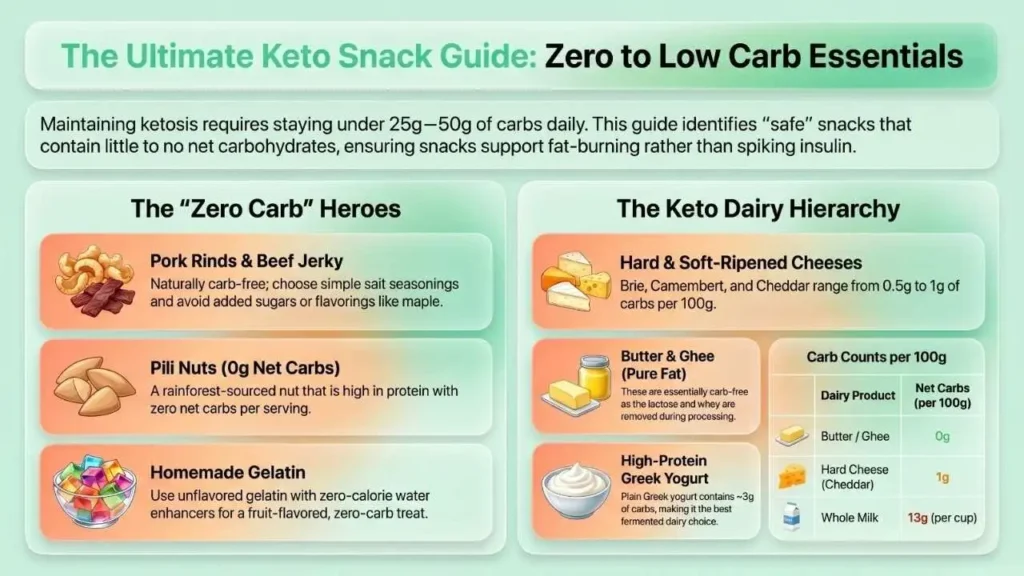
Be very careful with products marketed as diet or low-fat. Often, when companies remove fat, they add sugar or refined starches to keep the flavor. Even roasted chana or makhana, which are traditional Indian snacks, contain about 15-20 grams of carbohydrates per serving. While they are better than a bag of potato chips, they aren’t zero carbohydrate food and can kick you out of ketosis if you aren’t careful. Similarly, many energy bars are actually loaded with hidden syrups.
The Homemaker’s Challenge: Balancing Tradition and Health
For women like Nina, the kitchen is often a place of duty. I know it’s hard when your family expects a full meal with rice and dal, but you don’t have to cook two separate dinners. Let’s simplify this. You can cook the family’s favorite chicken curry or palak paneer as usual. The only difference is that they eat it with roti, and you eat it with a bowl of sautéed cabbage or cauliflower rice.
Struggling with Social Gatherings and Festivals
I also encourage homemakers to involve their families in the change. High-carbohydrate diets are contributing to obesity in children and adolescents across India as well. By moving toward more whole, zero carbohydrate food sources like eggs and fresh vegetables, you are protecting the health of the entire household. However, we all know that Indian festivals are synonymous with sweets (mithai). Therefore, look for modern alternatives. You can make delicious keto laddoos using almond flour, ghee, and stevia.
Clinical Evidence for Diabetes Remission and Weight Loss
I want you to feel confident that this isn’t just a fad diet. Major medical groups, including the American Diabetes Association and researchers at Stanford, have acknowledged that very low-carbohydrate diets are effective for managing blood sugar. For example, in the Stanford Keto-Med study, both the Ketogenic and Mediterranean diets showed similar drops in HbA1c, but the Keto group saw a much more significant drop in triglycerides.
Is Diabetes Remission Possible?
This is a critical question for anyone struggling with a new diagnosis. Remission is defined by international medical societies as having an HbA1c of less than 6.5% for at least 3 months without any medications. Consequently, clinical data suggest that remission is indeed possible through these dietary interventions. As patients improve their glycemic control and lose weight, their levels can fall below the diagnostic threshold. Furthermore, this provides a powerful incentive to stick to your zero carbohydrate food plan.
Sustainability and The Pendulum of Nutrients
While a zero carbohydrate food approach is excellent for resetting your metabolism, some experts suggest a more balanced approach for the long term. Dr. V. Mohan, one of India’s leading diabetologists, suggests that while the keto diet shows dramatic short-term results, many find it hard to sustain for years. He recommends moving toward a moderation plan once sugars are stable-one that still limits white rice but includes more high-fiber vegetables. Therefore, you should view strict keto as a powerful intervention rather than a permanent restriction.

Practical Steps to Start Your Low-Carb Journey Today
I know it’s hard to start something new when you’re already tired. Let’s make this as easy as possible. You don’t need a gym membership or expensive superfoods. You just need to make better choices at your next meal. Specifically, focus on the 24-hour Kickstart plan below to see immediate changes in your energy.
The 24-Hour Kickstart Plan
- Breakfast: Skip the cereal or toast. Instead, have two eggs scrambled in butter with some sautéed spinach (palak).
- Lunch: Skip the rice and dal. Have a bowl of paneer bhurji or chicken curry with a large cucumber salad.
- Evening Snack: A handful of walnuts or a few slices of cheese if you’re hungry. Specifically, avoid the office biscuits!.
- Dinner: Grilled fish or a soya chunk stir-fry with a side of roasted cauliflower.
- Hydration: Drink plenty of water with a squeeze of lemon and a pinch of salt. This helps prevent the keto flu fatigue.

Addressing Common Myths about Zero Carbohydrate Food
There’s a lot of misinformation out there, and I want to set the record straight so you can make informed decisions. Consequently, understanding the reality behind these myths will help you stay the course when others question your choices.
Myth 1: You need carbs for energy.
Actually, your body is perfectly capable of making the small amount of glucose it needs for certain brain functions through a process called gluconeogenesis. For everything else, fat is a much more efficient and long-lasting fuel source.
Myth 2: High-fat diets cause heart disease.
Recent research from Harvard shows that low-carb diets high in vegetable sources of fat and protein actually lower heart disease risk by 30%. Therefore, the key is to avoid processed, trans-fats and stick to natural sources like ghee, nuts, and olive oil.
Myth 3: It’s too expensive to eat this way.
While meat can be pricey, eggs, seasonal green leafy vegetables, and local fats like mustard oil are very affordable. In the long run, you will likely save money on medical bills and medications.
| Traditional Belief | Modern Scientific Reality |
| Brain needs 130g of carbs daily | Brain thrives on ketones during restriction |
| Fat makes you fat | Insulin (triggered by carbs) stores fat |
| Ghee is bad for the heart | Ghee is a stable, healthy cooking fat |
| Rice is a necessary staple | White rice is a primary driver of diabetes in India |

Conclusion: Empowering Your Metabolic Future
Nina’s journey didn’t happen overnight, but by focusing on zero carbohydrate food, she regained control of her health. She stopped seeing the kitchen as a prison and started seeing it as a pharmacy. I know it’s hard to change decades of habits, but you don’t have to be perfect. Every time you choose paneer over a potato, or a salad over a samosa, you are taking a step toward a healthier, more vibrant version of yourself.
What this means for your daily routine is that you have the power to influence your blood sugar with every single bite. You are not a victim of your genetics; rather, you are the architect of your metabolism. Let’s simplify the path forward: eat real food, prioritize protein and healthy fats, and keep those carbohydrates as low as possible. Furthermore, remember that small changes today lead to a lifetime of freedom tomorrow. You’ve got this, and we’re here to help you every step of the way.
If you’re feeling overwhelmed or want a plan tailored specifically to your medical history and favorite foods, I’d love to help you personally. Specifically, we can work together to find a routine that fits your busy life.
Ready to start your journey?
Frequently Asked Questions (FAQ)
Q1: What exactly counts as a zero carbohydrate food in an Indian kitchen?
In an Indian context, zero carbohydrate food includes things like ghee, butter, mustard oil, and coconut oil. For proteins, eggs, chicken, mutton, and most fish (prepared without breading or thickeners) are carb-free. Most spices are also fine, though some like onion or garlic powder have trace amounts of sugar.
Q2: Can vegetarians follow a diet based on zero carbohydrate food?
While it’s harder for vegetarians to hit zero because plant proteins like lentils have carbs, you can get very close. Focus on paneer, tofu, soya chunks, and green leafy vegetables. Use almond or coconut flour instead of wheat, and prioritize healthy fats like ghee to keep you full.
Q3: How quickly will I see results in my blood sugar using zero carbohydrate food?
Most people see a significant drop in their post-meal blood sugar levels within just 24 to 48 hours of cutting out grains and sugars. Over a few weeks, this leads to a lower HbA1c and often allows for a reduction in diabetes medication under a doctor’s supervision.
Q4: Is it safe to eat zero carbohydrate food if I have high cholesterol?
Many people find that their good HDL cholesterol goes up and their triglycerides go down on a low-carb diet. However, if you have specific genetic concerns, it’s best to focus on monounsaturated fats like olive oil and nuts rather than just animal fats. Always monitor your levels with your physician.
Q5: What are the best zero carbohydrate snacks for long work hours?
The best snacks that won’t touch your carb limit are hard-boiled eggs, cheese cubes, or a handful of plain roasted nuts. Specifically, avoid diet namkeens or puffed rice snacks, as these are actually quite high in carbohydrates and will spike your insulin.
Contact Us
We understand how overwhelming nutrition and weight loss information can feel. With so many opinions and confusing advice online, it’s easy to feel stuck or unsure about what to do next.
At Diet Dekho, you never have to figure it out alone. You can contact us anytime with any questions or concerns. Our expert dietitians are available 24/7 to guide, support, and help you stay on track. Whether your goal is weight loss or building healthier habits, we’re here to make the journey simpler and more sustainable for you.
Disclaimer
This blog is intended to help readers make healthier food choices. Your health should always be the top priority. Before starting any restrictive or special diet, especially if you have a medical condition or health concern, please consult a doctor or a qualified dietitian. Each body responds differently to food and lifestyle changes. Always choose what is safe and suitable for you.

Abhinav is the Founder of Diet Dekho, helping people manage weight and lifestyle health through simple, practical nutrition and personalized diet plans.