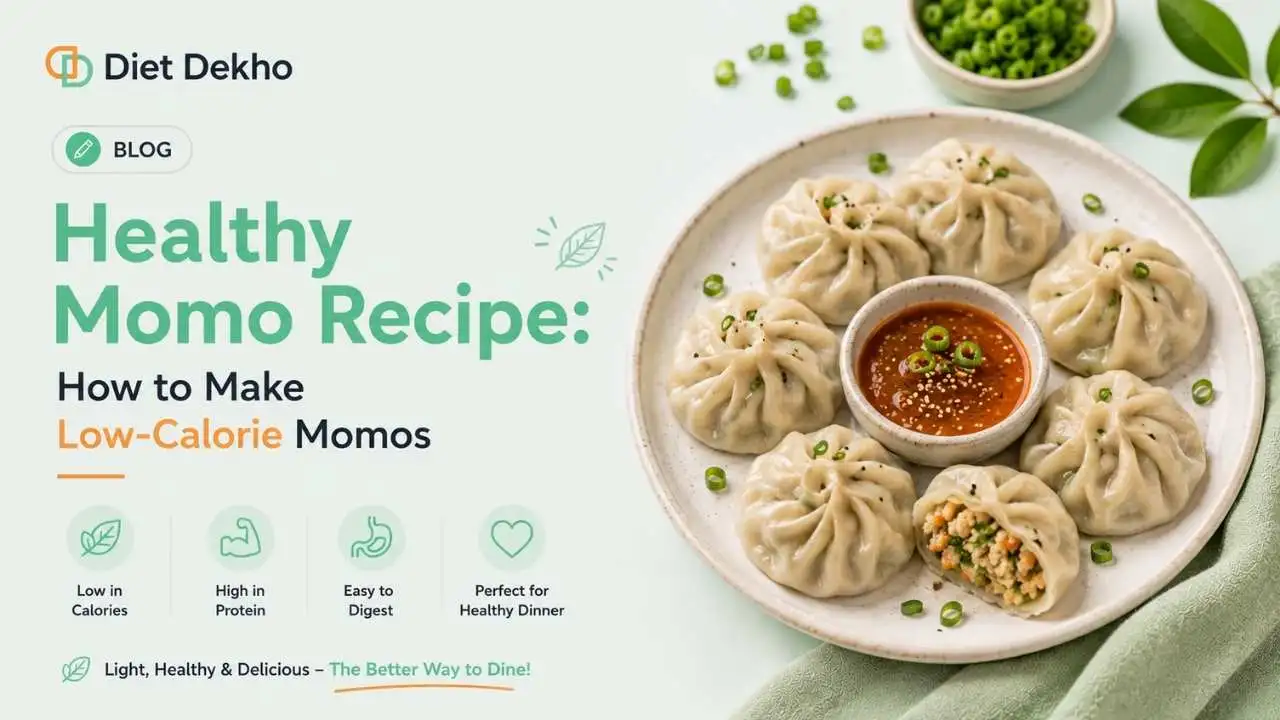
Have you ever found yourself standing near a street corner, smelling that familiar aroma of steaming dumplings, and feeling a pang of guilt because you know your blood sugar might not handle the refined flour? I know it is hard to find time to cook from scratch when your schedule is packed, but what if I told you that your favorite comfort food could actually become a tool for your health? Many of my clients at DietDekho struggle with the idea that tasty and healthy are mutually exclusive, but the recipe of making momos can be transformed into a high-fiber, protein-rich meal that keeps you full without the sugar crash. Let’s simplify this journey together and look at how we can bring that authentic Himalayan taste into your kitchen in a way that respects your health goals and your busy life.
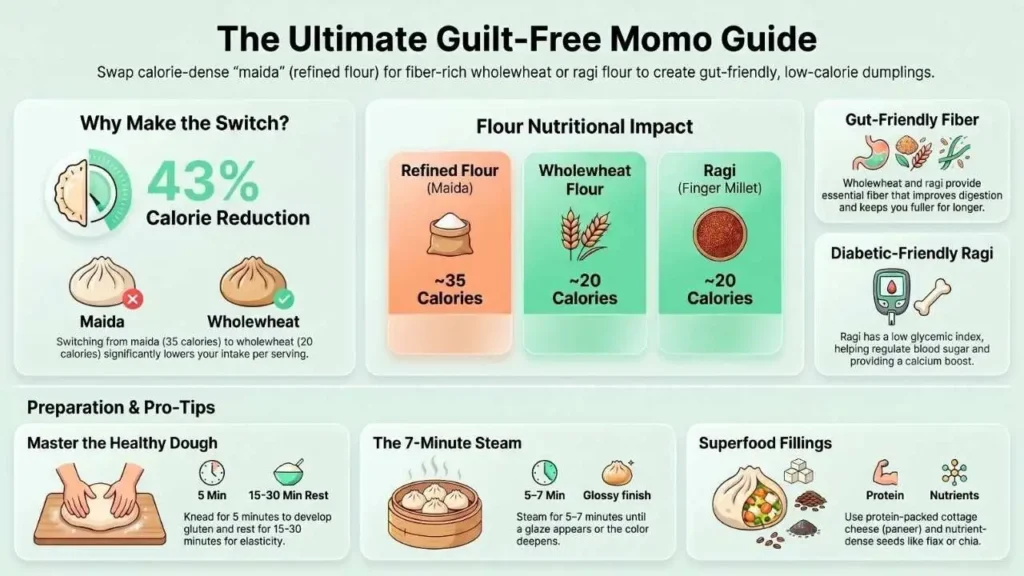
The healthy recipe of making momos involves replacing refined flour (maida) with high-fiber alternatives like whole wheat (atta), ragi, or oats flour to maintain glycemic control. Fillings should prioritize fiber-rich vegetables like cabbage and carrots, combined with lean proteins such as tofu, paneer, or soya granules. Always choose steaming for 10-12 minutes over frying to preserve vital antioxidants and keep the calorie count under 35 per piece, making them a perfect, diabetic-friendly snack.
The Metabolic Reality: Why We Need a Better Recipe of Making Momos
To understand why we need to change how we cook, we have to look at the bigger picture of health in India today. I know it’s overwhelming to track every bite, but the numbers tell a story we can’t ignore. According to the ICMR-INDIAB study, there are now over 10.1 crore people in India living with diabetes, and another 13.6 crore who are in the prediabetic stage. What this means for your daily routine is that the hidden sugars in refined flour snacks are no longer just a minor indulgence; they are contributing to a national health crisis.
When we talk about the recipe of making momos found on the street, we are usually looking at a wrapper made of 100% maida. Maida is a refined carbohydrate that is stripped of almost all its fiber and vitamins during processing. For a busy professional or a homemaker managing a family’s health, this refined flour is a silent enemy. It leads to rapid blood sugar spikes-clinically referred to as hyperglycemia-followed by a crash that leaves you feeling tired and irritable.
| State/Region | Diabetes Prevalence (per 100,000) | Annual Percentage Change | Impact on Daily Life |
| India (National) | 264.53 | 0.63% | Rising need for dietary intervention. |
| Goa | 314.30 | 0.87% | High risk requiring low-GI alternatives. |
| Delhi | 278.87 | 0.66% | Urban lifestyle demands quick, healthy snacks. |
| Punjab | 302.76 | 0.56% | Need for high-fiber grain substitutes. |
The data from PharmEasy Labs reveals an even more startling insight: about 1 in 2 people tested show high blood sugar levels, and many are completely unaware of it. If you’re someone who doesn’t have time for the gym, your diet becomes your primary defense against insulin resistance. This is why we are focusing on a version of the recipe of making momos that works with your body, not against it.
The Anatomy of the Wrapper: Moving Beyond Refined Flour
I often tell my friends that the biggest mistake we make in the kitchen is thinking that all flour is created equal. The traditional recipe of making momos relies on the elasticity of maida, which comes from its high gluten content and lack of fiber. But that same softness is what makes it so dangerous for your metabolism. When the bran and germ are removed from the wheat kernel, you lose 90% of the Vitamin E and virtually all the fiber.
Let’s look at what happens inside your body when you choose a whole-grain wrapper instead. Whole wheat (atta), ragi (finger millet), and oats contain complex carbohydrates. These are chains of sugar molecules that take much longer for your enzymes to break down into glucose (C6H12O6). This slow release ensures that your pancreas isn’t forced to pump out massive amounts of insulin all at once, which is the key to preventing Type 2 diabetes.
Why Whole Wheat and Millets are Your Best Friends
Choosing the right base for your recipe of making momos is about more than just calories; it’s about satiety. Have you noticed how you can eat ten maida momos and still feel like you could eat more? That is because maida lacks the fiber needed to trigger the hormones in your gut that tell your brain you are full.
| Flour Type | Glycemic Index (GI) | Fiber Content | Best Use Case |
| Maida (Refined) | High (70+) | Very Low | Traditional but metabolically taxing. |
| Whole Wheat (Atta) | Medium (55-60) | High | Everyday healthy alternative. |
| Ragi (Finger Millet) | Low (<55) | Exceptional | Best for long-term blood sugar control. |
| Oats Flour | Low/Medium | High (Beta-glucan) | Heart health and weight management. |
Ragi is a powerhouse that I highly recommend for my diabetic clients. It is naturally gluten-free and contains polyphenols that actually slow down the absorption of starch. When you use ragi in your recipe of making momos, you aren’t just eating a snack; you are consuming a functional food that helps regulate your blood sugar for hours after the meal. I know it takes a little practice to handle ragi dough because it isn’t as stretchy as wheat, but the trade-off for your health is immense.

The Science of the Filling: Protein and Fiber Synergy
Now, let’s talk about what goes inside. Many people think that a veg momo is automatically healthy because it has vegetables. But if those vegetables are overcooked in poor-quality oil or mixed with too much salt and MSG, the benefits are lost. For a busy person, the filling is where you can pack in the most nutrition with the least effort.
I want you to think of the filling as a way to buffer the carbohydrates in the wrapper. By adding high-quality protein like tofu, paneer, or soya granules, you are further slowing down the digestion of the meal. This is a trick we dietitians use to lower the overall glycemic load of a dish.
Choosing Your Protein Sources
- Tofu: This is a fantastic plant-based protein that is high in iron and low in saturated fat. It absorbs the flavors of ginger and garlic beautifully.
- Low-Fat Paneer: If you prefer dairy, paneer provides structure and a good dose of calcium. It doesn’t melt, which makes it perfect for the recipe of making momos as it holds its shape during steaming.
- Soya Granules: These are an incredibly budget-friendly way to get a meat-like texture without the cholesterol. They are packed with protein and fiber.
- Sprouts: Adding steamed sprouts (like moong) to your filling increases the Vitamin C content and adds a lovely crunch.
The Role of Fiber-Rich Vegetables
Cabbage is the unsung hero of the recipe of making momos. It provides volume and crunch for very few calories, and it is rich in antioxidants that support your immune system. When you combine it with carrots (rich in Vitamin A) and bell peppers (loaded with Vitamin C), you are creating a micronutrient bomb that protects your eyes and your skin.
I know it’s hard to find time to chop everything perfectly, so here is a pro-tip: use a food processor or a manual grater on the weekends. You can keep a mix of shredded cabbage and carrots in an airtight container for up to three days. This makes the actual recipe of making momos on a weeknight much faster.

Thermal Integrity: Why Steaming is the Superior Choice
One of the most beautiful things about the authentic recipe of making momos is that it is traditionally steamed. In a world where so many snacks are deep-fried, steaming stands out as a clean cooking method. But it’s not just about avoiding oil; it’s about what the steam does to the nutrients inside.
When you boil vegetables, a significant portion of the water-soluble vitamins-like Vitamin C and the B-complex vitamins-leach out into the water and are often thrown away. Frying, on the other hand, subjects the food to extreme heat that can destroy delicate antioxidants and add hundreds of unnecessary calories.
| Nutrient | Steaming Retention | Boiling Retention | Frying Retention |
| Vitamin C | 80-90% | 40-50% | <20% |
| Folate (B9) | High | Low | Low |
| Antioxidants | Preserved/Increased | Reduced | Destroyed |
| Glucosinolates | Preserved | Lost | Lost |
Based on studies from NIH and the Journal of Agricultural and Food Chemistry.
For my friends who are worried about cancer prevention and heart health, steaming is a must. Research has shown that steaming is the only method that preserves myrosinase, an enzyme in cabbage and broccoli that helps your body create sulforaphane, a potent cancer-fighting compound. By sticking to the steamed version of the recipe of making momos, you are ensuring that every bite is as medicinal as it is delicious.

The Master Recipe: Step-by-Step for the Home Cook
Let’s get into the actual recipe of making momos. I’ve refined this over the years to make it as simple as possible for someone who might be struggling with time or health issues. We are going to use a whole wheat base, but feel free to experiment with a 50/50 mix of wheat and ragi once you get comfortable.
Step 1: The Dough (The Foundation)
Take 1 cup of whole wheat flour and a pinch of salt. Now, here is a secret: use lukewarm water to knead the dough. Warm water helps the gluten in the whole wheat relax, which makes the dough much softer and easier to roll out. Knead it until it’s firm but pliable-not as soft as roti dough, but not as hard as puri dough.
Cover it with a damp cloth and let it rest for at least 30 minutes. I know you might be tempted to skip this, but resting the dough is what makes the final momo wrapper thin and translucent instead of thick and chewy.
Step 2: The Filling (The Nutrients)
While the dough is resting, heat a teaspoon of oil in a pan. Add 5-6 cloves of finely chopped garlic and an inch of grated ginger. Garlic is fantastic for your heart, and ginger helps with digestion. Add 2 cups of your pre-shredded veggie mix (cabbage, carrots, onions).
Stir-fry them on high heat for just 2 minutes. We don’t want to cook them fully; we just want to remove the excess moisture so they don’t make the dough soggy. Add your protein (tofu or paneer) and season with black pepper and a dash of low-sodium soy sauce. Let this mixture cool completely before you start filling.
Step 3: Shaping and Folding (The Craft)
Divide your dough into small, lemon-sized balls. Roll them out into 3-inch circles. Try to make the edges thinner than the center. This is important because when you pleat the edges together, you don’t want a thick clump of dough at the top that stays raw while the rest of the momo is cooked.
Place a spoonful of filling in the center. If you are a beginner, the half-moon shape is the easiest. Just fold the circle in half and pinch the edges tight. If you’re feeling adventurous, you can try the round pleated style, but remember, the taste is the same regardless of the shape!
Step 4: The Final Steam
Grease your steamer tray with a tiny bit of oil or line it with parchment paper. Arrange the momos so they have some space to breathe-they will expand slightly as they cook. Steam them for 10-12 minutes. You’ll know they are done when the wrapper looks slightly shiny and doesn’t stick to your finger when you touch it.
Dipping into Health: The Chutney Factor
We can’t talk about the recipe of making momos without mentioning the red chutney. Most store-bought sauces are full of sugar, preservatives, and excessive salt. But a home-made tomato-garlic chutney is actually quite healthy.
Tomatoes are rich in lycopene, an antioxidant that becomes more available to your body when cooked. By boiling tomatoes with dried red chilies and then blending them with raw garlic and a splash of vinegar, you get a fiery, tangy sauce that boosts your metabolism without the empty calories of mayonnaise.
| Ingredient | Health Benefit | Role in Chutney |
| Ripe Tomatoes | Lycopene (Heart Health) | The base and tanginess. |
| Garlic | Anti-inflammatory | Bold flavor and immunity. |
| Red Chilies | Capsaicin (Metabolism Boost) | The heat and color. |
| Vinegar/Lemon | Digestive aid | Preservation and zest. |
I encourage my clients to skip the mayo entirely. If you want something creamy, try a yogurt-based dip. Simply mix thick Greek yogurt with some chopped cucumber and mint. It provides a cooling contrast to the spicy chutney and adds another layer of protein to your meal.
Meal Prep Hacks for the Busy Professional
I know your life is a whirlwind, and sometimes the idea of rolling dough feels like too much. Let’s simplify the recipe of making momos so it fits into your Sunday prep routine.
- The Freezer is Your Friend: You can make a large batch of momos on a Sunday, steam them half-way (for about 5 minutes), let them cool, and then freeze them in a single layer. Once frozen, pop them into a zip-lock bag. On a busy Wednesday night, you can steam them directly from frozen for 15 minutes, and dinner is served.
- The Open Momo or Momo Bowl: If you don’t have time to fold, don’t worry. You can make momo bowls. Sauté the filling and serve it over a small portion of steamed brown rice or quinoa, topped with the red chutney. You get all the flavor of the recipe of making momos without the time-consuming assembly.
- One-Pan Sauté: Another option is to use the filling ingredients to make a momo-style stir fry with some whole wheat noodles or even just a big bowl of the sautéed veggies and protein.
What this means for your daily routine is that you are no longer a victim of your schedule. You have a plan that keeps you full and keeps your health on track.

Expert Insight: The Dietitian’s Perspective on Portions
Even the healthiest recipe of making momos requires portion awareness. I often see people eat 10-12 momos because they are steamed and healthy. However, for someone managing diabetes, the total carbohydrate load still matters.
A standard serving of 5-6 whole wheat momos is about 200 calories and provides a balanced mix of fiber and protein. If you are still hungry, pair them with a large bowl of clear vegetable soup. The warm liquid and fiber from the soup will help you feel satisfied without adding significant calories or sugar.
The key to diabetes management isn’t deprivation; it’s substitution and portion control. By choosing whole grains and lean proteins in your momos, you are making a sustainable lifestyle choice, not just following a temporary diet, says renowned dietician Geeta Shenoy.
Frequently Asked Questions (FAQs)
1. Is the recipe of making momos with whole wheat really as tasty as the maida version?
I’ll be honest with you-it’s different. Whole wheat has a heartier, more rustic taste. But once you get used to the nuttiness of the grain and the freshness of home-made fillings, you might find the maida version tastes pasty or flavorless in comparison.
2. Can I use an idli steamer for this recipe?
Absolutely! You don’t need fancy equipment. An idli steamer, a pressure cooker (without the whistle), or even a simple metal colander placed over a pot of boiling water works perfectly for the recipe of making momos.
3. What can I do if my dough is too sticky?
If your dough is sticking to your hands or the rolling pin, you’ve likely added too much water. Add a tablespoon of dry flour and knead again. Remember, for momos, a slightly firmer dough is better than a soft one as it holds the shape better.
4. How can I make these for my kids who are picky eaters?
Kids usually love the shape of momos. To make the recipe of making momos kid-friendly, go easy on the chilies in the filling and maybe add a little bit of cheese to the paneer filling. It’s a great way to sneak in extra vegetables like finely grated carrots and zucchini.
5. Are momos better than samosas for weight loss?
Generally, yes. A steamed vegetable momo has about 35 calories, while a fried potato samosa can easily have 250-300 calories. By choosing the recipe of making momos, you are saving a huge amount of saturated fat and empty calories.
Conclusion: Embracing the New Normal
I know it is a journey to change habits that have been with us for years. But the recipe of making momos is a perfect example of how we can honor our cravings while protecting our health. Whether you are a busy professional looking for a quick dinner or a homemaker trying to keep your family’s sugar levels in check, these small changes-choosing atta over maida, adding protein, and mastering the steamer-will make a world of difference.
You deserve to enjoy your food without fear. Let’s take it one step at a time. Start by making a batch of these healthy momos this weekend, and see how much better you feel when you aren’t fighting a sugar crash.
Ready to start your health journey today?
I’m here to support you with personalized plans that fit your life.
Contact Us
We understand how overwhelming nutrition and weight loss information can feel. With so many opinions and confusing advice online, it’s easy to feel stuck or unsure about what to do next.
At Diet Dekho, you never have to figure it out alone. You can contact us anytime with any questions or concerns. Our expert dietitians are available 24/7 to guide, support, and help you stay on track. Whether your goal is weight loss or building healthier habits, we’re here to make the journey simpler and more sustainable for you.
Disclaimer
This blog is intended to help readers make healthier food choices. Your health should always be the top priority. Before starting any restrictive or special diet, especially if you have a medical condition or health concern, please consult a doctor or a qualified dietitian. Each body responds differently to food and lifestyle changes. Always choose what is safe and suitable for you.

Abhinav is the Founder of Diet Dekho, helping people manage weight and lifestyle health through simple, practical nutrition and personalized diet plans.