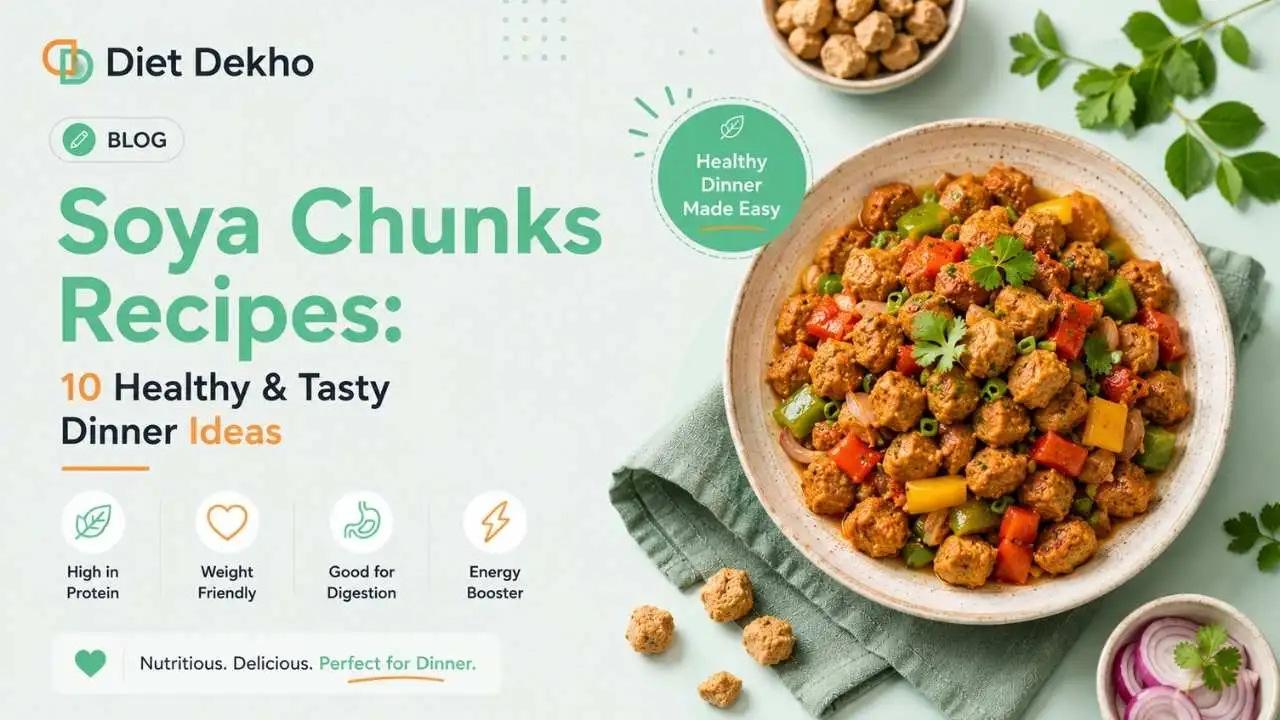
Imagine you are driving home through the heavy traffic of Hinjawadi or Magarpatta in Pune. It is already 9:00 PM, you have had an exhausting day of back-to-back meetings, and the easiest option seems to be ordering a quick, greasy biryani or a plate of refined flour parathas. But in the back of your mind, you remember that last health checkup where the doctor mentioned your blood sugar was creeping into the pre-diabetic range. I know it is hard to find time to cook when you are balancing a career and a household, but finding the right recipes soya chunks can be the simplest way to turn your health around without spending hours in the kitchen.
For those looking for immediate solutions, recipes for soya chunks provide a high-protein, low-fat dinner option that stabilizes blood sugar due to a very low glycemic index of 15-20. By boiling, rinsing, and squeezing these plant-based nuggets, you can create delicious curries, stir-fries, or pulaos that provide 52g of protein per 100g, making them an ideal meat substitute for managing diabetes and weight loss today.
Why 30 is Becoming the New 50 in Urban India
What this means for your daily routine is that the traditional I feel fine trap is no longer a safe place to hide. Across Pune’s tech corridors and office parks, a silent health crisis is unfolding where young professionals in their late 20s and early 30s are experiencing the metabolic health of someone twenty years older. We are seeing a surge in lifestyle diseases like Type 2 Diabetes, hypertension, and abdominal obesity, largely driven by sedentary work cultures and poor dietary habits.
The numbers are quite worrying. Nearly 15% to 20% of urban Indians under the age of 40 now have pre-diabetes, and most are completely unaware of it. When you spend 8 to 12 hours seated at a desk, your body’s ability to manage insulin and regulate blood pressure takes a massive hit. This is compounded by what we at DietDekho call nutritional neglect-the habit of skipping meals and then overcompensating with high-sugar snacks or late-night heavy meals that spike your blood sugar just before you go to sleep.
The Hidden Health Cost of Pune’s Tech Boom
In places like Hinjawadi, the reliance on food delivery apps has replaced balanced, home-cooked nutrition with convenience that is high in saturated fats and refined carbohydrates. Chronic sleep deprivation, often fewer than 7 hours a night, further disrupts the hormones that regulate your appetite and insulin sensitivity. This creates a direct pathway to metabolic disease that often goes undetected until a major health event occurs.
| Lifestyle Challenge | Physiological Impact | Long-term Risk |
| Prolonged Sitting (8-12 hrs) | Reduced Glucose Uptake | Obesity, Diabetes |
| Late Night Meals (10 PM+) | High Postprandial Sugar | Metabolic Syndrome |
| Chronic Stress | Elevated Cortisol | Abdominal Fat |
| Sleep Deprivation | Insulin Resistance | Cardiovascular Disease |
Understanding the Indian Protein Gap
Let’s simplify one of the biggest myths about the Indian diet: the idea that we get enough protein from our daily dal and rice. While pulses and legumes are staples, they are often consumed in quantities that are too small to meet the actual needs of a working adult. According to the Indian Council of Medical Research (ICMR), a healthy adult needs about 0.8 to 1 gram of protein per kilogram of body weight. Yet, surveys show that 60% of urban Indians are protein deficient.
The problem is that most of our calories-about 62%-come from carbohydrates, specifically refined cereals and milled grains. This imbalance causes frequent spikes and drops in blood sugar, leading to that 4:00 PM fatigue you might be feeling at your desk. Switching to plant-based proteins like soya chunks is not just a fitness fad; it is a foundational requirement for daily health and disease prevention.
Statistical Realities of Protein Deficiency
| Statistic | Finding | Source |
| Protein Deficiency Rate | 73% of Indians are deficient | IMRB Survey |
| Urban Indian Deficiency | 6 out of 10 not consuming daily protein | LocalCircles |
| Calorie Source | 62% of Indian calories from carbs | Nature Medicine |
| Daily Intake Gap | Avg. Indian takes only 0.6g/kg | ICMR/NNMB |

Soya Chunks: The Vegetarian Meat Solution
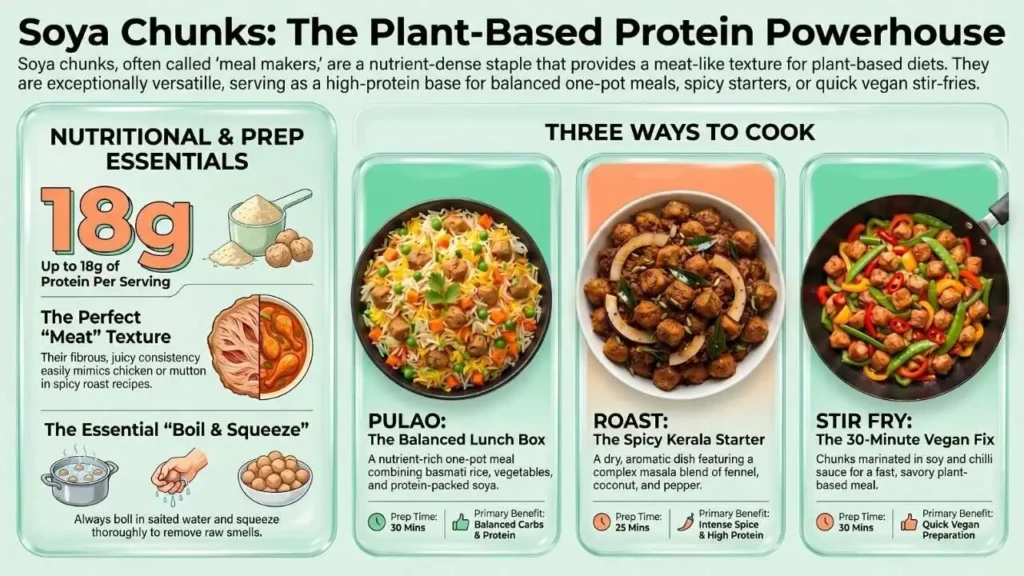
I want to introduce you to a kitchen hero that is often misunderstood. Soya chunks, also known as textured vegetable protein (TVP) or meal maker, are essentially defatted soy flour that has been cooked under pressure and dried. They are a byproduct of soybean oil extraction, which makes them naturally low in fat but incredibly dense in protein.
What makes them perfect for your busy life is their ability to mimic the texture of meat while being 100% plant-based and cholesterol-free. This makes them a meat substitute that fits perfectly into the Indian palate, absorbing the flavors of your favorite spices and gravies effortlessly.
The Nutritional Profile at a Glance
For every 100 grams of dry soya chunks, you are getting a massive 52 grams of protein. To put that in perspective, that is more protein than you would find in an equivalent amount of chicken or eggs. They also contain zero sugar and no sodium, which is exactly what we want when managing diabetes and heart health.
| Nutrient (per 100g dry) | Value |
| Protein | 52 g |
| Calories | 345 kcal |
| Carbohydrates | 33 g |
| Total Fat | < 1 g |
| Dietary Fiber | 13 g |
| Iron | 20 mg |
| Calcium | 338 mg |

Soya Chunks and Diabetes Management
If you are struggling with fluctuating blood sugar, the low glycemic index (GI) of soya chunks is your best friend. With a GI of just 15 to 20, they release glucose into your bloodstream at a slow, steady pace. This prevents the sudden spikes that can damage your blood vessels and lead to long-term complications.
The secret lies in the combination of protein and fiber. Protein triggers a hormonal response that helps lower blood sugar levels by enhancing glucose clearance. Meanwhile, the dietary fiber in soy slows down the absorption of carbohydrates from the rest of your meal, making your entire dinner more diabetes-friendly.
Scientific Evidence for Blood Sugar Control
Research published by the National Institutes of Health (NIH) indicates that whole soy interventions significantly decrease blood glucose concentrations compared to standard diets. A 6-week study showed that soy protein could significantly reduce plasma glucose and serum insulin levels, improving overall insulin sensitivity.
For the non-gym audience, this means you can manage your weight and sugar levels simply by making better choices at the dinner table. Replacing just 5% of your daily carbohydrate calories with plant protein can significantly lower the risk of developing Type 2 diabetes.

Heart Health and Cholesterol
Living in a city like Pune often means dealing with environmental stressors that can impact your heart. Soya chunks are a heart-friendly dietary choice because they contain isoflavones-plant compounds that help lower bad LDL cholesterol and increase good HDL cholesterol.
Unlike red meat or even some dairy products, soya chunks are low in saturated fat and completely free of cholesterol. This balance promotes better cardiovascular health by reducing the risk of plaque build-up in your arteries. Studies reviewed by the Harvard Edu suggest that replacing animal proteins higher in saturated fat with soy products is a significant nutritional plus.
The Impact of Soy on Lipid Profiles
| Lipid Marker | Effect of Soy Protein | Mechanism |
| LDL (Bad) Cholesterol | 4% to 6% Reduction | Impaired absorption & receptor upregulation |
| HDL (Good) Cholesterol | Potential Increase | Isoflavone interaction |
| Triglycerides | Significant Reduction | Improved fatty acid metabolism |
| Arterial Elasticity | Improvement | Antioxidant properties of genistein |
Myth-Busting: Soya, Thyroid, and Hormones
I know you might have heard some scary things about soya affecting your thyroid or hormones. Let’s clear that up with real science. Concerns about soy causing infertility in men or feminization have no scientific basis. Phytoestrogens in soy are much weaker than the estrogen produced by the body and can actually have anti-estrogenic properties that block more potent natural estrogens from doing harm.
Regarding the thyroid, for the vast majority of people with a healthy thyroid, soy is perfectly safe as long as you are getting enough iodine (usually from iodized salt). If you are already on medication like Levothyroxine for hypothyroidism, the only thing you need to worry about is timing.
How to Eat Soya If You Have Hypothyroidism
What this means for your daily routine is quite simple. You don’t have to avoid soya; you just have to wait at least four hours after taking your thyroid medication before you eat it. This is because soy protein can interfere with the absorption of the drug, just like many other foods and supplements.
| Group | Recommendation | Why? |
| Healthy Individuals | Safe in moderation | No effect on T3/T4 hormones |
| Subclinical Hypothyroid | Monitor TSH levels | High doses may cause slight TSH rise |
| Clinical Hypothyroid | Wait 4 hours post-meds | To ensure full drug absorption |
| Pregnant People | Safe and encouraged | Provides Vitamin D and complete protein |

Mastering the Kitchen: Preparing the Perfect Soya Chunk
If you have tried soya chunks before and didn’t like them, it was probably because of the way they were cooked. Many people find them rubbery or dislike the beany smell. Let’s simplify the prep process so they taste just like a delicious meat alternative in your recipes soya chunks.
The Squeeze and Rinse Technique
- Boil: Place your chunks in boiling water with a pinch of salt and a tablespoon of milk. The milk helps neutralize that raw soy smell.
- Soak: Let them sit for 5 to 10 minutes until they double in size and become soft.
- Rinse: This is the part most people skip! Drain the hot water and rinse them with cold water 2 to 3 times.
- Squeeze: Use your hands to squeeze out every drop of water. If there is water left inside, they won’t absorb the flavors of your spices.
Pro-Tip: The Flavor Absorption Hack
After squeezing, marinate your chunks in a mix of curd, ginger-garlic paste, and a little garam masala for 15 minutes. This ensures that the flavor goes all the way to the center of the chunk, rather than just coating the outside.
10 Healthy and Tasty Soya Chunks Recipes for Dinner
Now that you are an expert on why these are so good for you, let’s look at how to get them on your plate tonight. These recipes are designed for the busy professional-they are quick, use common pantry staples, and are light on the stomach for a better night’s sleep.
1. The 20-Minute Soya Chunks Masala Dry
This is my go-to for late nights. It is punchy, satisfying, and doesn’t require a lot of cleanup.
- Ingredients: 1 cup soya chunks, 1 onion, 1 tomato, 1 capsicum, ginger-garlic paste, curry leaves.
- Step 1: Boil and squeeze your soya chunks as we discussed.
- Step 2: Heat 1 tablespoon of oil. Add cumin seeds and curry leaves until they splutter.
- Step 3: Sauté onions and ginger-garlic paste until the raw smell goes away.
- Step 4: Add chopped tomatoes and capsicum. Cook until soft.
- Step 5: Toss in your soya chunks and your basic masalas (turmeric, chili powder, coriander powder).
- Step 6: Stir-fry on high for 3 minutes until the chunks are coated and slightly charred.
2. One-Pot Soya Chunks Pulao
If you don’t have the energy for sabzi and roti, this is your answer. Use brown rice or millets to keep the GI even lower.
- Step 1: In a pressure cooker, sauté whole spices (bay leaf, cinnamon, cardamom) in a little ghee or oil.
- Step 2: Add sliced onions and your favorite veggies like peas or carrots.
- Step 3: Add soaked rice and prepped soya chunks.
- Step 4: Add water (1.5 cups for 1 cup rice) and pressure cook for 2 whistles.
- Step 5: Serve with a side of cold curd for a probiotic boost.
3. Soya Keema Matar (Vegetarian Minced Meat)
This is a fantastic way to trick your brain into thinking you are having a heavy, indulgent meal when you are actually eating something incredibly light and healthy.
- The Hack: Take your cooked soya chunks and pulse them in the mixer for 2 seconds to get a minced texture.
- Step 1: Sauté onions and ginger-garlic paste with green chilies.
- Step 2: Add frozen or fresh peas and your minced soya.
- Step 3: Add turmeric, chili powder, and a dash of pav bhaji masala for that street-food flavor.
- Step 4: Cook for 10 minutes with a splash of water until it all comes together.
4. Soya Chunks and Spinach (Palak Soya)
This is an iron and protein powerhouse. It is especially good for women who might be struggling with low energy levels.
- Step 1: Prepare a basic tomato-onion gravy.
- Step 2: Add finely chopped fresh spinach and your prepped soya chunks.
- Step 3: Cover and cook until the spinach is wilted and the soya has absorbed the juice.
- Step 4: Finish with a squeeze of lemon juice to help your body absorb the iron.
5. Grilled Soya Tikka (Tandoori Style)
Perfect for those nights when you want something that feels like an appetizer but is actually a full meal.
- Step 1: Marinate large soya chunks in hung curd, lemon juice, tandoori masala, and ginger-garlic paste for 1 hour.
- Step 2: Thread them onto skewers with onion and bell pepper cubes.
- Step 3: Air fry at 200°C for 10-15 minutes or grill on a tawa until the edges are charred.
6. Soya Chunks Manchurian (Healthy Indo-Chinese)
You don’t have to give up your favorite flavors. We just swap the deep-frying for a light sauté.
- Step 1: Lightly coat your chunks in 1 tablespoon of cornflour and sauté in a non-stick pan until crispy.
- Step 2: In another pan, sauté lots of garlic, ginger, and spring onions.
- Step 3: Add a little soy sauce, vinegar, and green chili sauce.
- Step 4: Toss in your crispy chunks and coat well.
7. Soya and Moong Dal Cutlets
These are great for meal prep. You can make a batch on Sunday and just shallow-fry them for dinner during the week.
- Step 1: Grind soaked moong dal and boiled soya chunks into a coarse paste.
- Step 2: Add finely chopped veggies and spices.
- Step 3: Shape into patties and shallow fry on a non-stick pan.
8. Soya Chunks Curry (Dhaba Style)
When you crave a rich gravy but want to keep it heart-healthy.
- Step 1: Make a paste of onions, tomatoes, and cashews (just 4-5).
- Step 2: Cook the paste in a little oil until it releases a nice aroma.
- Step 3: Add marinated soya chunks and simmer for 15 minutes.
- Step 4: The curd in the marination gives it a creamy texture without the need for heavy cream.
9. Soya Chunk Salad with Foxnut Dressing
A very light dinner for those days when you had a heavy lunch at the office.
- Step 1: Roast boiled soya chunks with a little salt and pepper.
- Step 2: Mix with chopped cucumber, tomatoes, and carrots.
- Step 3: For the dressing, grind soaked makhana (foxnuts) and lemon juice for a creamy, dairy-free finish.
10. Soya Chunks and Potato Stew
A comforting, soupy dinner that is easy on the digestion.
- Step 1: In a pot, boil potatoes and soya chunks with ginger, garlic, and whole black peppers.
- Step 2: Add a little coconut milk for richness if you like, or keep it as a clear broth.
- Step 3: It is incredibly soothing and helps you wind down for the night.

Portions and Balance: The Dietitian’s View
While soya chunks are a superfood, moderation is key. A practical serving for most adults is about 20 to 30 grams of dry weight per day. I know it’s tempting to eat a whole bowl, but because they are so high in fiber and protein, eating too much in one go can cause bloating or indigestion if your body isn’t used to it.
What this means for your daily routine is that you should treat soya as a smart protein option to rotate with your dals, eggs, or paneer, rather than eating it every single day. And always make sure you are drinking enough water, as the high fiber needs hydration to move smoothly through your system.
Comparison of Protein Sources in the Indian Kitchen
| Food Item | Protein per 100g | Calories per 100g | Fat per 100g |
| Soya Chunks (Dry) | 52 g | 345 | < 1 g |
| Paneer | 18-20 g | 265 | 20 g |
| Moong Dal (Dry) | 24 g | 348 | 1.2 g |
| Chicken Breast | 31 g | 165 | 3.6 g |
| Egg (2 large) | 12 g | 140 | 10 g |
Emotional Support: You Are Not Alone in This
I know it feels overwhelming to change your diet when you are already juggling so much. But let’s simplify this: health isn’t about being perfect; it’s about making one better choice at a time. Choosing recipes soya chunks tonight instead of that heavy delivery meal is a victory. It’s a step toward waking up tomorrow with more energy and knowing you are taking care of your future self.
At DietDekho, we have seen over 19,600 people transform their lives by making these small, sustainable changes. Whether you are a busy professional in Pune or a homemaker looking after the family’s health, you deserve a plan that works with your life, not against it.
FAQs
Are soya chunks good for weight loss?
Yes, they are excellent! Their high protein and fiber content promote a feeling of fullness, which prevents late-night snacking. They also have a high thermogenic effect, meaning your body burns more energy just to digest them.
Can I eat soya chunks every day if I have diabetes?
While they are very beneficial for blood sugar, it is better to rotate them with other protein sources like lentils or sprouts to ensure a variety of nutrients. A portion of 25-30g dry weight is a safe daily limit for most.
Do soya chunks increase uric acid?
Soy is a moderate-purine food. While not as high as red meat, people with severe gout should consult their doctor. For most, moderate consumption is perfectly fine.
Is the beany smell normal?
Yes, it is natural for soy. Using the rinse-and-squeeze method along with a little milk during boiling completely removes this smell.
Are soya chunks safe for children?
Absolutely. They provide high-quality protein and calcium essential for growth. Just ensure they are cooked soft so they are easy to digest.
Taking the Next Step
I hope these ideas make your dinner tonight a little easier and a lot healthier. If you want a plan that is completely personalized to your specific health needs-whether it’s managing PCOS, thyroid issues, or diabetes-we are here to help. Our team at DietDekho specializes in creating Indian-style plans that include the foods you already love, just optimized for your body.
Contact Us
We understand how overwhelming nutrition and weight loss information can feel. With so many opinions and confusing advice online, it’s easy to feel stuck or unsure about what to do next.
At Diet Dekho, you never have to figure it out alone. You can contact us anytime with any questions or concerns. Our expert dietitians are available 24/7 to guide, support, and help you stay on track. Whether your goal is weight loss or building healthier habits, we’re here to make the journey simpler and more sustainable for you.
Disclaimer
This blog is intended to help readers make healthier food choices. Your health should always be the top priority. Before starting any restrictive or special diet, especially if you have a medical condition or health concern, please consult a doctor or a qualified dietitian. Each body responds differently to food and lifestyle changes. Always choose what is safe and suitable for you.

Abhinav is the Founder of Diet Dekho, helping people manage weight and lifestyle health through simple, practical nutrition and personalized diet plans.