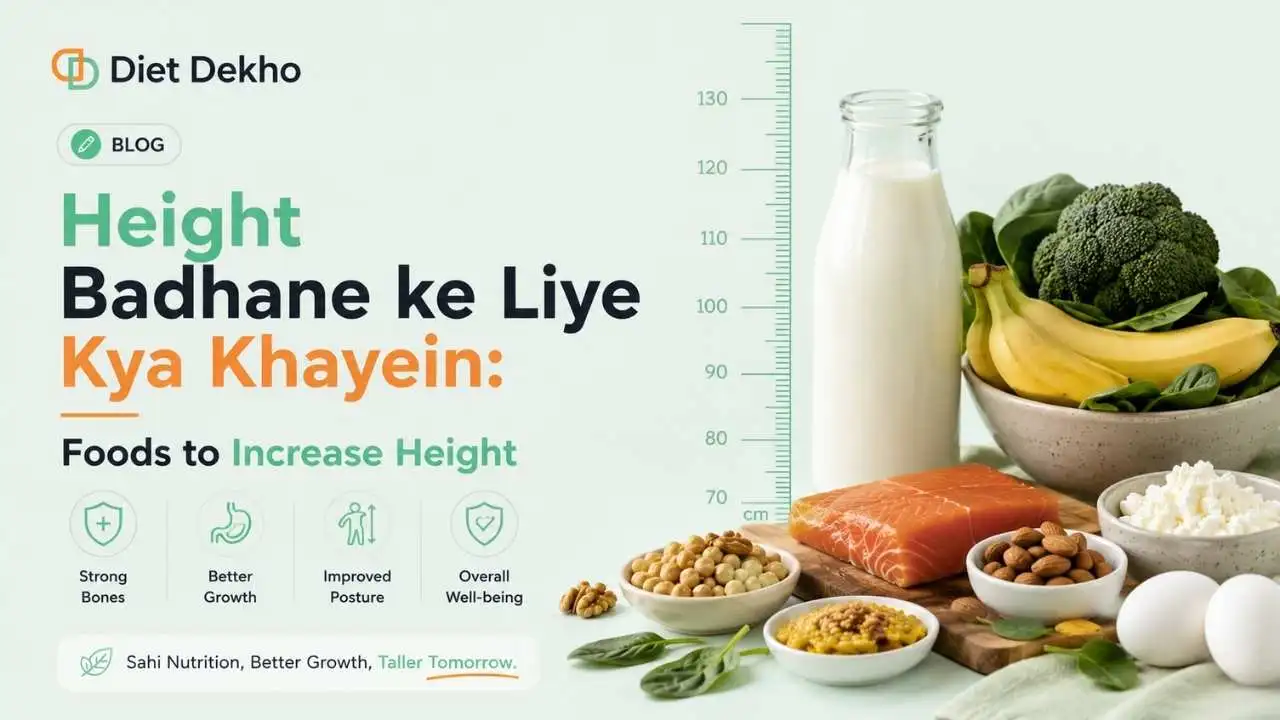
I remember talking to Anjali last week. She’s a busy bank manager and a mother of two. Between her long shifts and managing the house, she was worried about her son, Aarav. He seemed shorter than most kids in his class. I feel like I’m failing him, she told me. I know it’s hard to find time, but determining height badhane ke liye kya khaye is actually simpler than most parents think.
To answer the question of height badhane ke liye kya khaye, you should focus on a diet rich in high-quality proteins (eggs, paneer), calcium (ragi, milk), and Vitamin D. Clinical research shows that adding millets like Ragi can increase height by up to 50% compared to a plain rice diet. Consistency with zinc and magnesium is key for bone elongation.
Why Nutrition is Your Growth Accelerator
Let’s simplify this. Your genes provide the blueprint for how tall you can be. But nutrition is the builder that actually follows that blueprint. If the builder doesn’t have enough bricks, the house stays small. In India, we are seeing a secular trend. This means that as our nutrition improves, each generation is growing taller than the last.
Recent data shows that Indian boys at age 18 are now roughly 2.8 cm taller than they were two decades ago. This isn’t magic; it’s the result of better food. What this means for your daily routine is that the small changes you make today in the kitchen can have a massive impact on your child’s final height.
Protein: The Building Blocks of Growth
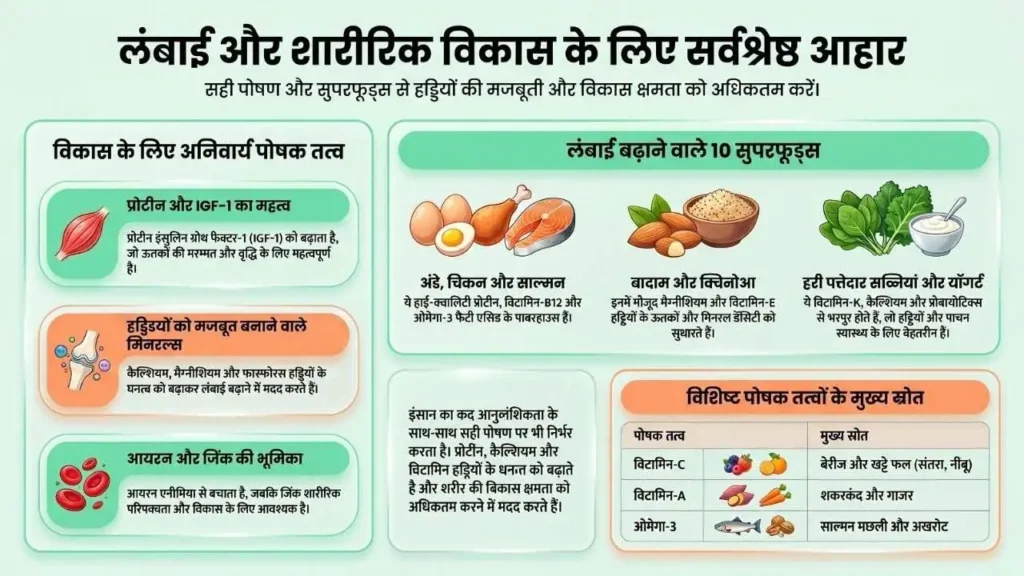
When people ask me about height badhane ke liye kya khaye, I always start with protein. Think of protein as the scaffolding of the bone. Without it, minerals like calcium have nowhere to sit. Protein triggers a hormone called IGF-1 (Insulin-like Growth Factor 1). This hormone tells the growth plates in the long bones to expand and create new bone tissue.
According to the National Institutes of Health (NIH), even a slight protein deficiency can stall this process. For the Indian vegetarian diet, I recommend a cereal-to-pulse ratio of 3:1. This ensures your body gets a complete protein profile.
| Protein Source | Protein per 100g | Why it Works |
| Soy Chunks | 52g | Best plant-based source for muscle and bone. |
| Paneer | 18-20g | High calcium + protein combo. |
| Eggs | 13g | Contains Vitamin D and high-quality amino acids. |
| Ragi (Millet) | 7-8g | Rich in methionine for cartilage health. |
The Ragi Revolution: A Height Growth Secret
If there is one superfood for height in India, it is Ragi (Finger Millet). I know it sounds old-fashioned, but the science is modern and solid. A famous study in Karnataka found that children who replaced rice with millets grew 50% taller (relatively) in just three months.
Ragi is special because it has three times more calcium than milk. It also contains sulfur-containing amino acids that are crucial for the health of the growth plates. Instead of buying expensive growth powders full of sugar, try making a simple Ragi malt or Ragi idli. It’s a natural, cost-effective way to boost height.
Calcium and the Bone Bank Strategy
I often tell my clients to think of their child’s skeleton as a bone bank. During the growing years, they are making deposits. Once they hit their late teens or early twenties, the bank closes for deposits. After that, they can only make withdrawals.
For children aged 9 to 18, the requirement is 1,300 mg of calcium daily. That’s a lot! Harvard Health experts suggest that a cup of milk or yogurt provides about 300 mg. This is why dairy is a staple. If you are lactose intolerant, don’t worry. You can get plenty of calcium from fortified soy milk, almonds, and leafy greens like spinach or kale.
Essential Micronutrients for Height
We talk about protein and calcium a lot, but micronutrients are the catalysts that make everything work.
Vitamin D: The Absorption Gatekeeper
You can eat all the calcium in the world, but without Vitamin D, your body will only absorb about 10% of it. I know it’s hard with indoor jobs and school, but just 15 minutes of morning sunlight can make a huge difference. You can also find Vitamin D in egg yolks and fortified cereals.
Zinc and Magnesium
Zinc is essential for DNA synthesis and cell division. A lack of zinc is one of the biggest causes of stunted growth in developing countries. Magnesium is just as important. It helps convert Vitamin D into its active form. You can get these from simple snacks like roasted peanuts, pumpkin seeds, and walnuts.

Practical Tips for Busy Professionals
I understand you’re short on time. Here is how you can integrate these foods into a hectic schedule:
- The 10-Minute Breakfast: A bowl of Ragi porridge with milk, topped with a few crushed almonds.
- The 3:1 Lunch Rule: Three rotis for every one bowl of thick dal.
- Smart Snacking: Keep roasted chana or makhana (fox nuts) on your desk or in your child’s bag instead of biscuits.
- The Bedtime Ritual: A warm glass of milk with a pinch of turmeric. It helps with bone healing and better sleep.
Beyond Diet: The Role of Sleep and Exercise
While you are focusing on height badhane ke liye kya khaye, don’t ignore lifestyle. Growth hormone is primarily released during deep sleep. Children need 9-11 hours of rest.
Also, not all exercise is equal for height. High-impact Ground Reaction Force activities like jumping, skipping, or basketball are best. These create tiny stresses on the bone that signal the body to deposit more minerals and grow longer. Even 10 minutes of vigorous skipping a day can trigger this growth signal.

Understanding the 2024 ICMR Guidelines
The latest 2024 ICMR-NIN guidelines have made some big changes that affect growth. They now recommend 400g of vegetables daily-that’s a 33% increase from previous years. They also emphasize reducing sugar to less than 5% of total calories. High sugar causes insulin spikes that can actually interfere with your growth hormone.
For families with a history of diabetes, these guidelines are a blessing. By focusing on whole grains like millets and plenty of vegetables, you support stable blood sugar while giving the body exactly what it needs to stand tall.
When to Consult a Pediatrician
I always tell my friends: trust your gut, but check the charts. The Indian Academy of Pediatrics recommends tracking height and weight until age 18. If a child’s growth stalls for more than six months or they are significantly shorter than their Target Height (an average of the parents’ heights), it’s time to see a specialist. They can check for things like thyroid issues or Celiac disease which might be blocking nutrient absorption.
FAQs for Growth and Nutrition
1. Can we increase height after 21?
Generally, no. Once the growth plates at the ends of your long bones close (usually by 18-21), linear growth stops. However, a good diet can improve your posture and bone density, which helps you stand at your full potential height.
2. Does milk really help in height badhane ke liye kya khaye?
Absolutely. Milk is a one-stop-shop for calcium, phosphorus, and protein. Studies show that children who drink milk are often taller than those who don’t. If you don’t like plain milk, try curd or paneer.
3. Is Ashwagandha a miracle for height?
There is no solid clinical evidence that Ashwagandha increases height once growth plates are closed. While it’s great for stress and vigor, it won’t restart bone growth in adults.
4. How many eggs should a growing child eat?
One to two eggs a day is a great goal. Eggs provide high-quality protein and Vitamin D, both of which are essential for the skeleton.
5. Does skipping actually increase height?
Yes, but indirectly. The impact of skipping stimulates the growth plates and strengthens the bones. When combined with a good diet, it helps maximize growth potential.
Conclusion: Take the First Step Today
Growing taller is a long-term project, but the fuel for that growth is decided at every meal. By focusing on traditional, nutrient-dense foods like Ragi, milk, and lentils, and staying active, you are giving your body (or your child’s) the best possible chance to reach the clouds.
I know it’s a lot to take in, but you don’t have to do it alone. We can help you create a plan that fits your busy life and your family’s needs.
Book Your Personal Consultation

Contact Us
We understand how overwhelming nutrition and weight loss information can feel. With so many opinions and confusing advice online, it’s easy to feel stuck or unsure about what to do next.
At Diet Dekho, you never have to figure it out alone. You can contact us anytime with any questions or concerns. Our expert dietitians are available 24/7 to guide, support, and help you stay on track. Whether your goal is weight loss or building healthier habits, we’re here to make the journey simpler and more sustainable for you.
Disclaimer
This blog is intended to help readers make healthier food choices. Your health should always be the top priority. Before starting any restrictive or special diet, especially if you have a medical condition or health concern, please consult a doctor or a qualified dietitian. Each body responds differently to food and lifestyle changes. Always choose what is safe and suitable for you.

Abhinav is the Founder of Diet Dekho, helping people manage weight and lifestyle health through simple, practical nutrition and personalized diet plans.