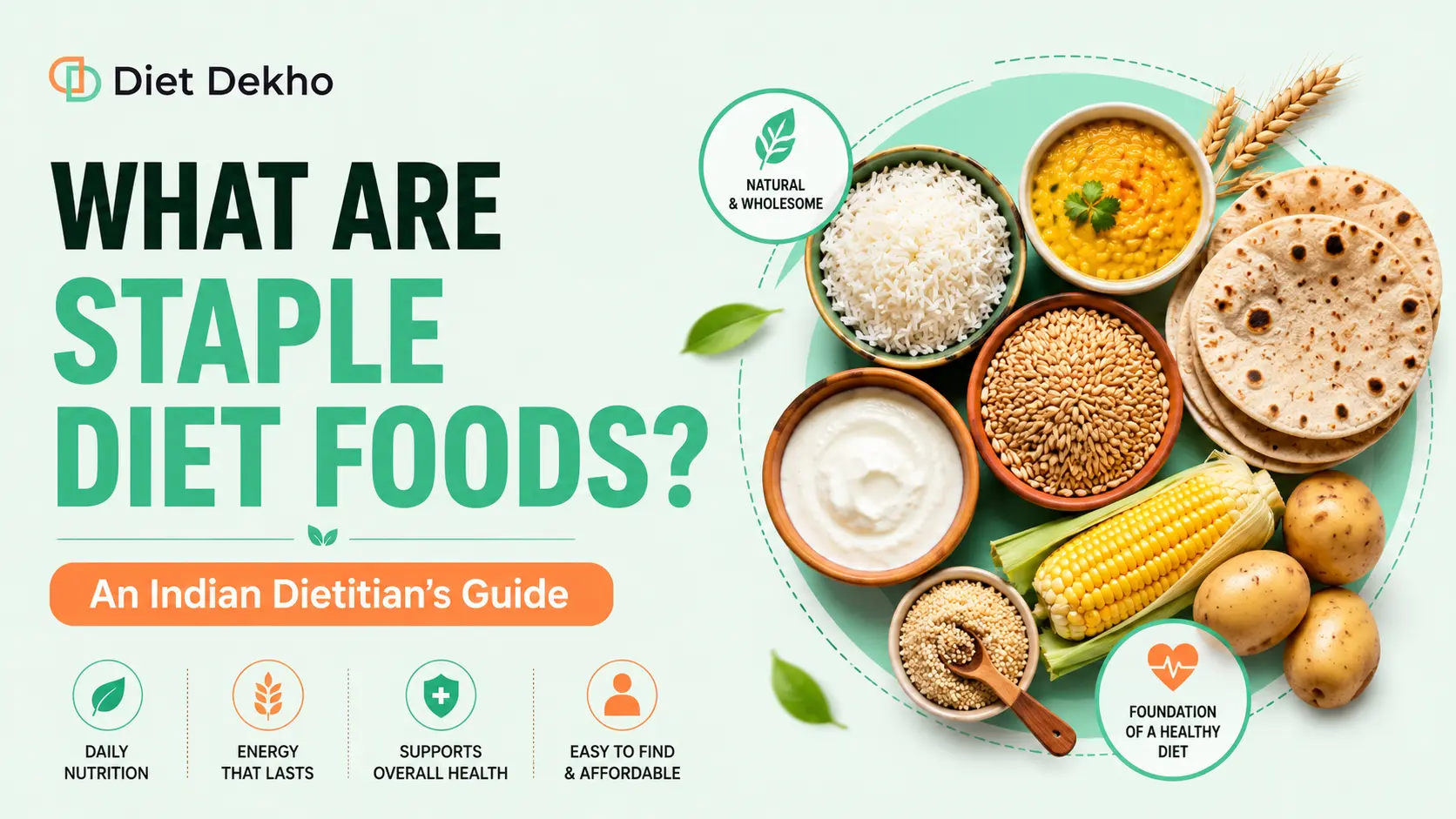
I remember a client who visited our Dehradun clinic last month. She was exhausted, holding a printed list of fascinating “superfoods” she thought she needed to buy to get healthy. When I looked at her pantry, I saw the real heroes: simple jars of dal, rice, and wheat. These familiar staple diet foods are more than just items on a grocery list. They are the heartbeat of our Indian kitchens and the foundation of our strength.
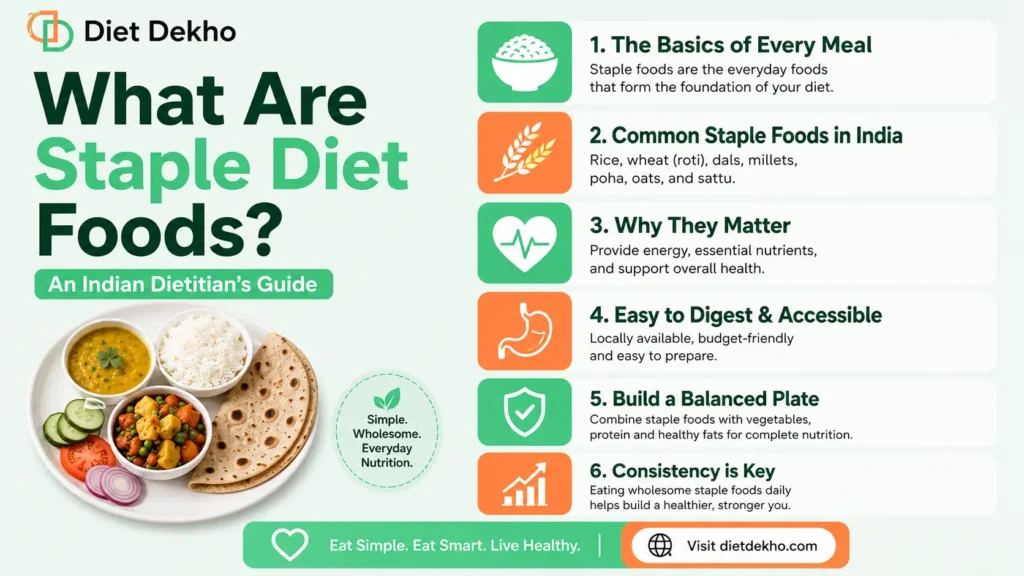
Staple diet foods are items eaten regularly and in large enough quantities to provide the majority of a person’s energy and nutrient needs. In the Indian context, these typically include cereals like wheat and rice, various pulses, and millets. They are affordable, culturally significant, and form the base of almost every meal we consume daily.
The True Definition of an Indian Staple
What exactly makes a food a staple? Imagine a food that is so essential you cannot imagine a single day without it. These items are usually inexpensive, easy to store, and available throughout the year. Most importantly, they provide the calories needed for a hard day of work or study.
While some countries rely on corn or potatoes, our Indian landscape is dominated by grains and legumes. Actually, the diversity of our country means a staple in Punjab might differ from one in Kerala. However, the purpose remains the same. These foods provide the carbohydrates and proteins that keep our bodies moving.
Why Availability Matters
A food becomes a staple partly because it grows well in the local soil. Farmers have cultivated these crops for centuries, ensuring we always have a steady supply. This reliability is why we see them in every kirana store, from the smallest village to the busiest city.
Cultural Identity and Nutrition
Think about how we identify ourselves through our food. A “rice eater” or a “roti lover” is a common way we describe our habits. These choices are not just about taste. They are about the traditions passed down through generations.
How Staple Diet Foods Support Your Body
I often tell my patients that their bodies are like high-performance machines. To run well, they need consistent fuel. The primary role of these essential foods is to provide energy through complex carbohydrates. Without them, you would feel sluggish, irritable, and unable to focus on your work.
According to the World Health Organization, a balanced diet should include a variety of these plant-based foods. They offer more than just energy. When we choose whole grains, we get a healthy dose of dietary fiber, which is vital for digestion.
The Power of Fiber
Many of my working professional clients complain about bloating or poor digestion. The honest truth is that they often skip their traditional staples for processed snacks. When you stick to whole-wheat rotis or brown rice, the fiber helps move things along in your gut.
Micronutrients Hiding in Plain Sight
Do not underestimate the humble dal or bowl of bajra. These items are packed with B vitamins, iron, and magnesium. These nutrients support your metabolism and keep your heart healthy. It is fascinating how much nutrition sits right inside your kitchen cupboard.

The Big Two: Wheat and Rice in India
If we look at the most common staple diet foods across the nation, wheat and rice take the top spots. Most households rotate between these two depending on the time of day or the specific region. Let’s simplify why each one holds such a high place on our plates.
The North Indian Love for Wheat
In Northern India, wheat is the king of the kitchen. From fluffy parathas at breakfast to soft phulkas at dinner, it is everywhere. Wheat is high in protein compared to other grains. It also contains gluten, which gives our rotis that perfect, pliable texture we all love.
The Southern and Eastern Rice Tradition
Travel toward the south or east, and you will find rice at the center of every meal. It is incredibly easy to digest, making it perfect for both children and the older people. Many people find rice more versatile. You can steam it, ferment it into idli batter, or grind it into flour for crispy dosas.
Is white rice or brown rice better for weight loss?

Modern Twists on Ancient Grains
Let’s talk about the rising stars of the nutrition world: millets. While our grandparents ate these regularly, they disappeared from our tables for a while. Now, they are making a massive comeback. I call them “super staples” because their nutritional profile is quite extraordinary.
Ragi and Bajra Benefits
If you are looking for calcium, ragi is your best friend. It is wonderful for bone health, especially for women and growing children. Similarly, bajra provides a great deal of iron. Incorporating these into your weekly routine can prevent common deficiencies.
Joowar and Small Millets
Jowar is naturally gluten-free, which is great for people with sensitive stomachs. Including these diverse grains prevents your diet from becoming boring. Variety is the spice of life, and it is also the key to a healthy gut microbiome.

Balancing Your Plate for Weight Loss
Most people I see make this one mistake: they eat too much of the staple and too little of the vegetables. I know it is hard to resist that third roti or extra scoop of rice. However, if weight loss is your goal, portion control is the secret weapon.
Think of it this way. Your staple grain should take up only about one-quarter of your plate. The rest should be filled with dal and plenty of seasonal sabzi. This balance ensures you get the comfort of your favorite food without the calorie overload.
The Role of Protein
Always pair your grain with a protein source. Whether it is a bowl of yellow moong dal or a cup of curd, protein slows down the digestion of carbohydrates. This prevents blood sugar spikes. You will feel full for much longer, which stops those midday cravings for biscuits or samosas.
Healthy Fats and Staples
A tiny teaspoon of ghee on your roti is not the enemy. In fact, healthy fats help your body absorb vitamins from the grain. Trust me on this, a little bit of traditional wisdom goes a long way in modern nutrition.

Common Myths About Staple Foods
I often hear people say that “carbs make you fat.” This is a misleading statement that causes a lot of unnecessary stress. The truth is that your body needs carbohydrates to function properly. The problem isn’t the grain itself; it is the quantity and the processing.
White Flour vs. Whole Wheat
The real culprit is often highly processed flour, or maida. When the bran is removed, the nutrition goes with it. I always encourage my clients at DietDekho.com to stick to whole-grain options. This simple switch can improve your energy levels almost instantly.
Are Staples Too Heavy for Dinner?
Many people believe they should skip grains at night. If you eat a very late dinner, a light meal is better. But for most, a small portion of rice or a single roti is perfectly fine. It helps your brain produce serotonin, which can actually help you sleep better.

FAQ: Your Questions on Staple Diet Foods
What are the most common staple diet foods for weight loss?
The best options for weight loss include millets like ragi, jowar, and bajra. These are high in fiber and keep you full longer. Whole wheat and unpolished rice are also excellent when eaten in controlled portions alongside plenty of protein and vegetables.
Can staple diet foods in India be considered healthy?
Absolutely, they are the foundation of a healthy diet. Indian staples like lentils, whole grains, and local vegetables provide essential minerals and vitamins. They are much healthier than processed cereals or white bread because they contain complex carbohydrates and natural fiber.
Should I stop eating rice to lose weight?
You do not need to quit rice completely. Instead, try to control the portion size and pair it with fiber-rich dal or sabzi. Choosing brown rice or red rice can also provide more nutrients and help you feel satisfied with a smaller amount.
What are the best staple diet foods for daily energy?
Whole wheat, brown rice, and oats are fantastic for sustained energy. These grains release glucose slowly into the bloodstream. This provides a steady stream of fuel for your brain and muscles throughout your busy workday or study sessions.
Why is it important to rotate my staple foods?
Rotating your grains ensures you get a wider variety of micronutrients. For example, wheat provides protein, while ragi offers calcium. By changing your staples every few days, you cover all your nutritional bases and keep your meals interesting.

Final Thoughts on Your Daily Plate
I hope this helps you see your kitchen in a whole new light. We often look for health solutions in expensive supplements, but the real magic is in the food we have been eating for years. Your body thrives on the familiarity and nutrition of these traditional items.
The good news is that you don’t need a radical overhaul to feel better. Just start by choosing whole grains and watching your portions. Small, consistent changes lead to the best long-term results for your health and happiness.
If you are feeling overwhelmed by all the conflicting advice online, we are here to help. Our team can help you build a meal plan that includes your favorite traditional foods while reaching your health goals. Book a free consultation with our expert dietitians at DietDekho.com and get a plan made just for you.
Contact Us
We understand how overwhelming nutrition and weight loss information can feel. With so many opinions and confusing advice online, it’s easy to feel stuck or unsure about what to do next.
At Diet Dekho, you never have to figure it out alone. You can contact us anytime with any questions or concerns. Our expert dietitians are available 24/7 to guide, support, and help you stay on track. Whether your goal is weight loss or building healthier habits, we’re here to make the journey simpler and more sustainable for you.
Disclaimer
This blog is intended to help readers make healthier food choices. Your health should always be the top priority. Before starting any restrictive or special diet, especially if you have a medical condition or health concern, please consult a doctor or a qualified dietitian. Each body responds differently to food and lifestyle changes. Always choose what is safe and suitable for you.

Abhinav is the Founder of Diet Dekho, helping people manage weight and lifestyle health through simple, practical nutrition and personalized diet plans.