The exhausted professional often returns home to the comforting scent of freshly made wheat rounds, a sensory anchor in a day defined by high-stress meetings and sedentary constraints. For the homemaker balancing domestic management with personal health goals, the staple phulka represents both a cultural tradition and a caloric enigma that dictates the success of weight management and blood sugar stability. Understanding the precise calories in a roti is not merely a matter of counting numbers; it is about deciphering the metabolic roadmap of the Indian subcontinent’s primary energy source.
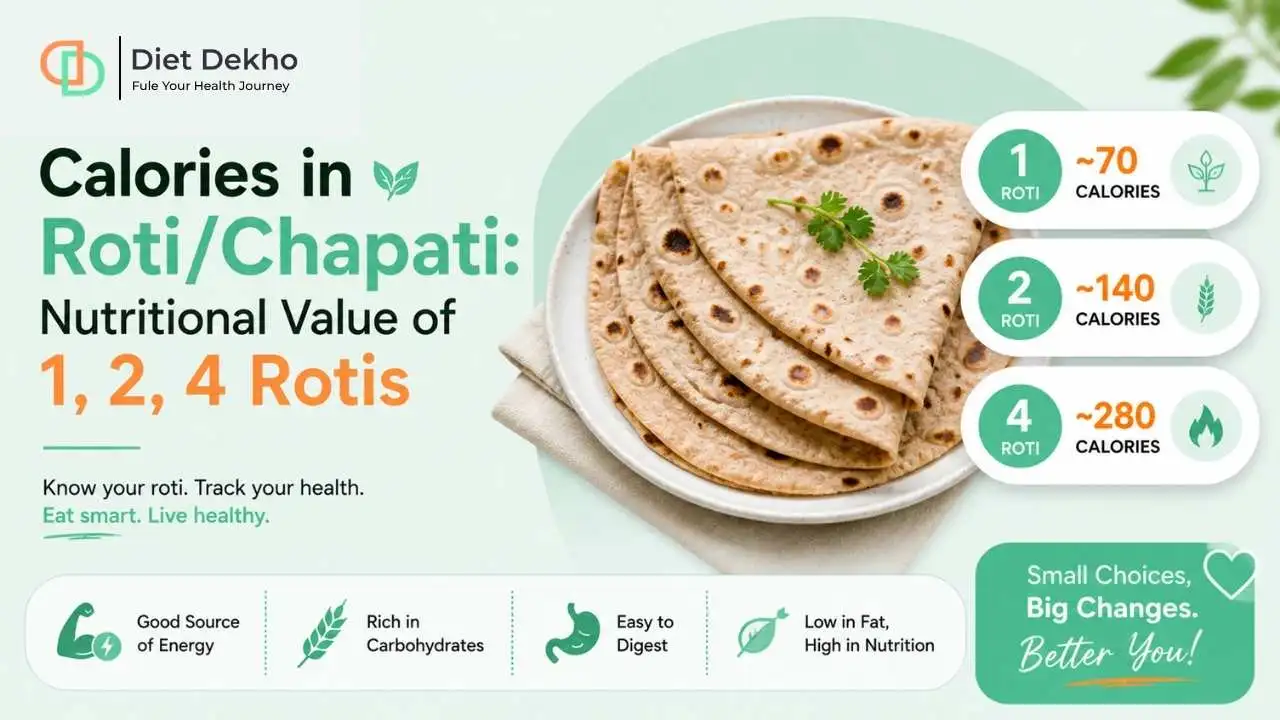
A standard medium-sized whole wheat roti (approx. 40g) contains about 120 calories. Consuming two rotis provides 240 calories, while four rotis contribute 480 calories. This staple is rich in fiber (2.4g) and protein (3.1g), offering a nutritious, low-glycemic alternative to refined bread for individuals managing weight, energy levels, and blood sugar stability.
The Historical and Evolutionary Context of Wheat Consumption in India
The reliance on the roti spans over 5,000 years, anchoring the dietary habits of millions across the Indian subcontinent. Traditionally, the preparation of unleavened flatbread was an essential mechanism for preserving the nutritional integrity of the whole grain. Unlike the highly processed flours of the contemporary era, ancient methods of stone-grinding ensured that the bran, germ, and endosperm remained intact. This historical continuity provides the foundation for the current understanding of why whole wheat remains a superior carbohydrate source compared to refined modern alternatives.
The transition from regional grains like millets to a wheat-centric diet was accelerated by the Green Revolution, which standardized agricultural output but also altered the metabolic profile of the average Indian meal. For the non-gym audience, this shift meant that the daily energy intake became increasingly dependent on wheat-based starches. Consequently, the nutritional analysis of the modern roti must account for these evolutionary shifts and the resulting impact on public health markers, including the prevalence of Type 2 Diabetes and metabolic syndrome.

The Micro-Level Anatomy of the Whole Wheat Kernel
To comprehend the energy density of a single phulka, one must examine the physiological structure of the wheat kernel itself. All grains grow as kernels, consisting of three distinct layers that determine the nutritional and caloric value of the flour used in traditional Indian households.
| Kernel Component | Composition | Primary Nutritional Value |
| Bran | Outer coating | Most of the grain’s fiber |
| Germ | Inner core | Vitamins, minerals, and healthy oils |
| Endosperm | Middle layer | Starch providing energy for growth |
The process of refining whole wheat into white flour (maida) removes the bran and germ, stripping away essential fiber, Vitamin E, B6, and minerals like magnesium and zinc. This removal significantly alters the metabolic response to the grain. While a whole wheat roti provides a slow release of glucose, refined versions cause rapid spikes in insulin, which is particularly detrimental for those struggling with blood sugar management.
The Science of Starch and Satiety
The endosperm consists primarily of two types of starch: amylose and amylopectin. Whole wheat roti contains resistant starch and beta-glucans, which are known to improve insulin sensitivity and promote a prolonged sense of fullness. This satiety factor is critical for busy professionals who may not have time for multiple small meals throughout the day. By consuming a whole grain staple, the body accesses a steady stream of energy, reducing the likelihood of mid-afternoon cravings for processed snacks.
The presence of resistant starch also serves as a prebiotic, feeding beneficial gut bacteria. This supports digestive health and may even influence the gut-brain axis, potentially mitigating some of the professional stress experienced by urban workers. Therefore, the caloric value of the roti is mediated by its fiber content, which acts as a metabolic buffer.

Comprehensive Caloric Breakdown: 1, 2, 4, and 6 Rotis
The primary concern for most individuals remains the quantitative caloric burden of their meals. Research from the National Institute of Nutrition (NIN) and other health authorities indicates that caloric density is directly proportional to the weight and diameter of the finished product.
| Roti Quantity | Average Weight (g) | Total Calories (kcal) | Protein (g) | Fiber (g) |
| 1 Medium Roti | 40 g | 112 – 120 kcal | 2.9 – 3.1 g | 2.4 – 3.2 g |
| 2 Medium Rotis | 80 g | 224 – 240 kcal | 5.8 – 6.2 g | 4.8 – 6.4 g |
| 3 Medium Rotis | 120 g | 336 – 360 kcal | 8.7 – 9.3 g | 7.2 – 9.6 g |
| 4 Medium Rotis | 160 g | 448 – 480 kcal | 11.6 – 12.4 g | 9.6 – 12.8 g |
| 5 Medium Rotis | 200 g | 561 – 600 kcal | 14.5 – 15.5 g | 12.0 – 16.0 g |
| 6 Medium Rotis | 240 g | 673 – 720 kcal | 17.4 – 18.6 g | 14.4 – 19.2 g |
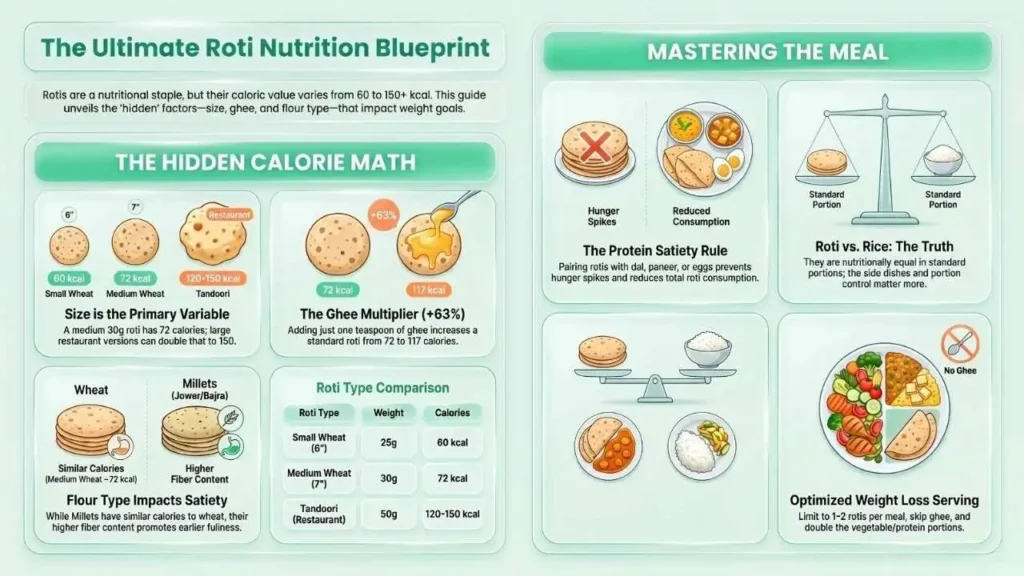
The variation in calories in a roti can be attributed to the size and thickness of the dough ball used. A small roti (30g) may contain only 84 calories, whereas a large restaurant-style roti (50g or more) can exceed 140 calories per piece. For most sedentary adults, a meal containing two medium rotis provides roughly 15% of the total daily energy requirement, assuming a 1,600 to 2,000 calorie diet.
Diameter and Thickness: The Geometric Impact
The physical dimensions of a phulka significantly influence the total energy intake. In many households, the size of a roti is estimated visually, leading to potential inaccuracies in caloric tracking.
| Roti Diameter | Approx. Weight of Dough | Caloric Range (kcal) |
| 5-inch (Small) | 30 g | 60 – 80 kcal |
| 6-inch (Medium) | 40 g | 90 – 120 kcal |
| 8-inch (Large) | 55 g | 120 – 160 kcal |
What this means for a daily routine is that a slight increase in the size of the dough ball can lead to an unintended surplus of 20 to 40 calories per meal. Over a week, this cumulative effect can hinder weight loss efforts for those who are not physically active.
The Lipid Variable: The Caloric Impact of Ghee and Oil
In traditional Indian cooking, the addition of ghee (clarified butter) or oil is a common practice to keep the bread soft and palatable. However, this addition fundamentally alters the energy profile of the meal. A single teaspoon of ghee (approx. 5g) adds nearly 45 calories to a plain roti.
For a person consuming four rotis with a generous brush of ghee, the caloric intake rises from 480 to approximately 660. While ghee is a source of fat-soluble vitamins and healthy fatty acids, its high energy density necessitates careful moderation, especially for the non-gym audience whose daily caloric expenditure is relatively low.
| Preparation Method | Base Calories | Added Fat Calories | Total Calories per Roti |
| Plain Phulka | 120 kcal | 0 kcal | 120 kcal |
| Ghee-brushed Roti | 120 kcal | 45 kcal | 165 kcal |
| Butter Roti | 120 kcal | 50 – 70 kcal | 170 – 190 kcal |
| Stuffed Paratha | 120 kcal | 100 – 150 kcal | 220 – 270+ kcal |
The inclusion of fats can be beneficial as it slows the gastric emptying rate, further lowering the glycemic response of the meal. However, for individuals prioritizing weight loss, the most effective strategy is to limit fat to a thin brush or skip it entirely in favor of high-moisture vegetable sides.

Glycemic Dynamics and Diabetes Management
For those managing diabetes, the focus shifts from pure caloric counts to the Glycemic Index (GI) and Glycemic Load (GL). The GI ranks carbohydrate-containing foods based on how quickly they raise blood glucose levels. Whole wheat roti typically possesses a medium GI, ranging between 52 and 62.
Understanding Glycemic Load
The Glycemic Load is a more accurate measure of a food’s impact on blood sugar because it accounts for the portion size. The calculation is as follows:
For a single medium roti containing 20 grams of net carbs and a GI of 60, the GL is 12, which is considered moderate. However, consuming four rotis at once elevates the GL to 48, which is a significant burden on the body’s insulin response.
| Food Item | Glycemic Index (GI) | Glycemic Category |
| White Rice | 70 – 90 | High |
| Whole Wheat Roti | 55 – 60 | Medium |
| Bajra (Pearl Millet) | 45 – 50 | Low |
| Jowar (Sorghum) | 50 – 55 | Low-Medium |
| Ragi (Finger Millet) | 54 | Medium |
Medical experts suggest that pairing a roti with high-fiber vegetables, lentils (dal), or proteins like paneer can effectively lower the overall glycemic load of the meal. This synergy prevents the sharp sugar spikes that can lead to long-term complications in diabetic patients.
The Comparative Analysis: Roti vs. Bread and Other Carbohydrates
In the modern urban landscape, convenience often dictates food choices, leading many to replace the traditional roti with store-bought bread. However, a rigorous comparison reveals significant nutritional disparities.
The Preservative and Additive Factor
Commercial bread, even varieties labeled as whole wheat or brown, often undergoes extensive processing. Manufacturers frequently add preservatives like calcium propionate to extend shelf life and emulsifiers to improve texture. Homemade rotis are free from these synthetic additives, making them a cleaner source of fuel for the body.
Furthermore, many store-bought brown breads achieve their color through the addition of caramel or molasses rather than a high whole grain content. This deceptive labeling can lead consumers to believe they are making a healthier choice when, in fact, they are consuming a product with a high glycemic index and minimal fiber.
Satiety and Digestive Health
The unleavened nature of the roti makes it distinct from yeast-leavened bread. Some individuals experience bloating or digestive discomfort from the yeast used in commercial baking. Because the roti is made from fresh dough and consumed shortly after preparation, it retains its natural nutrient density and is generally easier to digest.
| Nutrient (per serving) | Whole Wheat Roti | Store-Bought White Bread | Store-Bought Brown Bread |
| Serving Size | 1 Medium (40g) | 1 Slice (25g) | 1 Slice (33g) |
| Calories | 120 kcal | 67 kcal | 87 kcal |
| Fiber | 3.2 g | 0.6 g | 2.0 g |
| Protein | 3.1 g | 2.0 g | 3.0 g |
| Sodium | 37 mg | 170 mg | 158 mg |
| Preservatives | None | High | High |
While a slice of bread may contain fewer calories than a roti, the low fiber content of white bread means it provides very little satiety. Most people find they need three or four slices of bread to feel full, resulting in a higher total caloric and sodium intake compared to two rotis.

Societal Impacts on Nutrition: Professionals and Homemakers
The dietary challenges faced by the Indian middle class are often a reflection of larger socio-economic shifts. Rapid urbanization and the rise of the IT industry have created a work culture defined by long hours and erratic schedules.
Challenges for the Busy Professional
The busy professional often faces a double burden of nutritional needs: the requirement for high cognitive energy and the reality of a sedentary lifestyle. Research indicates that professional women, in particular, tend to forgo meals or opt for processed convenience foods while prioritizing professional and domestic obligations. For this demographic, the roti can be a stabilizing force. Its complex carbohydrates provide sustained energy, preventing the mental fatigue associated with blood sugar crashes.
The Role of the Homemaker in Family Health
The homemaker remains the primary architect of the family’s health. However, cultural norms, such as the tradition of eating last, can lead to poor personal nutritional outcomes. Homemakers are also susceptible to using excessive oil or ghee out of a desire to make meals more palatable for the family. By shifting toward dry phulkas and incorporating more fiber-rich vegetables, the homemaker can significantly improve the health trajectory of the entire household.
Evidence from the National Family Health Survey (NFHS-5) suggests that despite an increase in education, many individuals remain unaware of their daily caloric requirements. Bridging this knowledge gap is essential for combating the rising rates of obesity and non-communicable diseases in both urban and rural India.
Optimizing the Nutritional Profile: Flour Blends and Substitutions
To maximize the health benefits of the daily staple, one can look beyond traditional whole wheat. Blending wheat with alternative flours can lower the glycemic index and increase the micronutrient density of the roti.
The Millet Revolution
Millets like Jowar, Bajra, and Ragi are ancient grains that are naturally higher in fiber and minerals than wheat.
- Bajra: Rich in iron and ideal for winter consumption.
- Jowar: A low-GI grain that supports heart health.
- Ragi: An exceptional source of calcium for bone density.
Mixing these flours with wheat in a 50:50 ratio allows the dough to remain pliable while significantly boosting its nutritional value.
Expert Blending Strategies
Incorporating pulse flours like Besan (chickpea flour) or adding seeds can further enhance the protein content.
- Pulse Addition: Mixing Besan into wheat flour provides a more complete amino acid profile, essential for muscle repair in a non-gym audience.
- Fiber Boosters: Adding flaxseed meal or fenugreek (methi) leaves to the dough can lower the glycemic response and add healthy fats.
- Vegetable Infusion: Using spinach puree or grated bottle gourd (lauki) to knead the dough adds volume and vitamins without adding significant calories.
These home-based solutions represent practical steps for busy individuals to improve their diet without a complete overhaul of their traditional eating patterns.

Practical Steps for Caloric Balance and Weight Management
For those struggling to find time for formal exercise, the focus must be on non-exercise activity thermogenesis (NEAT) and mindful portion control.
Strategies for Burning Roti Calories
A single medium roti provides 120 calories of energy. To maintain weight, one must ensure this energy is utilized. The following activities can help burn the calories in a roti :
- Walking: 25 to 30 minutes of brisk walking at 6 km/h.
- Jogging: 12 to 15 minutes at a moderate pace.
- Cycling: 20 minutes of steady cycling.
- Home Activities: 15 minutes of jumping rope or 30 minutes of vigorous cleaning.
Portion Control for Different Activity Levels
The ICMR 2020 guidelines suggest that dietary requirements should be tailored to the intensity of one’s work.
| Activity Category | Recommended Roti Intake (per meal) | Goal Focus |
| Sedentary (Office worker) | 1 – 2 Medium Rotis | Weight maintenance and sugar control |
| Moderate (Active housewife) | 2 – 3 Medium Rotis | Sustained energy for domestic tasks |
| Heavy (Manual labor/Athlete) | 4+ Medium Rotis | Caloric replacement and muscle fuel |
For weight loss, a helpful rule of thumb is to fill half the plate with non-starchy vegetables, one quarter with protein (dal/paneer/eggs), and one quarter with a single or double roti.
Insights into Long-Term Metabolic Stability
The latest research from the Harvard T.H. Chan School of Public Health suggests that the quality of carbohydrates is far more important than the quantity. Consuming whole grains like those found in a traditional roti can reduce the risk of early death from cardiovascular disease and diabetes by up to 20%.
For the Indian population, which typically consumes 65% to 75% of calories from carbohydrates, reducing this to 50% while increasing protein and healthy fats is a recommended strategy for long-term health. This does not mean eliminating the roti; rather, it means transforming the roti-based meal into a more balanced nutritional event.
As one navigates the complexities of modern life, the roti remains a dependable ally. By understanding the calories in a roti and making small, conscious adjustments to its preparation and portioning, it is possible to achieve significant health transformations. The journey toward better health is not about deprivation but about making informed, supportive choices that fit into a busy schedule.
Frequently Asked Questions
How many calories are in 1 roti without ghee?
A typical medium-sized whole wheat roti, weighing approximately 40 grams, contains around 120 calories. If the roti is smaller (30g), the count drops to about 84 calories. The absence of ghee keeps the fat content low and the calories predictable.
Is roti better than rice for diabetics?
Yes, whole wheat roti is generally superior to white rice for blood sugar management. Roti has a lower glycemic index (52-62) compared to white rice (70-90) and contains significantly more fiber. Fiber slows down the absorption of sugar, preventing rapid spikes after meals.
How can I reduce the calories in a roti?
To reduce the caloric density, avoid adding ghee or oil after cooking. You can also mix wheat flour with high-fiber, low-calorie additions like grated vegetables (spinach or radish) or swap a portion of the wheat for lower-GI flours like Jowar or Bajra.
How many rotis can a diabetic eat in one meal?
Most medical professionals recommend that diabetics limit themselves to 1 or 2 medium-sized rotis per meal. It is crucial to pair these with a large portion of fiber-rich vegetables and a source of protein to further stabilize blood sugar levels.
Can eating too many rotis cause weight gain?
Weight gain occurs when the total caloric intake exceeds the body’s energy expenditure. While a single roti is a healthy choice, consuming four or more rotis per meal without sufficient physical activity can lead to a caloric surplus and subsequent weight gain.
Conclusion
The humble roti is a nutritional powerhouse that, when managed correctly, serves as an ideal fuel for the modern Indian lifestyle. Whether balancing a demanding career or a busy household, the key to health lies in understanding the calories in a roti and the science of glycemic management. By choosing whole wheat, practicing portion control, and pairing the staple with protein and fiber, individuals can maintain metabolic stability and long-term vitality. The transition toward a healthier version of oneself begins with the very next meal, one small, mindful step at a time.
For personalized guidance and a detailed health roadmap tailored to your specific needs.

Contact Us
We understand how overwhelming nutrition and weight loss information can feel. With so many opinions and confusing advice online, it’s easy to feel stuck or unsure about what to do next.
At Diet Dekho, you never have to figure it out alone. You can contact us anytime with any questions or concerns. Our expert dietitians are available 24/7 to guide, support, and help you stay on track. Whether your goal is weight loss or building healthier habits, we’re here to make the journey simpler and more sustainable for you.
Disclaimer
This blog is intended to help readers make healthier food choices. Your health should always be the top priority. Before starting any restrictive or special diet, especially if you have a medical condition or health concern, please consult a doctor or a qualified dietitian. Each body responds differently to food and lifestyle changes. Always choose what is safe and suitable for you.

Abhinav is the Founder of Diet Dekho, helping people manage weight and lifestyle health through simple, practical nutrition and personalized diet plans.