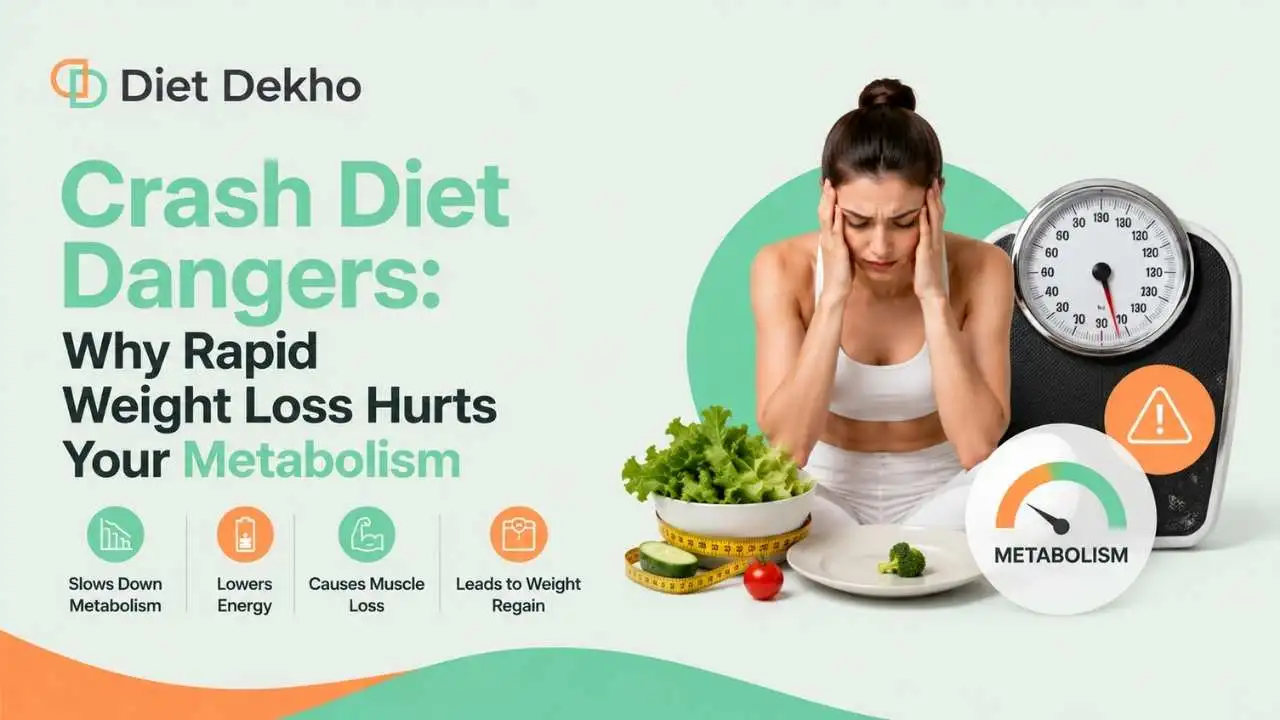
Meena, a busy homemaker from Delhi, found herself staring at a beautiful silk saree she intended to wear for her brother’s wedding, only to realize it no longer fit. With just three weeks to go, she turned to an extreme 800-calorie liquid cleanse she found online, unaware of the crash diet dangers and metabolism consequences that would follow. Like many struggling with their health and time, she wanted a quick fix for her weight and her rising blood sugar levels, but the results were far from what she expected.
Crash dieting severely damages your metabolism by triggering adaptive thermogenesis, a survival mechanism where your body slows its resting metabolic rate by up to 15% to conserve energy. This rapid weight loss often results in muscle atrophy, hormonal imbalances-specifically increased ghrelin and decreased leptin-and a high probability of rapid weight regain once normal eating patterns resume.
The Evolutionary Betrayal of the Metabolic Engine
When you decide to cut your calories drastically, your body doesn’t realize you are just trying to fit into a smaller size or manage your diabetes. It interprets this sudden lack of food as a life-threatening famine. What this means for your daily routine is that your body begins to work against you almost immediately. This response is rooted in thousands of years of evolution, designed to help our ancestors survive periods of food scarcity.
Your metabolism is not a fixed number but a dynamic system that responds to your environment. When you engage in a crash diet, your body enters what is often called starvation mode. This isn’t a myth; it is a documented physiological state where your brain sends signals to slow down your digestion and reduce energy expenditure. It’s as if your body’s internal battery is trying to save power because it doesn’t know when the next charge is coming.

Understanding Basal Metabolic Rate and Adaptive Thermogenesis
The core of your metabolism is your Basal Metabolic Rate (BMR), which represents the energy your body needs just to keep your heart beating, your lungs breathing, and your organs functioning while you rest. For the average person, this accounts for 60% to 75% of the total energy burned in a day. During a crash diet, your BMR can drop significantly as your organs become more efficient or, more accurately, reduced in their functional intensity to preserve fuel.
This reduction is part of a broader process known as adaptive thermogenesis. Your body starts burning fewer calories not just because you weigh less, but because it is actively trying to prevent further weight loss. I know it’s hard to find time to exercise, but even the small movements you make throughout the day-what we call Non-Exercise Activity Thermogenesis (NEAT)-begin to decrease subconsciously. You might find yourself sitting more, fidgeting less, and feeling generally lethargic as your body tries to save every bit of energy.
| Component of Energy Expenditure | Impact of Crash Dieting | Why it Matters |
| Basal Metabolic Rate (BMR) | Decreases by 10-15% | You burn fewer calories even while sleeping. |
| Thermic Effect of Food (TEF) | Significant Drop | Your body uses less energy to digest the tiny amount of food you eat. |
| NEAT (Spontaneous Movement) | Subconscious Decrease | You move less without realizing it, burning fewer daily calories. |
| Exercise Activity | Often Decreases | Fatigue makes it nearly impossible to maintain a workout routine. |

The Hormonal Hunger Trap: Ghrelin and Leptin
Let’s simplify why you feel so ravenous after a few days of extreme restriction. Your body uses a complex signaling system involving two main hormones: leptin and ghrelin. Think of leptin as your fullness signal and ghrelin as your hunger alarm. Under normal conditions, these two work in balance to keep your weight stable. However, crash dieting throws this entire system into chaos.
Leptin is produced by your fat cells. When you lose weight rapidly, your fat cells shrink, and your leptin levels plummet. This tells your brain that your energy stores are dangerously low, leading to a persistent feeling of hunger that is almost impossible to ignore. At the same time, your stomach produces more ghrelin, the hormone that screams eat now!. This hormonal imbalance is why most people find themselves indulging after a period of restriction. It isn’t a lack of willpower; it is a biological drive that is hardwired into your system.
The Role of Cortisol and Stress in Fat Storage
I know it’s hard to manage a busy household or a demanding job while trying to diet, and that stress only makes things worse. Crash dieting itself is a significant stressor for your body, leading to an increase in cortisol, the stress hormone. When cortisol levels remain high for extended periods, it signals your body to store fat, particularly around the midsection. This is especially concerning for individuals with diabetes, as abdominal fat is a key driver of insulin resistance.
Moreover, the psychological toll of strict dieting can create a vicious cycle. When you label foods as good or bad, you set yourself up for guilt and anxiety. This mental exhaustion often leads to decision fatigue, where you eventually give in to cravings and feel like you’ve failed. But the truth is, the diet failed you, not the other way around. A sustainable approach focuses on how food makes you feel, rather than just the number on the scale.

Muscle Atrophy: The Cost of Speed
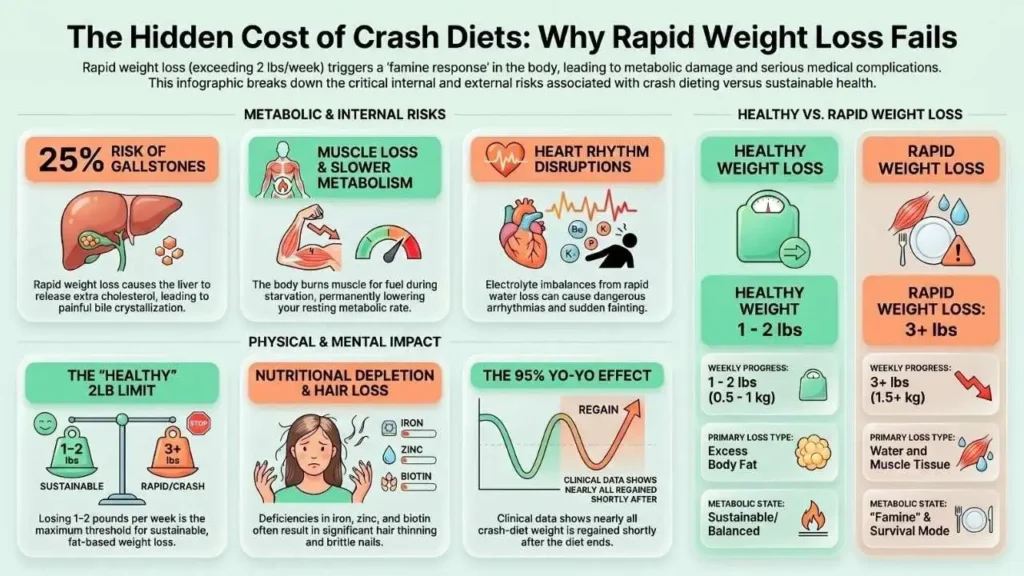
One of the most hidden crash diet dangers metabolism risks is the loss of precious muscle tissue. While it feels rewarding to see the numbers drop quickly on the scale, much of that initial weight loss isn’t fat-it’s water, glycogen, and muscle. Muscle is a metabolically active tissue, meaning it burns more calories than fat even when you are just sitting on the sofa watching TV.
When you don’t eat enough, your body begins to break down its own muscle fibers to get the energy it needs to keep your heart and brain running. Losing muscle is a double-edged sword: not only do you feel weaker, but your metabolism slows down even further. This makes it incredibly easy to regain weight later on. If you lose 10 kg through a crash diet and then gain it back, you often end up with a higher body fat percentage and a slower metabolism than when you started.
| Tissue Type | Calories Burned at Rest | Impact of Loss |
| Muscle Tissue | ~20% of total daily burn | Lowers metabolic rate and reduces strength. |
| Fat Tissue | ~5% of total daily burn | Less impact on the number of calories burned at rest. |

Diabetes and the Rapid Weight Loss Paradox
For my friends who are managing diabetes, the pressure to lose weight can be intense. You’ve likely heard that losing weight can help your blood sugar, and that is true-even a modest 5% weight loss can make your body more sensitive to insulin. However, doing it too quickly can be dangerous. Rapid weight loss can lead to severe drops in blood sugar, known as hypoglycemia, which can cause dizziness, confusion, and even fainting.
Another complication for those with type 2 diabetes is how the body handles insulin resistance. In the early stages, your pancreas often pumps out extra insulin to try and keep blood sugar down. High insulin levels are obesogenic, meaning they actually encourage your body to store fat and make it harder to burn it off. A crash diet doesn’t fix this underlying hormonal issue; it often exacerbates it by stressing the system further and causing a rebound in weight that worsens insulin resistance in the long run.
The Twin Cycle Hypothesis and Pancreatic Health
Let’s look at why gradual weight loss is so much better for your internal organs. There is a concept called the Twin Cycle Hypothesis, which suggests that excess fat in the liver and pancreas is a primary cause of type 2 diabetes. When you lose weight sustainably, your body has the chance to slowly clear this fat, allowing your pancreas to function better and potentially putting your diabetes into remission.
However, when you crash diet, you risk overwhelming your liver with a sudden release of toxins and fatty acids from your shrinking fat cells. This can lead to inflammation and even worsen liver disease. A slow, steady approach of losing half a kilo to a kilo a week gives your organs the time they need to heal and adapt without the shock of a sudden famine.

The Physical Toll: Gallstones and Heart Risks
Beyond the scale and the hormones, crash dieting can cause real physical damage. One of the most common issues is the formation of gallstones. When you lose weight too fast, your liver releases extra cholesterol into your bile, which can then harden into stones. Up to 25% of people on very-low-calorie diets end up with gallstones, which can be incredibly painful and sometimes require surgery.
Your heart is also a muscle, and extreme dieting can put it under significant strain. Rapid weight loss can lead to electrolyte imbalances-specifically a lack of potassium and sodium-which are crucial for a steady heartbeat. Without these minerals, you may experience heart palpitations or even more serious cardiac issues. I know you want to see results quickly, but your heart needs you to be patient and provide it with the nutrients it needs to keep pumping.

Practical Indian Solutions for Busy Lives
What this means for your daily routine is that you don’t need a perfect diet; you need a simple, repeatable plan that fits into your life. In an Indian household, we are often surrounded by rice, rotis, and sweets, which can make things feel difficult. But our traditional cuisine actually holds many of the secrets to a healthy metabolism if we use the Thali approach.
By filling half your plate with non-starchy vegetables like spinach, bottle gourd (lauki), or okra (bhindi), you get the fiber you need to feel full without the heavy calorie load. A quarter of your plate should be protein-think moong dal, paneer, or eggs-to help keep your muscle mass intact. The remaining quarter can be a whole grain like a multigrain roti or a small portion of brown rice. This balance prevents the blood sugar spikes and crashes that lead to cravings and metabolic damage.
Time-Saving Kitchen Hacks for Professionals
I know it’s hard to find time to cook every meal from scratch, so let’s simplify your prep. You can batch-cook basic staples like dal or sprouts over the weekend. These are high-protein, high-fiber building blocks that can be turned into a quick meal in minutes. For example, a moong dal chilla (pancake) is a fantastic, quick breakfast that keeps you full for hours because it is packed with protein.
Keep healthy snacks like roasted makhana (fox nuts) or roasted chana (chickpeas) in your office drawer or your car. These are much better alternatives to the biscuits and samosas that are often found in offices. They provide a slow release of energy and satisfy that crunch craving without ruining your blood sugar levels. Even a simple cup of buttermilk (chaas) in the afternoon can provide probiotics for your gut health and keep you hydrated.
| Time-Saving Snack | Nutritional Benefit | Why it’s Good for Metabolism |
| Roasted Makhana | Low sodium, high antioxidants | Light on the stomach, keeps you full. |
| Roasted Chana | High fiber and protein | Prevents blood sugar crashes and mid-day hunger. |
| Sprouts Chaat | Nutrient-dense, high satiety | Supports stable insulin levels for diabetics. |
| Handful of Almonds | Healthy fats and protein | Reduces carvings and supports heart health. |

Reclaiming Your Metabolism: The Path Forward
If you have been caught in the cycle of crash dieting before, don’t worry-it is possible to heal your metabolism. The first step is to stop looking for a quick fix and start focusing on consistency. This means eating regular, balanced meals that provide your body with enough energy to trust that the famine is over. When your body feels safe, it will naturally start to let go of stored fat.
Incorporating gentle movement is also key. You don’t need a gym membership; a 30-minute brisk walk daily can significantly improve how your body uses insulin and help boost your metabolism. If you are a homemaker, even your daily chores like sweeping or gardening count toward your movement goals. The goal is to move your body in a way that feels good, not like a punishment.
The Importance of Sleep and Hydration
Never underestimate the power of a good night’s sleep. Chronic stress and lack of sleep can disrupt your hormones just as much as a bad diet can. When you are tired, your body produces more ghrelin and less leptin, making you reach for sugary, high-calorie foods the next day. Aiming for 7-8 hours of sleep is one of the best things you can do for your metabolic health.
Hydration is another simple but vital step. Drinking enough water supports every metabolic process in your body. Sometimes, our brains confuse thirst with hunger, leading us to eat when we actually just need a glass of water. Start your day with a glass of warm water, perhaps with a few soaked fenugreek (methi) seeds, which have been shown to help manage blood sugar levels in people with diabetes.

Frequently Asked Questions (FAQs)
How exactly does a crash diet affect my metabolism?
A crash diet causes your metabolism to slow down significantly through a process called adaptive thermogenesis. Your body begins to burn fewer calories to conserve energy because it believes it is in a state of famine. This makes it much harder to keep weight off in the long term.
Why do I feel so hungry after losing weight quickly?
When you lose fat rapidly, your levels of the fullness hormone leptin drop, while your hunger hormone ghrelin increases. This creates a biological drive to eat that can often lead to indulging and regaining the weight you lost.
Is it safe to lose weight if I have type 2 diabetes?
Yes, but it should be done gradually. A slow weight loss of 0.5 to 1 kg per week is much safer and more effective for improving insulin sensitivity than a crash diet, which can lead to dangerous blood sugar fluctuations and muscle loss.
What are some easy Indian home remedies to boost metabolism?
Drinking warm water with soaked fenugreek (methi) or cumin (jeera) seeds in the morning can help support digestion and blood sugar control. Additionally, staying hydrated and including protein in every meal are simple ways to keep your metabolic rate healthy.
Can I reverse the damage done by previous crash diets?
Yes, metabolic recovery is possible. By focusing on a sustainable, balanced diet with adequate protein and regular movement, you can rebuild muscle mass and help your hormones return to a state of balance.
Conclusion: Small Steps to a Healthier You
I know you want to see results today, but your body deserves a long-term solution that makes you feel strong and energetic. Crash dieting might give you a temporary thrill on the scale, but the internal cost is simply too high. By choosing simple, whole foods and moving your body gently, you are not just losing weight-you are building a resilient metabolism that will support you for years to come.
Remember, you don’t have to do this alone. If you’re feeling overwhelmed by the conflicting advice and your busy schedule, we are here to help you navigate your health journey with practical, evidence-based solutions that actually fit your life.
Take the first step toward a healthier metabolism today.
Contact Us
We understand how overwhelming nutrition and weight loss information can feel. With so many opinions and confusing advice online, it’s easy to feel stuck or unsure about what to do next.
At Diet Dekho, you never have to figure it out alone. You can contact us anytime with any questions or concerns. Our expert dietitians are available 24/7 to guide, support, and help you stay on track. Whether your goal is weight loss or building healthier habits, we’re here to make the journey simpler and more sustainable for you.
Disclaimer
This blog is intended to help readers make healthier food choices. Your health should always be the top priority. Before starting any restrictive or special diet, especially if you have a medical condition or health concern, please consult a doctor or a qualified dietitian. Each body responds differently to food and lifestyle changes. Always choose what is safe and suitable for you.

Abhinav is the Founder of Diet Dekho, helping people manage weight and lifestyle health through simple, practical nutrition and personalized diet plans.