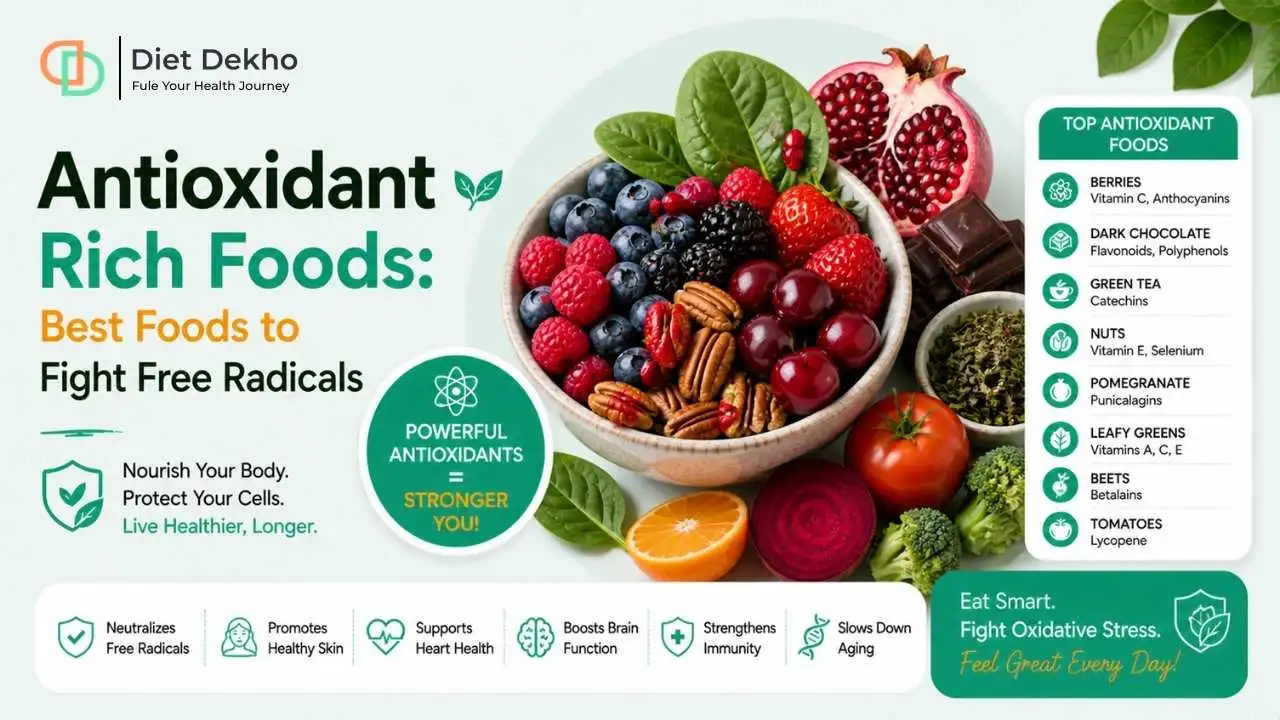
Have you ever sliced an apple, left it on the kitchen counter for a few minutes while answering a work call, and returned to find it turned a dull, unappetizing brown? That simple change is a perfect window into what happens inside our bodies every single day when we are stressed or tired. Finding food that are rich in antioxidants is essentially like putting a protective layer of lemon juice on that apple slice to stop it from rusting or browning.
Foods that are rich in antioxidants, such as amla, turmeric, moringa, and colorful berries, protect your body by neutralizing harmful free radicals. These natural compounds reduce internal inflammation, support glowing skin, and help manage blood sugar levels. Prioritizing whole plant-based foods over supplements ensures your body receives the necessary fiber and nutrients for long-term metabolic balance.
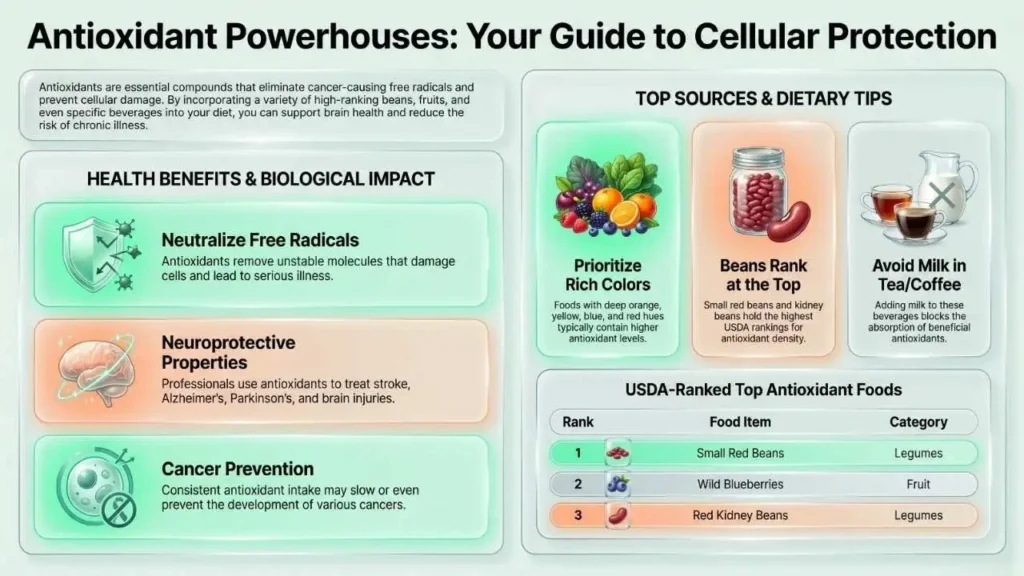
Understanding the Invisible Rusting of the Body
I know it is hard to find time to think about oxidative stress when you are juggling school lunches and office presentations, but let’s simplify this concept. Imagine your body as a high-performance engine. As the engine runs, it naturally produces exhaust. In our bodies, this exhaust consists of unstable molecules called free radicals. These molecules are missing an electron, which makes them feel incomplete and aggressive. To fix themselves, they steal electrons from your healthy cells, damaging your DNA and cell membranes in the process.
When these free radicals build up-because of pollution, fried foods, or just the natural process of aging-your body enters a state of oxidative stress. Think of this as internal rusting. For my friends living with diabetes, this rusting is often more aggressive because high blood sugar acts as a fuel for creating even more free radicals. This is why your cells can sometimes feel exhausted, leading to that persistent fatigue or the slow healing of wounds.
What this means for your daily routine is that every bite of food that are rich in antioxidants acts as a peacekeeper. Antioxidants are generous molecules that give up one of their own electrons to neutralize the free radicals, stopping the damage before it starts. By eating a variety of these defenders, you are essentially hiring a full-time security team for your health.
The Chemical Process of Stabilization
In more technical terms, the interaction between a free radical and an antioxidant can be viewed as a redox reaction. While I promised to keep things simple, understanding the basic notation helps visualize the sacrifice these molecules make. A typical radical R^bullet seeks to steal an electron to become stable. An antioxidant AOH steps in:
R^bullet + AOH rightarrow RH + AO^bullet
The beauty of food-based antioxidants is that the resulting antioxidant radical AO^bullet is much more stable and less reactive than the original free radical, and other nutrients in your food often help recharge it back to its original state.
Table 1: Common Free Radicals and the Damage They Cause
| Radical Type | Common Sources | Target in the Body | Resulting Health Issue |
| Superoxide Radical | Oxygen metabolism | Mitochondria (Cell powerhouses) | Low energy, fatigue |
| Hydroxyl Radical | UV rays, pollution | DNA and Proteins | Premature aging, cell mutations |
| Lipid Peroxyl | Fried/Oily foods | Cell membranes (Fatty layers) | Stiff arteries, skin dullness |
| Nitric Oxide Radical | Stress, inflammation | Blood vessel lining | High blood pressure |

The Indian Superfood Pharmacy: Amla and Moringa
If I were to pick a captain for our antioxidant team, it would undoubtedly be Amla, the Indian Gooseberry. I often tell my clients that if you can’t manage a 10-step skincare routine or a 2-hour workout, just start with a bit of amla. It is one of the most concentrated sources of Vitamin C on the planet, containing nearly twenty times more than an orange. Vitamin C is a powerhouse because it doesn’t just fight radicals; it actually helps build collagen, which is the glue that keeps your skin firm and your joints healthy.
For those managing blood sugar, amla is a quiet hero. It contains polyphenols that have been shown to protect the pancreas from oxidative damage, helping your body maintain better insulin sensitivity. I know the sour taste can be intimidating, but what this means for your daily routine is that even a small teaspoon of amla powder in your morning smoothie or a quick shot of fresh amla juice can set a protective tone for the whole day.
Then we have Moringa, or the humble drumstick leaves. In many of our childhood homes, these were just something added to sambar for flavor. However, Moringa is essentially nature’s multivitamin. It is packed with quercetin, an antioxidant that helps lower blood pressure, and chlorogenic acid, which helps stabilize blood sugar levels after meals. For a busy professional, keeping moringa powder at your desk to sprinkle over a salad or mix into a bowl of curd is a simple, home-based solution that requires zero cooking time but offers massive emotional support to your overworked cells.

Turmeric and the Secret of Bioavailability
We cannot talk about food that are rich in antioxidants without bowing to Turmeric. The active compound, curcumin, is a world-class anti-inflammatory agent. It acts like a fire extinguisher for the silent inflammation that often accompanies diabetes and heart disease. However, here is the catch that many people miss: curcumin is very poorly absorbed by our bodies. It’s like having a high-tech security system but forgetting the key.
The key is black pepper. A tiny pinch of black pepper contains a compound called piperine, which can boost the absorption of curcumin by a staggering 2,000%. When you make your morning Golden Milk or add haldi to your dal, always ensure there is a crack of fresh black pepper included. What this means for your daily routine is that you don’t need a fancy supplement; you just need to use your spice box more intelligently.
Another way to help your body use turmeric better is to cook it with a healthy fat, like a teaspoon of cold-pressed oil or a bit of ghee. Curcumin is fat-soluble, meaning it needs a taxi to get through your gut lining and into your bloodstream. This is why our traditional way of tempering spices in oil (tadka) was actually a brilliant scientific move by our ancestors.
Table 2: Maximizing Antioxidant Absorption Through Pairing
| Chief Nutrient | Best Source | Pairing Partner | Why It Works |
| Curcumin | Turmeric | Black Pepper | Piperine increases absorption by 2,000% |
| Lycopene | Tomatoes | Olive Oil / Ghee | Fat carries lycopene into the blood |
| Iron | Spinach / Lentils | Lemon (Vitamin C) | Vitamin C makes plant-iron absorbable |
| Beta-carotene | Carrots | Avocado / Nuts | Healthy fats unlock the Vitamin A |
Managing the Sugar Trap with Antioxidants
I know how hard it is to resist the mid-afternoon sugar craving when you are stuck in back-to-back meetings. That craving is often your brain crying out for a quick energy fix because your blood sugar has dipped. The problem is that the invisible sugar in our diet-the two teaspoons in each cup of tea, the healthy digestive biscuits, or the white bread sandwich-is causing a massive spike in oxidative stress.
When your blood sugar spikes, your body produces advanced glycation end-products (AGEs). I like to think of these as sticky molecules that gunk up your system, leading to stiff arteries and skin wrinkles. This is where food that are rich in antioxidants become your best friend. By choosing low-glycemic index (GI) foods that are also high in antioxidants, you can keep your energy stable and your cells protected.
Let’s look at Cinnamon. Just a half-teaspoon of cinnamon has been shown to improve insulin sensitivity and lower fasting blood sugar. It works by mimicking insulin and improving the way glucose moves into your cells. Instead of reaching for a sugary snack, try sprinkling cinnamon on a bowl of oats or adding it to your evening tea. It’s a small, sweet-tasting victory for your health that won’t cause a glucose crash later.

Millets: The Ancient Solution for Modern Problems
I often hear from homemakers who are worried that their families are eating too much white rice and wheat. I understand the concern-refined grains are essentially empty because the antioxidant-rich outer layer has been stripped away. The solution isn’t to stop eating grains, but to embrace the old new stars: Millets.
Jowar (Sorghum), Bajra (Pearl Millet), and Ragi (Finger Millet) are naturally high in fiber and minerals like magnesium, which acts as a co-factor for the enzymes that manage insulin. Because they have a low-to-moderate GI, they release sugar slowly into your bloodstream, preventing the rusting effect of high glucose. Moreover, millets like ragi are packed with polyphenols that have been shown to have antimicrobial and antioxidant properties.
What this means for your daily routine is that you can swap your regular wheat roti for a jowar roti once a day. You don’t have to change your entire menu; just one smart swap can reduce your family’s risk of metabolic disease. I know it’s a bit more effort to knead millet dough, but your body will thank you for the steady energy and the extra layer of cellular protection.
Table 3: Antioxidant and Fiber Content in Common Grains
| Grain Type | Fiber Content | Key Antioxidants | Glycemic Index (GI) |
| White Rice | Very Low | Minimal | High (70+) |
| Brown Rice | Medium | Selenium, Phenols | Moderate (55-65) |
| Ragi (Finger Millet) | High | Polyphenols, Calcium | Low-Moderate |
| Jowar (Sorghum) | Very High | Tannins, Anthocyanins | Low (50-55) |
| Oats | High | Avenanthramides | Low (55) |

Why Whole Foods Beat Supplements Every Time
I know it’s tempting to just buy a bottle of Vitamin E or C capsules and call it a day. It feels like a time-saver. But as your dietitian, I have to be honest: your body doesn’t recognize isolated vitamins the same way it recognizes a piece of fruit. This is what we call food synergy. A strawberry isn’t just a delivery vehicle for Vitamin C; it’s a complex matrix of fiber, potassium, and hundreds of different polyphenols that all work together.
Studies from Harvard have shown that high doses of isolated antioxidant supplements can sometimes do more harm than good. For example, high-dose Vitamin E supplements have been linked to an increased risk of heart failure in some trials, whereas getting your Vitamin E from almonds or sunflower seeds is heart-protective. This is because nature provides these nutrients in the right balance.
Think of it like a symphony. A supplement is like one person playing a very loud trumpet. It’s a lot of noise, but it’s not music. A whole food, like a bowl of spinach or a handful of walnuts, is the entire orchestra playing in harmony. The fiber in the food slows down the absorption, ensuring your body isn’t overwhelmed by a bolus effect of nutrients it can’t actually use.

Glowing Skin from the Inside Out
Many of you ask me about the best creams for anti-aging. While a good sunscreen is non-negotiable, the real work happens at the dinner table. Premature aging, wrinkles, and those age spots are essentially the result of oxidized fats under your skin. When you eat food that are rich in antioxidants, you are essentially creating an internal sunblock.
Lycopene, found in tomatoes and watermelon, is a fantastic defender against UV damage. In fact, one study showed that eating tomato paste daily could increase your skin’s natural protection against sunburn. But remember our synergy rule: you need a little bit of healthy fat (like olive oil) to unlock that lycopene.
If you are struggling with dull skin, focus on Vitamin C-rich foods like papaya and guava. Vitamin C is essential for collagen synthesis. Without it, your skin loses its elasticity and bounce. For my friends with busy schedules, a simple snack of sliced papaya with a squeeze of lime is a double-hit of skin-loving antioxidants that takes two minutes to prepare.
The Role of Healthy Fats
Don’t be afraid of fats! Your cell membranes are made of fats, and they need protection. Walnuts and flaxseeds provide Omega-3 fatty acids, which keep your skin hydrated and plump. They also reduce the inflammation that leads to acne and redness. What this means for your daily routine is that a small handful of walnuts is better than any expensive skin-glow serum you can buy at the mall.
The Dark Chocolate Delight: A Science-Backed Treat
I have some great news for those who think a diet means no treats. Recent research from the Harvard T.H. Chan School of Public Health has found that eating dark chocolate might actually lower your risk of diabetes. In a study of over 192,000 people, those who ate dark chocolate (at least five servings a week) had a 21% lower risk of developing type 2 diabetes compared to those who rarely ate it.
The secret is in the cocoa solids. Dark chocolate (70% or higher) is rich in flavonoids, which help improve how your body uses insulin and reduce blood pressure. However, this isn’t a license to eat at an entire bar! Milk chocolate doesn’t have the same benefits-in fact, because of the high sugar and milk content, it can lead to weight gain.
What this means for your daily routine is that you can enjoy a small square of dark chocolate after dinner. It satisfies the sweet craving, provides a boost of antioxidants, and doesn’t cause the massive sugar spike that a traditional Indian mithai would. It’s about being intelligent with your desserts, as I always say.
Table 4: Dark Chocolate vs. Milk Chocolate for Health
| Feature | Dark Chocolate (70%+) | Milk Chocolate |
| Cocoa Content | High (70-90%) | Low (10-30%) |
| Primary Antioxidant | Flavonoids / Polyphenols | Minimal |
| Impact on Diabetes | 21% Risk Reduction | No Benefit / Risk of Weight Gain |
| Sugar Content | Low | High |
| Best Serving Size | 1-2 small squares | Avoid for daily use |

Solving the No Time to Cook Dilemma
I know you are busy. Between the commute, the kids’ homework, and the endless chores, cooking a perfect meal feels impossible. Let’s simplify this. You don’t need to cook fancy recipes to get your daily dose of antioxidants. You just need to upgrade what you are already eating.
- The Breakfast Upgrade: If you’re eating daliya or oats, stir in a spoonful of flaxseeds and a dash of cinnamon. If you prefer a savory breakfast like poha, add plenty of peanuts and a squeeze of fresh lemon juice at the end.
- The Office Lunch Box: Instead of just plain rice and dal, add a side of Kachumber salad-finely chopped onions, tomatoes, and cucumbers with lemon and black pepper. It takes five minutes to chop in the morning but provides a massive hit of allium compounds and lycopene.
- The 4 PM Slump: Skip the samosa. Keep a jar of roasted chana (chickpeas) or a mix of almonds and walnuts at your desk. They provide the protein to keep you full and the antioxidants to keep your brain sharp.
- The Dinner Strategy: Focus on one-pot meals. A hearty vegetable khichdi made with bajra or moong dal, loaded with spinach and turmeric, is a complete meal that protects your heart and your blood sugar.

Environmental Toxins: What You Can’t See
We often forget that our environment is a major source of free radicals. Pollution in our cities and UV radiation from the sun are constantly attacking our cells. While we can’t always change the air we breathe, we can change the antioxidant reserve our body has to fight back.
One interesting expert quote from Harvard points out that antioxidant is actually a chemical property-the ability to act as an electron donor-rather than a single substance. This means your body needs a variety of different donors. Some work in the watery parts of your cells (like Vitamin C), and some work in the fatty parts (like Vitamin E). By eating a colorful plate-red tomatoes, green spinach, orange carrots-you are ensuring every part of your cellular house is protected.
What this means for your daily routine is that eating the rainbow isn’t just a cute saying for kids. It’s a strategic defense plan for adults living in high-pollution areas. Each color represents a different type of shield. The more colors you have on your plate, the fewer holes there are in your defense system.
Table 5: The Color Guide to Antioxidant Protection
| Color | Phytochemical | Found In | Specific Benefit |
| Red | Lycopene | Tomatoes, Watermelon | Heart health, UV protection |
| Orange/Yellow | Beta-carotene | Carrots, Papaya, Pumpkin | Vision and skin repair |
| Green | Lutein / Zeaxanthin | Spinach, Kale, Moringa | Eye health and liver support |
| Blue/Purple | Anthocyanins | Jamun, Purple Grapes | Brain function and memory |
| White | Allicin | Garlic, Onions | Immune system and BP control |
Understanding the Rusting Equation (For the Science Lovers)
or those of you who like to know the “how” behind the “what,” let’s look at the chemistry of a common radical in the body: the Hydroxyl radical (OH•). This is one of the most reactive species and can be formed through the Fenton reaction involving iron:
Fe²⁺ + H₂O₂ → Fe³⁺ + OH• + OH⁻
This hydroxyl radical is a thief that immediately attacks DNA. An antioxidant like a polyphenol from your green tea or amla juice neutralizes it by donating a hydrogen atom:
Polyphenol-OH + OH• → Polyphenol-O• + H₂O
The resulting water molecule (H2O) is harmless. This is why staying hydrated and eating juicy, antioxidant-rich fruits is so effective-you are literally turning dangerous radicals into harmless water.
Common Myths About Antioxidants
There is so much information out there that it can get confusing. Let’s clear up a few things.
Myth 1: Cooking destroys all antioxidants. Not true! While some Vitamin C is lost when you boil vegetables, other antioxidants like lycopene in tomatoes actually become more available to your body when cooked. Steaming or lightly sautéing is usually the best middle ground.
Myth 2: Superfoods have to be expensive. I hate this myth. You don’t need acai berries from the Amazon. Amla, turmeric, garlic, and spinach are some of the most powerful superfoods in the world, and they are available at your local subzi-mandi for a few rupees.
Myth 3: You can undo a bad diet with a supplement. I know it’s what we all want to believe, but as a dietitian, I have to tell you the truth: you can’t supplement your way out of a poor diet. The fiber and the complex matrix of whole foods are what make the antioxidants work. A pill just can’t replicate that.
A Supportive Word for the Homemaker
I see how hard you work to take care of everyone else. Often, you are the last person to sit down and eat. I want you to remember that by choosing food that are rich in antioxidants for your family, you are giving them a gift of a longer, healthier life. Adding a bit of amla powder to the family’s ginger-garlic paste or using ragi in the dosa batter are small acts of love that have a huge impact.
But don’t forget yourself. You need that internal rust protection too. Make it a habit to have a cup of green tea in the afternoon while the house is quiet, or keep a bowl of pomegranate seeds in the fridge for a quick snack. You are the heart of the home, and keeping your cells healthy is the best way to ensure you have the energy to keep going.
A Practical Roadmap for the Busy Professional
If your life feels like a race against the clock, here is my low-effort, high-impact antioxidant plan:
- Week 1: Just focus on the Morning Haldi. One cup of warm water or milk with turmeric and black pepper.
- Week 2: Add one Colorful Snack. Replace your tea-time biscuit with an orange, a guava, or a handful of walnuts.
- Week 3: Switch one grain. Try a jowar roti for dinner or use brown rice instead of white for your lunch box.
- Week 4: The Green Addition. Add a handful of spinach or moringa leaves to your dal or smoothie every day.
By the end of the month, you’ll have built a powerful defense system without ever feeling like you were on a strict diet.
Table 6: 7-Day Cell-Shield Meal Plan Ideas
| Day | Breakfast Idea | Lunch Idea | Evening Snack | Dinner Idea |
| Monday | Oats with almonds & cinnamon | Dal with moringa leaves & rice | Apple & peanut butter | Jowar roti & palak sabzi |
| Tuesday | Ragi dosa with tomato chutney | Rajma chawal & carrot salad | Roasted chana | Grilled paneer & veggies |
| Wednesday | Besan chilla with ginger/garlic | Moong dal khichdi & curd | Walnuts & a square of dark chocolate | Millet upma with peas |
| Thursday | Papaya bowl with seeds | Spinach dal & chapati | Guava with black salt | Stir-fried broccoli & paneer |
| Friday | Vegetable daliya with turmeric | Chickpea salad with lemon | Green tea & peanuts | Bajra khichdi with veggies |
| Saturday | Sprouts salad with pomegranate | Paneer bhurji & whole wheat roti | Dark chocolate & almonds | Mixed veg soup & toast |
| Sunday | Poha with lots of peanuts | Chicken/Fish curry & brown rice | Fresh coconut water | Ragi roti & mixed dal |
Frequently Asked Questions (FAQs)
Q1: What exactly are food that are rich in antioxidants?
These are whole foods, mostly from the plant kingdom, that contain high levels of vitamins (C, E, A), minerals (selenium, zinc), and phytochemicals (like curcumin or anthocyanins). These substances protect your cells from the internal rust caused by free radicals, which is especially important for managing long-term health and diabetes.
Q2: How can I manage my diabetes using food that are rich in antioxidants?
Antioxidants like those found in amla, cinnamon, and bitter gourd help improve your body’s sensitivity to insulin and protect your pancreas. By eating low-GI, antioxidant-rich foods like millets and legumes, you prevent the sharp sugar spikes that cause oxidative damage to your nerves and blood vessels.
Q3: Are there any Indian fruits that are particularly high in antioxidants?
Absolutely! Amla is the gold standard, but pomegranate, guava, jamun, and papaya are also fantastic. These fruits provide the fiber you need to keep your blood sugar stable while delivering a massive dose of Vitamin C and polyphenols for your skin and heart.
Q4: Can food that are rich in antioxidants help with anti-aging?
Yes, they are nature’s beauty secret. Antioxidants like lycopene in tomatoes and Vitamin E in walnuts protect your skin from UV damage and help maintain collagen. This prevents wrinkles and keeps your skin looking bright and healthy from the inside out.
Q5: Is it okay to take antioxidant supplements instead of eating these foods?
I always recommend food first. Whole foods contain a complex mix of nutrients that work together (synergy). Supplements provide isolated vitamins in high doses, which your body may not absorb well and could even be harmful in some cases. Stick to colorful vegetables, fruits, and spices for the safest and best results.
Let’s Take the First Step Together
I know that making changes to your diet can feel overwhelming, especially when life is already so full. But remember, you don’t have to be perfect. You just have to be a little bit better than you were yesterday. Every time you choose an apple over a biscuit, or add a little extra turmeric to your cooking, you are casting a vote for your future health.
If you are feeling stuck or if your diabetes management is feeling like a burden you can’t carry alone, we are here to help. At DietDekho, we don’t believe in one-size-fits-all plans. We believe in finding solutions that work for your life, your schedule, and your family.
Let’s simplify your journey to health together.
Contact Us
We understand how overwhelming nutrition and weight loss information can feel. With so many opinions and confusing advice online, it’s easy to feel stuck or unsure about what to do next.
At Diet Dekho, you never have to figure it out alone. You can contact us anytime with any questions or concerns. Our expert dietitians are available 24/7 to guide, support, and help you stay on track. Whether your goal is weight loss or building healthier habits, we’re here to make the journey simpler and more sustainable for you.
Disclaimer
This blog is intended to help readers make healthier food choices. Your health should always be the top priority. Before starting any restrictive or special diet, especially if you have a medical condition or health concern, please consult a doctor or a qualified dietitian. Each body responds differently to food and lifestyle changes. Always choose what is safe and suitable for you.

Abhinav is the Founder of Diet Dekho, helping people manage weight and lifestyle health through simple, practical nutrition and personalized diet plans.