🩺 Medically Reviewed & Nutrition Verified by Dt. Mahi Patel (B.Sc. Clinical Nutrition & Dietetics) | Editorial Lead: Diet Dekho Clinical Nutrition Desk | Cross-referenced with ICMR & NIN Dietary Standards.
Imagine you’re a forty-five-year-old executive in Mumbai. Your day is a blur of back-to-back meetings, lukewarm chai, and the constant hum of traffic. Recently, you received a blood report that left you worried. Despite cutting out the deep-fried samosas, your good cholesterol hasn’t budged. This is a common struggle for many of us trying to find the right foods for hdl cholesterol. You want to protect your heart, but you simply don’t have three hours to spend at the gym. I know it’s hard to find time for yourself when everyone else depends on you, but let’s simplify this. Heart health isn’t just about what you stop eating; it’s about the powerful, simple foods you start adding to your plate today.
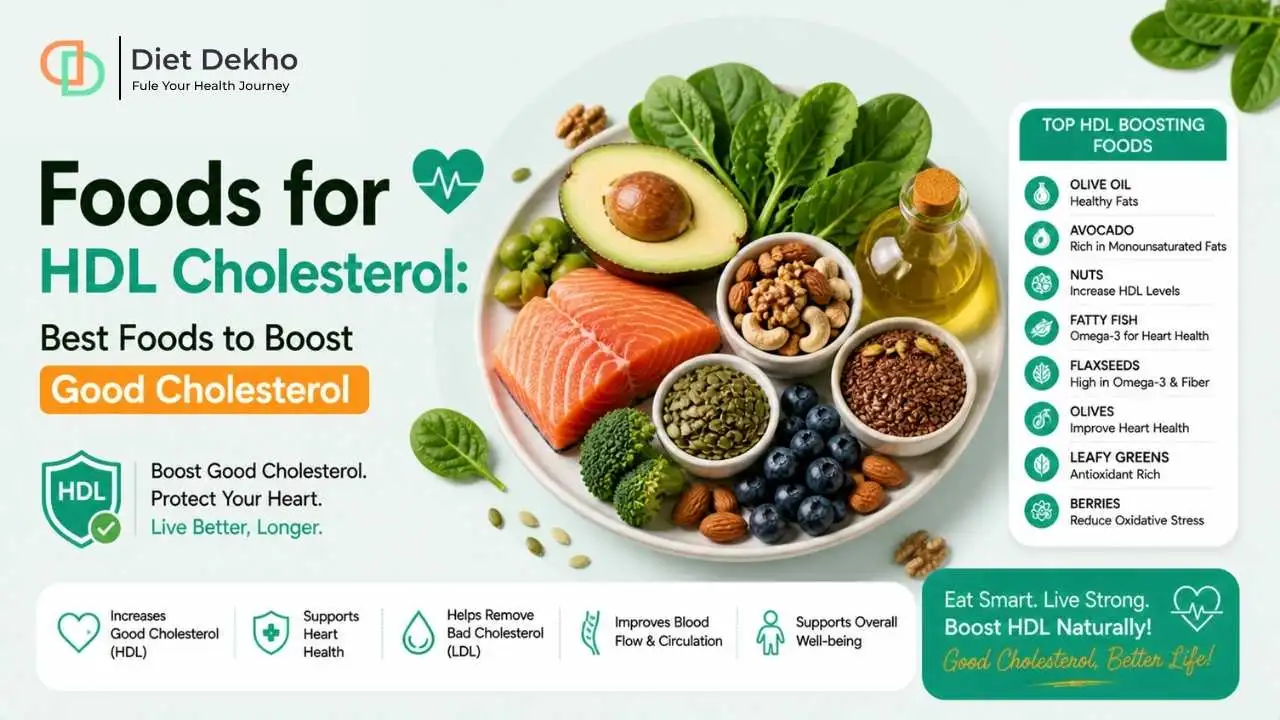
To boost your HDL levels, you should focus on eating healthy fats like those found in fatty fish, walnuts, and extra virgin olive oil. Additionally, increasing your intake of soluble fiber from oats, lentils, and millets is essential. These foods for hdl cholesterol help transport excess fats back to your liver for removal, effectively keeping your arteries clean and healthy.
The Biological Architecture of Cholesterol Management
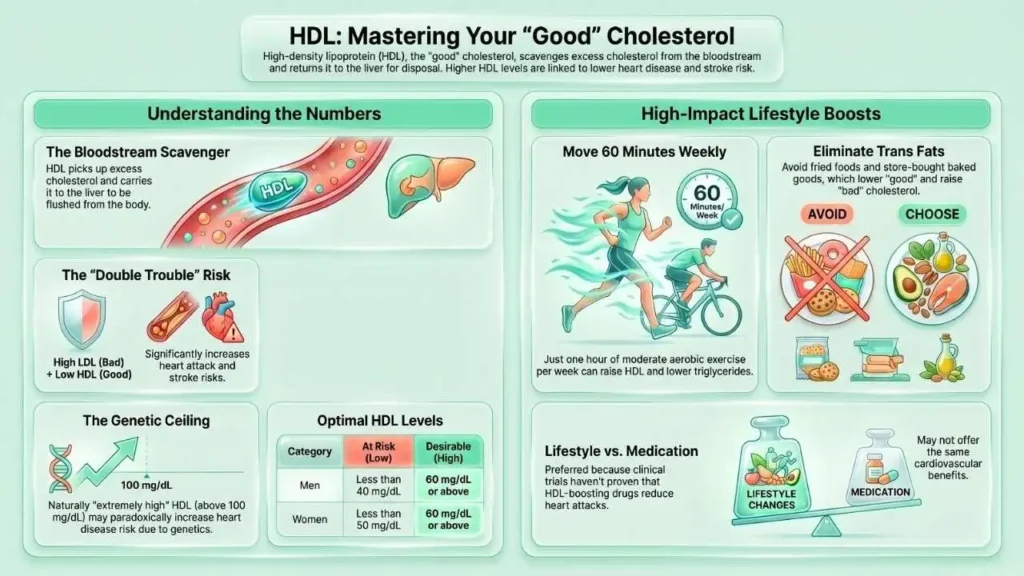
Cholesterol is a waxy substance that your liver produces naturally, but you also get it from certain foods. Essentially, it acts as a building block for your cells and hormones. Because cholesterol cannot travel through your blood on its own, it hitches a ride on carriers called lipoproteins. You’ve likely heard of LDL and HDL, which play very different roles in your body. While LDL often gets a bad reputation, understanding how these two work together is the first step toward better health.
The Cleanup Crew in Your Arteries
Think of LDL as the delivery truck that drops off cholesterol to your cells. However, if there are too many trucks on the road, they start leaving trash in your artery walls. This is where HDL comes in. Specifically, HDL acts like a cleanup crew or a garbage truck. It patrols your bloodstream, picks up that excess cholesterol, and carries it back to the liver to be flushed out. Therefore, having higher levels of HDL is like having a more efficient cleaning team for your heart.
Moreover, the quality of your HDL matters just as much as the quantity. Scientists call this efflux capacity, which is just a fancy way of saying how well your HDL can pluck fat out of your vessel walls. I’ve seen many clients focus only on the numbers, but what this means for your daily routine is that eating the right nutrients actually makes your cleanup crew stronger and faster.

The South Asian Genetic Blueprint and Lipid Challenges
If you feel like you’re fighting an uphill battle, you might be right. The Indian population faces a very specific challenge known as Indian dyslipidemia. This condition typically involves high triglycerides and very low HDL levels. In fact, data from the Indian Council of Medical Research (ICMR) shows that South Asians often develop heart issues a decade earlier than people in the West. Consequently, we have to be even more mindful of our dietary choices.
The ICMR-INDIAB Reality Check
The ICMR-INDIAB study revealed a startling statistic: nearly 67% of Indians have low HDL cholesterol. Interestingly, this isn’t just an urban problem; it affects people in rural areas and across almost every state. For example, while Kerala has high total cholesterol, Tamil Nadu shows some of the lowest HDL levels in the country. Because high cholesterol usually has no symptoms, many people don’t even realize their heart is at risk until a major event occurs.
Because of our unique genetics, experts like Dr. Naresh Trehan emphasize that we need to be proactive. For a busy professional, this doesn’t mean you need to eat foreign health foods. Instead, it means moving away from the four whites-sugar, white rice, maida, and potatoes-which can suppress your HDL production. By making simple swaps in your kitchen, you can start neutralizing these genetic risks immediately.
Essential Grains and Fiber for Arterial Protection
One of the most effective ways to support your heart is by changing your daily grains. Soluble fiber is your best friend here because it binds with cholesterol in your digestive system and pulls it out of your body. This process forces your liver to use up the cholesterol already in your blood, which naturally improves your lipid profile. Therefore, focusing on high-fiber foods for hdl cholesterol is a simple, home-based solution you can start today.
Millet Magic: Jowar, Bajra, and Ragi
Naturally, oats and Dalia (broken wheat) are excellent choices for a heart-healthy breakfast. Oats contain beta-glucan, a specific type of fiber that has been proven to lower bad cholesterol and protect the good. However, don’t forget our traditional Indian millets like Jowar, Bajra, and Ragi. These ancient grains are packed with minerals and digest slowly, which helps keep your energy levels steady throughout a long workday.
| Grain Type | Primary Fiber Type | Health Benefit for Cholesterol | Traditional Indian Use |
| Oats | Beta-glucan (Soluble) | Reduces LDL absorption; boosts heart health | Porridge, savory upma |
| Dalia (Broken Wheat) | Insoluble & Soluble | Regulates digestion; low GI | Khichdi, breakfast cereal |
| Ragi (Finger Millet) | High Dietary Fiber | Supports weight loss; mineral rich | Rotis, malt, porridge |
| Jowar (Sorghum) | Complex Carbohydrates | Gluten-free; keeps blood sugar steady | Bhakri, unleavened bread |
For a homemaker, a practical step is to mix millet flour into your regular atta. This small change means your whole family gets a heart-health boost without even noticing a difference in taste. Since most of us are too busy for the gym, these grains provide a metabolic advantage that works for you all day long. Essentially, every bite of fiber you take is helping your body clear out the clutter in your arteries.
The Kitchen Pharmacy: Spices and Heart Resilience
Your kitchen’s masala dabba is actually a powerful pharmacy for your heart. Many of our traditional spices contain compounds that act as natural lipid-lowering agents. I know it sounds too simple to be true, but adding these to your daily cooking can significantly balance your cholesterol. Let’s look at how these familiar ingredients help your good cholesterol thrive.
The Power of Garlic and Fenugreek
Garlic is perhaps the most famous heart tonic in the world. It contains allicin, which helps stop the liver from making too much cholesterol in the first place. To get the most benefit, try eating one or two raw cloves in the morning with warm water. Similarly, fenugreek (Methi) seeds are a miracle for both diabetics and heart patients. Methi is incredibly high in soluble fiber, which slows down the absorption of fats into your blood.
| Spice/Herb | Active Compound | Primary Benefit for HDL | Best Way to Consume |
| Garlic | Allicin | Inhibits liver cholesterol synthesis | Raw cloves or crushed in food |
| Fenugreek | Galactomannan | Reduces fat absorption; improves insulin | Soaked seeds or fresh leaves |
| Turmeric | Curcumin | Anti-inflammatory; prevents plaque | Daily curries or turmeric milk |
| Amla (Gooseberry) | Vitamin C | Enhances liver detox; boosts immunity | Fresh juice or powder |
Additionally, don’t underestimate the power of Turmeric (Haldi) and Amla. Turmeric contains curcumin, which reduces inflammation in your blood vessels so that plaque doesn’t get a chance to build up. Meanwhile, Amla is a Vitamin C powerhouse that supports your liver and helps produce the proteins needed for healthy HDL. These aren’t just flavors; they are your heart’s best defenders.

Choosing the right cooking oil is one of the most confusing parts of heart health. However, it is also one of the most important decisions you’ll make for your family. In an Indian kitchen, we need oils that can handle high heat without breaking down. If an oil breaks down, it creates trans fats, which are the absolute worst enemies of your good cholesterol.
Mustard Oil: The Indian Heart’s Hero
Mustard oil (Sarson ka Tel) is often the best choice for our traditional cooking styles. Because it has a very high smoke point, it stays stable even when you’re making a tadka or sautéing vegetables. More importantly, it has an excellent ratio of omega-3 to omega-6 fats, which helps keep your heart resilient. In fact, people who traditionally use mustard oil have been shown to have lower rates of heart disease.
| Oil Type | Smoke Point | Fatty Acid Profile | Best Culinary Use |
| Mustard Oil | 250°C | High MUFA; Good Omega-3/6 ratio | Sautéing, tadka, frying |
| Rice Bran Oil | 250°C | Balanced; Contains Oryzanol | Everyday Indian cooking |
| Groundnut Oil | 232°C | High MUFA; Stable | Frying and roasting |
| Olive Oil (EVOO) | 160-190°C | Very High MUFA; Polyphenols | Salads, light sautéing |
| Desi Ghee | 250°C | High SFA; Vitamins A, D, E, K | Finishing dishes (in moderation) |
On the other hand, olive oil is fantastic for your heart but is best used for drizzling or light cooking. For everyday meals, rice bran oil is also a great option because it contains oryzanol, which blocks the absorption of bad fats. While many worry about Ghee, a small amount of pure cow ghee can actually be healthy for some people. The key is moderation-stick to one or two teaspoons a day and avoid reusing oil that has already been heated.

Protein Foundations: Pulses, Nuts, and Fatty Fish
Protein is essential for keeping your metabolism running, but where you get it matters immensely for your lipid profile. For my vegetarian friends, Indian pulses and legumes are excellent foods for hdl cholesterol because they provide protein without the saturated fat found in meat. For non-vegetarians, certain types of fish can provide a direct boost to your heart’s cleanup crew.
Indian Fatty Fish and Nut Power
If you eat fish, varieties like Bangda (mackerel) and Rawas (Indian salmon) are your best options. They are rich in omega-3 fatty acids, which help your HDL particles work more effectively. Similarly, nuts and seeds are like little heart-health capsules. Almonds and walnuts are filled with healthy fats that help your liver produce high-quality HDL. Just five soaked almonds a day can make a noticeable difference over time.
| Protein Source | Key Heart Nutrient | Role in Cholesterol Management | Recommended Intake |
| Moong/Masoor Dal | Soluble Fiber | Lowers LDL; provides clean protein | Daily bowl |
| Walnuts | Omega-3 (ALA) | Reduces inflammation; boosts HDL | 2-3 daily |
| Almonds | MUFA; Vitamin E | Protects HDL from oxidation | 5-6 daily (soaked) |
| Flaxseeds | ALA; Lignans | Lowers triglycerides | 1 tsp ground daily |
| Fatty Fish (Bangda) | Omega-3 (EPA/DHA) | Improves HDL efflux capacity | 2 servings per week |
Meanwhile, legumes like Rajma and Chole are wonderful because they are packed with soluble fiber. I know it’s hard to find time for a complicated meal, so why not try a simple chickpea salad as an evening snack? It’s much better for your heart than a packet of biscuits. By making these small protein swaps, you’re giving your body the tools it needs to keep your arteries flexible and clean.
The Intersection of Blood Sugar and Good Cholesterol
For those managing Type 2 Diabetes, the battle for good cholesterol is even more critical. High blood sugar levels can actually damage your HDL particles through a process called glycation. Essentially, the sugar coats the HDL, making it sticky and unable to do its job of cleaning up your arteries. This is why many diabetics have low HDL levels even if they are careful with fat.
Managing Insulin Resistance
To fix this, you must focus on foods that keep your blood sugar stable. For instance, incorporating bitter gourd (Karela) or moringa (drumstick leaves) into your meals can improve how your body uses insulin. When your insulin works better, your liver can produce more efficient HDL particles. It’s all connected. What this means for your daily routine is that a low-sugar diet is one of the best ways to protect your heart.
| Diabetic Factor | Impact on Cholesterol | Necessary Dietary Shift | Beneficial Food |
| High Blood Glucose | Glycation of HDL particles | Low Glycemic Index foods | Karela (Bitter Gourd) |
| Insulin Resistance | Faster breakdown of HDL | High fiber; complex carbs | Moringa (Drumstick) |
| High Triglycerides | Increases small, dense LDL | Healthy fats; low sugar | Cinnamon (Dalchini) |
| Abdominal Obesity | Suppresses HDL production | Portion control; whole grains | Millets (Jowar/Ragi) |
I know it’s hard to juggle both diabetes and cholesterol, but let’s simplify this. Every time you choose whole grains over white rice, you’re helping both your blood sugar and your heart. Avoiding hidden sugars in juices and processed snacks will give your HDL the best chance to thrive. Remember, your heart and your metabolism are on the same team, so let’s feed them both wisely.

Practical Movement Strategies for Busy Lifestyles
You don’t need to be an athlete to have a healthy heart. In fact, many household chores are actually exercises in disguise. Scientists call this NEAT-Non-Exercise Activity Thermogenesis. This just means the calories you burn while doing your regular daily activities. For a busy professional or homemaker, this is the most practical way to boost your HDL without ever stepping foot in a gym.
NEAT: Movement Without the Gym
Specifically, tasks like mopping the floor or cleaning windows can burn a surprising amount of energy. If you mop your entire house in one go, you’re keeping your heart rate elevated, which is excellent for your lipid profile. Similarly, for professionals, walking while talking on phone calls can add thousands of steps to your day. These small bursts of activity add up and are often just as effective as a single long workout.
| Household Chore | Calories Burned (30 min) | Muscle Groups Targeted | Movement Hack |
| Mopping floors | 100-125 | Core, shoulders, legs | Use wide, exaggerated strokes |
| Vacuuming | 90-110 | Arms, back, legs | Add lunges while moving forward |
| Washing the car | 135-150 | Full body | Use a bucket; skip the automatic wash |
| Gardening/Weeding | 150-180 | Arms, core, legs | Squat while pulling weeds |
| Making beds | 140-160 | Upper body, core | Do it quickly to raise heart rate |
Ultimately, heart health is about consistency, not intensity. Whether it’s taking the stairs instead of the lift or doing some calf raises while waiting for your tea to boil, every movement matters. I know it’s hard to find time for a dedicated exercise hour, but you can weave activity into the fabric of your life. These simple, home-based solutions give you back control over your health without the stress of a rigid gym schedule.

Sustainable Meal Planning and Implementation
The secret to success with any diet is preparation. In our busy lives, we often reach for unhealthy snacks because they are the easiest choice. However, by spending just a couple of hours on the weekend prepping your ingredients, you can ensure that the best foods for hdl cholesterol are always ready when you are. This is the most trustworthy way to stay on track even during your most hectic weeks.
Batch Cooking for Busy Weeks
Batch cooking is a lifesaver for Indian households. You can prepare a large batch of Bhuna Masala (your onion-tomato base) on Sunday and use it for different curries all week long. Also, boiling your dals and chickpeas in advance makes it so much easier to assemble a healthy meal in minutes. For breakfast, having a millet-based batter ready to go ensures you start your day with heart-healthy energy rather than refined carbs.
| Day | Breakfast Choice | Lunch Composition | Evening Snack | Dinner Composition |
| Mon | Oats Porridge w/ fruit | Brown rice, Dal, Sabzi | Handful of Walnuts | Papaya, Mixed Veg Soup |
| Tue | Vegetable Upma (Dalia) | Whole wheat Roti, Chole | Roasted Chana | Grilled Fish, Salad |
| Wed | Moong Dal Chilla | Millet Roti, Paneer (low-fat) | Spiced Makhana | Veg Dalia Khichdi |
| Thu | Whole grain toast w/ Avocado | Brown rice, Rajma, Salad | Fruit Chaat | Methi Roti, Lauki Sabzi |
| Fri | Ragi Porridge | Roti, Chicken/Fish Curry | Boiled Egg Whites | Stir-fry Veg with Tofu |
| Sat | Poha with Peanuts | Brown rice, Chana Masala | Sprout Chaat | Soup, Sautéed Spinach |
| Sun | Millet Dosa with Sambar | Grilled Protein, Big Salad | Almonds/Flaxseeds | Light Dal, 1 Roti |
Importantly, remember the rule of the plate: fill half with vegetables, one-quarter with protein, and one-quarter with whole grains. This balance ensures you’re getting all the nutrients you need without overeating. I know it takes a little effort at first, but once you have your routine down, you’ll feel so much better. Sustainable health isn’t about perfection; it’s about making the right choices more often than not.

Expert Perspectives and Clinical Recommendations
Finally, let’s look at what India’s top heart specialists recommend. Dr. Naresh Trehan and Dr. Devi Shetty both agree that prevention is far better than any medicine. They suggest that everyone should start getting regular checkups by the age of thirty. Since high cholesterol is a silent issue, knowing your numbers early is the only way to stay ahead of the game.
Annual Preventive Checkups
Furthermore, experts emphasize that your lifestyle is the most powerful tool you have. While medicine can help lower bad cholesterol, only healthy habits-like eating the right foods for hdl cholesterol and staying active-can truly strengthen your heart’s natural defenses. For example, quitting smoking can improve your HDL levels in just a few months. It’s never too late to start making better choices.
| Expert | Core Recommendation | Critical Warning |
| Dr. Devi Shetty | Diet should be low carb, high protein | Avoid bad news like excess white rice |
| Dr. Naresh Trehan | Use and rotate oils every 3 months | Avoid the Four Whites: sugar, rice, maida, potato |
| Dr. Akshay Kashid | Don’t quit Indian food; make healthy swaps | Deep-fried snacks are a major threat |
| Harvard Health | Exercise is a natural heart-protector | High HDL doesn’t cancel out high LDL risk |
In conclusion, your heart health is a reflection of the small decisions you make every day. I know it’s hard to change everything at once, so let’s simplify this. Start by adding one or two heart-healthy foods to your plate and finding ways to move throughout your day. These practical steps, tailored for our Indian context, are the best investment you can make for a long and healthy life.

Conclusion: A Holistic Path to Heart Health
Managing your cholesterol in a fast-paced environment doesn’t have to be a source of stress. Instead, think of it as an opportunity to reconnect with our traditional Indian food wisdom. By focusing on foods for hdl cholesterol like millets, mustard oil, and fiber-rich pulses, you are giving your heart the protection it needs. Whether you’re a professional taking a walking call or a homemaker prepping healthy meals for the week, every effort counts. Remember, the goal is to create a lifestyle that is both sustainable and enjoyable. You have the power to keep your cleanup crew working at its best.
Take the first step toward a healthier you by connecting with the experts at DietDekho.com. Our team provides personalized nutrition plans that respect your culture, your time, and your health goals. Visit to start your journey today.
Frequently Asked Questions
What are the best foods for hdl cholesterol in a vegetarian Indian diet?
Vegetarians should focus on high-fiber whole grains like oats and millets, protein-rich pulses like moong dal and chickpeas, and healthy fats from walnuts and flaxseeds. These ingredients help the body naturally produce and maintain high-quality HDL particles.
Can I raise my good cholesterol without going to a gym?
Yes, increasing daily physical activity through household chores like mopping and sweeping, or taking walking meetings, can effectively raise HDL. Consistency in movement is more important than the intensity of the workout for long-term lipid health.
Is ghee better than refined oil for boosting HDL?
Pure cow ghee in small amounts (one to two teaspoons) can be beneficial, but mustard oil and rice bran oil are generally better for everyday cooking due to their high smoke points and healthier fat profiles. The key is to avoid trans fats and reused oils at all costs.
How does diabetes affect the efficiency of my HDL cholesterol?
High blood sugar can sugar-coat (glycate) the proteins in HDL, making them less effective at removing cholesterol from your arteries. Managing your blood sugar through a low-glycemic diet is essential for ensuring your good cholesterol can function properly.
How soon can I see changes in my cholesterol after switching to these foods?
Small improvements in your metabolic health begin almost immediately, but measurable changes in your lipid profile typically take eight to twelve weeks of consistent dietary and lifestyle changes. Regular blood tests are the only way to accurately track this progress.
Contact Us
We understand how overwhelming nutrition and weight loss information can feel. With so many opinions and confusing advice online, it’s easy to feel stuck or unsure about what to do next.
At Diet Dekho, you never have to figure it out alone. You can contact us anytime with any questions or concerns. Our expert dietitians are available 24/7 to guide, support, and help you stay on track. Whether your goal is weight loss or building healthier habits, we’re here to make the journey simpler and more sustainable for you.
Disclaimer
This blog is intended to help readers make healthier food choices. Your health should always be the top priority. Before starting any restrictive or special diet, especially if you have a medical condition or health concern, please consult a doctor or a qualified dietitian. Each body responds differently to food and lifestyle changes. Always choose what is safe and suitable for you.
Medical & Nutritional Disclaimer: The nutritional charts and recommendations presented in this article are intended solely for educational and preventive wellness guidance. They are not a replacement for clinical consultation, personal diagnosis, or medical prescription. Always consult a qualified medical professional or certified clinical dietitian before making drastic modifications to your clinical diet routine.

Abhinav is the Founder of Diet Dekho, helping people manage weight and lifestyle health through simple, practical nutrition and personalized diet plans.