Imagine waking up at 6:00 AM to the sound of an alarm that feels more like a physical blow than a wake-up call. You reach for your phone, scrolling through emails while your father asks if his morning tea is ready, and your toddler is already demanding a snack. By 11:00 AM, you are on your third cup of coffee, yet your energy is flagging, your skin looks dull, and you can feel that familiar, scratchy sensation in the back of your throat. You know you need to eat better, but between office meetings and household chores, finding the right foods for vitamin c feels like just another chore on an endless list. I know it’s hard to find time when you’re carrying the world on your shoulders, but let’s simplify this together so you can reclaim your vitality without adding more stress to your day.
If you are looking for the most effective foods for vitamin c to boost your immunity and manage your health, prioritize local Indian superfoods like Amla (Indian Gooseberry), Guava, and Moringa leaves. Amla offers twenty times the vitamin C of oranges, while Guava provides over 200% of your daily requirement in a single fruit. These choices are budget-friendly, low in glycemic index, and perfect for busy professionals or those managing diabetes.
The Biological Essentiality of Ascorbic Acid
To understand why we need to focus so much on our diet, we have to look at a small evolutionary glitch in human biology. Most animals on this planet can produce their own vitamin C within their bodies. However, humans, along with primates and guinea pigs, lost the ability to synthesize this nutrient millions of years ago because we lack a specific enzyme called L-gulonolactone oxidase. What this means for your daily routine is that every single milligram of vitamin C your body needs must come from what you put on your plate.
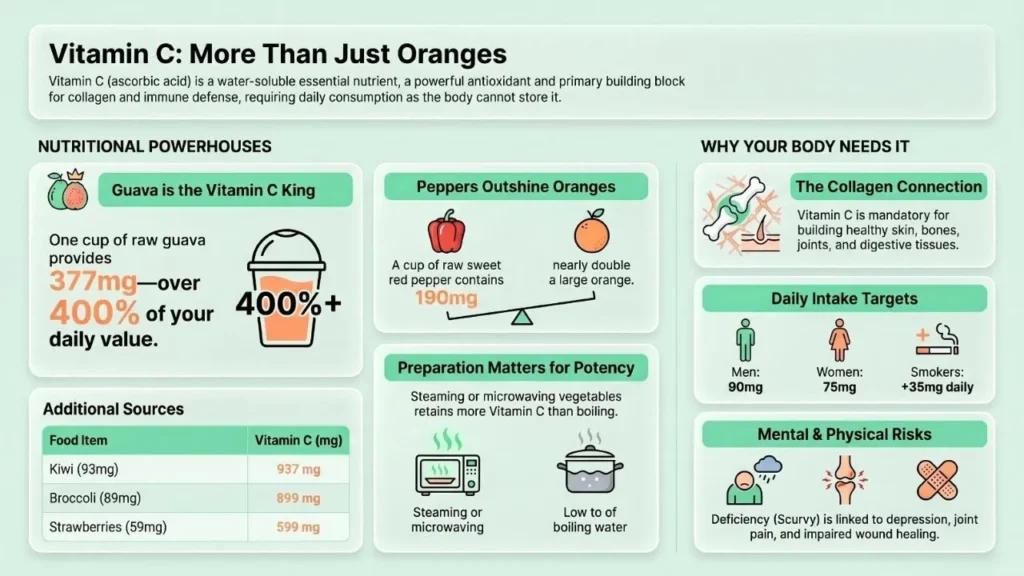
Vitamin C, or ascorbic acid (C6H8O6), is not just a cold fighter. It is a fundamental building block for your entire physical structure. It plays a primary role in creating collagen, which is the glue that holds your skin, tendons, ligaments, and blood vessels together. If you’ve noticed that small cuts take a long time to heal or that your skin is losing its glow, your body might be signaling a collagen deficit. Beyond structural support, it acts as a high-performance antioxidant, neutralizing free radicals-those unstable molecules that damage your cells and contribute to aging and diseases like heart disease.
Table 1: Metabolic Functions of Vitamin C and Their Daily Impact
| Physiological Function | Biological Mechanism | Real-World Impact |
| Collagen Synthesis | Hydroxylation of Proline and Lysine | Keeps skin firm, joints flexible, and heals wounds |
| Immune Support | Enhancing Leukocyte and Phagocyte function | Helps your white blood cells hunt down and destroy viruses |
| Iron Absorption | Reducing Fe^{3+ to Fe^{2+ for uptake | Prevents fatigue by making sure you absorb iron from your dal and spinach |
| Antioxidant Action | Scavenging Reactive Oxygen Species (ROS) | Protects your DNA from damage caused by pollution and stress |
| Neurotransmitter Production | Co-factor for Norepinephrine synthesis | Supports brain health and helps you stay focused during a long workday |

The 2024 ICMR-NIN Dietary Shift: Why the Rules Changed
I want to share something important that often gets missed in the noise of social media health trends. The Indian Council of Medical Research (ICMR) and the National Institute of Nutrition (NIN) recently released the 2024 Dietary Guidelines for Indians, and the numbers have moved. We are seeing a significant shift in how we approach nutrition because our lifestyles have become more sedentary, and our environments more polluted.
The new guidelines represent a 33% increase in recommended vegetable intake. Why? Because we are facing a dual burden in India-we have high rates of traditional undernutrition alongside a massive surge in diabetes and obesity. The 2024 recommendations specifically target micronutrient deficiencies by doubling the suggested daily intake of green leafy vegetables from 50g to 100g. For you, this means that those foods for vitamin c aren’t just a nice to have-they are now a calculated part of the national strategy to prevent chronic illness.
Table 2: Recommended Dietary Allowance (RDA) for Vitamin C (ICMR-NIN 2024 vs. International Standards)
| Life Stage / Group | ICMR-NIN 2024 RDA (mg/day) | NIH (US) Standards (mg/day) | Tolerable Upper Limit (TUL) |
| Adult Men (Sedentary) | 80 – 90 | 90 | 2,000 mg |
| Adult Women (Sedentary) | 65 – 75 | 75 | 2,000 mg |
| Pregnant People | 80 – 90 | 85 | 2,000 mg |
| Lactating Mothers | 115 – 125 | 120 | 2,000 mg |
| Smokers | RDA + 35 | RDA + 35 | 2,000 mg |
| Infants (0-12 months) | 20 – 30 (AI) | 40 – 50 (AI) | Not established |
| Children (1-9 years) | 30 – 45 | 15 – 45 | 400 – 1,200 mg |
I know that tables and numbers can feel overwhelming when you’re just trying to figure out what to cook for dinner. Let’s simplify this: if you’re an adult living in a city, aim for about 80-90mg a day. If you smoke or live in a highly polluted area, your body uses up its vitamin C stores much faster to fight off the oxidative stress, so you need that extra 35mg buffer.
Decoding the Best Indian Foods for Vitamin C
In India, we are incredibly lucky. We don’t need to buy expensive, imported kiwis or superfood powders. Our local markets are overflowing with some of the most potent foods for vitamin c in the world. Let’s look at the heavy hitters that can fit into your busy schedule.
Amla: The Unbeatable Powerhouse
Amla, or Indian Gooseberry, is truly in a league of its own. It contains nearly 20 times the vitamin C of an orange. One small Amla (about 10-15 grams) can provide your entire day’s requirement. What makes Amla special for a busy homemaker is its stability. Most vitamin C is destroyed by heat, but Amla contains unique tannins and polyphenols that protect the vitamin, meaning even when it’s dried or made into a simple pickle (without excessive sugar), it remains a potent source.
Guava: The High-Fiber Hero
If I had to pick one fruit that is the best friend of a busy professional, it’s the Guava (Amrud). It is affordable, portable, and has four times the vitamin C of an orange. A single medium guava packs over 200mg of vitamin C. For someone managing diabetes, the fiber in guava is a miracle-it slows down the absorption of sugar, preventing those dangerous spikes after eating.
Moringa: The Miracle in Your Backyard
Moringa, or drumstick leaves, have been a staple in South Indian kitchens for centuries, and for good reason. These leaves contain seven times more vitamin C than oranges. For a busy professional, a tablespoon of moringa leaf powder stirred into a glass of water or a bowl of dal is one of the fastest ways to spike your nutrient intake without needing a long meal prep session.
Table 3: Vitamin C Density per 100g of Edible Portion
| Food Item | Vitamin C Content (mg) | Cultural Con / Usage |
| Amla (Indian Gooseberry) | 445 – 600 | Juice, Chutney, Murabba |
| Guava (Amrud) | 228 | Raw snack, Fruit salad |
| Moringa Leaves | 120 – 200 | Added to Dal, Sambar, or Powdered |
| Red Bell Pepper | 128 – 183 | Sautéed with veggies or in salads |
| Green Chilies | 109 | Raw tempering or in chutneys |
| Nagpur Mandarins | 50 – 55 | Fresh juice or whole fruit |
| Papaya | 60 – 95 | Breakfast bowl or evening snack |
| Strawberries | 60 – 89 | Winter treat, smoothies |

Tailoring Vitamin C for the Diabetic Journey
If you or a loved one are managing diabetes, I know the anxiety that comes with every piece of fruit. You’ve probably been told fruit is sugar, but that’s a half-truth that can lead to missing out on vital nutrients. The key is in the Glycemic Index (GI) and the Guava Peel Secret uncovered in recent research.
The Guava Peel Insight
A fascinating study published in the Journal of Pharmaceutical and Biomedical Sciences (PMC5071920) found that for people with diabetes, the peel of a ripe guava might actually increase blood sugar, while the pulp lowers it. The pulp is rich in pectin (a type of soluble fiber) that delays glucose absorption, while the ripe peel has a different chemical profile that might interfere with sugar metabolism.
What this means for your daily routine is simple: if you are diabetic and eating a ripe guava, peel it first. This small step helps you get that massive 200mg of vitamin C without the unwanted sugar spike.
Low GI Fruits: Your Safety List
When searching for foods for vitamin c, look for these low-GI options that release energy slowly:
- Jamun (Black Plum): With a GI of 25, it’s practically medicine for diabetics. It contains jamboline, which helps convert starch into energy, preventing sugar surges.
- Pears: These are high in water and fiber. A medium pear has about 10mg of vitamin C but a very low GI of 38.
- Apples: Always eat them with the skin (except for guava, the skin is usually your friend!). The pectin in apples helps detoxify the body and reduces insulin requirements by up to 35%.
Table 4: Diabetic-Friendly Vitamin C Fruits (Low Glycemic Index)
| Fruit | Glycemic Index (GI) | Recommended Serving | Vitamin C per Serving |
| Guava (Peeled) | 12 – 24 | 1 medium fruit | 200 mg |
| Jamun | 25 | 100g (one small bowl) | 18 mg |
| Orange | 40 – 44 | 1 medium fruit | 50-70 mg |
| Pear | 38 | 1 medium fruit | 10 mg |
| Apple | 36 – 39 | 1 medium fruit | 6-10 mg |
| Strawberries | 41 | 1 cup (150g) | 80-90 mg |

The Busy Professional’s Guide to Nutrient Hacks
I know it’s hard to find time to cook elaborate meals. You’re likely jumping from one Zoom call to another, or your commute takes up two hours of your day. But staying healthy doesn’t require a three-course meal. It requires smart swaps and adds.
The Squeeze Strategy
The easiest way to get your daily dose? Keep a bowl of lemons on your dining table. Every time you eat dal, rice, or a salad, squeeze half a lemon over it. This provides about 15-20mg of vitamin C and, more importantly, it helps your body absorb the iron from your plant-based foods. For a vegetarian, this squeeze is the difference between feeling energetic and feeling perpetually anemic.
No-Cook Vitamin C Meals
- The 5-Minute Sprouts Bowl: Mix one cup of moong sprouts with chopped tomatoes, raw red bell peppers, and green chilies. Sprinkle some black salt and lemon juice. You’ve just hit nearly 100% of your vitamin C and protein needs for the afternoon.
- The Desktop Snack: Instead of biscuits, keep a box of sliced papaya or a couple of guavas. A cup of papaya gives you 87mg of vitamin C-that’s your whole day’s quota in one go.
- Smoothies Done Right: If you’re a smoothie person, blend one cup of spinach, half an apple, and a dash of amla juice. Avoid adding milk to this (we’ll talk about why in the Ayurveda section).

Ayurvedic Insights: When and How to Eat
As an Indian brand, we at DietDekho respect the traditional wisdom that has guided our kitchens for generations. Ayurveda offers specific warnings that align perfectly with modern digestion science, especially regarding the timing and combination of foods for vitamin c.
The Milk Conflict (Viruddha Ahara)
You’ve probably heard your grandmother say don’t drink milk after eating oranges. She was right. In Ayurveda, combining sour fruits with milk is considered Viruddha Ahara (incompatible food). The acid in the fruit curdles the milk in your stomach, which slows down digestion and can lead to the formation of Ama (toxins). This often results in bloating, skin issues, or even respiratory congestion.
I know those fruit cream desserts or orange smoothies look delicious, but what this means for your daily routine is that you should wait at least 2 hours between consuming citrus and dairy.
The Sun Rule
Ayurveda suggests that our digestion is tied to the sun. Citrus fruits and Amla are best consumed during the day when the sun is up and our Agni (digestive fire) is strong. Avoid eating very sour fruits late at night, as they can aggravate the Kapha dosha, potentially leading to acidity or a cough the next morning.

Preserving the Glow: Storage and Cooking Mistakes
Vitamin C is arguably the most delicate vitamin. It hates light, heat, and oxygen. If you aren’t careful, you might be buying the best foods for vitamin c but getting none of the benefits.
- The Pre-Cut Trap: Do you chop your vegetables in the morning for the evening meal? Stop! Vitamin C starts oxidizing as soon as the fruit or vegetable is cut and exposed to air. By the time you cook those bell peppers in the evening, they may have lost 50% of their potency.
- The Boiling Blunder: Vitamin C is water-soluble. When you boil broccoli or cabbage and throw away the water, you are literally pouring your immunity down the drain. Steaming or stir-frying for a short time is much better for keeping the nutrients intact.
- The Storage Secret: Store your citrus fruits in the fridge, but keep them in a dark drawer. Light degrades vitamin C over time. For supplements, never store them in the bathroom or near the stove-the steam and heat will destroy the crystalline structure of the vitamin in less than a week.

The State of the Nation: Vitamin C Deficiency in India
It’s a bit of a paradox, isn’t it? We live in a land of Amla and Guava, yet we are facing a nutritional crisis. Research published in The Lancet Global Health (2021) shows that roughly 30% of Indians are insufficient in vitamin C. In some parts of North India, up to 73.9% of the older people population is actually deficient.
This isn’t just about getting a cold. Low vitamin C levels are linked to:
- Fatigue and Restlessness: That feeling of being tired but wired.
- Gingivitis: Bleeding gums when you brush your teeth.
- Poor Wound Healing: Scratches or bruises that stay for weeks.
- Anemia: Because without vitamin C, your body can’t use the iron you eat.
For a busy professional or homemaker, these subtle symptoms are often the reason why life feels so much harder than it needs to be. Addressing this through diet is the most sustainable way to get your energy back.

A Supportive Friend’s Final Words
I know you’re doing your best to take care of everyone else. But you cannot pour from an empty cup. Incorporating these foods for vitamin c into your life isn’t about starting a complex wellness journey. It’s about small, manageable habits-a peeled guava while you work, a squeeze of lemon in your lunch, and opting for an amla shot instead of that fourth cup of tea.
Every sentence I’ve shared with you today is a practical step. You don’t need to do it all at once. Pick one thing-maybe just the lemon squeeze-and start tomorrow. Your body will thank you for it with better energy, clearer skin, and the strength to keep going.

Frequently Asked Questions (FAQs)
What are the best foods for vitamin c for people with diabetes?
The best options are Amla, Guava (peeled), and Jamun. These fruits have a low Glycemic Index (GI), meaning they won’t cause rapid blood sugar spikes while providing a massive boost to your immune system.
Can I get enough Vitamin C from cooked vegetables?
It is difficult. Heat can destroy up to 60% of the vitamin C in vegetables like broccoli or spinach. It is always best to include at least one raw source, such as a fresh fruit, a squeeze of lemon, or raw bell peppers, in your daily diet.
Is it true that Amla has more Vitamin C than Oranges?
Yes, absolutely. Amla contains nearly 20 times the Vitamin C found in oranges. Just one small Amla provides more than the daily recommended allowance for an average adult.
Why should I avoid mixing citrus fruits with milk?
According to both Ayurveda and modern food science, the acid in citrus fruits can cause milk to curdle and agglutinate in the stomach. This leads to poor digestion, bloating, and the creation of metabolic toxins (Ama).
How does Vitamin C help with skin health?
Vitamin C is essential for collagen synthesis. Collagen is the protein that provides structure to your skin and keeps it firm. It also protects skin cells from UV damage and pollution, which helps minimize wrinkles and aging.

Ready to reclaim your health?
I know it’s hard to find time to plan your nutrition, so let us help you. Our dietitians specialize in creating simple, home-based plans for busy people like you.

Contact Us
We understand how overwhelming nutrition and weight loss information can feel. With so many opinions and confusing advice online, it’s easy to feel stuck or unsure about what to do next.
At Diet Dekho, you never have to figure it out alone. You can contact us anytime with any questions or concerns. Our expert dietitians are available 24/7 to guide, support, and help you stay on track. Whether your goal is weight loss or building healthier habits, we’re here to make the journey simpler and more sustainable for you.
Disclaimer
This blog is intended to help readers make healthier food choices. Your health should always be the top priority. Before starting any restrictive or special diet, especially if you have a medical condition or health concern, please consult a doctor or a qualified dietitian. Each body responds differently to food and lifestyle changes. Always choose what is safe and suitable for you.

Abhinav is the Founder of Diet Dekho, helping people manage weight and lifestyle health through simple, practical nutrition and personalized diet plans.