
Consider the mid-afternoon struggle of a busy professional in Bangalore or a homemaker in Delhi, navigating the narrow window between a late lunch and a long evening. The choice of a snack often determines the metabolic trajectory of the day. When asking how many calories are in an apple, one is seeking more than a number; one is looking for a strategy to manage energy, weight, and blood sugar in a high-pressure environment.
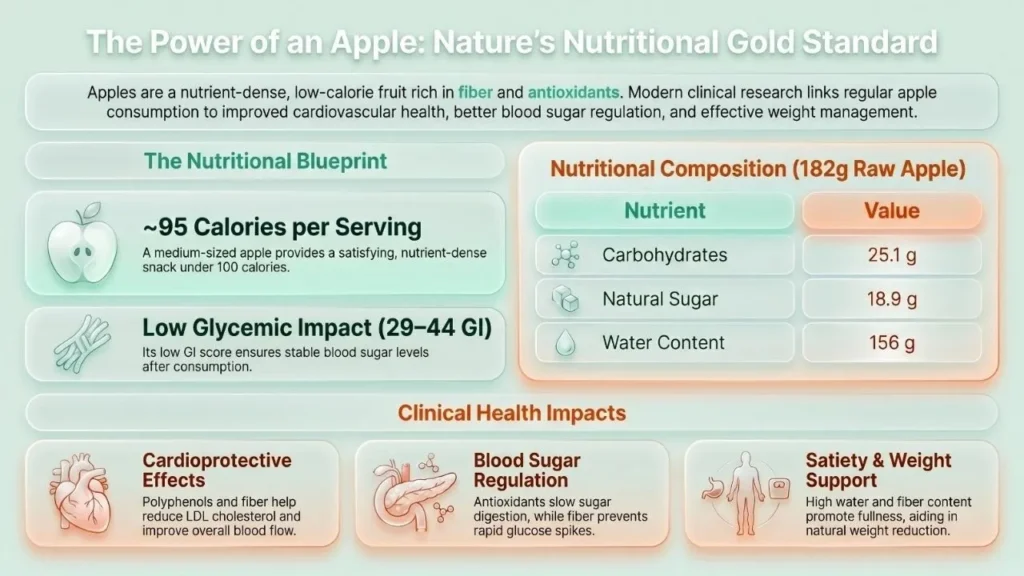
A medium-sized raw apple with its skin, weighing approximately 182 grams, contains 95 calories. This low-calorie, high-fiber fruit provides 25 grams of carbohydrates, including 4 grams of dietary fiber and 19 grams of natural sugars, making it an ideal choice for sustained energy without the spikes associated with processed Indian snacks.
The Quantitative Science of Apple Calories: Size and Variety
The energy yield of a fruit is a direct function of its biomass and the concentration of its primary macronutrients. For the health-conscious individual in India, where fruit sizes can vary from small local Kashmiri varieties to large imported Washington apples, understanding the weight-to-calorie ratio is essential for accurate dietary tracking.
The Correlation Between Mass and Energy Yield
The most common error in dietary logging is the reliance on generic units like one apple. Evidence from kitchen-scale testing in Indian markets suggests that the medium apple used in international databases (182g) is often larger than the standard fruit found in local mandis, which may weigh closer to 150g.
| Apple Size and Weight Category | Edible Mass (Approximate) | Caloric Yield (kcal) |
| Small Apple (approx. 100g) | 90g | 52 kcal |
| Medium Indian Apple (approx. 150g) | 135g | 78 kcal |
| Standard Commercial Apple (182g) | 164g | 95 kcal |
| Large Apple (approx. 200g) | 180g | 104 kcal |
| Extra Large Apple (220g+) | 198g+ | 115 – 126 kcal |

The core and stem typically account for 10% of the total fruit weight, which is defined as refuse in nutritional science. For a person managing a strict caloric deficit, miscalculating an extra-large apple as a small one can lead to an unaccounted 60-70 calories, which, over a week of daily consumption, impacts the metabolic ledger.
Cultivar-Specific Caloric Discrepancies
Beyond physical size, the genetic makeup of the cultivar influences the sugar-to-acid ratio and, consequently, the caloric density. Green apples, such as the Granny Smith, are often recommended for those monitoring their sugar intake because they contain slightly fewer calories and higher fiber than their sweeter counterparts.
| Apple Variety (Medium Size) | Calories (kcal) | Key Characteristic |
| Granny Smith (Green) | 80 – 85 kcal | Higher fiber, tart taste |
| Gala | 70 – 80 kcal | Low calorie, very sweet |
| Fuji | 80 – 90 kcal | High natural sugar content |
| Red Delicious | 95 – 125 kcal | Robust skin, high antioxidants |
| Honeycrisp | 95 kcal | High water content, crisp |
The analysis suggests that the lower sugar content in green apples (approximately 12.7g compared to 14.2g in red varieties) results in a caloric saving of roughly 10-15% per fruit. For a diabetic patient or a professional focused on weight management, this difference, while small in isolation, contributes to a lower glycemic load when consumed consistently.

Metabolic Impact and Diabetes Management in the Indian Population
India faces a significant challenge with metabolic health, making the choice of carbohydrates a critical daily decision. The apple stands out as a superfood in this con because its caloric delivery is governed by a complex matrix of fibers and polyphenols that stabilize the insulin response.
The Role of Fiber in Glycemic Regulation
A whole apple provides approximately 4 to 5 grams of fiber, a significant portion of which is pectin, a soluble fiber that slows the rate of gastric emptying. When a professional consumes an apple, the fiber forms a viscous gel in the digestive tract, which traps glucose and prevents the rapid absorption that causes blood sugar spikes.
| Nutrient Component | Content in 182g Apple | Function in Diabetes Management |
| Soluble Fiber (Pectin) | 2.4 g | Slows sugar absorption; improves gut health |
| Insoluble Fiber | 1.6 g | Adds bulk; promotes healthy digestion |
| Fructose | 10.0 – 12.0 g | Low glycemic index sugar source |
| Quercetin (Antioxidant) | Found in skin | Protects pancreatic cells from damage |
The glycemic index (GI) of an apple is consistently low, ranging from 36 to 38. This means that the 95 calories in an apple are released slowly into the bloodstream, providing a steady energy source. In contrast, the same number of calories from a refined biscuit would cause a rapid rise and fall in blood sugar, leading to the mid-afternoon energy crash familiar to many office workers.
Insulin Sensitivity and Long-Term Risk Reduction
Regular consumption of apples is not merely about managing immediate sugar levels; it appears to offer a protective effect against the development of Type 2 diabetes. Large-scale studies, including research involving over 38,000 participants, revealed that individuals eating one or more apples daily had a 28% lower risk of developing Type 2 diabetes compared to those who ate none.
The underlying mechanism involves the high concentration of polyphenols, primarily found in the apple skin. These plant compounds may improve insulin sensitivity, allowing the body to use its natural insulin more effectively to regulate glucose levels. For a person already struggling with insulin resistance, this means an apple is not just a snack but a functional food that supports the body’s metabolic machinery.

The Weight Loss Narrative: Volume vs. Density
For the non-gym audience and busy professionals, weight loss often feels like an uphill battle against hunger and time. The apple serves as a strategic tool in this battle because of its high water content (86%) and fiber density, which promote satiety without adding excessive calories.
The Pre-Meal Satiety Strategy
Clinical observations indicate that the form of the apple matters. Eating apple slices before a meal can lead to an overall reduction in calorie intake. Specifically, research shows that individuals who consumed apple slices 30 minutes before a lunch or dinner consumed 200 fewer calories during the actual meal.
| Food Item | Satiety Level | Caloric Density |
| Whole Apple (182g) | High (due to fiber/chewing) | 0.52 kcal/g |
| Apple Juice (240ml) | Low (no fiber/liquid) | 0.48 kcal/g |
| Apple Puree (150g) | Medium (partially broken fiber) | 0.55 kcal/g |
The act of chewing a whole apple triggers satiety signals in the brain that liquid calories cannot replicate. When the fiber-rich fruit reaches the stomach, it expands and signals fullness. This is a practical, home-based solution for a homemaker or a professional who finds it difficult to control portion sizes during main meals.
Comparison with Traditional Indian Snacks
To understand why the caloric profile of an apple is so valuable, one must compare it to common alternatives found in Indian households and offices. The 95 calories in a medium apple provide a significant volume of food, whereas the same caloric amount in processed snacks offers very little nutrition or fullness.
| Item | Weight for 95 Calories | Satiety Factor |
| Whole Apple | 182 grams | Very High |
| Phulka Roti (No Ghee) | 1 Roti | Medium |
| Digestive Biscuits | 3 Biscuits | Low |
| Samosa | 0.5 Samosa | Very Low |
| Poha | 1 small bowl | Medium |
For a busy professional reaching for a snack during a meeting, choosing an apple instead of three biscuits saves the body from refined flour and sugar while providing double the volume of food. This swap is one of the simplest dietary changes a person can implement today.

Nutritional Breakdown of Indian Apple Varieties: Shimla vs. Kinnaur
The Indian market is unique due to its access to high-altitude Himalayan apples. Varieties like Shimla, Kinnaur, and Kashmir apples are not just culturally significant but also nutritionally distinct based on their growing conditions.
Shimla Apple: The All-Rounder
Grown at altitudes of approximately 6,000 feet, Shimla apples are known for their sweet-tart flavor and crisp ure. They are particularly rich in Vitamin C and fiber, making them excellent for boosting immunity and aiding digestion. For a professional working in a stressful environment, the high antioxidant content in Shimla apples helps combat oxidative stress and the common infections that frequently disrupt work schedules.
Kinnaur Apple: The High-Altitude Powerhouse
Kinnaur apples are sourced from heights of up to 9,000 feet. The intense UV exposure and cold climate at these altitudes lead to a deeper, darker red skin and a much firmer, crunchier ure.
- Deep Pigmentation: The dark red color is indicative of high anthocyanin levels, which support heart health and blood pressure regulation.
- Fiber Content: The skin of a Kinnaur apple is often thicker, providing a higher dose of insoluble fiber which is vital for those struggling with digestive irregularity.
- Weight Management: Their extreme crunchiness requires more chewing time, further enhancing the satiety effect compared to softer varieties.
Kashmiri Apple: The Delicate Sweetener
The apples from the Kashmir Valley are typically softer and sweeter. While they contain a similar caloric profile, they are often preferred by children or older family members who find the crunchy Shimla or Kinnaur varieties harder to consume. They are celebrated for their ability to lower cholesterol and improve skin health, making them a staple in many Indian homes.

The Essential Role of the Skin: Nutrition vs. Waste
A common practice in many Indian households is peeling the apple to avoid pesticides or due to personal preference. However, from a nutritional standpoint, peeling the apple significantly alters its caloric and metabolic profile.
Nutrient Concentration in the Epicarp
The skin, or epicarp, is the most nutrient-dense part of the fruit. It contains the majority of the apple’s antioxidants and a large portion of its fiber. When the skin is removed, the calorie count drops slightly (because mass is removed), but the health benefits drop exponentially.
| Component | Apple with Skin (182g) | Apple without Skin (approx. 160g) |
| Calories | 95 kcal | 77 kcal |
| Total Fiber | 4.4 g | 2.1 g |
| Vitamin C | 8.4 mg | 6.4 mg |
| Vitamin A | 98 IU | 48 IU |
| Potassium | 195 mg | 145 mg |
Removing the skin effectively halves the fiber content and eliminates most of the quercetin, the polyphenol responsible for protecting against heart disease and supporting lung function. For a person with diabetes, the skin is non-negotiable, as it is the fiber in the skin that truly regulates the sugar absorption.
Addressing Pesticide Concerns
The reluctance to eat the skin often stems from concerns about wax and pesticide residue. Instead of peeling, it is recommended to wash the fruit thoroughly with a mixture of water and vinegar or a food-grade fruit wash. This preserves the 95 calories of high-quality energy and the essential fiber that keeps the gut healthy.
Practical Integration: Snack Ideas for the Busy Indian Professional
Finding time for healthy eating is difficult when one is juggling deadlines, household chores, and family responsibilities. However, the apple’s versatility allows it to fit into any schedule with minimal preparation.
Desk-Friendly Apple Combinations
For the professional at a desk, a plain apple might feel incomplete. Pairing the 95 calories of an apple with a protein or healthy fat source can extend satiety for hours.
- Apple and Nut Butter: Slicing a medium apple and dipping it into one tablespoon of natural peanut butter adds protein and healthy fats, creating a complete mini-meal that prevents evening overeating.
- Apple and Greek Yogurt: Chopped apple mixed into a bowl of curd or Greek yogurt provides a probiotic boost alongside fiber, which is excellent for gut health and immunity.
- Apple Chaat: For those who prefer savory flavors, tossing apple chunks with a pinch of chaat masala, lemon juice, and roasted cumin powder is a quick way to enjoy a traditional Indian snack that is low in calories.
Morning and Evening Strategies
The timing of apple consumption can also influence its benefits. In the morning, an apple on an empty stomach can help with detoxification and provide an immediate, natural energy boost. For those who struggle with late-night cravings while working or watching television, an apple provides a crunchy, sweet fix that satisfies the hand-to-mouth habit without the caloric burden of chips or sweets.

The Science of Processing: Juice, Puree, and Cooked Apples
As food moves from its whole form to processed versions, its metabolic impact changes. Understanding this is vital for parents preparing lunchboxes or individuals looking for healthy beverage options.
The Juice Illusion
Many people believe that a glass of fresh apple juice is as healthy as a whole apple. However, juicing removes the fiber and concentrates the sugar.
- Caloric Shift: One cup of apple juice contains approximately 115 calories but zero grams of fiber.
- Hunger Response: Because there is no fiber to slow digestion, the sugar in juice enters the bloodstream rapidly, causing an insulin spike followed by a hunger crash.
- Liquid Calories: The brain does not register liquid calories the same way it registers solid food, meaning juice often adds to the daily caloric total without reducing hunger.
Cooked and Pureed Apples
Apple puree and cooked apples (like stewed apples or apple halwa) fall somewhere in between juice and the whole fruit. While some fiber is maintained, the physical structure is broken down, which can slightly increase the glycemic response. For individuals with digestive issues like IBS or for young children, stewed apples are easier on the stomach and provide a soothing source of energy.

Long-term Health Benefits: Beyond the Calories
The value of an apple is not just in its 95 calories but in the micronutrients and phytochemicals that support various body systems. For the Indian audience, these benefits address some of the most common health concerns in the country.
Heart Health and Cholesterol
Heart disease remains a leading health issue in India. The soluble fiber in apples binds to cholesterol in the digestive tract and flushes it out of the system, helping to lower LDL (bad) cholesterol. The flavonoids in the skin also help lower blood pressure and reduce the risk of stroke.
Bone Density and Longevity
Interestingly, apples contain boron, a trace mineral that supports bone health and may help prevent osteoporosis, a concern for many Indian women as they age. Additionally, the high water content (86%) contributes to overall hydration, which is essential in India’s warm climate but often overlooked by busy professionals.
Respiratory Health
For those living in polluted metropolitan areas, the antioxidant quercetin found in apples may help improve lung function and reduce the risk of respiratory diseases. This makes the apple a day habit particularly relevant for residents of cities like Delhi or Mumbai.

Common Myths and Facts About Apple Nutrition
To truly understand how many calories are in an apple, one must clear the confusion surrounding fruit consumption in a healthy diet.
- Myth: Apples are too high in sugar for diabetics.
- Fact: While apples contain sugar, their low GI and high fiber content mean they do not cause the dangerous blood sugar spikes associated with processed sweets.
- Myth: Green apples have significantly fewer calories than red apples.
- Fact: The difference is only about 10-15 calories per medium fruit. The real benefit of green apples is their slightly higher fiber and lower sugar content.
- Myth: You should never eat an apple at night.
- Fact: An apple is a much better late-night snack than cereal or biscuits. Its fiber can help you feel full and prevent mindless overeating before bed.

FAQs
How many calories are in a medium apple with skin?
A standard medium-sized apple (about 182 grams) typically contains 95 calories. This includes approximately 25 grams of carbohydrates and 4 grams of fiber, providing a nutrient-dense snack that supports both energy and digestion.
Are the calories in a green apple different from a red apple?
Yes, but the difference is small. A medium green apple (like a Granny Smith) usually has around 80–85 calories, while a red apple averages about 95 calories. Green apples are slightly lower in sugar and higher in fiber, making them a popular choice for weight loss.
How many calories are in a small Kashmiri apple?
Small apples found in Indian markets, often around 100 grams, contain approximately 52 calories. Because they are smaller, they are an excellent portion-controlled snack for children or those wanting a light bite between meals.
Does peeling an apple reduce its calorie count significantly?
Peeling an apple removes about 15-20 calories because you are removing mass, but it also removes nearly 50% of the fiber and the majority of the antioxidants. For the best metabolic health, it is always recommended to eat the skin.
Is it safe to eat apples every day if I have diabetes?
Yes, most dietitians recommend one small-to-medium apple daily for people with diabetes. The key is to eat the whole fruit with the skin and perhaps pair it with a few almonds or walnuts to further stabilize blood sugar levels.

Conclusion: Making the Apple a Daily Habit
The humble apple is a metabolic powerhouse disguised as a simple snack. With 95 calories in a medium fruit, it offers a high-volume, high-fiber solution for the most common health struggles of the modern Indian lifestyle. Whether it is the crunch of a high-altitude Kinnaur apple or the tartness of an Indian Granny Smith, this fruit provides a reliable way to manage weight, protect the heart, and stabilize blood sugar.
For the busy professional, the homemaker, and the health seeker, the path to better health does not require complicated regimes. It can start today with the simple act of choosing a whole apple over a processed snack. The fiber, the hydration, and the slow-release energy are exactly what a tired body needs to keep going.
Ready to personalize your health journey? Our team at DietDekho is here to help you navigate your specific dietary needs with practical, expert advice tailored to your life.
Let’s simplify your nutrition together. Fill out our Form today and start your journey toward a healthier, more energetic you!
Contact Us
We understand how overwhelming nutrition and weight loss information can feel. With so many opinions and confusing advice online, it’s easy to feel stuck or unsure about what to do next.
At Diet Dekho, you never have to figure it out alone. You can contact us anytime with any questions or concerns. Our expert dietitians are available 24/7 to guide, support, and help you stay on track. Whether your goal is weight loss or building healthier habits, we’re here to make the journey simpler and more sustainable for you.
Disclaimer
This blog is intended to help readers make healthier food choices. Your health should always be the top priority. Before starting any restrictive or special diet, especially if you have a medical condition or health concern, please consult a doctor or a qualified dietitian. Each body responds differently to food and lifestyle changes. Always choose what is safe and suitable for you.

Abhinav is the Founder of Diet Dekho, helping people manage weight and lifestyle health through simple, practical nutrition and personalized diet plans.