
The search for nutrient-dense whole foods often leads to the discovery of ingredients that bridge the gap between medicinal utility and culinary indulgence. Macadamia nuts health benefits have emerged as a focal point of nutritional research, particularly for individuals managing complex metabolic conditions like type 2 diabetes. Often referred to as the king of nuts, these buttery kernels offer a unique lipid profile that distinguishes them from more common varieties like almonds or walnuts.
Macadamia nuts health benefits include improved heart health, stable blood sugar management for diabetes, and weight support due to their high monounsaturated fat content and low glycemic index. These nutrient-dense nuts are rich in antioxidants, fiber, and manganese, making them a potent whole-food solution for metabolic syndrome and neurological protection.
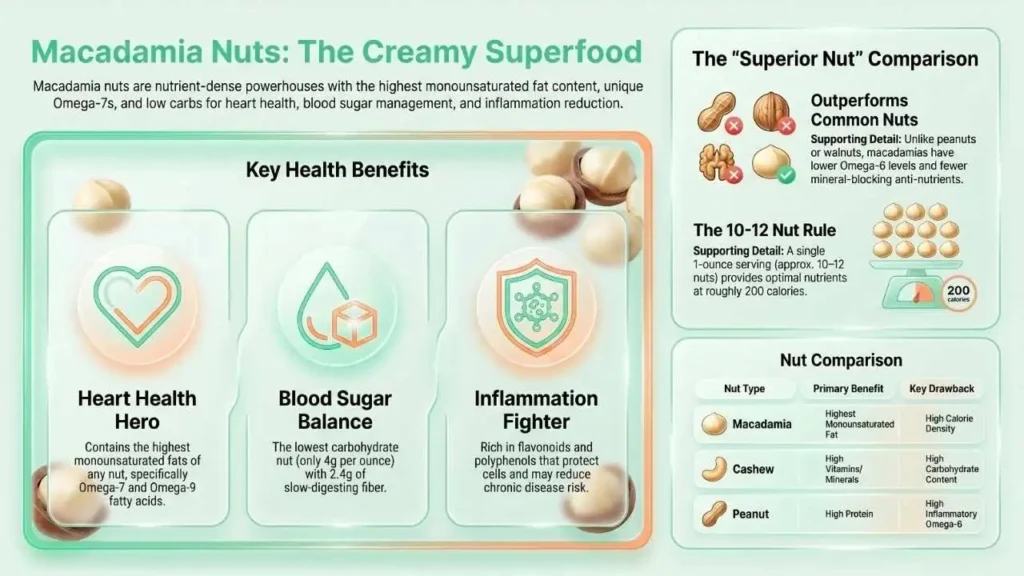
The Rise of the Macadamia in Global and Indian Nutrition
The transition of the macadamia nut from an foreign Australian native to a global nutritional staple reflects a shift in dietary priorities. For the modern professional or homemaker in India, the challenge is no longer just finding calories but finding the right kind of energy to sustain a demanding schedule without compromising long-term health. The macadamia nut, with its dense concentration of healthy fats and minimal carbohydrate load, provides a strategic solution for those navigating the dual pressures of time and health maintenance.
Research indicates that macadamia nuts health benefits extend beyond basic nutrition, acting as a functional food that can influence biological markers of disease. While they were historically avoided due to their high calorie count, contemporary clinical studies emphasize the quality of their fats over the quantity. This shift in understanding has made them a preferred recommendation for dietitians focusing on cardiometabolic health.

Comprehensive Nutritional Architecture: A Molecular Breakdown
The nutritional profile of the macadamia nut is a study in lipid-dominant energy. Unlike many other nuts that rely on a balance of protein and fat, macadamia is characterized by an overwhelming concentration of monounsaturated fatty acids (MUFAs). This architectural uniqueness is what drives the majority of macadamia nuts’ health benefits, particularly in the context of systemic inflammation and heart health.
The Lipid Matrix: Monounsaturated Fats and Rare Omegas
The fat content of a macadamia nut is approximately 75% to 80% of its total weight, with monounsaturated fats making up the vast majority of that percentage. Specifically, the nut is rich in oleic acid, which is also found in olive oil, and palmitoleic acid, a rare omega-7 fatty acid.
| Nutrient Component | Amount per 1 oz (28g) | % Daily Value (DV) |
| Calories | 204 kcal | 10% |
| Total Fat | 21.5 g | 33% |
| Saturated Fat | 3.4 g | 17% |
| Monounsaturated Fat | 16.7 g | N/A |
| Polyunsaturated Fat | 0.4 g | N/A |
| Total Carbohydrates | 3.9 g | 1% |
| Dietary Fiber | 2.4 g | 10% |
| Sugars | 1.3 g | N/A |
| Protein | 2.2 g | 4% |
Data sourced from.
Palmitoleic acid acts as a lipokine, a hormone-like molecule that can improve muscle glucose uptake and suppress liver fat accumulation. This specific fatty acid is not readily available in many other food sources, making the macadamia a critical dietary inclusion for those seeking to optimize their metabolic machinery.

Micronutrient Density: Minerals and Vitamins
Beyond fats, the macadamia nut serves as a concentrated source of essential minerals. Manganese, a trace mineral vital for bone health and enzymatic function, is found in exceptionally high levels. A single ounce provides over 50% of the daily required intake, supporting wound healing and the metabolic processing of carbohydrates.
| Mineral/Vitamin | Amount per 1 oz (28g) | % Daily Value (DV) |
| Manganese | 1.2 mg | 51-58% |
| Thiamine (B1) | 0.34 mg | 22-28% |
| Copper | 0.21 mg | 11-24% |
| Magnesium | 37 mg | 9% |
| Iron | 0.75 mg | 4-6% |
| Vitamin B6 | 0.1 mg | 5-6% |
Data sourced from.
Thiamine, or Vitamin B1, is another critical component of the macadamia’s nutritional profile. It plays a foundational role in converting nutrients into energy, a function that is particularly important for busy professionals who experience frequent energy dips. Copper and magnesium further support the nervous system and bone mineralization, creating a comprehensive support system for the body’s structural and functional integrity.

The Metabolic Nexus: Diabetes and Insulin Regulation
For individuals managing type 2 diabetes or prediabetes, the primary objective is the maintenance of glycemic stability. Macadamia nuts’ health benefits offer a strategic advantage here due to their low glycemic index (GI), which is estimated to be around 10. This indicates that consumption causes a minimal rise in blood glucose levels, a critical factor for preventing the long-term complications associated with diabetes.
Blunting Postprandial Glucose Spikes
The high fat and fiber content of macadamia nuts slows the rate of gastric emptying. When these nuts are integrated into a meal, they act as a buffer for more rapidly digested carbohydrates. For example, adding macadamia nuts to a high-carb breakfast like poha can result in a more gradual release of glucose into the bloodstream, thereby reducing the insulin demand on the pancreas.
A meta-analysis of randomized trials suggests that tree nut interventions, including macadamias, lead to modest but significant improvements in HbA1c levels and fasting blood glucose when they replace refined carbohydrates in the diet. This suggests that the nuts do not just offer a safe snacking alternative but actively contribute to better glycemic control over time.
Improving Insulin Sensitivity
The rare palmitoleic acid found in macadamias has been shown to enhance insulin sensitivity. By functioning as a signaling molecule, it may help the body’s cells respond more effectively to insulin, facilitating the movement of glucose from the blood into the cells for energy. This is particularly relevant for the Indian population, which has a high genetic predisposition toward insulin resistance and metabolic syndrome.
| Parameter | Impact of Macadamia Consumption | Mechanism |
| Glycemic Index | Very Low (approx. 10) | High fat/fiber slows digestion |
| Insulin Sensitivity | Improved | Palmitoleic acid as a lipokine |
| HbA1c | Modest reduction | Displacement of high-GI foods |
| Satiety | Increased | Fat triggers fullness hormones |

Cardiovascular Optimization: Beyond Cholesterol
Heart health is one of the primary drivers of research into macadamia nuts health benefits. Cardiovascular disease remains a significant concern for the sedentary, non-gym audience and busy professionals who may not have the time for intensive exercise.
Lipid Modulation and the Role of MUFAs
Consuming macadamia nuts as a portion of daily caloric intake-specifically around 15% of total calories-has been shown to lower LDL (bad) cholesterol by 5% to 10%. This effect is largely due to the substitution of saturated fats with the monounsaturated fats found in the nuts. Research from Harvard and other institutions indicates that these fats help the liver more efficiently process and eliminate excess cholesterol.
Furthermore, macadamia nuts contain beta-sitosterol, a plant sterol that competes with dietary cholesterol for absorption in the small intestine. By blocking a portion of cholesterol from entering the bloodstream, these nuts provide a dual-action approach to heart health: improving the internal lipid profile and reducing external absorption.
Reducing Systemic Inflammation
Chronic inflammation is a precursor to atherosclerosis and coronary artery disease. The flavonoids and tocotrienols in macadamia nuts serve as powerful antioxidants that neutralize free radicals and reduce markers of inflammation, such as leukotriene B4. These compounds protect the endothelial lining of the blood vessels, ensuring that arteries remain flexible and healthy.

Weight Management Biomechanics: The Caloric Paradox
While macadamia nuts are calorie-dense, providing about 204 calories per ounce, they are not associated with weight gain when consumed in moderation. This phenomenon, often called the nut paradox, is explained by several physiological factors that support weight management.
Satiety Signals and Hunger Control
The combination of protein, healthy fats, and fiber in macadamia nuts triggers the release of satiety hormones like cholecystokinin (CCK). These hormones signal the brain that the body is satisfied, which can prevent the overeating often associated with high-carbohydrate, low-fiber snacks. For a homemaker or professional managing a busy day, a handful of macadamia nuts can provide hours of satiety, reducing the need for frequent snacking.
Thermic Effect and Bioavailability
Not all calories in macadamia nuts are absorbed by the human body. Because of the rigid cell wall structure of the nut, a portion of the fat remains trapped and is excreted rather than stored as adipose tissue. Additionally, the process of digesting whole nuts increases the thermic effect of food-the energy the body spends on digestion and metabolism-further offsetting the high caloric density.
| Factor | Effect on Weight | Scientific Reasoning |
| Fiber Content | High satiety | Delays gastric emptying |
| Fat Composition | Preferential oxidation | MUFAs burned for energy first |
| Caloric Yield | Lower than expected | Incomplete absorption of fats |
| Thermogenesis | Increased | High energy cost of nut digestion |

Neurological and Cognitive Implications
The brain is the most fat-dependent organ in the body, and macadamia nuts health benefits include providing the specific types of fats and antioxidants required for cognitive longevity.
Tocotrienols and Neuroprotection
Macadamias are particularly rich in tocotrienols, a potent form of Vitamin E. Unlike standard tocopherols, tocotrienols have shown a unique ability to protect brain cells from glutamate-induced toxicity, a factor in the development of Alzheimer’s and Parkinson’s diseases. These compounds act as a shield, preserving the fatty acids that make up the brain’s structure from oxidative damage.
Palmitoleic Acid and Myelin Health
The palmitoleic acid in macadamias may also support the health of the myelin sheath, the protective coating around nerve fibers that ensures efficient electrical signaling in the brain. This could lead to improved focus and memory, which are essential for busy professionals and those looking to maintain mental sharpest as they age.

Skeletal and Structural Integrity: Beyond Calcium
While calcium is the most well-known mineral for bone health, it requires several co-factors to be effective. Macadamia nuts health benefits include a rich supply of these secondary minerals, ensuring that the skeletal system remains robust.
- Manganese: Essential for the enzymes responsible for bone formation and repair.
- Phosphorus: Works in tandem with calcium to build bone density and prevent conditions like osteoporosis.
- Magnesium: Assists in the transport of calcium across cell membranes and contributes to the structural development of bone.
- Copper: Vital for the cross-linking of collagen and elastin, which gives bones the flexibility to resist breaks.
The high mineral content makes macadamias a valuable addition to the diet of the non-gym audience, who may not be engaging in weight-bearing exercise to stimulate bone growth.
Comparative Nut Science: Macadamia vs. The World
To understand whether macadamias are truly the healthiest nut, it is necessary to compare them with other dietary staples like almonds, walnuts, and cashews. Each nut has a unique profile, and the healthiest choice often depends on individual goals.
| Feature | Macadamia | Almond | Walnut | Cashew |
| Caloric Density | 204 (Highest) | 164 | 185 | 157 |
| Protein | 2.2 g | 6.0 g (Highest) | 4.3 g | 5.2 g |
| Fiber | 2.4 g | 3.5 g (Highest) | 1.9 g | 0.9 g |
| Dominant Fat | MUFA (Oleic/Palmitoleic) | MUFA (Oleic) | PUFA (Omega-3) | MUFA |
| Oxalates | Low (42mg/100g) | High (296mg/100g) | Moderate | Moderate |
| Net Carbs | ~1.5 g (Lowest) | ~2.5 g | ~2.1 g | ~8.0 g |
Data synthesized from.

The Low-Oxalate Advantage
One significant advantage of macadamia nuts over almonds is their low oxalate content. Oxalates are compounds that can contribute to the formation of kidney stones in susceptible individuals. For someone following a high-nut diet for health or weight loss, choosing macadamias can significantly reduce the risk of stone formation compared to consuming large quantities of almonds.
The Keto and Diabetes Edge
In the context of diabetes and keto diets, the macadamia nut remains unrivaled. With the lowest carbohydrate count and the highest fat-to-protein ratio, it provides the most stable energy source with the least impact on insulin levels. Cashews, by comparison, contain nearly four times the amount of carbohydrates, which can lead to unwanted glucose spikes if consumed in large quantities.
Culinary Integration: Indian Dietary Applications
For a brand like DietDekho.com, the focus is always on making health advice practical and culturally relevant. Integrating macadamia nuts into the Indian kitchen requires an understanding of traditional flavor profiles and cooking techniques.
Enhancing Traditional Breakfast Staples
Traditional Indian breakfasts like Upma or Poha often rely on peanuts for texture and fat. Substituting or supplementing these with macadamia nuts can transform the nutritional quality of the meal.
- Poha with Toasted Macadamias: Roughly chopping raw macadamias and toasting them in the initial tadka (tempering) with mustard seeds and curry leaves releases their natural oils, enhancing the flavor without the need for excess cooking oil.
- Upma with Macadamia Garnish: Adding crushed macadamias at the end of the cooking process preserves their crunch and provides a high-fat buffer that slows the absorption of the semolina (rava).
Sugar-Free Indian Sweets (Mithai)
For the diabetic audience, managing the desire for sweets during festivals is a major challenge. Macadamia nuts can serve as a base for sugar-free alternatives that do not compromise on taste.
- Macadamia and Date Ladoo: Combining pitted dates with ground macadamia nuts and a hint of cardamom creates a fiber-rich, naturally sweet treat. The high fat content of the nuts ensures that the natural sugars from the dates are released slowly.
- Nut-Based Barfi: Using macadamia flour (ground nuts) as a substitute for refined flour in traditional barfi recipes provides a low-carb, nutrient-dense alternative that is safer for blood sugar management.

Economic Realities: Sourcing and Value in India
Macadamia nuts are primarily grown in Australia, Hawaii, and South Africa, which makes them an imported luxury in India. This contributes to their higher price point compared to local nuts like peanuts or cashews.
| Market Source | Form | Estimated Price (INR) | Unit |
| Online Grocery | Raw/Roasted | ₹390 – ₹450 | 100g |
| Wholesale (Delhi) | Bulk Kernels | ₹1,100 – ₹2,100 | 1kg |
| Premium Retail | Vacuum Pack | ₹850 – ₹1,200 | 250g |
While the initial cost may seem high, the nutrient density of macadamia nuts means that a smaller portion is required to achieve satiety and health benefits. When viewed as a functional food that reduces the long-term cost of healthcare for conditions like diabetes and heart disease, the value proposition becomes clearer.
Safety, Moderation, and Practical Guidelines
To maximize macadamia nuts health benefits, consumers must follow specific portion and storage guidelines.
- Portion Control: A standard serving size is one ounce, or roughly 10 to 12 nuts. Because they are so palatable and calorie-dense, eating them directly from a large bag can easily lead to caloric surplus.
- Raw vs. Roasted: While raw nuts are highly nutritious, some research suggests that light roasting can increase the availability of certain antioxidants by up to 26%. However, consumers should avoid nuts roasted in inflammatory seed oils or coated in excess salt and sugar.
- Storage: Due to their high oil content, macadamia nuts are prone to rancidity if exposed to heat, light, or oxygen. Storing them in an airtight container in the refrigerator or freezer is recommended to preserve their delicate flavor and nutritional integrity.
- Allergy Awareness: Macadamias are tree nuts. Those with existing tree nut allergies should consult a medical professional before introducing them to their diet.
Frequently Asked Questions (FAQs)
Are macadamia nuts healthy for people with diabetes?
Yes, macadamia nuts are healthy for individuals with diabetes because they have a very low glycemic index of approximately 10. They are naturally low in sugar and carbohydrates and high in monounsaturated fats, which help stabilize blood sugar and improve insulin sensitivity over time.
Can macadamia nuts help with weight loss?
Despite being calorie-dense, macadamia nuts can support weight loss by promoting satiety. The combination of healthy fats and fiber triggers fullness hormones, reducing overall calorie intake. Additionally, not all the fat in the nuts is absorbed during digestion.
How many macadamia nuts should I eat a day for health benefits?
The recommended serving size for macadamia nuts health benefits is one ounce per day, which is about 10 to 12 kernels. This portion provides over 200 calories and significant amounts of manganese, thiamine, and heart-healthy fats.
What makes macadamias the healthiest nut compared to almonds?
Macadamias are unique for their high concentration of monounsaturated fats and rare omega-7 palmitoleic acid, which aren’t as abundant in almonds. They are also much lower in oxalates, making them a better choice for those prone to kidney stones.
Actionable Strategy and Conclusion
The extensive research into macadamia nuts health benefits reveals a food that is uniquely suited to the challenges of modern metabolic health. For the busy professional, the homemaker, or the diabetic patient, the macadamia provides a dense source of stable energy, structural support for the bones and brain, and a potent tool for cardiovascular protection.
The transition to a healthier lifestyle does not require a complete overhaul of one’s culinary culture. Instead, it can start with a simple substitution: replacing a high-carb snack with a handful of macadamia nuts or adding them to a traditional Indian breakfast. These small, consistent changes, supported by the nutritional density of the king of nuts, can lead to profound improvements in long-term wellness.
To receive a personalized nutrition plan that incorporates macadamia nuts and other functional foods tailored to your health goals, visit our consultation page and take the first step toward a more vibrant, healthy life.
Contact Us
We understand how overwhelming nutrition and weight loss information can feel. With so many opinions and confusing advice online, it’s easy to feel stuck or unsure about what to do next.
At Diet Dekho, you never have to figure it out alone. You can contact us anytime with any questions or concerns. Our expert dietitians are available 24/7 to guide, support, and help you stay on track. Whether your goal is weight loss or building healthier habits, we’re here to make the journey simpler and more sustainable for you.
Disclaimer
This blog is intended to help readers make healthier food choices. Your health should always be the top priority. Before starting any restrictive or special diet, especially if you have a medical condition or health concern, please consult a doctor or a qualified dietitian. Each body responds differently to food and lifestyle changes. Always choose what is safe and suitable for you.

Abhinav is the Founder of Diet Dekho, helping people manage weight and lifestyle health through simple, practical nutrition and personalized diet plans.