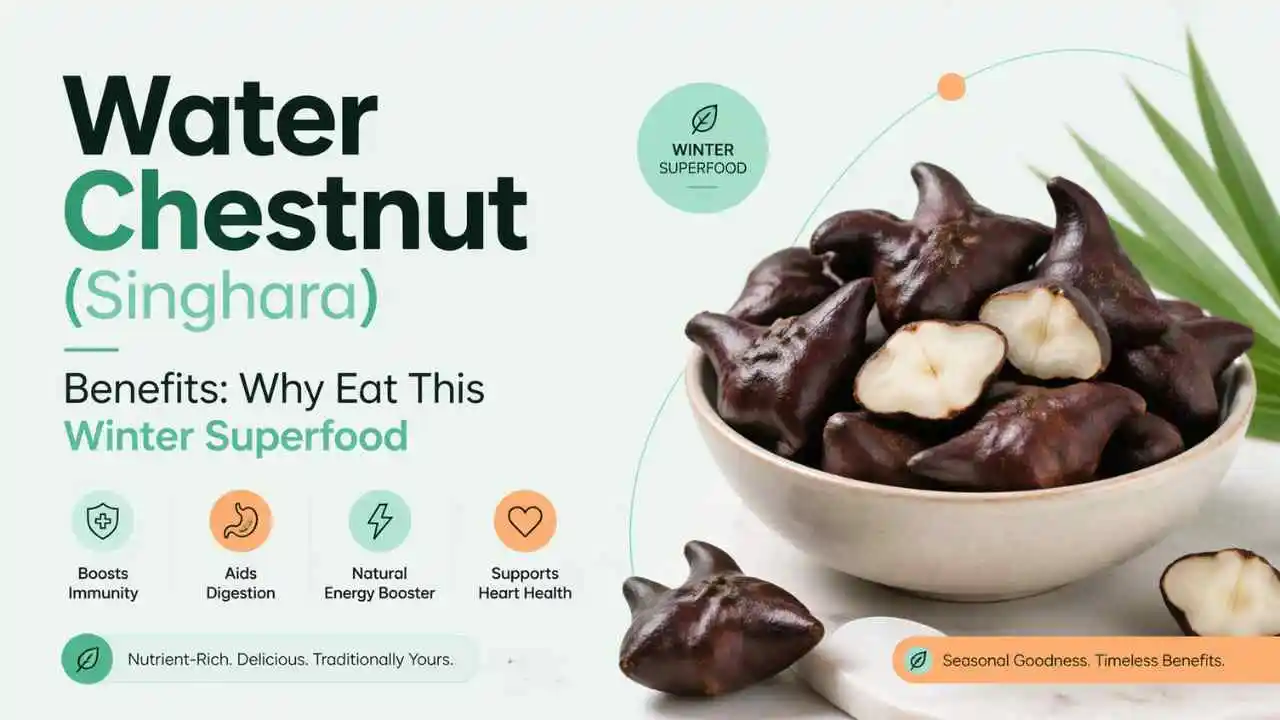
Do you ever feel like winter makes you want to hibernate with a plate of heavy, oily snacks? I know how hard it is to find a treat that satisfies your crunch cravings without ruining your health goals. However, understanding the water chestnut benefits can truly change your daily winter routine. This humble aquatic vegetable is the secret to staying light, hydrated, and energized when the temperature drops.
Water chestnut benefits include better heart health, weight management, and blood sugar control. They are low-calorie, high-fiber, and rich in potassium. These tubers provide potent antioxidants like ferulic acid to protect your cells. Furthermore, their low glycemic index makes them a safe and nourishing choice for those managing diabetes during the winter season.
The Cultural Roots of Singhara in India
The water chestnut is known locally as Singhara or Paniphal. It is not actually a nut. Instead, it is the edible part of an aquatic plant. In India, the Trapa bispinosa species thrives in shallow ponds and marshes. For over 3,000 years, this plant has been a vital part of the Indian diet.
I know it is hard to find foods that fit into traditional fasts. However, Singhara is a perfect choice. Because it is a fruit and not a grain, people use Singhara flour (Singhara Atta) during Navratri and Ekadashi. This allows you to stay energized while following spiritual guidelines.

Nutritional Profile of Fresh vs. Processed Singhara
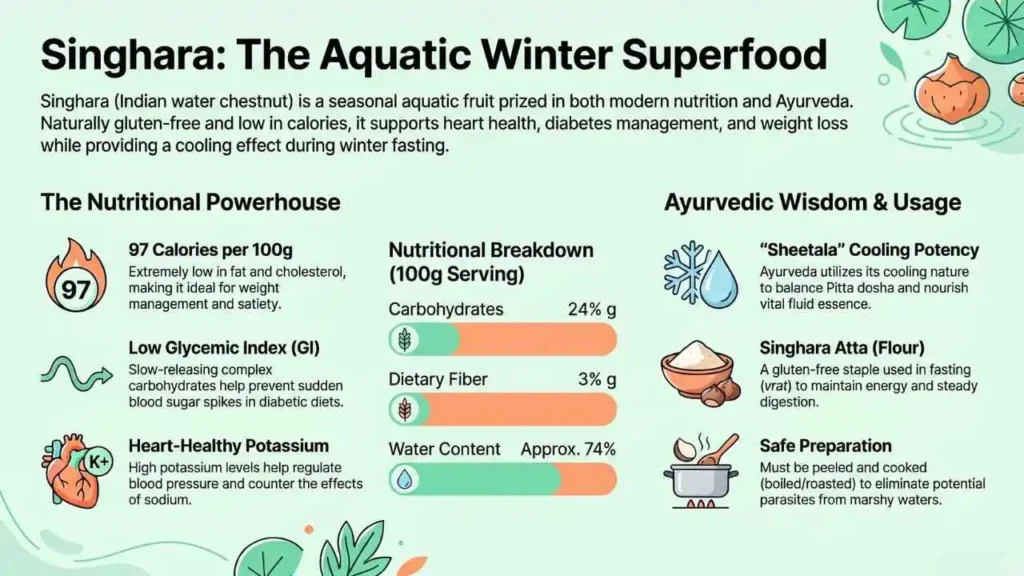
Let’s simplify the nutrition facts so you can make the best choice at the market. Fresh Singhara is a high-volume, low-energy food. This means you can eat a lot of it without consuming too many calories. Raw water chestnuts are roughly 74% water, which helps you stay hydrated even in dry winter air.
| Nutrient Component | Raw Singhara (per 100g) | Singhara Atta (per 100g) |
| Calories (kcal) | 97 | 347 |
| Moisture (%) | 74% | 10-12% |
| Carbohydrates (g) | 23.9 | 77.0 |
| Dietary Fiber (g) | 3.0 | 4.0 – 8.0 |
| Protein (g) | 1.4 | 3.0 – 7.0 |
| Potassium (mg) | 584 | 600+ |
As you can see, fresh Singhara is excellent for weight loss. However, the flour is a concentrated energy source for busy days. I always suggest choosing fresh, seasonal produce over canned versions. Canned varieties often lose significant nutrients during processing.

Why Resistant Starch is a Win for Your Metabolism
The carbohydrates in Singhara are quite special. They contain high levels of resistant starch (RS). This type of starch resists digestion in your small intestine. Instead, it moves to your colon and acts as a prebiotic.
What this means for your daily routine is better gut health. When this starch ferments, it produces short-chain fatty acids like butyrate. These compounds nourish your colon and improve how your body handles insulin. Consequently, water chestnut benefits are very helpful for anyone dealing with Type 2 Diabetes.

Managing Blood Pressure with Potassium
Many of my clients struggle with high blood pressure. If you are looking for a natural way to help, Singhara is your friend. It is packed with potassium. In fact, a 100-gram serving provides about 584 mg of this vital mineral.
Potassium helps your body balance out the sodium from salty snacks. According to the National Institutes of Health (NIH), high potassium intake is linked to lower blood pressure and a reduced risk of stroke. Additionally, Singhara contains magnesium and manganese. These minerals support your bone density and metabolic enzymes.
The Science of Antioxidants and Skin Health
I know you want to keep your skin glowing even in the harsh winter wind. Singhara contains a powerful antioxidant called ferulic acid. This compound is very stable. It even keeps the fruit crunchy after you cook it.
In your body, ferulic acid fights off free radicals. These are harmful molecules that damage your cells and DNA. Furthermore, Singhara provides polyphenols like epicatechin gallate. These antioxidants stop inflammation in your blood vessels. Research from Harvard Health suggests that polyphenol-rich diets can reduce heart disease risk scores by up to 8.5%.

A Natural Solution for Diabetes Management
If you have diabetes, you might worry about the starch in Singhara. However, you can relax. Properly prepared Singhara flour has a low glycemic index (GI) of about 30.21. This ensures that sugar enters your blood slowly and steadily.
Moreover, compounds in the water chestnut husk can inhibit certain digestive enzymes. These enzymes normally turn starch into sugar very quickly. By slowing them down, Singhara acts like a natural version of some glucose-management medicines. One study showed that a tea made from the husks lowered blood sugar levels significantly within an hour of eating.

Heart Protection and Healthy Cholesterol
Water chestnut benefits extend directly to your heart. The high potassium-to-sodium ratio is just the start. Ferulic acid also helps your liver manage cholesterol levels. Clinical trials have shown that ferulic acid can lead to a 9.3% reduction in “bad” LDL cholesterol.
| Marker | Percentage Change |
| Total Cholesterol | 8.1% Reduction |
| LDL-Cholesterol | 9.3% Reduction |
| Triglycerides | 12.1% Reduction |
| HDL-Cholesterol | 4.3% Increase |
What this means for you is cleaner arteries and a stronger heart. Additionally, the anti-inflammatory properties of Singhara help keep your blood vessels flexible and healthy.
Digestive Comfort and the Low-FODMAP Advantage
Winter foods can often lead to bloating. However, Singhara is very gentle on the stomach. It provides 3 grams of fiber per 100 grams. This fiber adds bulk to your stool and keeps things moving.
Interestingly, water chestnuts are also a low-FODMAP food. This is great news if you have Irritable Bowel Syndrome (IBS). Many other vegetables like beans can cause gas. In contrast, Singhara provides a safe starchy option that won’t stress your gut. It also supports the growth of “good” bacteria in your intestine.

Detoxification and the Ayurvedic Perspective
Traditional Indian medicine has praised Singhara for centuries. In Ayurveda, it is considered a “cooling” food. This helps balance out the heavy, spicy meals we often eat in winter.
Ayurvedic practitioners often use Singhara to help with liver issues like jaundice. The high water content and antioxidants help flush toxins from the blood. Deepali Sharma, a Clinical Nutritionist at CK Birla Hospital, notes that its 97 calories per serving make it a “guilt-free snack” for those watching their weight.
Weight Loss for Busy Professionals
I know it’s hard to find time for the gym. That is why your diet needs to work harder for you. Singhara follows the principle of volumetrics. Because it is mostly water and fiber, it fills your stomach quickly for very few calories.
The crunchy texture is also a secret weapon. You have to chew it more than processed snacks. This extra chewing time gives your brain a chance to realize you are full. As a result, you are less likely to overeat later in the day.
Practical Ways to Eat Singhara Today
Let’s simplify your meal prep with these home-based solutions. You don’t need hours in the kitchen to enjoy water chestnut benefits.
- The Desk Snack: Peel fresh Singhara and keep them in a container. They are a hydrating alternative to biscuits.
- Singhara Stir-Fry: Briefly sauté boiled chestnuts with curry leaves and mustard seeds.
- Gluten-Free Roti: Use Singhara flour mixed with a little mashed potato. This makes a soft, filling roti for lunch.
- Winter Halwa: Roast the flour in a little ghee and sweeten it with stevia or jaggery.
Safety and Sourcing Tips
Before you start, I want to share a quick safety tip. Singhara grows in water, so the outer shell can be dirty. Please wash the fruit thoroughly before you peel it.
While you can eat it raw, I usually suggest boiling or roasting it. This kills any bacteria and makes it easier to digest. Also, listen to your body. Too much fiber at once can cause mild bloating. Stick to about 100-150 grams a day to get the best results without any discomfort.
FAQs About Water Chestnut Benefits
Can diabetics eat Singhara every day?
Yes, you can eat it daily. It has a low glycemic index which helps keep your sugar stable. However, please limit your portion to 100-150 grams because it still contains carbohydrates.
Is Singhara good for weight loss?
Absolutely. It is 74% water and very low in calories. The high fiber content keeps you full, so you won’t reach for unhealthy snacks later.
How does it help my heart?
It is a great source of potassium. This mineral helps lower your blood pressure. It also contains no fat or cholesterol, making it a very heart-friendly snack.
Can I eat Singhara raw?
Yes, you can eat it raw for a refreshing crunch. Just make sure to wash it very well in running water to remove any silt or bacteria from the pond.
Is it safe during pregnancy?
Yes, it is often recommended. The minerals like iodine and manganese support hormonal health. The fiber also helps prevent the constipation that many women face during pregnancy.
I know managing your health can feel overwhelming. At DietDekho, we want to make it easy for you. If you need a personalized plan that fits your busy lifestyle, we are here to help. Fill out our form today and let’s start your health journey together.
Contact Us
We understand how overwhelming nutrition and weight loss information can feel. With so many opinions and confusing advice online, it’s easy to feel stuck or unsure about what to do next.
At Diet Dekho, you never have to figure it out alone. You can contact us anytime with any questions or concerns. Our expert dietitians are available 24/7 to guide, support, and help you stay on track. Whether your goal is weight loss or building healthier habits, we’re here to make the journey simpler and more sustainable for you.
Disclaimer
This blog is intended to help readers make healthier food choices. Your health should always be the top priority. Before starting any restrictive or special diet, especially if you have a medical condition or health concern, please consult a doctor or a qualified dietitian. Each body responds differently to food and lifestyle changes. Always choose what is safe and suitable for you.

Abhinav is the Founder of Diet Dekho, helping people manage weight and lifestyle health through simple, practical nutrition and personalized diet plans.