Imagine waking up to find more hair on your pillow than on your head-it is a heart-sinking moment that Mira, a 34-year-old software engineer, knows all too well. While she tried every expensive serum on the market, the real fix for her thinning hair was hidden in her kitchen’s foods rich in biotin, also known as Vitamin H.
Biotin-rich foods include egg yolks, liver, legumes like peanuts and soybeans, nuts such as almonds, and seeds like sunflower seeds. Consuming these foods rich in biotin naturally boosts keratin production, the protein foundation for hair growth and strength. These dietary sources effectively prevent thinning, support metabolic health, and help manage blood sugar levels for those with diabetes.
The Biological Foundation of Hair Growth and Vitamin H
Biotin, often called Vitamin B7 or Vitamin H, belongs to the water-soluble family of B-complex vitamins. The name Vitamin H originates from the German words Haar und Haut, which literally translate to hair and skin. This historical nomenclature highlights its long-standing reputation as a cornerstone of dermatological health. As a domain expert at DietDekho.com, I have spent years helping clients understand that hair is essentially an internal report card of their nutritional status.
What this means for your daily routine is that you must view biotin as the Essential Foreman of your body’s construction crew. Most of our hair-about 95%-is made of a tough protein called keratin. Biotin serves as the coenzyme that oversees the metabolic reactions required to synthesize this protein infrastructure. Without it, the body struggles to build the keratin bricks that make up a sturdy hair shaft, leading to brittle strands that snap easily.
The Chemical Mechanism of Keratin Production
At a molecular level, biotin acts as a cofactor for five specific carboxylases. These enzymes catalyze the metabolism of fatty acids, glucose, and amino acids. Amino acids are the building blocks of keratin. Biotin facilitates the breakdown of these amino acids into a form the body can reassemble into hair strands. This process is highly energy-intensive. Hair follicles replicate at an extremely fast rate, demanding high levels of energy generated from the food you eat.
| Component | Biological Role | Impact on Hair |
| Carboxylase Enzymes | Catalyze metabolism of fatty acids and glucose | Fuels the follicle for rapid cell replication |
| Keratin Synthesis | Structural protein formation (95% of hair) | Increases hair density and tensile strength |
| Amino Acid Catabolism | Breaks down proteins from diet into hair blocks | Prevents hair from becoming brittle or thin |
| Gluconeogenesis | Converts non-carbohydrates into glucose energy | Supports consistent nutrient delivery to the scalp |
I know it’s hard to find time to dive into biochemistry, but knowing that biotin is a sulfur-containing vitamin helps explain its strength-giving properties. Sulfur is vital for the cross-links in keratin that provide mechanical resilience to each strand. Since biotin is water-soluble, your body cannot store large reserves of it; it is processed through the kidneys and excreted daily. This makes a consistent intake of foods rich in biotin essential for maintaining your keratin wall and supporting the energetic demands of follicles.

The Indian Hair Health Landscape: Statistics and Reality
The state of hair health in India has reached a critical juncture. Data suggests that hair loss is no longer just an issue for those in their fifties or sixties. A sweeping analysis of over 1.6 lakh Indian men across ten states has revealed a national decline in hair health that mirrors a decline in gut wellness. I understand how frustrating it is to deal with thinning hair when you’re also managing the stress of a busy career or household.
Nearly 63% of Indian men aged 21 to 61 experience noticeable hair loss. More startling is the finding that over 50% of Indian men facing these issues are under the age of 25. For women, the statistics are equally concerning, with about 33% experiencing significant thinning at some point in their lives. This shift toward younger demographics suggests that environmental pollution, urban stress, and erratic dietary patterns are taking a toll on our collective vitality.
The Gut-Hair Connection in Urban India
The recent Great Indian Hair Fall Study identifies the gut as the real starting point for many hair problems. Your gut is responsible for absorbing the very nutrients-protein, iron, zinc, and B-vitamins-that your hair follicles depend on. When digestive health suffers due to ultra-processed foods or chronic dehydration, these nutrients fail to reach the scalp.
| State/Region (India) | Reported Decline in Gut Health (Point Drop) | Impact on Hair Density |
| Rajasthan | -3.30 | High correlation with early-onset thinning |
| Delhi NCR | -2.97 | Urban lifestyle identified as a major driver |
| Bihar | -1.30 | Notable shift despite traditional dietary roots |
| Maharashtra | Significant | High prevalence of anemia and B12 deficiency |
Let’s simplify this: if your stomach is struggling, your hair is starving. Behind every data point is a professional who wears a cap to hide their scalp or a homemaker who avoids social gatherings because of their thinning hair. The emotional impact is real, with 85% of women reporting reduced self-esteem due to hair shedding. This is why focusing on foods rich in biotin-and the health of the system that absorbs them-is your best first step toward recovery.
Top Foods Rich in Biotin: The Animal-Based Powerhouses
When we talk about the most concentrated sources of Vitamin H, we have to look at organ meats and eggs. I know liver isn’t everyone’s favorite meal, but its nutritional density is unmatched. It makes biological sense; most of the body’s biotin is stored in the liver.
Organ Meats: The Nutrient Heavyweights
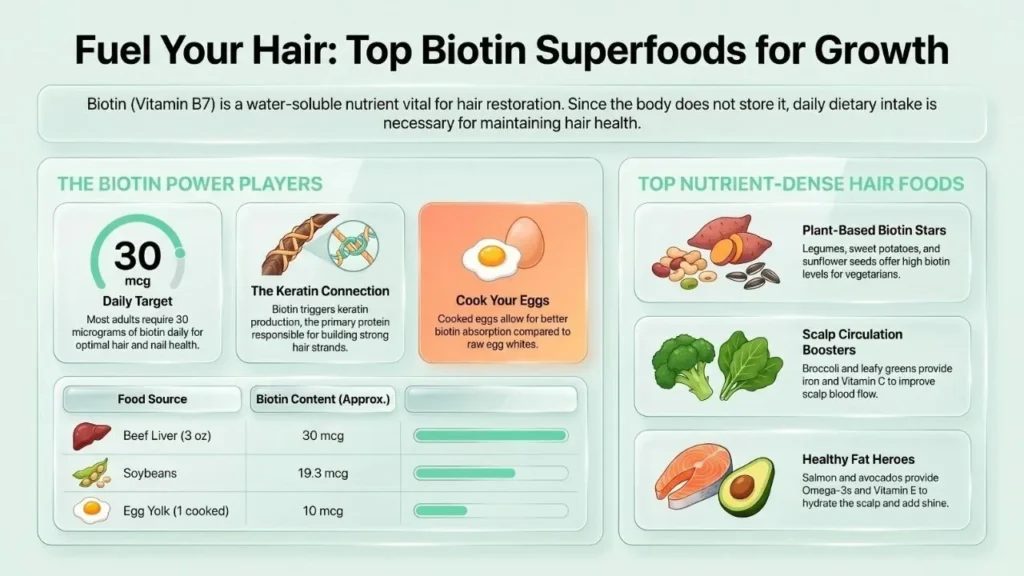
Beef and chicken liver are the undisputed champions of biotin content. A single 3-ounce serving of cooked chicken liver provides a massive 138 micrograms of biotin, which is a whopping 460% of the Daily Value (DV). Beef liver is not far behind, offering 30.8 micrograms per serving, which fully satisfies the daily requirement for an adult.
Beyond biotin, liver is a stellar source of iron and copper. Copper is particularly important for hair as it helps synthesize blood vessels that feed the follicles and prevents premature graying. If you can incorporate a small portion of liver into your weekly routine, it acts as a nutritional insurance policy for your hair.
The Whole Egg: Nature’s Perfect Hair Food
Eggs are often called the gold standard of hair nutrition. One whole, cooked egg provides about 10 micrograms of biotin, covering 33% of your Daily Value. Most of this biotin is found in the yolk. Eggs also provide high-quality protein, which strengthens the hair from within.
There is a critical warning I often give my clients: never eat raw egg whites regularly. Raw egg whites contain a protein called avidin that binds to biotin, preventing its absorption. This can lead to a deficiency even if you’re eating healthy smoothies. Cooking the egg denatures the avidin, freeing up the biotin for your body to use.
| Animal-Based Source | Serving Size | Biotin (mcg) | % Daily Value (DV) |
| Chicken Liver (Cooked) | 3 oz (85g) | 138 | 460% |
| Beef Liver (Cooked) | 3 oz (85g) | 30.8 | 103% |
| Whole Egg (Cooked) | 1 Large (50g) | 10.0 | 33% |
| Pork Chop (Cooked) | 3 oz (85g) | 3.8 | 13% |
| Pink Salmon (Canned) | 3 oz (85g) | 5.0 | 17% |

Biotin for Vegetarians: Plant-Based Solutions
If you are following a vegetarian or vegan diet, don’t worry-there are plenty of foods rich in biotin available in the Indian kitchen. Legumes, nuts, and certain vegetables provide reliable plant-based sources that also support your overall metabolic health.
Legumes: The Protein-Fiber Combo
Peanuts and soybeans are standout vegetarian sources. A 1-ounce serving of roasted peanuts contains nearly 5 micrograms of biotin. For those looking for a high-strength option, 100 grams of whole soybeans can provide as much as 19.3 micrograms, meeting 64% of your daily needs. These are also rich in plant-based protein, which is essential because your hair is 90% keratin protein.
Dals like moong, masoor, and chole are also helpful. While their individual biotin content is lower than liver, they are consumed daily in large quantities in India. They provide iron and zinc, which are crucial for reducing hair shedding and strengthening roots. A bowl of dal daily supports general health and consistent hair growth.
Seeds and Nuts: The Snackable Solution
Nuts like almonds and walnuts are brain and beauty foods. A quarter-cup of roasted almonds provides about 1.5 micrograms of biotin. They are also high in Vitamin E, which repairs hair tissue and builds new follicles. Seeds are equally potent; sunflower seeds provide 2.6 micrograms per quarter-cup and are packed with selenium to maintain scalp health.
I understand it’s hard to find time to cook when you’re busy, but keeping a handful of mixed nuts and seeds in your bag is a practical step you can take today. These healthy fats also support your skin’s elasticity and nail strength, giving you a full-spectrum beauty boost.

The Diabetic’s Guide: Biotin and Blood Sugar Control
For my clients managing diabetes, biotin is more than just a hair vitamin; it is a metabolic ally. Research from institutes like Harvard suggests that biotin plays a vital role in regulating signals sent by cells and the activity of genes involved in glucose metabolism. I know it’s a constant struggle to balance your numbers, and what this means for your daily routine is that your biotin intake can actually help stabilize your sugar levels.
Clinical studies have shown that biotin supplementation-often in combination with chromium picolinate-can significantly improve glycemic control. In one study, patients receiving biotin and chromium saw a 0.54% reduction in HbA1c and a meaningful decrease in fasting glucose levels. This is because biotin enhances the activity of enzymes like pyruvate carboxylase, which promotes the utilization of glucose for energy.
Low Glycemic Index (GI) Biotin Sources
When choosing foods rich in biotin, people with diabetes must focus on low-GI options that prevent sudden sugar spikes. The Indian Plate is full of these traditional gems.
| Biotin Food (Low GI) | Glycemic Index (GI) | Benefit for Diabetics |
| Whole Moong Dal | 38 (Low) | High fiber slows glucose absorption |
| Almonds | 0 (Low) | Magnesium helps use insulin effectively |
| Spinach (Palak) | <15 (Low) | Rich in fiber and magnesium |
| Sweet Potato | 44 (Moderate) | Rich in beta-carotene; better than white potato |
| Chickpeas (Chole) | 28 (Low) | High protein + fiber combo for satiety |
| Salmon/Fish | 0 (Low) | Omega-3s support heart health |
Relieving Diabetic Neuropathy
High doses of biotin have also been linked to an improvement in neurological function for those suffering from diabetic neuropathy. This nerve damage can be debilitating, but clinical trials suggest that daily biotin intake can significantly reduce mechanical pain sensitivity and allodynia. While the exact mechanism is still being studied, it is believed that biotin’s role in fatty acid synthesis helps repair the myelin sheath surrounding our nerves.

Practical Solutions for Busy Professionals and Homemakers
I know you’re juggling a million things, from work deadlines to household chores. You don’t need a book lecture; you need solutions that work within your existing schedule. Let’s simplify this with a few Desi kitchen hacks that prioritize your hair and your time.
The 10-Minute Biotin Laddu
One of my favorite recommendations for busy clients is the homemade Biotin Laddu. You can make a batch on Sunday and have a quick, hair-boosting snack all week.
- Ingredients: Peanuts, almonds, walnuts, sesame seeds, flaxseeds, and dates for binding.
- Method: Roast the nuts and seeds nicely until they crackle. Blend them into a coarse powder. Bind them with pitted dates or a splash of liquid jaggery-no refined sugar needed. This simple snack provides a concentrated dose of Vitamin H, calcium, and iron.
Quick Biotin Milkshake
For those mornings when you’re running late, a Biotin Milkshake is a life-saver. Simply add one tablespoon of your homemade biotin powder to a glass of hot or cold milk. It’s a nutrient-dense breakfast that supports your follicles while keeping your energy levels steady throughout the morning.
The One-Pot Indian Solution: Khichdi
Moong dal khichdi is more than just comfort food; it is a protein powerhouse. By adding spinach (palak) and a dollop of ghee, you create a balanced meal that improves scalp health and hair ure. Ghee acts as a carrier for fat-soluble vitamins and nourishes the scalp from within.

Supplementation vs. Diet: The Honest Verdict
As a dietitian, I am often asked: Do I really need a supplement? The truth is that most healthy individuals who eat a varied diet meet their basic biotin requirements naturally. Biotin deficiency is rare in the general population. However, for those already experiencing hair loss or brittle nails, a therapeutic dose can make a difference.
- Maintenance Dose: 30 micrograms (mcg) per day.
- Cosmetic Results Dose: Most Indians report visible improvement with 1,000 to 5,000 mcg daily.
A Critical Warning for Your Health
If you decide to take high-strength biotin (above 5,000 mcg), you must be aware that it can interfere with critical blood tests. Specifically, biotin can cause falsely low results in troponin tests-which are used to diagnose heart attacks. It can also skew thyroid function tests, leading to an incorrect diagnosis. Always inform your doctor if you are taking biotin before any medical evaluation.
| Daily Biotin Intake (mcg) | Purpose | Source |
| 30 mcg | Basic health and metabolism | Standard Indian Diet (Eggs, Dals, Nuts) |
| 1,000 – 2,500 mcg | Mild hair fall or weak nails | Low-strength supplements |
| 5,000 mcg | Visible hair thickening/growth | Most popular dose for results in India |
| 10,000 mcg | Severe thinning (Doctor guided) | High-strength support |

Internal Nutrition vs. External Products
There is a huge misconception that biotin shampoos and serums are the secret to long hair. While they might smell nice or contain conditioning agents that make hair feel thicker, there is no clinical evidence that biotin can penetrate the scalp effectively in a rinse-off product.
What this means for your daily routine is that your money is better spent on foods rich in biotin than on expensive shampoos. Hair growth is an internal process that starts at the follicle, where blood delivers nutrients. External products are great for protecting the hair you already have, but they cannot create new growth. Think of internal nutrition as the foundation of your house and external care as the paint on the walls.

Emerging Trends in 2026: The Future of Hair Care
As we move into 2026, the focus of hair care is shifting toward Holistic Customization. We are moving away from one-size-fits-all vitamins and toward solutions that address the scalp microbiome and chronic stress.
- The Scalp Microbiome: Just like your gut, your scalp has a community of bacteria. Using ingredients like probiotics and prebiotics helps balance this environment, reducing inflammation and creating an optimal base for hair growth.
- Adaptogenic Support: Herbs like Ashwagandha and Ginseng are becoming key ingredients for their ability to manage the cortisol (stress) spikes that often lead to hair shedding.
- AI Diagnostics: In India, we are seeing a rise in AI-driven scalp diagnostics. This technology allows you to understand your specific nutrient gaps-whether it’s iron, biotin, or Vitamin D-so you can eat for your specific needs.

FAQs
1. Can biotin help with hair loss caused by stress?
Biotin supports the keratin structure, but it is not a cure for stress-induced hair loss (Telogen Effluvium). Addressing the root cause-stress-is essential. However, ensuring you eat enough foods rich in biotin provides the nutrients your hair needs to recover once the stress subsides.
2. Are sweet potatoes better than regular potatoes for hair?
Yes, significantly. Sweet potatoes provide 2.4 mcg of biotin and are rich in beta-carotene, which your body converts to Vitamin A to keep your scalp moisturized. Regular white potatoes are much higher on the glycemic index and don’t provide the same hair-boosting nutrients.
3. Is it possible to take too much biotin?
Since biotin is water-soluble, toxicity is extremely rare as the excess is excreted. However, very high doses can cause skin breakouts or digestive upset in some people. The biggest risk remains its interference with critical lab tests.
4. How long before I see a difference in my hair?
Hair grows slowly. It typically takes about 2 to 3 months (90 days) of consistent dietary changes to notice an improvement in hair strength, ure, or thickness. Patience is key!
5. I have diabetes; can I eat bananas for biotin?
Bananas contain a small amount of biotin (0.2 mcg), but they are higher in sugar. It is better to choose lower-GI fruits like guava or berries, which provide antioxidants and support collagen production without causing large sugar spikes.

Nuanced Conclusions and Recommendations
Managing your hair health while balancing a busy life and health conditions like diabetes can feel like a mountain to climb. But let’s look at the bigger picture: your hair is a sign of your internal health. By focusing on foods rich in biotin, you aren’t just working on your appearance; you are supporting your metabolism, your nervous system, and your blood sugar control.
I recommend starting with three simple steps this week:
- Switch Your Snack: Replace processed biscuits with a handful of almonds and walnuts.
- Cook Your Eggs: If you eat eggs, make sure they are fully cooked to unlock their biotin potential.
- Prioritize the Gut: If you’re in a city like Delhi or Mumbai, focus on fiber-rich dals and sprouts to ensure your gut can actually absorb the nutrients you’re eating.
I know it’s hard to change everything at once, but every biotin-rich meal is a step toward stronger, healthier hair. You’ve got this!
Need a personalized plan that fits your diabetic needs and busy schedule?

Contact Us
We understand how overwhelming nutrition and weight loss information can feel. With so many opinions and confusing advice online, it’s easy to feel stuck or unsure about what to do next.
At Diet Dekho, you never have to figure it out alone. You can contact us anytime with any questions or concerns. Our expert dietitians are available 24/7 to guide, support, and help you stay on track. Whether your goal is weight loss or building healthier habits, we’re here to make the journey simpler and more sustainable for you.
Disclaimer
This blog is intended to help readers make healthier food choices. Your health should always be the top priority. Before starting any restrictive or special diet, especially if you have a medical condition or health concern, please consult a doctor or a qualified dietitian. Each body responds differently to food and lifestyle changes. Always choose what is safe and suitable for you.

Abhinav is the Founder of Diet Dekho, helping people manage weight and lifestyle health through simple, practical nutrition and personalized diet plans.