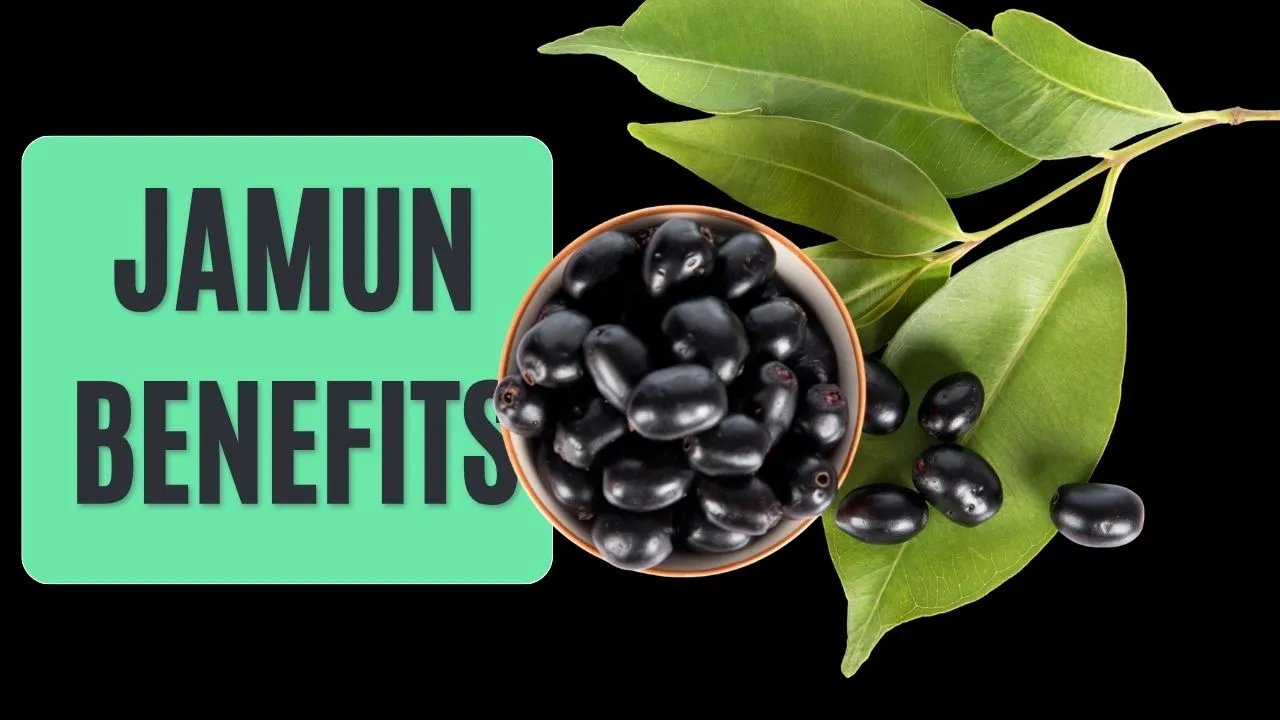
I was talking to a friend yesterday, a busy marketing manager named Vikram, who told me he feels like his life is a series of alarms and blood sugar checks. He mentioned that after his usual office lunch, he hits a wall of fatigue so heavy he can barely focus on his spreadsheets, only to see his glucometer flash a worrying number an hour later. If you have ever felt that same frustration—the feeling that your body is working against you despite your best efforts—you are not alone, and I want you to know there is a simple, purple fruit that can act as your metabolic ally. Understanding the jamun health benefits can be a turning point in how you manage your daily energy and long-term health.
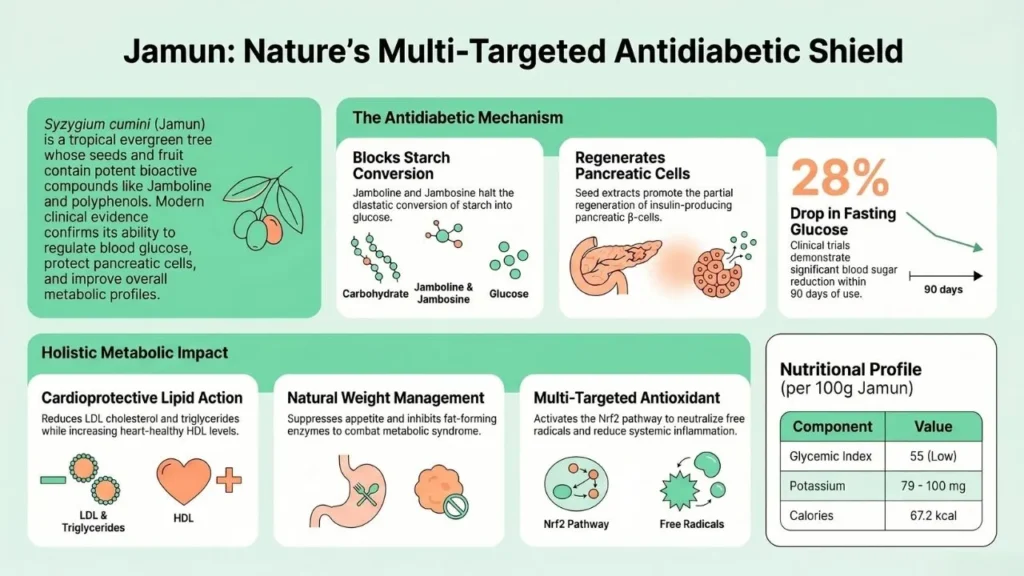
The jamun health benefits for diabetes stem from unique compounds like jamboline and jambosine, which slow the conversion of starch into sugar in the body. This prevents sharp blood sugar spikes after meals. With a low glycemic index and high antioxidant content, Jamun improves insulin sensitivity and protects vital organs from long-term diabetic complications.
The Rising Burden of Diabetes in the Indian Context
Table of Contents
- 1 The Rising Burden of Diabetes in the Indian Context
- 2 Meet the Purple Healer: The Botanical Marvel of Syzygium cumini
- 3 The Starch-to-Sugar Shield: How Jamun Works Inside Your Body
- 4 The Power of the Seed: Why You Should Never Throw Them Away
- 5 Protecting Your Vital Organs: Beyond Just Blood Sugar
- 6 Heart Health: The Potassium Connection
- 7 Improving Digestion and Gut Health
- 8 Practical Integration: For the Busy Professional
- 9 Practical Integration: For the Dedicated Homemaker
- 10 Comparing Jamun with Other Superfruits
- 11 Safety and Precautions: What You Need to Know
- 12 Real Stories, Real Results
- 13 A Final Word from Your Dietitian
- 14 FAQs
- 15 Contact Us
- 16 Disclaimer
I know it’s hard to find time to research every health claim, but the numbers coming out of our national health institutes are a wake-up call for all of us. Recent data from the ICMR-INDIAB-17 study reveals that over 101 million people in India are currently living with diabetes, and another 136 million are in the pre-diabetic stage. This isn’t just a statistic; it represents mothers, fathers, and busy professionals who are struggling to find a balance. What is particularly concerning is that we are seeing a younger onset of the disease, with many being diagnosed a decade earlier than their Western counterparts.
The typical Indian diet, while delicious and comforting, often draws over 60% of its energy from refined carbohydrates like white rice and milled flour. This heavy reliance on low-quality carbs is what triggers those exhausting sugar spikes. When I talk to my clients at DietDekho, I always emphasize that we don’t need to abandon our culture or our favorite dishes. Instead, we need to find metabolic shields that can buffer the impact of these carbohydrates. This is exactly where the jamun health benefits become a essential part of your daily toolkit.

Meet the Purple Healer: The Botanical Marvel of Syzygium cumini
Let’s simplify the science for a moment. Jamun, known scientifically as Syzygium cumini, is much more than just a nostalgic summer fruit that stains your tongue purple. It belongs to the Myrtaceae family and is a native treasure of the Indian subcontinent. For centuries, it has been a cornerstone of Ayurvedic medicine, where diabetes is referred to as Madhumeha—a condition where sweetness leaks into the system due to metabolic imbalance.
Every part of this tree, from its deep purple fruit to its bitter seeds and astringent bark, contains specialized molecules designed to help your body process sugar more effectively. While most people wait for the short summer season to enjoy the fresh fruit, as a dietitian, I want to show you how to use the seeds and bark year-round to get the full spectrum of jamun health benefits.
Nutritional Profile of Syzygium cumini (Per 100g)
| Nutrient | Approximate Value | Daily Benefit for Diabetics |
| Calories | 60 kcal | Low-calorie snacking option |
| Carbohydrates | 14 g – 15.5 g | Low glycemic energy |
| Dietary Fiber | 0.6 g – 0.9 g | Slower sugar absorption in the gut |
| Vitamin C | 14.3 mg – 18 mg | Boosts immunity and iron absorption |
| Potassium | 55 mg – 79 mg | Maintains healthy blood pressure |
| Iron | 1.2 mg – 1.62 mg | Increases hemoglobin levels |
| Calcium | 8.3 mg – 19 mg | Supports bone health in aging |
The Starch-to-Sugar Shield: How Jamun Works Inside Your Body
What this means for your daily routine is that Jamun acts like a biological gatekeeper. The primary challenge Vikram faces, and perhaps you do too, is the rapid breakdown of starch into glucose right after a meal. This is where two specific compounds, jamboline and jambosine, step in. They inhibit the enzymes in your saliva and gut that are responsible for turning that rice or roti into sugar.
Imagine your digestion as a fast-moving highway. Without any intervention, the sugar from your meal rushes into your bloodstream all at once, causing a traffic jam (a sugar spike). Jamun acts like a series of well-timed traffic lights, slowing down the flow so your insulin can keep up. Research published by the National Institutes of Health (NIH) has shown that Jamun extracts can inhibit $\alpha$-amylase activity, which is the exact same mechanism used by some pharmaceutical diabetes drugs, but in a natural, food-based form.
The Power of the Seed: Why You Should Never Throw Them Away
I know it’s tempting to just enjoy the fruit and discard the rest, but the seeds are actually the medicine cabinet of the Jamun tree. They contain the highest concentration of the glycoside jamboline. When dried and ground into a powder, these seeds become a potent supplement that can help manage polyuria—that frequent need to visit the bathroom—and constant thirst, which are two of the most bothersome symptoms of high blood sugar.
In my experience, many busy professionals prefer the seed powder because it is easy to transport and doesn’t require the preparation that fresh fruit does. A simple 2-gram dose of Jamun seed powder, taken consistently, has been shown in clinical trials to reduce fasting blood glucose levels by significant margins over 60 to 90 days.
Clinical Evidence: Human Response to Jamun Seed Supplementation
| Study Duration | Daily Dosage | Resulting Change in Fasting Sugar |
| 30 Days | 5g – 10g | Initial stabilization and symptom relief |
| 60 Days | 10g | 18% average reduction in serum glucose |
| 90 Days | 10g | Up to 30% reduction in fasting blood sugar |
Protecting Your Vital Organs: Beyond Just Blood Sugar
One thing we don’t talk about enough is internal rusting. Scientists call this oxidative stress and the formation of Advanced Glycation End-products (AGEs). When your blood sugar stays high for too long, it literally damages your tissues from the inside out, affecting your kidneys, eyes, and nerves.
The jamun health benefits extend to being a powerful antioxidant shield. The deep purple pigment, called anthocyanins, works to neutralize the free radicals that cause this damage. Researchers at the ICMR-National Institute of Nutrition (NIN) have highlighted that formulations containing Jamun can help arrest the progression of long-term complications like retinopathy (eye damage) and nephropathy (kidney disease). For a homemaker who is the pillar of her family, or a professional with decades of career ahead, protecting these vital organs is just as important as the daily sugar reading.

Heart Health: The Potassium Connection
Diabetic individuals are at a much higher risk for heart-related issues, often dealing with high blood pressure and cholesterol alongside their sugar levels. Jamun is naturally rich in potassium, containing about 55mg to 79mg per 100g. Potassium is essential for balancing out the sodium in our salt-heavy Indian diets, helping to relax blood vessel walls and lower blood pressure.
Furthermore, the flavonoids in Jamun have been shown to lower bad LDL cholesterol and triglycerides while improving good HDL cholesterol. This means that by making Jamun a part of your diet, you are giving your heart a much-needed break. It’s a simple lifestyle change that offers multi-layered protection without requiring hours at the gym.
Improving Digestion and Gut Health
If you struggle with bloating, gas, or irregular bowel movements, you’ll be happy to know that Jamun has been used as a digestive tonic for centuries. It acts as a mild carminative, which is a fancy way of saying it helps your body expel gas more easily. The dietary fiber in the fruit supports a healthy gut microbiome, which we now know is directly linked to how well your body handles insulin.
For my clients who often eat on the go or deal with high stress—both of which can wreck your digestion—I recommend Jamun juice or seed powder to soothe the intestinal lining. It has natural antibacterial properties that help keep harmful gut bacteria in check, ensuring that your digestive system is a partner in your health journey, not a hurdle.
Practical Integration: For the Busy Professional
I know it’s hard to find time for wellness when your calendar is packed with meetings. Let’s simplify this into a routine that takes less than two minutes of your day. You don’t need a fancy kitchen or expensive gadgets to access these jamun health benefits.
- The Desk-Side Secret: Keep a jar of organic Jamun seed powder in your office drawer. Mix half a teaspoon in a small glass of warm water before your heaviest meal of the day. This simple step can significantly blunt the sugar spike from that office lunch.
- The Smart Commute Snack: If it’s the summer season, a small container of 10-12 Jamun fruits is the perfect travel snack. They are hydrating, low in calories, and much safer for your blood sugar than an apple or a banana.
- The No-Prep Infusion: If you prefer herbal teas, simply stir a pinch of Jamun powder into your green tea or chamomile. It adds a slightly earthy, pleasant depth and turns your tea into a functional health drink.
Practical Integration: For the Dedicated Homemaker
As the person often in charge of the family’s nutrition, you have a unique opportunity to protect everyone’s metabolic health. You can weave the jamun health benefits into the meals you already prepare, making health a family affair without it feeling like dieting.
- The Salad Upgrade: Sprinkle a little Jamun seed powder over your family’s evening salad or raita. The tangy, slightly bitter taste pairs beautifully with yogurt and fresh vegetables.
- The Morning Ritual: I recommend starting the day with a Jamun Water for any family members with a history of diabetes. One teaspoon in lukewarm water on an empty stomach is a time-tested Ayurvedic habit that supports long-term wellness.
- The Healthy Treat: During the summer, blend fresh Jamun pulp (seeds removed) with some curd and a tiny bit of stevia to make Jamun Frozen Yogurt. It’s a delicious way to satisfy a sweet craving for you and the kids without the sugar crash.
Comparing Jamun with Other Superfruits
You might be wondering, Why Jamun? Why not blueberries or apples? While those are also healthy, Jamun has a unique advantage for the Indian body and the Indian diet. According to Harvard Health, while most whole fruits are linked to a lower risk of diabetes, the specific compounds in Jamun like jamboline are particularly effective at handling the high-starch content (like rice and wheat) that dominates our plates.
| Fruit | Glycemic Index | Key Benefit for Diabetes | Why Jamun Wins for You |
| Jamun | ~48 (Low) | Specifically halts starch-to-sugar conversion | Local, affordable, and targets high-carb diets. |
| Blueberries | ~53 (Low) | High in anthocyanins for heart health | Often imported and expensive in India. |
| Apple | ~36 (Low) | High fiber slows glucose release | Great for general health, but lacks jamboline for starch blocking. |
| Mango | ~51-56 (Medium) | High Vitamin A and C | High sugar content requires very strict portion control. |
Safety and Precautions: What You Need to Know
Even with a natural superfood, it is important to be mindful. I want you to get the best results without any unwanted surprises.
- Hypoglycemia Warning: Because Jamun is so effective at lowering blood sugar, if you are already on heavy diabetes medication, you must monitor your levels closely. You don’t want your sugar to drop too low.
- The Milk Rule: Ayurveda suggests waiting at least an hour between consuming Jamun and drinking milk. This prevents digestive upsets like acidity or bloating.
- Empty Stomach Caution: While seed powder is great in the morning, if you have a very sensitive stomach, eating large amounts of the tart fruit on an empty stomach might cause temporary acidity.
- Surgery: If you have an upcoming surgery, stop taking concentrated Jamun supplements two weeks prior, as it can interfere with blood sugar control during the procedure.

Real Stories, Real Results
I remember a client, Anjali, a 45-year-old homemaker who was struggling with her HbA1c levels. She felt constantly tired and was worried about her family history of kidney issues. We didn’t change her whole life; we just introduced half a teaspoon of Jamun seed powder in the morning and replaced her evening biscuit and tea with a handful of seasonal Jamun.
After three months, she reported not just better numbers, but a newfound energy. She wasn’t dozing off in the afternoons anymore. What this means for your daily routine is that small, consistent changes are more powerful than drastic, short-lived diets. Jamun is a bridge between the traditional wisdom of our grandparents and the clinical requirements of modern medicine.
A Final Word from Your Dietitian
Managing diabetes is a marathon, not a sprint. I know there are days when it feels overwhelming, but remember that nature has provided tools to help you. The jamun health benefits are a testament to the power of functional foods. By incorporating this purple superfood into your life, you are taking a proactive step toward a more stable, vibrant future.
Whether you choose the fresh fruit in the summer or the seed powder throughout the rest of the year, you are giving your body the support it needs to handle the stresses of modern life. Let’s move away from the fear of food and toward the power of nutrition.
If you’re ready to create a personalized plan that fits your unique lifestyle and health goals, I’m here to help. Let’s work together to find the right balance for you.
FAQs
1. How many Jamuns can a person with diabetes eat daily?
I usually recommend eating about 8 to 15 medium-sized Jamun fruits a day during the season. This portion provides all the jamun health benefits without adding too many calories. It is best enjoyed as a mid-morning or evening snack.
2. Is Jamun seed powder better than the fruit for sugar control?
Both are excellent, but the seed powder is often considered more potent for blood sugar regulation because it contains a higher concentration of jamboline and jambosine. It is also more convenient for year-round use when the fresh fruit isn’t available.
3. Can I take Jamun along with my regular diabetes medicine?
Yes, Jamun is a safe dietary addition, but it is not a replacement for your prescribed medication. Since it can lower blood sugar naturally, I always advise my clients to check their sugar levels regularly and consult their doctor if they notice a significant drop, as their medicine dosage might need adjustment.
4. Can children and pregnant people eat Jamun?
Fresh Jamun fruit is generally safe and very nutritious for everyone as it’s rich in Vitamin C and iron. However, for concentrated supplements like seed powder, pregnant people and nursing mothers should consult their doctor first, as clinical studies on high doses in these groups are limited.
5. How long does it take to see results from using Jamun seed powder?
While you might feel more energetic and see slight improvements in post-meal spikes quickly, significant changes in fasting blood sugar usually take about 4 to 6 weeks of consistent daily use. Patience and consistency are your best friends here.
Contact Us
We understand how overwhelming nutrition and weight loss information can feel. With so many opinions and confusing advice online, it’s easy to feel stuck or unsure about what to do next.
At Diet Dekho, you never have to figure it out alone. You can contact us anytime with any questions or concerns. Our expert dietitians are available 24/7 to guide, support, and help you stay on track. Whether your goal is weight loss or building healthier habits, we’re here to make the journey simpler and more sustainable for you.
Disclaimer
This blog is intended to help readers make healthier food choices. Your health should always be the top priority. Before starting any restrictive or special diet, especially if you have a medical condition or health concern, please consult a doctor or a qualified dietitian. Each body responds differently to food and lifestyle changes. Always choose what is safe and suitable for you.

Mahi Patel is a nutritionist and BSc graduate in Nutritional Science and Dietetics from Symbiosis Skills and Professional University. She is passionate about helping people improve their health through practical nutrition and sustainable lifestyle changes. Her experience includes clinical internships at Aditya Birla Memorial Hospital and VLCC, along with nutrition content writing and education.