Imagine standing in your kitchen on a frantic Tuesday morning. You have exactly seven minutes before you need to leave for the office, and your breakfast usually consists of a rushed cup of tea or a heavy, greasy paratha that leaves you feeling sluggish by mid-morning. If you are managing blood sugar levels, this daily rush feels even more daunting because every choice seems like a potential risk. I often see my clients at DietDekho struggling to find that one simple change that doesn’t require an hour of prep time but actually makes a difference in how they feel. This is where the fruit papaya benefits become a game-changer for your routine. It is the one fruit that feels like a supportive friend, sitting on your counter, ready to fix your digestion and stabilize your energy without demanding anything but a quick slice.
The fruit papaya benefits include high concentrations of the digestive enzyme papain, heart-healthy potassium, and immune-boosting vitamin C. For individuals managing diabetes, its moderate glycemic index of 60 and high fiber content help prevent blood sugar spikes while improving insulin sensitivity. Eating 100-150 grams daily supports weight loss, heart health, and digestive regularity.
The Nutritional Architecture of Carica Papaya
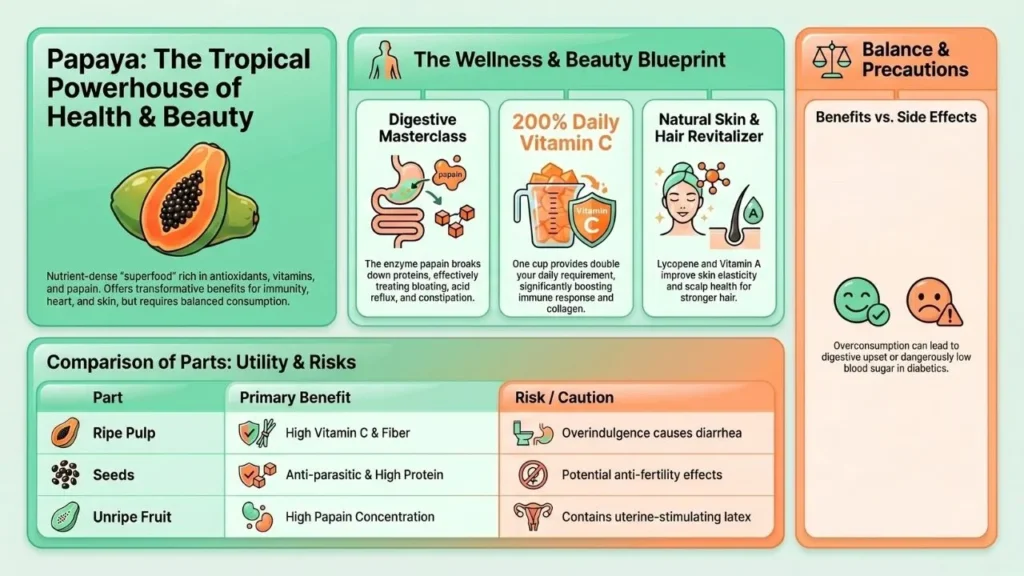
When we look at the nutritional profile of this vibrant fruit, it becomes clear why it is often called a powerhouse of health. Most people see a sweet, orange fruit, but as a dietitian, I see a complex delivery system for micronutrients that your body desperately needs. A medium-sized papaya provides about 120 calories, which is quite low when you consider the volume of food you are getting. What is even more interesting is that those 120 calories come packed with 30 grams of carbohydrates, but 5 of those grams are pure fiber. This fiber is your best defense against the sugar crashes that make office afternoons so difficult.
The vitamin profile is where this fruit truly outshines its tropical cousins. A small fruit can provide up to 95.6 milligrams of vitamin C, which is actually more than your recommended daily value. I tell my clients that this isn’t just about avoiding a cold; vitamin C is the building block for collagen, which keeps your skin glowing even when you are stressed and sleep-deprived. It also contains significant amounts of vitamin A, folate, and magnesium, alongside essential electrolytes like potassium.
| Component | Pulp (per 100g) | Seeds (per 100g) | Leaves (per 100g) |
| Energy (kcal) | 32.1 – 43.0 | 212.7 | 348.6 |
| Protein (g) | 0.6 – 0.7 | 2.6 | 5.8 |
| Lipids (g) | 0.1 | 3.1 | 1.4 |
| Total Carbohydrates (g) | 7.2 – 10.8 | 43.6 | 78.2 |
| Dietary Fiber (g) | 0.8 – 2.6 | 2.1 | 13.1 |
| Potassium (mg) | 257.0 – 286.0 | 344.0 | 534.0 |
| Vitamin C (mg) | 60.0 – 95.0 | ND | ND |
| Vitamin A (IU) | 888.0 | ND | ND |
What this means for your daily routine is that a simple bowl of papaya provides a massive nutritional return on a very small caloric investment. For the busy professional, it provides the B-complex vitamins that support energy metabolism, helping you stay sharp during those long meetings. For the homemaker managing a household, the high potassium content (about 257-286 mg per 100g) helps manage blood pressure levels that can fluctuate during a stressful day.

The Digestive Engine: Papain and Gut Health
I often hear from patients who feel heavy after meals or struggle with persistent bloating. If you have been reaching for antacids every night, let’s simplify your approach. The most unique fruit papaya benefits come from an enzyme called papain. This is a proteolytic enzyme, which is just a fancy way of saying it breaks down proteins. In fact, papain is so effective at breaking down tough protein chains that it has been used as a meat tenderizer for centuries.
When you eat a piece of ripe papaya, this enzyme goes to work in your stomach, helping to digest the proteins from your dal, chicken, or paneer more efficiently. This reduces the amount of time food sits in your gut, which is usually the main cause of that uncomfortable post-meal bloat. Harvard-trained gastroenterologists have even noted that consistent consumption of papaya can ease heartburn and keep constipation under control because it stimulates the production of digestive juices.
For my friends who find it hard to maintain a perfect diet, the fiber in papaya acts as a natural broom for your intestines. It adds bulk to your stool and softens it, which is the most natural way to find relief if you struggle with regularity. Beyond just moving things along, research shows that fermented papaya can actually improve your gut microbiome by providing probiotics that fight inflammation and support the good bacteria in your system. A healthy gut is the foundation of a healthy mind, and something as simple as a daily slice of papaya can be the first step in that direction.

Strategic Diabetes Management with Papaya
There is a common myth that if you have diabetes, you must avoid all sweet fruits. I want to reassure you that this is not true, especially when it comes to papaya. While it does contain natural sugars, the way your body processes those sugars is what matters. The fruit papaya benefits for diabetics are rooted in its moderate glycemic index (GI), which is around 60. This means it doesn’t cause the rapid, dangerous spikes in blood sugar that you might get from a white bread toast or a sugary cereal.
In a fascinating study comparing tropical fruits, researchers found that the glycemic response to papaya bites was significantly lower than pure glucose. Specifically, the GI for papaya bites was measured at 38 in some clinical settings, which is firmly in the low-GI category. This low-to-moderate response is further supported by the fruit’s high fiber content, which slows down the absorption of sugar into your bloodstream.
| Fruit Type | Glycemic Index (GI) | Diabetic Suitability |
| Papaya | 38 – 60 | Safe in moderation |
| Apple | 36 | Excellent choice |
| Banana | 62 | Limited amounts only |
| Guava | 29 | Very safe |
| Mango | High | Use caution |
But the benefits go deeper than just being safe. Recent research has explored how papaya actually helps your cells use sugar better. Studies on the molecular level suggest that papaya extracts can accelerate the expression of the insulin receptor (IR) and a protein called GLUT4 in your muscles. Think of GLUT4 as a gatekeeper that allows sugar to enter your muscle cells to be used for energy. By increasing the number of these gatekeepers, papaya helps your body lower its own blood sugar naturally.
What this means for your daily routine is that you can enjoy half a cup of ripe papaya (about 75-80 grams) as a mid-morning snack without fear. I suggest pairing it with a few almonds or a spoonful of plain curd. The protein and healthy fats in the nuts or curd further slow down digestion, giving you a very stable energy curve that lasts until lunch. This is a practical, home-based solution that fits perfectly into a busy professional’s schedule or a homemaker’s snack time.

Weight Loss and Metabolic Efficiency
If you are part of the non-gym audience-perhaps you don’t have the time or the inclination for intense workouts-you can still make significant progress on your weight loss goals through your diet. The fruit papaya benefits for weight management are three-fold: satiety, hydration, and metabolic support.
First, let’s talk about satiety. Because papaya is rich in fiber and has a high water content, it takes up a lot of space in your stomach for very few calories. When you eat a bowl of papaya before a meal, it acts as a natural appetite suppressant. You feel full sooner, which naturally reduces the urge to overeat or reach for unhealthy snacks later in the day. I know it’s hard to resist office snacks, but having a full stomach from healthy fruit makes that choice much easier.
Second, the papain enzyme we discussed earlier also aids in breaking down fats and proteins more efficiently. When your digestion is working at its peak, your body can absorb nutrients better and eliminate waste faster, which reduces that heavy, bloated feeling that often looks like extra weight around the midsection. Some studies have even shown that papaya juice can help reduce bad LDL cholesterol and triglycerides in the blood, which are often elevated in people struggling with obesity.
| Weight Loss Factor | Papaya’s Contribution | Result |
| Caloric Density | 43 kcal per 100g | Low calorie intake |
| Satiety | High fiber and water | Reduced hunger pangs |
| Digestion | Papain enzyme | Reduced bloating |
| Inflammation | Antioxidants (Vit C, Beta-carotene) | Better recovery from stress |
Chronic inflammation is a silent enemy of weight loss. When your body is stressed, it tends to hold onto fat. The antioxidants in papaya, specifically vitamin C and beta-carotene, help reduce this internal stress, allowing your metabolism to function more smoothly. What this means for your daily routine is that papaya isn’t a magic fat burner, but it is a powerful tool that makes your body a more efficient machine.

Cardiovascular Support and Heart Health
Your heart works incredibly hard, especially if you are balancing a high-pressure job and family responsibilities. We need to give it the right fuel to keep your blood vessels relaxed and your cholesterol in check. One of the most important fruit papaya benefits for your heart is its high potassium content. Potassium helps balance out the sodium in your diet, which is crucial for maintaining a healthy blood pressure.
Many Indian snacks are notoriously high in salt, which can make your blood vessels stiff and increase your risk of hypertension. The potassium in a daily serving of papaya helps relax these vessels, improving blood flow and reducing the strain on your heart. Additionally, papaya is rich in lycopene, the same heart-healthy pigment found in tomatoes. Lycopene has been shown to reduce bad LDL cholesterol and may lower the risk of heart disease and stroke by preventing the buildup of plaque in your arteries.
I have seen patients who significantly improved their cholesterol ratios simply by adding more fiber-rich fruits like papaya to their diets. The fiber binds to excess cholesterol in the digestive tract and carries it out of the body before it can enter the bloodstream. This is a simple, proactive step you can take today to protect your long-term health.

Beyond the Pulp: The Healing Power of Seeds and Leaves
While most of us focus on the sweet flesh, the entire papaya plant offers incredible medicinal properties. I want to introduce you to the waste products that are actually secret health boosters. The crunchy black seeds in the center of the fruit are entirely edible, though they have a bit of a peppery kick. These seeds have been used in traditional medicine to help eliminate intestinal parasites and support liver health. You can dry them and grind them into a powder to add to your salads or smoothies for an extra health boost.
The leaves of the papaya plant are perhaps even more famous in India, especially during dengue season. Papaya leaf extract is widely used to help increase platelet counts and support the immune system during viral infections. But you don’t have to be sick to benefit from them. The leaves are packed with phenolic compounds and flavonoids that have anti-inflammatory and anti-hypertensive effects.
| Plant Part | Primary Benefit | Usage Tip |
| Pulp | Digestion and Vitamin C | Fresh as a snack |
| Seeds | Anti-parasitic and Liver support | Ground into pepper substitute |
| Leaves | Platelet support and Immunity | Juice or extract |
| Unripe Fruit | Wound healing and Meat tenderizing | Cooked in curries |
For my friends who love traditional, home-based solutions, using the whole plant is a way to honor the zero-waste wisdom of our grandparents. Whether it is using the pulp for a glowing skin mask or using the seeds for digestion, there is a reason this fruit has been revered in Indian households for generations.

Relatable Daily Routines for the Modern Indian
I know it’s hard to find time, but let’s simplify your daily routine. You don’t need elaborate meal prep to enjoy the fruit papaya benefits. If you are a busy professional, try the Harvard Smoothie trick. A gastroenterologist from Harvard recommends a simple blend of one cup of ripe papaya, a splash of coconut milk, and a pinch of cinnamon. This takes less than three minutes to make and provides a gut-friendly breakfast that travels well in a commuter mug. It’s much better than grabbing a biscuit at the office.
For the homemakers who are managing the health of the entire family, think of papaya as your secret weapon. Instead of serving heavy fried snacks in the evening, try a fresh fruit chaat with papaya as the star. It’s naturally sweet, so the kids will love it, and it provides the vitamins they need for immunity. I have found that when a family eats together and chooses simple, whole foods, the collective energy of the household improves.
If you are a non-gym goer looking for a way to feel lighter, try eating a bowl of papaya as your first meal of the day. This village habit of starting with fresh fruit on an empty stomach helps wake up your metabolism and ensures your digestion stays smooth all day. It is these small, consistent choices that lead to a lasting transformation in your health.

Comparative Analysis: Why Papaya Stands Out
When I’m guiding a client through the fruit aisle, they often ask why they should choose papaya over an orange or an apple. While all fruits have benefits, papaya is unique because of its enzymatic content. Oranges give you vitamin C, but they don’t help you digest your dinner. Apples give you fiber, but they don’t have the same high levels of lycopene for heart health.
| Health Goal | Best Fruit Choice | Why? |
| Immediate Digestion | Papaya | Contains Papain enzyme |
| Quick Vitamin C Boost | Papaya or Guava | Both exceed daily requirements |
| Low GI for Diabetes | Guava or Apple | Very slow sugar release |
| Potassium for BP | Papaya or Banana | Relaxes blood vessels |
What this means for your daily routine is that papaya is an all-rounder. It covers your vitamins, your digestion, your heart, and your blood sugar all in one go. It is a cost-effective, easily accessible solution that fits perfectly into the Indian lifestyle, where we already have a cultural affinity for Papita.
Scientific Deep Dive: Ocular Health and Anti-Aging
We spend so much time looking at screens these days that our eyes are under constant strain. One of the less-discussed fruit papaya benefits is its impact on vision. Papaya is rich in zeaxanthin, an antioxidant that filters out harmful blue light and protects the cells in your retina. This can significantly reduce the risk of age-related macular degeneration, which is a leading cause of vision loss as we get older.
Furthermore, the anti-aging effects of papaya aren’t just about wrinkles. Oxidative stress is the primary driver of aging at the cellular level. By neutralizing free radicals with its potent antioxidant profile, papaya helps protect your brain and your organs from the damage that leads to chronic diseases like Alzheimer’s. A study showed that people who took fermented papaya extract for six months saw a 40% reduction in biomarkers of oxidative damage. This is incredible for a simple fruit!
Practical Steps for Tomorrow Morning
Let’s make this actionable. I don’t want you to just read this and forget it. Tomorrow morning, I want you to try one of these three things:
- The Empty Stomach Bowl: Have one small bowl of cubed papaya before your tea. Notice how your digestion feels by lunchtime.
- The Office Smoothie: Blend papaya with curd or milk and take it with you. It will keep you full and prevent those 11 AM cookie cravings.
- The Diabetic Snack: Replace your afternoon biscuit with half a cup of papaya and 5-6 almonds. Check your blood sugar two hours later and see the difference.
I know life is busy, and your health often takes a backseat to everyone else’s needs. But remember, you can’t pour from an empty cup. Taking five minutes to eat some fresh fruit is a small act of self-care that pays huge dividends in how you show up for your family and your work.

Frequently Asked Questions
Q1: Is it safe to eat fruit papaya benefits every day if I am on diabetes medication?
Yes, but you should monitor your levels. Ripe papaya is a medium-GI fruit and very high in fiber, which generally helps stabilize blood sugar. However, because it can have a mild hypoglycemic effect, it is wise to check your glucose levels when you first start eating it daily to ensure they don’t dip too low.
Q2: Can I eat the seeds to get more fruit papaya benefits?
Absolutely. The seeds are safe and contain compounds that may help with intestinal health and liver detox. Start with just a few seeds to see how you like the peppery taste.
Q3: Is green papaya better than ripe papaya for weight loss?
Green (unripe) papaya actually has a higher concentration of the papain enzyme, which is great for digestion. However, ripe papaya is more palatable and still offers significant fiber and hydration for weight management. Note: Pregnant people should avoid green papaya.
Q4: When is the best time to eat papaya to help with digestion?
For the best results, eat it in the morning on an empty stomach or about 30 minutes before a heavy meal. This allows the enzymes to prep your stomach for the food to come.
Q5: Will eating papaya daily cause any side effects?
For most people, there are no side effects. However, excessive consumption can lead to a harmless yellowing of the skin (carotenemia) due to the beta-carotene. People with latex allergies should be cautious with unripe papaya.
Conclusion
We have traveled through the science of enzymes, the mechanics of insulin, and the traditional wisdom of our villages to understand why this simple fruit is so essential. Whether you are a busy professional trying to survive a 10-hour workday, a homemaker managing the health of three generations, or someone simply looking to feel a little lighter and more energetic, the fruit papaya benefits offer a path forward. It is affordable, it is delicious, and most importantly, it works with your body’s natural systems to promote healing and balance. Don’t let your health be another item on a stressful to-do list. Let it be as simple as a bowl of sun-ripened papaya.
I know it’s hard to find time, but taking the first step is the most important part. If you’re ready to stop guessing and start feeling better today, let’s build a plan that fits your life

Contact Us
We understand how overwhelming nutrition and weight loss information can feel. With so many opinions and confusing advice online, it’s easy to feel stuck or unsure about what to do next.
At Diet Dekho, you never have to figure it out alone. You can contact us anytime with any questions or concerns. Our expert dietitians are available 24/7 to guide, support, and help you stay on track. Whether your goal is weight loss or building healthier habits, we’re here to make the journey simpler and more sustainable for you.
Disclaimer
This blog is intended to help readers make healthier food choices. Your health should always be the top priority. Before starting any restrictive or special diet, especially if you have a medical condition or health concern, please consult a doctor or a qualified dietitian. Each body responds differently to food and lifestyle changes. Always choose what is safe and suitable for you.

Abhinav is the Founder of Diet Dekho, helping people manage weight and lifestyle health through simple, practical nutrition and personalized diet plans.