
The sun rises over the bustling streets of Mumbai, where a professional prepares for a day filled with demanding back-to-back meetings. The inevitable mid-morning hunger strikes, and while the instinct may be to reach for a processed biscuit, the seasoned dietitian understands the profound benefits of dates fruit as a superior alternative. This ancient fruit, which has nourished civilizations for over eight millennia, serves as a bridge between traditional wisdom and modern nutritional science. For the busy professional, the overworked homemaker, or the person carefully managing diabetes, understanding the biochemical makeup of this fruit is the first step toward reclaiming daily energy without compromising metabolic stability.
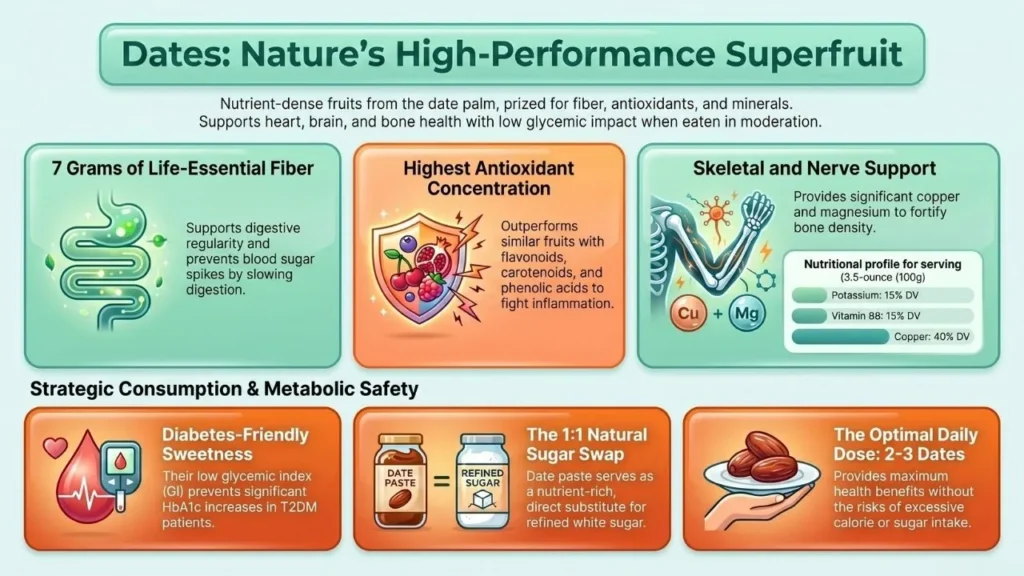
The benefits of dates fruit include providing a concentrated source of essential minerals like potassium and magnesium, alongside a high fiber content of approximately 7-8 grams per serving. Their low glycemic index makes them a safe, nutrient-dense substitute for refined sugars, helping to stabilize blood glucose levels while supporting cardiovascular health, brain function, and digestive regularity in a balanced daily diet.
The Evolutionary and Nutritional Foundation of Phoenix Dactylifera
The date palm, or Phoenix dactylifera L., is frequently lauded as the tree of life or the King of Oasis due to its historical role in sustaining populations in arid climates. Historical evidence suggests that dates have been cultivated for nearly 8,000 years, making them one of the oldest food sources known to humanity. The nutritional value of dates is rooted in their ability to concentrate energy and essential nutrients within a small, shelf-stable package.

Chemical Composition and Ripening Mechanics
The journey of the date fruit from flower to mature fruit involves four distinct physiological stages: Kimiri, Khalal, Rutab, and Tamer. Each stage represents a significant shift in the chemical profile of the fruit. In the initial Kimiri stage, the fruit is green and hard, containing high levels of tannins and moisture. As it progresses to the Tamer stage—the state most commonly consumed in India—the moisture content drops significantly, leading to a higher concentration of sugars and minerals. During this final maturation, enzymatic activity facilitates the conversion of sucrose into simpler sugars like glucose and fructose, which are more readily utilized by the human body for cellular respiration.
| Macronutrient | Content per 100 g serving | Physiological Importance |
| Energy | 277 – 314 kcal | Provides a sustainable fuel source for cellular metabolism. |
| Total Carbohydrates | 74.97 – 75.03 g | Primary substrate for energy production in the brain and muscles. |
| Dietary Fiber | 6.7 – 8.0 g | Regulates gastric emptying and promotes gut microbiome diversity. |
| Protein | 1.81 – 2.45 g | Supports muscle repair and enzymatic functions; higher than most fruits. |
| Total Lipids (Fat) | 0.15 – 0.39 g | Low-fat content makes it ideal for heart-healthy diets. |
The energy density of the Tamer stage is particularly valuable for individuals leading high-stress lifestyles. While a 100 g serving provides approximately 14\% of the daily caloric requirement, the presence of nearly 8 g of fiber ensures that this energy is released into the bloodstream over an extended period. This mechanism prevents the rapid insulin spikes and subsequent crashes associated with processed snacks, a factor that is especially relevant for those monitoring their blood sugar.

Micronutrient Density: Minerals and Their Biological Functions
The benefits of dates fruit are largely derived from their impressive mineral profile. Dates contain ten key minerals that are essential for maintaining the body’s electrochemical balance. Potassium, being the primary intracellular cation, is critical for the maintenance of the resting membrane potential in cardiac myocytes. A 100 g serving of dates can provide over 15\% of the recommended daily allowance (RDA) for potassium, magnesium, copper, and selenium.
| Mineral | Concentration (per 100g) | Primary Biological Role |
| Potassium | 656 – 696 mg | Regulates blood pressure and nerve impulse transmission. |
| Phosphorus | 62 mg | Essential for bone mineralization and ATP (energy) production. |
| Magnesium | 43 – 54 mg | Cofactor for over 300 enzymatic reactions, including muscle contraction. |
| Calcium | 39 – 64 mg | Critical for skeletal integrity and blood coagulation. |
| Iron | 0.90 – 1.02 mg | Necessary for hemoglobin synthesis and oxygen transport. |
| Zinc | 0.29 mg | Supports immune function and DNA synthesis. |
The high potassium-to-sodium ratio in dates is a significant therapeutic feature. With sodium levels as low as 1 – 2 mg per 100 g, dates are an excellent dietary choice for individuals with hypertension or those aiming to reduce their risk of cardiovascular disease. Potassium acts by relaxing the tension in blood vessel walls, which helps to lower systemic blood pressure.
The Biochemistry of Fiber and Digestive Health
For many, digestive discomfort is a daily reality, often caused by the low-fiber diets common in busy, urban environments. The high concentration of dietary fiber is one of the most immediate benefits of dates fruit for the gastrointestinal system. Dates provide a blend of soluble and insoluble fibers, each contributing uniquely to digestive wellness.
Insoluble Fiber and Regularity
Insoluble fiber does not dissolve in water; instead, it acts as a mechanical aid by adding bulk to the stool and accelerating its passage through the colon. This process is crucial for preventing constipation, a common issue for people with sedentary jobs. Clinical research published in the Journal of Nutrition indicated that individuals who consumed seven dates daily for 21 days experienced a significant increase in bowel movement frequency compared to those who did not consume dates. By increasing the speed of waste removal, dates also help to minimize the exposure of the colon lining to potentially harmful metabolites.
Soluble Fiber and Metabolic Support
Soluble fiber forms a gel-like substance in the gut, which plays a critical role in metabolic health. This gel slows down the digestion and absorption of fats and sugars. For the person managing diabetes, this means that the natural sugars in dates are absorbed more slowly, resulting in a more stable blood glucose profile. Furthermore, soluble fiber can bind to bile acids and dietary cholesterol in the intestines, facilitating their excretion and thereby helping to lower total serum cholesterol levels.
Prebiotic Mechanisms and Gut Microflora
Recent advances in nutritional research emphasize the importance of the gut microbiome for overall immunity and mental health. The fiber and polyphenols found in dates act as prebiotics—non-digestible food components that nourish beneficial bacteria such as Bifidobacteria and Lactobacillus. A healthy and diverse gut flora is associated with reduced systemic inflammation and improved nutrient absorption, highlighting that the benefits of dates fruit extend far beyond simple regularity.

Debunking the Diabetes Myth: Glycemic Index and Load Analysis
A common concern among those diagnosed with type 2 diabetes is that the sweetness of dates makes them unsafe for consumption. However, the seasoned dietitian recognizes that sweetness is not the sole indicator of how a food affects blood sugar. The nutritional value of dates includes a unique combination of fiber and phytochemicals that results in a low glycemic index (GI).
Understanding the Glycemic Index (GI)
The Glycemic Index is a ranking of carbohydrates based on their immediate effect on blood glucose levels. Foods with a GI of 55 or lower are classified as low GI and are generally recommended for people with diabetes because they produce a gradual rise in blood sugar. Despite being high in natural sugars, most varieties of dates consistently score within the low-GI range.
| Date Variety | Glycemic Index (GI) | Classification |
| Sukkary | 43.4 | Low |
| Sag’ai | 44.6 | Low |
| Khalas | 35.5 – 53.0 | Low |
| Ajwa | 45.0 – 48.0 | Low |
| Medjool | 42.0 – 55.0 | Low |
The Significance of Glycemic Load (GL)
While GI measures the quality of the carbohydrate, the Glycemic Load (GL) measures the quality and the quantity in a typical serving. The GL is calculated using the formula:
GL = GI × Available Carbohydrates 100
For a serving of two typical dates, the GL is approximately 17, which is considered moderate. This means that when eaten in the suggested portion of two to three pieces, dates do not cause significant glucose spikes. Clinical studies have shown that patients with type 2 diabetes can safely incorporate three dates into their daily diet without negatively affecting their HbA1c levels.
Strategic Consumption for Blood Sugar Management
The supportive dietitian advises that the context of consumption matters as much as the food itself. For the individual with diabetes, pairing dates with a source of protein or healthy fat—such as a few almonds or a spoonful of peanut butter—can further dampen the glycemic response. This pairing slows the rate of digestion even further, ensuring a flat and steady glucose curve that supports long-term metabolic health.
Cardiovascular Protection and Lipid Optimization
Heart health is a primary concern for the aging population and busy professionals alike. The benefits of dates fruit for the cardiovascular system are multifaceted, involving the regulation of blood pressure, the management of cholesterol, and the reduction of vascular inflammation.
Electrolyte Balance and Blood Pressure
As mentioned, the high potassium and low sodium content of dates make them an ideal food for managing blood pressure. Potassium helps to counteract the effects of sodium by promoting its excretion through urine and by relaxing the walls of the blood vessels, which reduces the workload on the heart. This is particularly relevant for those with high-stress jobs, where elevated cortisol levels can often lead to temporary spikes in blood pressure.
Impact on Cholesterol and Triglycerides
Clinical research has demonstrated that regular date consumption can lead to improvements in the lipid profile. A 16-week randomized controlled trial observed that individuals who ate three dates daily saw a statistically significant decrease in total cholesterol and LDL (the bad cholesterol) levels. The soluble fiber in dates binds to cholesterol in the digestive system, preventing it from entering the bloodstream and instead carrying it out of the body.
| Lipid Marker | Observation After 16 Weeks (3 Dates/Day) | Clinical Significance |
| Total Cholesterol | Decrease of 0.209 mmol/L | Reduced risk of arterial plaque formation. |
| LDL Cholesterol | Decrease of 0.171 mmol/L | Lowers the burden on the cardiovascular system. |
| HDL Cholesterol | Potential for elevation | Supports the scavenging of excess cholesterol. |
Antioxidant-Mediated Anti-Inflammatory Effects
Dates are rich in antioxidants, including flavonoids, carotenoids, and phenolic acids. These compounds protect the heart by neutralizing free radicals that can damage blood vessel walls and cause the oxidation of LDL cholesterol—a key step in the development of atherosclerosis. By reducing systemic inflammation, dates help to maintain the elasticity and health of the entire circulatory system.
Neurological Vitality and Memory Preservation
As the brain ages, it becomes more susceptible to oxidative stress and chronic inflammation, which are linked to cognitive decline and neurodegenerative diseases such as Alzheimer’s. The nutritional value of dates includes specific phytochemicals that have been shown to cross the blood-brain barrier and exert protective effects.
Suppression of Interleukin-6 (IL-6)
Laboratory studies have found that dates can lower inflammatory markers in the brain, most notably Interleukin-6 (IL-6). High levels of IL-6 are strongly associated with an increased risk of neurodegenerative conditions. By reducing these markers, regular date consumption may serve as a simple, food-based strategy to preserve brain health as we age.
Prevention of Beta-Amyloid Plaque Formation
A hallmark of Alzheimer’s disease is the buildup of beta-amyloid proteins that form plaques in the brain, disrupting communication between neurons. Animal models have demonstrated that a diet enriched with dates can help reduce the activity of these proteins, potentially delaying the onset of cognitive dysfunction.
Cognitive Function and Learning
In addition to protection against disease, dates have been linked to improved cognitive performance. Research indicates that the combination of antioxidants and natural sugars provides the brain with steady fuel, leading to better memory, enhanced learning capacity, and reduced anxiety-related behaviors. For the homemaker managing a busy household or the professional navigating complex tasks, this means better focus and mental clarity throughout the day.
Maternal Health and the Science of Natural Labor
One of the most remarkable benefits of dates fruit is their role in maternal health during the late stages of pregnancy. Traditional practices have long advocated for the consumption of dates to ease the labor process, and modern science is now validating these claims.
Stimulation of Oxytocin Receptors
Clinical evidence suggests that certain compounds in dates can stimulate oxytocin receptors in the uterus. Oxytocin is the primary hormone responsible for stimulating uterine contractions during labor. By mimicking the effects of this hormone, dates can:
- Promote the widening of the cervix (effacement and dilation).
- Reduce the need for medical labor induction (e.g., Pitocin).
- Shorten the total duration of the labor process.
Energy Storage for Childbirth
Labor is a physically demanding process that requires significant energy reserves. Dates are an excellent source of natural sugars and complex carbohydrates, allowing the body to store glycogen more effectively in preparation for the physical demands of delivery. A study published in the Journal of Obstetrics and Gynaecology showed that women who consumed six dates daily for four weeks before their due date had significantly more favorable labor outcomes.
Postpartum Recovery and Lactation
Following childbirth, the high iron and mineral content of dates helps to replenish the mother’s nutritional stores, particularly if there was significant blood loss during delivery. Furthermore, dates are traditionally used in many cultures to support healthy lactation, providing the necessary calories and nutrients for both mother and child during the early months of breastfeeding.
Reproductive Vitality and Endocrine Support
Beyond maternal health, the benefits of dates fruit extend to reproductive vitality in people. The presence of trace minerals and unique plant compounds supports the delicate balance of the endocrine system.
Male Fertility and Sperm Quality
Research into male reproductive health has shown that date consumption can improve sperm count and motility. This is likely due to the high concentration of flavonoids and amino acids, which protect the testicular tissue from oxidative damage and support the healthy production of sperm. Some studies have also explored the use of date pollen as a natural strategy for enhancing libido and overall sexual performance.
Hormonal Balance for Women
For women, the magnesium and vitamin B6 found in dates can help manage the symptoms of premenstrual syndrome (PMS) and menopause. Magnesium acts as a natural muscle relaxant, which can alleviate menstrual cramps, while vitamin B6 plays a role in regulating the neurotransmitters that influence mood and emotional stability. For women in the later stages of life, the calcium and phosphorus in dates are essential for maintaining bone density and preventing osteoporosis during the menopausal transition.
Dermatological and Aesthetic Mechanisms
While we often focus on internal health, the benefits of dates fruit are also visible externally. The fruit contains several beauty nutrients that support the health of the skin and hair, providing a natural alternative to synthetic chemical treatments.
Anti-Aging and Skin Elasticity
Dates are rich in vitamins C and D, which are essential for the production of collagen—the protein that gives skin its structure and elasticity. Furthermore, dates contain phytohormones (plant hormones) that have been shown to have a potent anti-wrinkle effect. In a clinical trial, middle-aged women who used a cream containing 5% date palm kernel extract for five weeks saw a significant reduction in the depth and surface area of wrinkles around the eyes.
Hair Health and the Role of Iron
Thinning hair is often a symptom of iron deficiency, a condition that is particularly common among women. The nutritional value of dates includes a significant amount of plant-based iron, which improves blood circulation to the scalp. This ensures that hair follicles receive the oxygen and nutrients they need to produce strong, healthy hair and can help to reduce excessive hair fall.
Comparative Analysis of Global Date Varieties
For the Indian consumer, walking into a market can be overwhelming due to the sheer variety of dates available. Each type has its own unique texture, sweetness level, and nutritional emphasis. Understanding these differences allows the consumer to choose the variety that best suits their health goals.
The Holy Ajwa Date
Originating from Medina, Ajwa dates are often considered the King of Dates. They are dark, almost black, with a prune-like texture and notes of caramel and chocolate. From a nutritional perspective, Ajwa dates are notable for having the highest iron content—nearly double that of other varieties—making them the top choice for individuals with anemia. They are also exceptionally rich in potassium and antioxidants.
The Succulent Medjool Date
Medjool dates are perhaps the most popular variety in the world. They are larger than average, with a soft, sticky texture and a flavor reminiscent of maple syrup. Because they are so sweet and energy-dense, they are the preferred choice for athletes or those needing an immediate boost before physical activity. However, the supportive dietitian notes that those managing calories should be mindful of their larger size.
The Sugar Sukkary Date
True to its name (derived from the Arabic word for sugar), the Sukkary date is incredibly sweet and melts in the mouth. Despite its sweetness, it has the highest fiber content of the major varieties (9 g per 100 g) and is particularly rich in calcium. This makes Sukkary an excellent choice for individuals struggling with constipation or those looking to improve their bone health.
The Budget-Friendly Omani and Pind Khajur
Omani dates are typically medium-sized, dark brown, and very juicy. In India, Pind Khajur refers to the soft, pressed dates often sold in blocks. These varieties are highly accessible and provide excellent value, offering all the core benefits of dates fruit—high potassium, fiber, and energy—at a more affordable price point.
| Variety | Texture & Taste | Specialized Benefit | Best For |
| Ajwa | Firm, dark, caramel/chocolate notes | Highest Iron & Potassium content | Heart health, Anemia, Pregnancy |
| Medjool | Large, soft, maple-syrup sweetness | High moisture & rapid energy release | Athletes, Pre-workout, Healthy dessert |
| Sukkary | Soft, melts in the mouth, very sweet | Highest Fiber & Calcium levels | Bone health, Constipation relief |
| Deglet Noor | Semi-dry, chewy, nutty flavor | Lowest calorie content per serving | Weight management, Calorie-conscious |
| Safawi | Soft, semi-dried, thumb-sized | High in essential B-vitamins | Immunity, Digestive support |
| Kimia | Extremely soft, juicy, thin skin | Immediate glucose availability | Afternoon slump, Instant energy |
Strategic Integration for the Busy Professional
The modern workplace is a hotbed for poor nutritional choices, often driven by a lack of time. For the professional, the benefits of dates fruit offer a zero-prep solution to maintaining productivity throughout a grueling workweek.
Overcoming the 3 PM Slump
The mid-afternoon energy crash is often the result of a high-carb lunch that has caused blood sugar to spike and then plummet. Instead of reaching for a third cup of coffee, which can lead to anxiety and sleep disruption, the supportive dietitian suggests consuming two dates. The glucose provides the brain with immediate fuel, while the fiber ensures that this energy is sustained until the end of the workday.
Portable Nutrition for the Commute
For many in India, the daily commute is long and exhausting. Keeping a small pouch of dates in a laptop bag or car ensures that the individual has access to healthy, non-perishable nutrition if they get stuck in traffic or have to work late. This prevents the vending machine trap where hunger leads to the consumption of high-fat, high-sodium snacks.
Homemakers and Pediatric Nutrition: Building Strong Foundations
The homemaker is the nutritional architect of the family. By incorporating dates into the daily diet of children and the older people, they can address common health gaps such as calcium deficiency and poor digestive regularity.
Bone Strengthening and Dental Health
Children require a steady intake of calcium, phosphorus, and magnesium for the development of strong bones and teeth. Dates provide a natural source of these minerals, making them a parent-approved snack that children actually enjoy due to their sweetness. Furthermore, dates contain fluoride, which helps protect tooth enamel from decay.
Natural Sweetener for Healthy Cooking
One of the most effective ways to use dates in a household is as a replacement for refined sugar. By soaking dates and blending them into a paste, the homemaker can add sweetness and moisture to milkshakes, porridges, and traditional sweets. This simple switch reduces the family’s intake of empty calories and replaces them with fiber, vitamins, and antioxidants.
| Indian Recipe Use | Date Variety Recommended | Health Benefit |
| Milkshakes/Smoothies | Kimia or Medjool (soft) | Provides creamy texture without added sugar. |
| Oatmeal/Dalia | Chopped Deglet Noor (firm) | Adds chewiness and sustained morning energy. |
| Ladoos/Energy Balls | Pind Khajur or Sukkary | High fiber content aids children’s digestion. |
| Natural Jam | Date Paste (any variety) | Replaces processed, high-sugar preserves. |
Weight Management and the Non-Gym Audience
You don’t need to be an athlete to experience the benefits of dates fruit for weight management. For individuals who are not particularly active or those who struggle to find time for the gym, dates can be a powerful tool for controlling hunger and reducing cravings.
Satiety and Portion Control
The high fiber content in dates increases satiety—the feeling of being full. When you eat a fiber-rich food, it stays in your stomach longer and suppresses the production of hunger hormones. The dietitian’s secret is to consume one or two dates with a glass of water about 30 minutes before a main meal. This pre-loading helps the individual feel satisfied with smaller portions during lunch or dinner.
Replacing High-Calorie Desserts
For many, the biggest obstacle to weight loss is a sweet tooth. Dates provide the intense sweetness of a candy bar but with the added benefits of potassium, B-vitamins, and fiber. By swapping a processed dessert for two high-quality dates, the individual reduces their intake of harmful trans fats and refined sugars while still satisfying their cravings.
The Role of Dates in Preventive Healthcare: A DietDekho Perspective
At DietDekho, we believe that the most effective healthcare starts in the kitchen, not the pharmacy. The benefits of dates fruit represent a core pillar of preventive nutrition. By making small, consistent changes—like eating two dates a day—we can address the root causes of many modern ailments, from chronic inflammation to metabolic syndrome.
Long-Term Outcomes of Daily Consumption
Research from organizations like the Harvard T.H. Chan School of Public Health suggests that diets rich in fruits, vegetables, and fiber are the most consistent predictor of a long, disease-free life. Regular date consumption contributes to this by:
- Maintaining a healthy cardiovascular system through electrolyte balance.
- Protecting the aging brain from inflammatory damage.
- Supporting a healthy and diverse gut microbiome.
A Supportive Path Forward
I know it’s hard to find time to overhaul your entire lifestyle, but you don’t have to. Let’s simplify this. You don’t need a complicated supplement routine or an expensive gym membership to start improving your health today. What this means for your daily routine is as simple as keeping a jar of dates on your kitchen counter. Every time you reach for one, you are providing your body with the tools it needs to protect your heart, your brain, and your future.
Frequently Asked Questions (FAQs)
Are the benefits of dates fruit really safe for someone with diabetes?
Absolutely. While dates are sweet, they have a low glycemic index (GI), typically between 42 and 55. This means they digest slowly and do not cause the rapid blood sugar spikes associated with refined sugar. Most clinical studies confirm that 2–3 dates per day are safe for people with type 2 diabetes, especially when eaten as part of a balanced meal.
What is the best time to eat dates for maximum energy?
The most effective time is in the morning on an empty stomach. This allows your body to absorb the minerals and natural sugars efficiently, giving you a steady boost of energy to start your day. They are also excellent as a pre-workout snack about 30 minutes before exercise or during the mid-afternoon slump at work.
Can children eat dates every day?
Yes, dates are one of the best natural snacks for children. They provide the energy needed for growth and play, along with essential minerals like calcium and magnesium for strong bones. The fiber in dates also helps prevent childhood constipation, which is often caused by low-fiber diets.
Do I need to soak dates before eating them?
While not strictly necessary, soaking dates overnight in water can make them easier to digest and can help activate some of the nutrients. This is a traditional Ayurvedic practice that is particularly helpful for people with sensitive stomachs or for those using dates in smoothies and recipes.
How many dates are too many?
Moderation is the key to reaping the benefits of dates fruit without excessive calorie intake. For most people, 2–4 dates per day is the sweet spot. Consuming more than 6–7 dates daily on a regular basis may lead to unwanted weight gain if you aren’t adjusting your other food intake, as they are calorie-dense.
Are you ready to stop struggling with low energy and start your journey toward a healthier, more vibrant life?
I know it’s hard to know where to begin, but making this one small change today can lead to big results for your heart, your brain, and your waistline. Let’s simplify your nutrition together.
Contact Us
We understand how overwhelming nutrition and weight loss information can feel. With so many opinions and confusing advice online, it’s easy to feel stuck or unsure about what to do next.
At Diet Dekho, you never have to figure it out alone. You can contact us anytime with any questions or concerns. Our expert dietitians are available 24/7 to guide, support, and help you stay on track. Whether your goal is weight loss or building healthier habits, we’re here to make the journey simpler and more sustainable for you.
Disclaimer
This blog is intended to help readers make healthier food choices. Your health should always be the top priority. Before starting any restrictive or special diet, especially if you have a medical condition or health concern, please consult a doctor or a qualified dietitian. Each body responds differently to food and lifestyle changes. Always choose what is safe and suitable for you.

Abhinav is the Founder of Diet Dekho, helping people manage weight and lifestyle health through simple, practical nutrition and personalized diet plans.