Imagine you are sitting in your kitchen at 7:00 PM. Your workday just ended. You are exhausted. You reach for a packet of biscuits. Then you remember your last lab report. That borderline sugar level feels like a weight. I know it is hard to find time for health. You want a snack that tastes good but helps your heart. This is where the benefits of eating cashew nuts change everything for your daily routine.
The benefits of eating cashew nuts include stabilizing blood sugar via a low glycemic index (22) and improving heart health through monounsaturated fats. Rich in magnesium and fiber, they boost insulin sensitivity and promote satiety. Regular, moderate intake (30g) supports weight management and reduces systemic inflammation without causing glucose spikes or unwanted weight gain.
The Hidden Story of the Indian Kaju
We often think of the cashew as a local Indian nut. However, history tells a different story. The Portuguese actually brought the cashew to India centuries ago. They originally used the trees to prevent soil erosion. Slowly, the nut became a staple in our coastal kitchens. Today, India is one of the largest producers and consumers of these kidney-shaped powerhouses.
What this means for your daily routine is simple. We have a locally available superfood right in our backyard. For years, many of us avoided Kaju because we thought it was too fatty. I want to help you unlearn that fear. We now know that the fats in cashews are good fats. They are similar to what you find in expensive olive oil.

Let’s Simplify the Nutritional Profile
It is easy to get lost in numbers. Let’s break down what is actually inside a handful of cashews. When you eat about 18 medium nuts, you get a dense package of energy. This is perfect for busy professionals who skip meals. You get protein for your muscles and healthy fats for your brain. Most importantly, you get minerals that your body cannot make on its own.
| Nutrient | Amount per 100g (Raw) | Clinical Importance |
| Energy | 553 – 592 kcal | Provides sustained fuel for long workdays |
| Protein | 18.22 g | Essential for muscle repair and satiety |
| Total Fat | 43.85 – 46.0 g | Healthy monounsaturated fats for the heart |
| Fiber | 3.3 – 4.1 g | Slows sugar absorption and aids digestion |
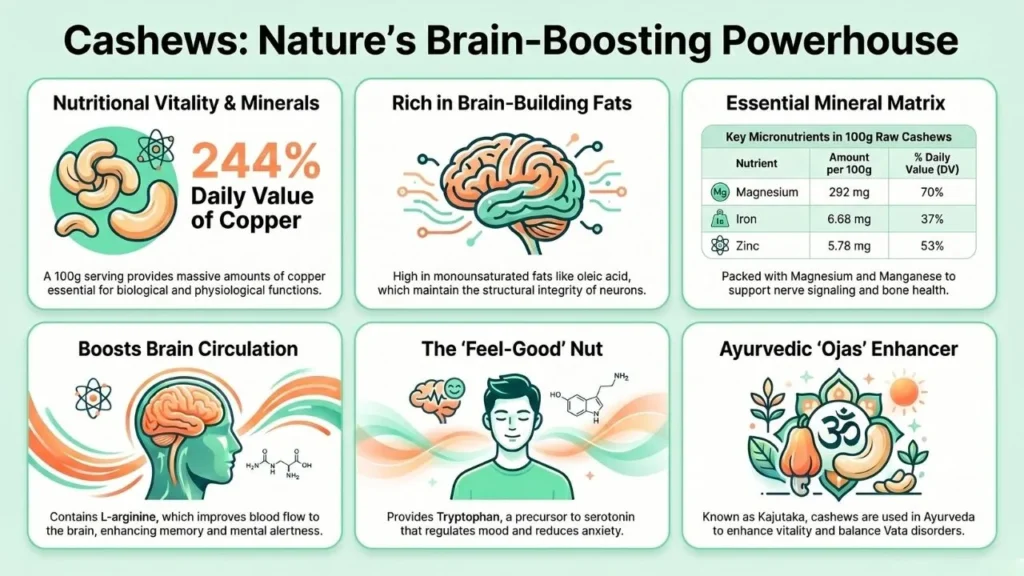
| Magnesium | 292 mg | Activates insulin receptors and relaxes muscles |
| Copper | 2.2 mg | Supports brain function and immunity |

Why Busy Professionals Need This Mineral Boost
I talk to many clients who feel tired all the time. Often, they are low on magnesium. Cashews are one of the best sources of this mineral. Magnesium helps your body turn food into energy. It also helps your heart maintain a steady rhythm. If you are a professional dealing with high stress, magnesium is your best friend. It acts like a natural relaxant for your nervous system.
Copper is another star in the cashew nut profile. It is often hard for vegetarians to get enough copper. This mineral is vital for your immune system. It also helps your body absorb iron. Think of cashews as a natural multi-mineral supplement. Just a small handful can cover a large portion of your daily needs.
Decoding the Fat Myth for Homemakers
I know many homemakers worry about the richness of Kaju. You might think it will increase your cholesterol. Let’s look at the facts together. About 75% of the fat in cashews is oleic acid. This is a monounsaturated fat. It actually helps lower the bad LDL cholesterol. It also raises the good HDL cholesterol.
For someone managing a household, energy is everything. These healthy fats provide a slow release of energy. Unlike a sugary snack, cashews won’t leave you feeling crashed an hour later. They help protect your organs and support cell growth. Choosing the benefits of eating cashew nuts over processed snacks is a simple win for your heart.

Managing Diabetes with the Low Glycemic Index
If you are living with diabetes, you probably watch the Glycemic Index (GI) of everything. White rice has a high GI of around 73. Cashews have a remarkably low GI of 22 to 25. This means they digest slowly. They do not cause the sudden sugar spikes that make you feel shaky or tired.
Research from the Madras Diabetes Research Foundation is very encouraging. They found that eating cashews did not raise blood sugar levels in Indian adults. In fact, replacing refined carbs like white bread with cashews can lower your diabetes risk by up to 20%. This is a practical step you can take today without feeling like you are on a medical diet.
Improving Insulin Sensitivity Naturally
Insulin is the key that lets sugar into your cells. In type 2 diabetes, that key often gets stuck. This is called insulin resistance. The magnesium in cashews helps unstick that key. It activates your insulin receptors. This allows your body to use sugar more effectively.
A study in Tehran showed that patients who ate cashews for eight weeks had lower insulin levels. Another review found that nut-rich diets could cut insulin resistance markers by 20%. I always tell my clients that food is medicine. Adding a few cashews to your breakfast is like giving your metabolism a gentle nudge in the right direction.

The ICMR Guidelines for Indian Diets
The Indian Council of Medical Research (ICMR) has looked closely at our local diets. Most Indians eat a lot of carbohydrates—about 62% of our daily calories. This high-carb intake is linked to obesity and diabetes. The ICMR suggests replacing 5% of these carbs with nuts like cashews.
Replacing some of your roti or rice with cashews can lower your risk of heart issues. The National Institute of Nutrition (NIN) recommends about 8 pieces of cashews daily. This small change fits perfectly into a balanced thali. It helps counter the genetic predisposition many Indians have toward diabetes.
A Real-World Lesson in Heart Health
Let’s talk about blood pressure. High blood pressure puts a lot of strain on your heart. In a 12-week trial, 300 Asian Indians with type 2 diabetes were given 30 grams of cashews daily. The results were impressive. Their systolic blood pressure dropped by 4.9 mmHg.
Their good HDL cholesterol also increased by 1.7 mg/dL. This happened without any increase in body weight or blood sugar. This study proves that cashews are heart-friendly. They contain an amino acid called Arginine. Arginine helps your blood vessels relax, which naturally lowers your blood pressure.

Understanding Stearic Acid and Cholesterol
You might hear that cashews contain saturated fat. This is true. However, most of that saturated fat is stearic acid. Harvard Health researchers note that stearic acid has a neutral effect on blood cholesterol. It does not act like the saturated fat in butter or red meat.
In a small study, volunteers added cashews to their diet for four weeks. Their bad LDL cholesterol levels dropped by about 5%. This is why cashews are a much better choice than low-fat potato chips. The chips are full of refined carbs that can actually hurt your lipid profile. The cashews provide nutrients that actively protect your arteries.

Breaking the Weight Loss Paradox
I know it sounds strange to say that a high-calorie nut helps with weight loss. But let’s look at why this happens. Cashews are very satisfying. They are rich in protein and fiber. This combination tells your brain that you are full. It stops you from overeating other empty calories like biscuits or fried snacks.
Another fascinating fact is that we don’t absorb all the calories in cashews. The cell walls of the nut are tough. Some of the fat stays trapped inside and passes through your system undigested. This means the actual calories you get might be lower than what is on the label. This makes cashews a secret weapon for weight management.
Real Results for the Non-Gym Audience
If you don’t have time for the gym, your diet has to do the heavy lifting. A study on adolescents with obesity showed that eating cashews reduced waist circumference. Even without extra exercise, the nuts helped improve body composition. This is likely because cashews help stabilize insulin, the fat-storage hormone.
When your insulin is stable, your body finds it easier to burn fat for fuel. Replacing a high-carb snack with a handful of cashews is one of the easiest home-based solutions. It requires zero prep time. It provides a huge emotional relief because you aren’t constantly fighting hunger. I want you to feel empowered by your snack choices, not restricted.

Brain Health and the Chemo-Brain Research
We are learning more about how cashews protect our brains. There is a term called Chemo-brain. It refers to the cognitive fog some people feel after chemotherapy. A 2022 study showed that cashews might help manage this neurotoxicity. The antioxidants in the nuts protect brain cells from damage.
The high copper content is also vital for your brain. Copper helps build the insulation around your nerves. This allows signals to travel faster. For a busy professional, this means better focus and mental clarity. Cashews also contain tryptophan, which your body uses to make serotonin—the feel-good hormone. This can help with your mood and sleep.
Protecting Your Vision with Zeaxanthin
In our digital age, we spend hours looking at screens. This puts a lot of stress on our eyes. Cashews contain a powerful antioxidant pigment called Zeaxanthin. This pigment is absorbed directly by your retina. It forms a protective layer that filters out harmful blue light.
This helps prevent age-related macular degeneration. Many people don’t realize that a simple snack can support their long-term vision. It is another reason why the benefits of eating cashew nuts make it a true superfood. You are not just eating for your heart or sugar; you are protecting your eyes too.

Tackling the Uric Acid and Gout Fear
I often hear the question: Are cashews bad for uric acid? If you suffer from gout, you know how painful joint swelling can be. Gout is caused by purines in food. High-purine foods like red meat and organ meats trigger pain. Cashews, however, are low in purines.
| Purine Content | Food Type | Gout Safety |
| High (150-1000mg) | Red Meat, Shellfish | Avoid during flares |
| Moderate (50-150mg) | Peanuts, Some Legumes | Limit daily intake |
| Low (<50mg) | Cashews, Almonds | Safe in moderation |
In fact, replacing meat with plant proteins like cashews can help manage gout symptoms. The magnesium in cashews also supports kidney function. Healthy kidneys are better at flushing excess uric acid out of your body.

Managing the Oxalate and Kidney Stone Risk
While cashews are amazing, we must be honest about everything. They do contain oxalates. For most people, this is not a problem. However, if you have a history of calcium oxalate kidney stones, you need to be careful. Too many oxalates can contribute to stone formation.
If you have had stones, limit yourself to 5-8 cashews a day. Also, eat them with a source of calcium, like a bowl of curd. The calcium binds to the oxalates in your stomach before they reach your kidneys. This is a simple trick to enjoy the benefits without the risk. Always stay well-hydrated to help your kidneys work effectively.
The Dietitian’s Kitchen: Smart Daily Swaps
Let’s look at how to actually eat these. I know you are busy. You don’t want a textbook lecture; you want a plan. The 30/30/30 Rule is a great place to start. Eat 30 grams of protein within 30 minutes of waking up. Adding chopped cashews to a bowl of sprouts or a vegetable cheela is an easy way to hit this goal.
| Instead of This… | Try This for a Week… | Why it Works |
| Morning Toast/Jam | Vegetable Poha with Peanuts & Cashews | Fiber and protein keep you full longer |
| Evening Samosa | Handful of Masala Roasted Cashews | Lowers calorie density and adds minerals |
| Oily Paneer Gravy | Paneer with Cashew-Tomato Paste | Heart-healthy fats replace refined oils |
| Sweetened Juice | Whole Fruit + 4-5 Cashews | Fiber slows down the fruit sugar spike |
My 5-Minute Professional Snack Recipe
You don’t need to be a chef to eat well. This recipe is for my clients who have no time. Take one cup of raw cashews. Put them in a dry pan on medium heat. Stir them for 5 minutes until they smell nutty and turn light golden. This roasting reduces phytic acid, which makes the minerals easier to absorb.
Once they are roasted, turn off the heat. Add a tiny drop of ghee and a pinch of black pepper and chaat masala. Add a few fresh curry leaves—they will get crispy from the heat of the nuts. This is a perfect snack for your office drawer. It satisfies that crunchy craving without the health risks of packaged chips.
How to Avoid the Sweets Trap
I know we all love Kaju Katli. But let’s be realistic. The traditional version is loaded with refined sugar. One piece won’t hurt, but hogging bowls of them will cause your sugar to spike. If you have diabetes, look for sugar-free versions made with stevia or jaggery powder.
Always remember: the benefits of eating cashew nuts come from the nut, not the sugar. In your daily routine, try to stick to plain, roasted, or lightly spiced versions. If you are cooking at home, use cashew paste to make your gravies creamy instead of using heavy cream or butter. This is a much better way to get that rich flavor while protecting your heart.
Practical Steps for a Healthier You Today
Let’s simplify this journey. You don’t have to change everything at once. Start by replacing one unhealthy snack with 10 cashews. I know it is hard to find time to cook, so keep a small container of roasted nuts in your bag. This one small habit can stabilize your energy and protect your heart for years to come.
What this means for your daily routine is that health can feel like home. You don’t have to eat boring food. You can enjoy the creamy, rich taste of Kaju and still reach your goals. It is about balance, not punishment. If you are struggling with a specific health condition like PCOS or Thyroid, these small tweaks are even more important.
Frequently Asked Questions
Q1: Is the focus keyphrase benefits of eating cashew nuts valid for those with high blood pressure?
Yes. Cashews contain Arginine, an amino acid that helps relax blood vessels. Studies show that 30g of daily consumption can lower systolic blood pressure by nearly 5 mmHg in Indian adults without causing weight gain.
Q2: Can I eat cashews if I have a history of kidney stones?
You should be cautious. Cashews contain oxalates, which can contribute to stones. If you have a history of stones, limit your portion to 5-8 nuts a day and pair them with calcium-rich foods like yogurt to bind the oxalates.
Q3: Why are cashews considered a better snack than biscuits for professionals?
Biscuits are usually made of refined flour and sugar, causing energy crashes. Cashews provide a mix of healthy fats, protein, and fiber. This combination ensures a slow release of energy and keeps you full for 3-4 hours.
Q4: Do the benefits of eating cashew nuts apply to weight loss diets?
Yes. While cashews have calories, they increase satiety. This means you feel full longer and eat fewer total calories throughout the day. Also, your body does not absorb all the fat in the nuts, making the actual calorie intake lower.
Q5: Is it better to eat cashews raw or roasted?
Lightly roasting cashews at home is often better for digestion. It reduces phytic acid, which can block mineral absorption. However, avoid deep-fried or heavily salted versions, as they can negatively impact heart health.
Summary of Findings
The research is clear: the cashew is a versatile ally for Indian health. Whether you are managing diabetes, worrying about your heart, or trying to lose a few kilograms, these nuts provide the support you need. They are easy to find, require no preparation, and fit perfectly into our traditional food culture.
I want you to stop feeling guilty about eating rich foods. Start focusing on the quality of your fats. Replace the empty calories of processed snacks with the nutrient-dense power of the cashew. Your body will thank you with more energy, better sugar control, and a stronger heart.

Conclusion and Next Steps
Taking control of your health shouldn’t feel like a chore. It starts with one handful. I know it is hard to navigate all the advice out there, but let’s keep it simple. Start with the benefits of eating cashew nuts as your daily snack. If you want a more detailed plan tailored to your body and your busy life, let’s talk. You can book your free consultation here and we can build a routine that works for you.
Contact Us
We understand how overwhelming nutrition and weight loss information can feel. With so many opinions and confusing advice online, it’s easy to feel stuck or unsure about what to do next.
At Diet Dekho, you never have to figure it out alone. You can contact us anytime with any questions or concerns. Our expert dietitians are available 24/7 to guide, support, and help you stay on track. Whether your goal is weight loss or building healthier habits, we’re here to make the journey simpler and more sustainable for you.
Disclaimer
This blog is intended to help readers make healthier food choices. Your health should always be the top priority. Before starting any restrictive or special diet, especially if you have a medical condition or health concern, please consult a doctor or a qualified dietitian. Each body responds differently to food and lifestyle changes. Always choose what is safe and suitable for you.

Abhinav is the Founder of Diet Dekho, helping people manage weight and lifestyle health through simple, practical nutrition and personalized diet plans.