Imagine a busy professional rushing toward a high-stakes meeting or a homemaker juggling the morning chaos of a household. In the midst of this whirlwind, breakfast often becomes an afterthought or a source of stress, especially for those managing blood sugar levels. Choosing a meal that provides sustained energy without causing a mid-morning crash is essential, and understanding the specific calories in an idli is the first step toward reclaiming metabolic control. This humble, steamed cake is not just a cultural staple but a sophisticated biochemical product that serves as a cornerstone of health for millions.
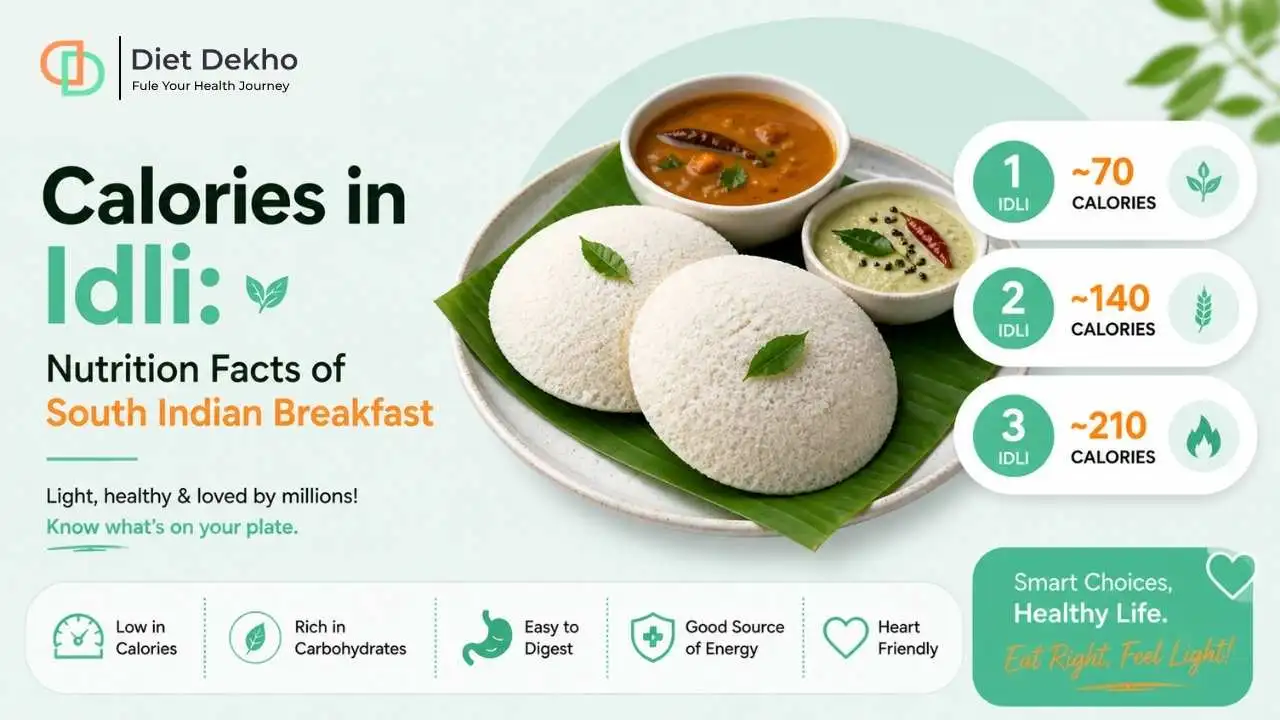
The calories in an idli typically range from 58 to 81 kcal for a medium-sized piece (35-40 grams), depending on the rice-to-pulse ratio and preparation method. This naturally low-fat, steamed breakfast provides roughly 12-15 grams of carbohydrates and 2 grams of protein per serving. When paired with fiber-rich sambar and healthy chutneys, the calories in an idli form a balanced, heart-healthy meal suitable for weight loss and diabetes management.
The Thermodynamic Profile of the South Indian Breakfast
The caloric density of a breakfast item determines its role in energy balance and weight management. Unlike fried alternatives such as vadas or parathas, the calories in an idli are derived from a process of steaming, which necessitates no added oils or fats during the cooking phase. This structural characteristic makes it a primary recommendation for individuals aiming to maintain a calorie deficit without sacrificing the volume of food consumed.
Comparative Caloric Density by Serving Size
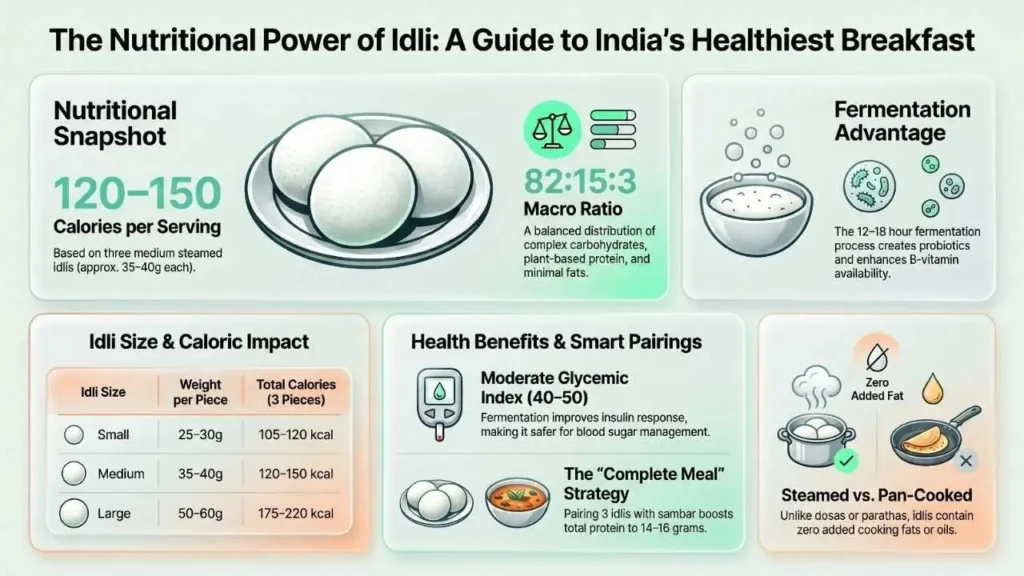
In clinical nutrition, the precision of portion sizes is paramount. A standard medium-sized idli provides a predictable energy load, but variations in size can lead to significant differences in total intake. The following data illustrates the caloric progression based on weight:
| Idli Size (Weight) | Energy (kcal) | Carbohydrates (g) | Protein (g) | Fat (g) |
| Small (30g) | 61 | 12.5 | 2.3 | 0.2 |
| Medium (40g) | 81 | 16.5 | 3.0 | 0.3 |
| Large (50g) | 102 | 20.8 | 3.8 | 0.4 |
The analysis suggests that for a non-gym audience or those with sedentary lifestyles, a serving of two to three medium idlis provides approximately 160-240 calories from the base cakes alone. This moderate density allows for the inclusion of nutrient-dense accompaniments while remaining within the 400-500 calorie window typically allotted for a healthy breakfast.
The Impact of Ingredient Substitution on Caloric Value
Modern dietary shifts have introduced several variations of the traditional rice-based batter. These substitutions are often made to increase fiber content or provide specific micronutrients, but they also alter the thermodynamic profile of the meal.
| Variation Type (30g) | Calories (kcal) | Primary Benefit |
| Traditional Rice Idli | 61 | High digestibility and probiotics |
| Ragi (Finger Millet) | 52 | High calcium and lower GI |
| Rava (Semolina) | 58 | Quick preparation, moderate energy |
| Oats Idli | 57 | High soluble fiber for heart health |
| Moong Dal Idli | 44 | Highest protein-to-calorie ratio |
| Bajra (Pearl Millet) | 45 | Rich in magnesium and iron |
What this means for a daily routine is that switching to a millet or pulse-based idli can reduce the total calories in an idli while simultaneously increasing the intake of essential minerals like iron and phosphorus. For a diabetic patient, the calorie count is only one part of the story; the quality of those calories, specifically the fiber-to-carb ratio, is what determines the success of the dietary intervention.

The Biochemistry of Fermentation: Beyond the Calorie Count
While the energy value is a critical metric, the true nutritional power of the idli lies in the 8-to-12-hour fermentation process. This biological transformation, driven by lactic acid bacteria and natural yeasts, fundamentally alters the food matrix, making it more than just a source of starch.
Probiotic Synthesis and Gut Health
Naturally fermented foods are essential for strengthening the gut microbiome, which contains approximately 100 trillion microorganisms. During the fermentation of idli batter, bacteria such as Lactobacillus flourish, pre-digesting the carbohydrates and proteins. This process not only makes the idli lighter on the stomach but also introduces live cultures that support the intestinal wall and boost immunity.
Bioavailability and Anti-Nutrient Reduction
One of the most profound effects of fermentation is the neutralization of anti-nutrients like phytic acid. These compounds, naturally present in grains and lentils, can bind to minerals and prevent their absorption. The fermentation process has been shown to reduce oligosaccharides by 40%, thereby improving the bioavailability of iron, zinc, and B-vitamins.
| Nutrient | Impact of Fermentation | Practical Consequence |
| Folate (B9) | Synthesis of natural B9 | Supports nerve health and pregnancy |
| Vitamin B12 | Microbial synthesis | Crucial for vegetarians |
| Iron | Increased absorption | Helps combat anemia in women and children |
| Resistant Starch | Increases during fermentation | Supports stable blood sugar |
For a busy professional, these biochemical changes mean that the energy from a breakfast of idli is released more steadily, preventing the brain fog and fatigue often associated with a high-sugar or refined-carb meal.
Managing Diabetes with Strategic Idli Consumption
For those navigating the complexities of Type 2 Diabetes, the idli often presents a paradox. While it is predominantly rice-based, its unique preparation allows it to be integrated into a diabetic-friendly diet when managed with precision.
Glycemic Index and the Role of Parboiled Rice
The Glycemic Index (GI) of a traditional white rice idli is often cited between 65 and 70, placing it in the medium-to-high category. However, the choice of rice variety can significantly lower this impact. Parboiled rice, which undergoes a hydrothermal treatment, has a higher level of resistant starch (RS) compared to regular white rice.
The research indicates that parboiled rice-based idlis result in a 30-38% reduction in the glucose area under the curve (AUC). This means the blood sugar response is much gentler, allowing the body to manage insulin levels more effectively.
The Protective Mesh Concept
A fascinating insight from clinical diabetology suggests that the order of food consumption can drastically change the metabolic outcome. Consuming a protein or fiber source-such as an egg white or a bowl of sprouts-before eating an idli creates what experts call a protective mesh. This physical barrier in the stomach traps the glucose molecules from the idli, slowing their absorption into the bloodstream.
| Strategy | Metabolic Effect | Suggested Application |
| Pre-loading with Protein | Slows gastric emptying | Eat an omelet or paneer before idlis |
| Adding Vegetables to Batter | Increases fiber density | Grate carrots or spinach into the idli |
| Using Millets | Lowers overall GI | Replace 50% of rice with Ragi or Jowar |
| Increasing Urad Dal | Boosts satiety | Use a 3:1 or 2:1 rice-to-dal ratio |
For a diabetic patient, monitoring the calories in an idli is less important than monitoring the glycemic load (GL) of the entire meal. Keeping the GL under 20-30 per meal is the gold standard for maintaining stable HbA1c levels.
Weight Loss Synergy: Satiety and Metabolism
The effectiveness of idli for weight loss is not merely a matter of low calories; it is about how those calories communicate with the body’s hunger hormones. The combination of fermented carbohydrates and high-quality pulse protein from urad dal provides a unique satiety signal.
Ghrelin Suppression and Satiety
The protein in urad dal provides essential amino acids that, when combined with the complex starches of rice, trigger the release of satiety hormones like Peptide YY and GLP-1. A 200-calorie idli meal has been shown to keep individuals feeling fuller for longer than an equivalent portion of plain rice or bread. This helps suppress ghrelin, the hunger hormone, preventing the impulsive snacking that often occurs mid-morning.
The Gut-Metabolism Connection
Emerging research from institutions like Harvard and the National Institute of Nutrition (NIN) links the gut microbiome directly to metabolic rate. The short-chain fatty acids (SCFAs) produced by the fermentation of resistant starch in the idli serve as fuel for colonocytes and help regulate fat storage signals.
By fostering a diverse microbial environment, regular idli consumption can actually support a leaner body composition over time. This makes it a strategic tool for the non-gym audience who must rely primarily on dietary choices for weight management.

The Role of Accompaniments in Metabolic Stability
An idli is rarely consumed in isolation, and the nutritional profile of the meal is fundamentally shifted by what is served alongside it. The traditional duo of sambar and chutney provides the necessary fats and fibers to complete the nutritional picture.
Sambar: The Unsung Metabolic Hero
Sambar is essentially a vegetable and lentil stew that adds significant protein and fiber to the plate. A medium bowl of sambar contains roughly 150-200 calories. The inclusion of vegetables like drumsticks, okra, and pumpkin adds micronutrients and slows the digestion of the idli’s starch.
Chutney and Healthy Fats
While coconut chutney is calorie-dense (approx. 50-100 kcal per serving), it contains Medium Chain Triglycerides (MCTs). These fats are metabolized quickly by the liver for energy rather than being stored as fat. Furthermore, the addition of healthy fats to a carbohydrate-rich meal like idli actually lowers the overall Glycemic Index of the meal by slowing the rate of glucose entry into the blood.
| Accompaniment | Calories (Approx.) | Key Benefit |
| Vegetable Sambar | 175 kcal | High fiber, lentil protein |
| Coconut Chutney | 75 kcal | Healthy MCTs, satiety |
| Tomato-Onion Chutney | 45 kcal | Antioxidants, lower fat |
| Molagapodi (with oil) | 90 kcal | Spices for metabolism |
For a homemaker preparing meals for the family, a balanced plate of two idlis with a generous serving of sambar and a small portion of chutney represents a scientifically optimized meal that provides about 350-400 calories.
Meal Prep and Preservation: Efficiency for the Professional
For a busy professional, the biggest hurdle to a healthy breakfast is often time. The idli batter, however, is a masterpiece of meal-prep engineering.
Batter Management and Fermentation Hacks
A single batch of batter can last in the refrigerator for 3 to 5 days. It is a living culture that continues to ferment slowly even in the cold. For those living in cooler climates, the batter can be placed in a warm oven (switched off) or near a heat source to ensure it rises properly.
The Freezing Debate
Can you freeze idli batter? While some experts warn that ice crystals can disrupt the batter’s structure, causing flatter idlis, many home cooks and professionals find success with freezing small portions for up to 4 weeks. The key is to thaw the batter at room temperature completely before use, allowing the microbes to wake up and reactivate.
| Method | Shelf Life | Impact on Nutrition/Texture |
| Room Temp | < 24 Hours | Rapid souring, high microbial activity |
| Refrigeration | 3 – 5 Days | Slowed fermentation, preserves texture |
| Freezing | 4 Weeks | Halts fermentation, may slightly flatten texture |
| Blast Chilling | 7 Days | Best for commercial preservation |
For those with a high-pressure work week, steaming a batch of idlis on Sunday and refrigerating them in airtight glass containers can ensure a 2-minute breakfast on Monday morning.

Addressing Specific Health Scenarios: PCOS and Heart Health
The benefits of the idli extend into specific clinical areas, making it a versatile tool for various demographic needs.
PCOS and Hormonal Balance
In PCOS management, avoiding insulin spikes is the primary goal. Because the idli has a moderate GI and is rich in probiotics, it supports gut health-a critical factor in hormonal regulation. Fermented foods help reduce the systemic inflammation that often drives insulin resistance in PCOS patients.
Heart Health and Lipid Control
The steaming process ensures the idli is 100% cholesterol-free and virtually fat-free. Research from Harvard indicates that fermented foods like yogurt and idli can provide modest heart-related benefits, including small improvements in blood pressure and LDL cholesterol. The high potassium content in the urad dal also aids in blood pressure management for those with hypertension.
Expert Perspectives on Idli Nutrition
Scientific institutions in India have long championed the idli as a model for nutritional balance. The Indian Council of Medical Research (ICMR) and the National Institute of Nutrition (NIN) categorize the idli as a cereal-pulse mix that provides a complete protein profile, containing all essential amino acids.
According to Dr. V. Mohan, a leading diabetologist, the idli is a heritage food that can be modernized. By replacing white rice with whole grains like brown rice or millets, the glycemic load is lowered, making it one of the safest traditional breakfasts for India’s 77 million diabetics.
Practical Steps to Optimize Your Idli Breakfast Today
Let’s simplify this. If you are struggling with time and health, you don’t need a radical overhaul; you need small, consistent adjustments.
- Watch the Portion: Stick to 2 medium idlis if you are sedentary, or 3 if you have an active morning.
- Fiber First: Always fill half your plate with sambar or a side of vegetable salad before touching the idli.
- Cooling and Reheating: Steaming is the key. Avoid frying leftover idlis; instead, re-steam them for 2 minutes to restore their fluffiness without adding calories.
- Experiment with Grains: Once a week, try a Ragi or Oats idli to give your gut a diverse range of fibers.

FAQs
How many calories are in an idli?
A single medium-sized rice idli (approx. 35-40g) contains about 58 to 81 calories. This makes it a low-calorie, nutrient-dense breakfast choice for those managing weight or heart health.
Is idli good for weight loss?
Yes, idlis are excellent for weight loss because they are steamed, low in fat, and provide high satiety. Each piece has roughly 2 grams of protein and 1 gram of fiber, which helps you stay full longer and maintain a calorie deficit.
Can diabetics eat rice idli every day?
Diabetics can eat rice idli, but moderation is essential. Experts recommend limiting intake to 2 idlis per meal and pairing them with high-fiber sambar or protein sources to prevent blood sugar spikes. Using parboiled rice or millets in the batter further improves glycemic control.
How many calories in 2 idlis with chutney?
A serving of 2 medium rice idlis with a standard portion of coconut chutney contains approximately 200-250 calories. Adding a bowl of sambar brings the total to about 350-400 calories, creating a complete and balanced meal.
Is rava idli better than rice idli?
Rava idli is a convenient alternative but is often made with refined semolina and may lack the probiotic benefits of fermented rice batter. For weight loss and gut health, traditional fermented rice-dal idli is generally the superior choice.

Conclusion: Reclaiming Your Health, One Steamed Plate at a Time
Managing your health doesn’t have to be a complicated, textbook lecture. It’s about making the most of the foods we already know and love. The idli is a perfect example of how traditional wisdom aligns with modern nutritional science to support our busy, modern lives. By understanding the calories in an idli and making small tweaks-like adding more vegetables or choosing the right rice-you can enjoy a breakfast that loves your body back.
I know it’s hard to find time between meetings and chores, but your metabolic health is the engine that keeps everything else running. Start tomorrow with two fresh idlis and a large bowl of sambar. Your blood sugar, your gut, and your energy levels will thank you for it.
Ready to take the next step in your health journey? Let us create a plan that fits your life perfectly.
Contact Us
We understand how overwhelming nutrition and weight loss information can feel. With so many opinions and confusing advice online, it’s easy to feel stuck or unsure about what to do next.
At Diet Dekho, you never have to figure it out alone. You can contact us anytime with any questions or concerns. Our expert dietitians are available 24/7 to guide, support, and help you stay on track. Whether your goal is weight loss or building healthier habits, we’re here to make the journey simpler and more sustainable for you.
Disclaimer
This blog is intended to help readers make healthier food choices. Your health should always be the top priority. Before starting any restrictive or special diet, especially if you have a medical condition or health concern, please consult a doctor or a qualified dietitian. Each body responds differently to food and lifestyle changes. Always choose what is safe and suitable for you.

Abhinav is the Founder of Diet Dekho, helping people manage weight and lifestyle health through simple, practical nutrition and personalized diet plans.