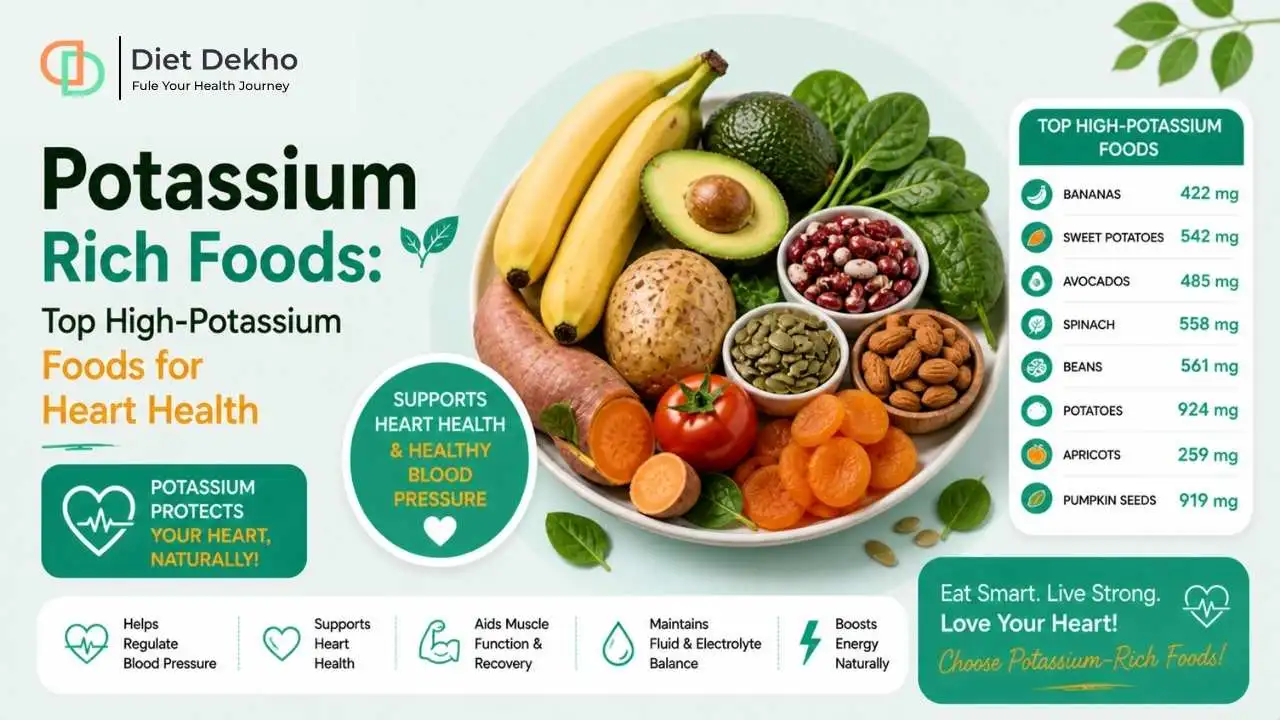
Have you ever felt that sudden jolt of worry when a routine check-up reveals your blood pressure is creeping up? I know it is hard to find time for complicated diet plans when you are balancing a high-pressure job or a busy household. However, the solution might be simpler than you think. When we look for the potassium food highest nutritional impact, we are really looking for a natural way to protect our hearts from the daily stresses of life.
The potassium food highest in density for the Indian kitchen includes soya beans (1,613 mg/100g), rajma (1,324 mg/100g), and beet greens (1,309 mg/cup). These whole foods significantly lower blood pressure by helping your kidneys flush out excess sodium. Specifically, incorporating these into your daily meals can reduce your risk of stroke and heart failure by nearly 24%.
Why Your Heart Craves Potassium
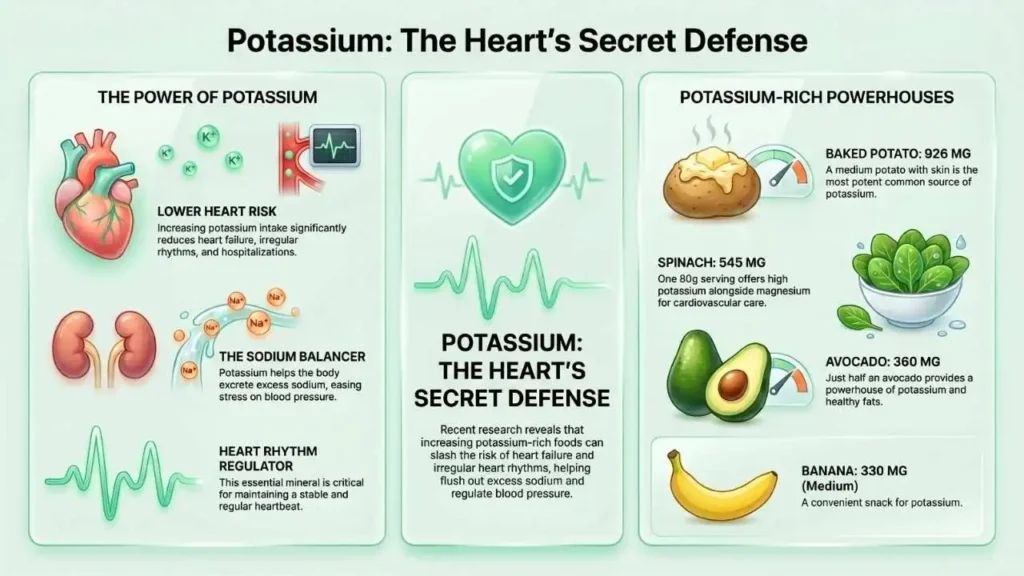
To start with, we must understand that potassium is not just a mineral; it is an essential electrolyte. Because it carries a tiny electrical charge, it helps your nerves fire and your muscles contract . Most importantly, it tells your heart to beat steadily. In essence, while sodium makes your body hold onto water and raises pressure, potassium does the opposite.
Accordingly, when you eat more potassium, your blood vessels relax and widen. This process, known as vasodilation, reduces the physical strain on your artery walls. Furthermore, potassium acts like a natural diuretic. It signals the kidneys to release more sodium through urine, which directly brings down your blood pressure numbers.
| Mineral | Location | Primary Function | Effect on Blood Pressure |
| Potassium | Inside cells | Muscle signals and fluid balance | Lowers by relaxing vessels and removing salt |
| Sodium | Outside cells | Fluid volume regulation | Increases by retaining water and tightening vessels |
The Indian Salt Crisis and the Dietary Vaccine
I know it is tempting to reach for a quick processed snack during a long workday. However, the average Indian now consumes between 8 to 11 grams of salt daily, which is nearly double the recommended limit. Interestingly, almost 80% of this sodium comes from the salt we add during home cooking.
Consequently, experts like Prof. Ambuj Roy from AIIMS describe potassium-enriched salt substitutes as a dietary vaccine for hypertension. Actually, switching to these substitutes can reduce systolic blood pressure by about 4.6 mm Hg. This is a massive win for busy professionals who cannot always control every ingredient in their meals but can certainly change the salt in their kitchen.

Identifying the Best High-Potassium Foods
Let’s simplify this. You do not need expensive superfoods to save your heart. Instead, look at the staples already sitting in your pantry.
Legumes: The Heavy Hitters
Legumes are arguably the potassium food highest in value for money. Specifically, soya beans and kidney beans (rajma) lead the pack.
- Soya Beans: One of the most concentrated sources, providing 1,613 mg per 100g.
- Rajma (Kidney Beans): A favorite in many households, offering 1,324 mg per 100g.
- White Beans: These provide 561 mg per half-cup and support both heart and kidney function.
Tubers and Roots: Don’t Peel the Power
While many people avoid potatoes due to carb fears, they are actually potassium powerhouses if you prepare them correctly. For instance, a medium baked potato with the skin on contains a staggering 941 mg of potassium. Crucially, the skin contains about 25% of that mineral, so please keep it on! Sweet potatoes are also excellent, providing 542 mg and a lower glycemic index .
Leafy Greens and Traditional Veggies
Leafy greens provide concentrated minerals with very few calories. For example, cooked beet greens offer 1,309 mg per cup. Similarly, a cup of cooked spinach (palak) gives you 839 mg. Traditional Indian vegetables like drumsticks (419 mg) and lotus root (611 mg) also add significant protection to your diet.

Potassium for the Diabetic Journey
What this means for your daily routine is that you can manage two conditions at once. Many people worry that high-potassium fruits might spike their sugar. However, several low-GI options exist that are perfectly safe for diabetics.
For example, guava is an incredible choice with a low GI of 12 and 283 mg of potassium. Because it is rich in fiber, it prevents sugar spikes while protecting your heart. In addition, vegetables like bitter gourd (karela) and bottle gourd (lauki) provide potassium without any risk to your glucose levels .
Furthermore, magnesium-rich foods like almonds (699 mg/100g) help your body use insulin more effectively. Therefore, a handful of almonds or a bowl of sprouted moong chaat makes an ideal snack for anyone managing both diabetes and hypertension .

Practical Steps for Busy Lifestyles
I understand that after a long day of work or managing the house, the last thing you want to do is spend hours in the kitchen. Let’s look at some time-saving hacks:
- Batch Prep Legumes: Boil a large batch of rajma or chickpeas on Sunday. You can then toss them into salads, wraps, or quick curries throughout the week.
- Use Your Pressure Cooker: Tools like the Instant Pot or a traditional pressure cooker can whip up a high-potassium dal palak in under 20 minutes.
- Choose Natural Hydration: Instead of tea or coffee, try coconut water. It provides about 600 mg of potassium per cup and is nature’s own electrolyte drink .
- Smart Snacking: Keep roasted makhana (fox nuts) or roasted chana at your desk. These are low-GI, high-fiber snacks that keep you full and your blood pressure stable .

A Note on Safety and Kidney Health
Although potassium is a hero for most, it can be a villain for a few. Specifically, if you have advanced kidney disease, your body might struggle to remove excess potassium. This can lead to a dangerous buildup called hyperkalemia. Additionally, certain blood pressure medications, like ACE inhibitors or potassium-sparing diuretics, can raise your levels too high . Therefore, always consult your doctor before making major changes or taking supplements.

Frequently Asked Questions
Which potassium food highest in density should I eat daily?
Soya beans and rajma are the highest. However, for daily variety, a medium potato with skin (941 mg) or a cup of cooked spinach (839 mg) are the easiest to incorporate into Indian meals.
Can I get enough potassium without taking supplements?
Yes, absolutely! Most healthy adults can meet their needs through whole foods. Actually, the Nutritionsource and the NIH both recommend food sources over supplements for better absorption and safety .
Is coconut water better than a banana for potassium?
In fact, a cup of tender coconut water can have up to 600 mg of potassium, while a medium banana has about 422 mg. Both are excellent, but coconut water is often more hydrating after a long day .
Why is potassium food highest importance for blood pressure?
Because it balances out the sodium in your diet. Naturally, when you eat more potassium, your body flushes out more salt, which reduces the volume of your blood and takes the pressure off your arteries .
Conclusion
Protecting your heart does not have to be an overwhelming task. By simply choosing the potassium food highest in density-like our humble dals, spinach, and potatoes-you are taking a powerful step toward a longer, healthier life. Start today by adding one extra serving of greens to your lunch or switching your table salt to a potassium-enriched version. These small, practical steps add up to a significant shield for your heart.
Contact Us
We understand how overwhelming nutrition and weight loss information can feel. With so many opinions and confusing advice online, it’s easy to feel stuck or unsure about what to do next.
At Diet Dekho, you never have to figure it out alone. You can contact us anytime with any questions or concerns. Our expert dietitians are available 24/7 to guide, support, and help you stay on track. Whether your goal is weight loss or building healthier habits, we’re here to make the journey simpler and more sustainable for you.
Disclaimer
This blog is intended to help readers make healthier food choices. Your health should always be the top priority. Before starting any restrictive or special diet, especially if you have a medical condition or health concern, please consult a doctor or a qualified dietitian. Each body responds differently to food and lifestyle changes. Always choose what is safe and suitable for you.

Abhinav is the Founder of Diet Dekho, helping people manage weight and lifestyle health through simple, practical nutrition and personalized diet plans.