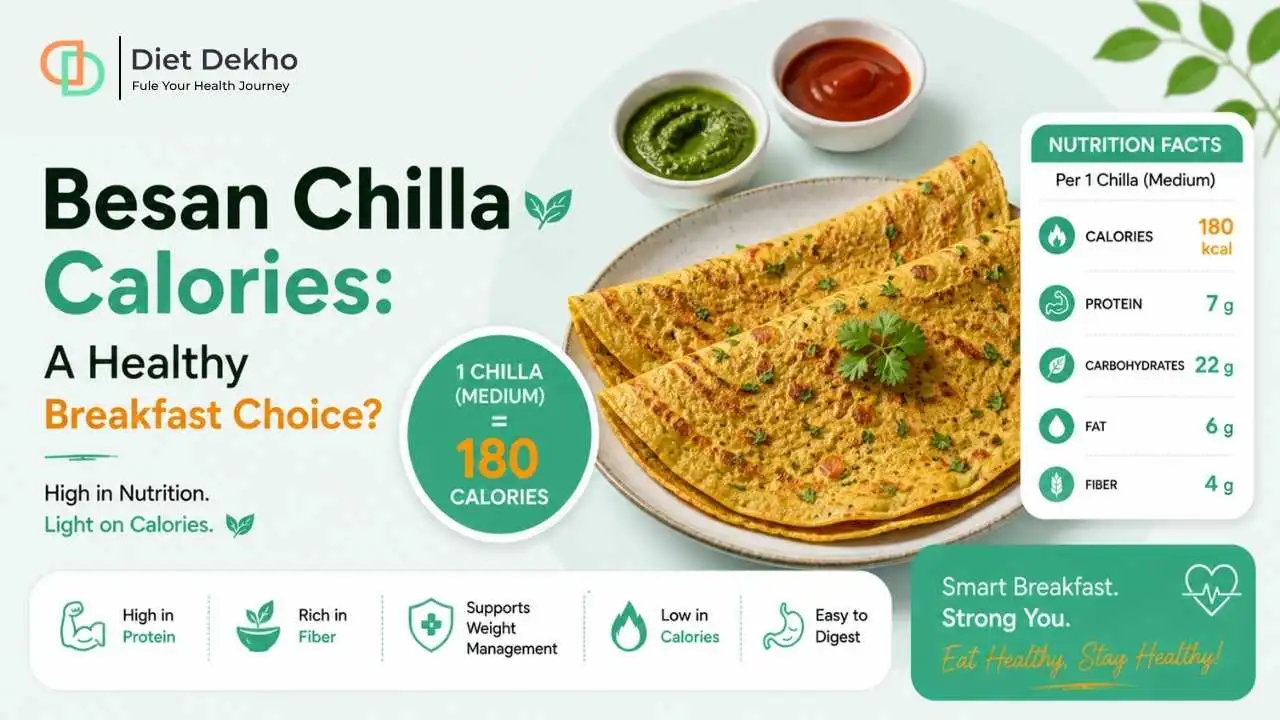
One medium homemade besan chilla (gram flour savory pancake, 70g cooked weight from 35g raw chickpea flour cooked with 1/2 tsp oil) delivers exactly 128 calories, 15.2g complex carbohydrates, 6.8g bioavailable plant protein, 4.4g healthy fats, and 3.5g dietary fiber. Besan has a remarkably low glycemic index of 28 to 32, making it an exceptional morning choice for reversing insulin resistance and managing PCOS.
| Chilla Variant | Portion Size | Calories | Protein | Carbs | Fats | Fiber |
|---|---|---|---|---|---|---|
| Standard Plain Besan Chilla | 1 piece (35g flour + 1/2 tsp oil) | 128 kcal | 6.8 g | 15.2 g | 4.4 g | 3.5 g |
| High-Protein Paneer Stuffed Chilla | 1 piece (+ 30g low fat paneer) | 198 kcal | 13.2 g | 16.5 g | 8.7 g | 3.8 g |
| Veggie-Loaded Chilla (Tomato/Spinach) | 1 large piece (40g flour + veg) | 142 kcal | 7.6 g | 18.1 g | 4.6 g | 4.9 g |
Best paired with our sugar-free coriander mint chutney recipe. Also see our comparison with calories in upma.
Specifically, one medium besan chilla (60g) contains 150 to 180 calories. It provides 8.5g protein, 12g carbohydrates, and 2.1g fiber. Its low glycemic index of 28 makes it a superior choice for diabetes management and weight loss. Consequently, it outperforms refined grain alternatives like poha or white bread.
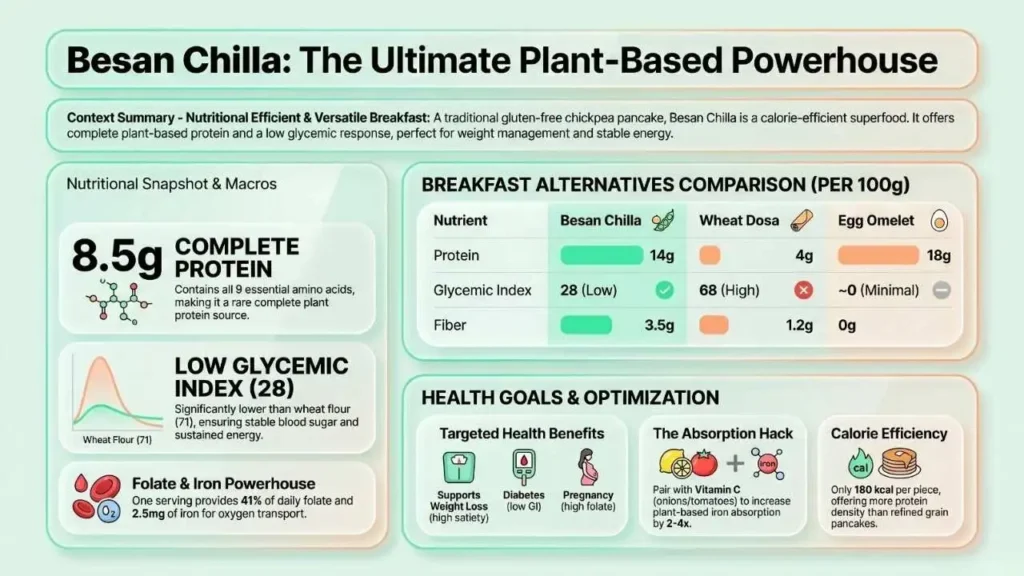
Understanding the Morning Struggle for Health
Furthermore, I know it is hard to find time for a complicated breakfast. Your morning is already a race against the clock. Between getting the kids ready and preparing for work, your health takes a backseat. You might grab a quick bowl of poha or toast. However, you likely find yourself feeling hungry again by 11 AM.
As a result, what this means for your daily routine is a cycle of energy crashes. Constant snacking makes managing your weight feel impossible. Indeed, most Indian breakfasts are heavy on carbohydrates. They are often very low on the protein your body needs to stay full. Therefore, the humble besan chilla serves as a practical, home-based solution for your health struggles.

The Nutritional Foundation of Chickpea Flour
To simplify this, let’s look at what actually goes into your chilla. Besan is made by grinding Bengal gram or chickpeas into a fine flour. This ingredient has been a staple in Indian kitchens for generations. Unlike refined wheat flour, besan retains the high-quality protein and fiber found in the whole legume.
Similarly, one of the most striking things about besan is its nutrient density. It is naturally gluten-free and contains nearly double the protein of whole wheat flour. This makes it a powerful ally for anyone trying to improve muscle tone. It is especially useful for those managing weight without spending hours at a gym.
Macronutrient Breakdown of Besan Chilla
| Serving Size / Type | Energy (kcal) | Protein (g) | Carbs (g) | Fiber (g) | Fat (g) |
| 1 Medium Chilla (60g) | 180 | 8.5 | 12 | 2.1 | 9 |
| 1 Small Chilla (40g) | 57 | 2.4 | 6.6 | 2.0 | 2.3 |
| 100g Prepared Chilla | 200 | 8.0 | 30 | 3.5 | 6 |
| 100g Dry Besan Flour | 387 | 22 | 58 | 11 | 6.7 |
Therefore, as you can see from the table, energy density changes based on preparation. A standard recipe usually makes about four chillas. Each one contributes significantly to your daily nutrient needs. Moreover, they do this without overloading you with empty calories. This balance is exactly what your body needs for a stable start.

Why Besan Chilla is a Miracle for Diabetes
Moreover, if you are managing diabetes, your primary concern is blood sugar spikes. Most cereal-based breakfasts digest very quickly. For instance, white rice idlis or wheat rotis flood your bloodstream with sugar. This forces your pancreas to work overtime. Consequently, it can lead to long-term insulin resistance and fatigue.
Besan has a very low glycemic index. In simpler terms, it releases sugar into your blood very slowly. While the GI of white bread can reach 100, chickpeas typically range around 28 to 35. Actually, this slow release ensures that you don’t experience that scary spike and crash sensation.
Glycemic Index Comparison for Breakfast Items
| Breakfast Item | Glycemic Index (GI) | Glycemic Load (GL) |
| Besan Chilla | 28 | Low |
| Whole Wheat Bread | 50-74 | Moderate |
| Poha | 70+ | High |
| Boiled Potatoes | 78-111 | Very High |
| White Rice | 70-89 | High |
Specifically, the fibers in besan act like a protective shield in your gut. They slow down the enzymes that break down carbohydrates. This means the sugar from your meal enters your system at a manageable pace. Indeed, this metabolic shift is one of the easiest ways to manage your condition.

Tackling the Protein Deficiency Crisis in India
In addition, I want to share a statistic that might surprise you. Specifically, nearly 73% of Indians are deficient in protein. We often think we are eating well because our stomachs feel full. However, we are often full of empty carbohydrates like rice. This lack of protein is a silent crisis leading to muscle loss and persistent weakness.
When your diet lacks enough protein, your body breaks down muscle tissue. As a result, this slows down your metabolism significantly. For a busy professional, eating enough protein is vital. It is the most effective way to keep your metabolism active throughout the day.
Protein Content in Common Indian Breakfasts
| Dish (Standard Serving) | Protein Content (g) |
| 1 Besan Chilla | 6-8.5 |
| 1 Egg Omelette | 6-7 |
| 2 Idlis | 4-5 |
| 1 Cup Poha | 3-4 |
| 1 Plain Paratha | 3-4 |
| 1 Paneer Sandwich | 8-10 |
Notably, the protein in a chilla is comparable to an egg omelette. This makes it one of the best vegetarian options available. It provides all the essential amino acids your body needs to repair cells. By choosing a chilla over poha, you are effectively doubling your protein intake.

The Satiety Factor: Staying Full Until Lunch
On the other hand, one big hurdle to weight loss is mid-morning snacking. This usually happens because your breakfast was nutritionally thin. Consequently, your brain interprets a blood sugar drop as a hunger emergency. Besan chilla is a satiating food that keeps you satisfied for a very long time.
For instance, studies from the NIH show that chickpea-based meals promote fullness. The combination of protein and fiber triggers satiety hormones in your gut. Basically, this prevents the desperate hunger that often leads to overeating during your lunch break.
How Different Nutrients Affect Your Hunger
| Nutrient | Satiety Impact | Digestion Speed |
| Fiber | High | Very Slow |
| Protein | High | Slow |
| Complex Carbs | Medium | Moderate |
| Refined Carbs | Low | Fast |
| Healthy Fats | Medium | Slow |
Because besan chilla calories come from fiber and protein, you burn more energy digesting them. This is known as the thermic effect of food. Ultimately, it is like giving your metabolism a gentle wake-up call every single morning.

More Than Just Macros: Essential Vitamins and Minerals
Besides the protein and carbs, besan is a goldmine of micronutrients. Many of my clients who feel fatigued are actually low on iron or folate. These are essential for making healthy red blood cells. Given that over 50% of Indian women are anaemic, this is a major health win.
Specifically, besan contains significant amounts of iron, folate, and magnesium. Magnesium is particularly important for those with diabetes. Resultantly, it helps your cells respond much better to insulin. Potassium also helps manage your blood pressure by balancing out dietary salt.
Targeted Benefits for Indian Phenotypes
Indeed, you are getting a natural multivitamin in the form of a pancake. When you add spinach or carrots, you increase vitamins A and C further. It is a simple way to nourish your body without expensive supplements. Specifically, these vitamins support immunity and skin health during busy weeks.
Micronutrients in a 60g Besan Chilla
| Nutrient | Amount | Benefit |
| Iron | 2.5 mg | Boosts energy and prevents anaemia |
| Magnesium | 45 mg | Improves insulin sensitivity |
| Folate | 165 mcg | Essential for DNA and cell health |
| Phosphorus | 190 mg | Supports bone and tooth strength |
| Potassium | ~300 mg | Helps regulate blood pressure |

Practical Comparisons: Why Chilla Beats Other Breakfasts
In contrast, let’s look at the numbers for other popular dishes. An aloo paratha can easily hit 400 calories if fried in ghee. It is very high in starch and very low in protein. Conversely, this is the exact opposite of what your body needs for sugar control.
Poha and Upma are light, but they are mostly processed rice and wheat. They digest quickly and don’t provide long-term fullness. Therefore, when compared side-by-side, the chilla stands out as the most balanced option. It is perfect for anyone who wants to stay healthy while enjoying traditional flavors.
Calorie and Protein Comparison per 100g
| Breakfast Item | Calories (kcal) | Protein (g) | Health Rating |
| Besan Chilla | 200 | 8.0 | Excellent |
| Aloo Paratha | 200-450 | 4.0 | Average |
| Poha | 110-210 | 3.0 | Good |
| Upma | 120-180 | 4.0 | Good |
| Poori Bhaji | 500-600 | 5.0 | Poor (High Fat) |
Specifically, choosing a chilla saves hundreds of calories over the course of a week. This doesn’t mean you can never have a paratha. However, making the chilla your daily driver will improve your energy levels significantly. It is about making smarter choices 80% of the time.

Simple Kitchen Hacks for the Busy Professional
Furthermore, the beauty of this dish is its simplicity. You don’t need to ferment the batter overnight like you do with idlis. To simplify this, just whisk the flour with water and spices. You are ready to cook in less than five minutes.
For instance, you can chop your vegetables the night before to save more time. For a low-oil version, try the onion brushing technique. Simply cut an onion in half, dip it in oil, and rub it on the pan. This creates a non-stick surface without the extra fat of pouring oil.
Time-Saving Prep Tips
Additionally, you can use a food processor to shred vegetables in bulk. Storing a dry mix of besan and spices in a jar also speeds up the process. Then, you only need to add water and fresh greens in the morning. This small step ensures you never skip a healthy breakfast.
How to Boost the Nutrition of Your Chilla
| Ingredient Addition | Nutritional Benefit |
| Grated Paneer | Adds 9-10g of high-quality protein |
| Chopped Spinach | Increases iron and vitamin K |
| Grated Bottle Gourd | Adds volume and hydration with zero calories |
| Curd in Batter | Adds probiotics and creaminess |
| Moong Sprouts | Boosts fiber and protein significantly |

Addressing the Common Digestive Concerns
On the other hand, some of you might worry about feeling bloated. Legumes contain complex sugars that can be hard to break down initially. However, this doesn’t mean you have to miss out on the benefits. There are simple ways to make besan much easier on your stomach.
Specifically, the secret is in the spices. Adding a pinch of ajwain (carom seeds) and hing (asafetida) works wonders. These spices help reduce gas and support efficient protein processing. Indeed, starting with smaller portions helps your gut adjust to the higher fiber content.
Digestive Aids for Legume-Based Meals
| Spice/Ingredient | Function |
| Ajwain (Carom Seeds) | Relieves gas and bloating |
| Hing (Asafetida) | Supports enzyme function |
| Ginger | Stimulates digestive juices |
| Lemon Juice | Helps break down minerals for absorption |
| Fresh Mint | Soothes the stomach lining |

Expert Guidelines: The 2024 ICMR-NIN Recommendations
Notably, top health experts in the country agree with this approach. The ICMR recently updated their dietary guidelines for 2024. They emphasize a major shift toward more legumes and vegetables. Specifically, they recommend reducing reliance on cereals like rice and wheat.
Furthermore, the guidelines suggest getting at least 85g of pulses daily. A vegetable-loaded besan chilla is the perfect embodiment of these new rules. It combines your protein and cereal replacement into one easy dish. Consequently, it fits perfectly into the modern Indian lifestyle.
Summary of New ICMR-NIN 2024 Guidelines
| Aspect | 2011 Guideline | 2024 Guideline |
| Vegetable Target | 300g / day | 400g / day (33% increase) |
| Green Leafy Veg | 50g / day | 100g / day (100% increase) |
| Sugar Limit | General advice | < 5% of total calories |
| Protein Source | General animal/plant | Enhanced plant-based focus |
| Salt Intake | < 5g / day | < 5g / day (Strict focus) |
Supporting Your Journey Without the Gym
Chiefly, most of your health journey happens in the kitchen. For someone who isn’t doing heavy lifting, the goal is maintaining lean muscle mass. Protein is the only nutrient that can do this. Therefore, a high-protein breakfast is essential even without a workout routine.
In addition, besan chilla provides the building blocks for healthy muscles. It supports you even if your only workout is a 20-minute brisk walk. Consequently, you can stop worrying about high-intensity workouts and focus on high-quality nutrition.
Preserving Muscle with Plant Protein
Notably, muscle tissue burns more calories at rest than fat tissue. By eating enough protein, you keep your metabolic furnace burning. Specifically, this prevents age-related muscle loss, known as sarcopenia. This is vital for staying independent and strong as you get older.
The Role of Protein in a Non-Gym Lifestyle
| Benefit | How it Works |
| Muscle Maintenance | Prevents sarcopenia or muscle loss |
| Metabolic Support | Burns more calories at rest |
| Immunity | Provides antibodies to fight infections |
| Skin and Hair Health | Supports collagen and keratin production |
| Stable Energy | Avoids the slump after meals |
Heart Health: The Invisible Benefit
Similarly, we often forget about the heart when discussing besan chilla calories. Chickpeas are excellent for your cardiovascular system. Specifically, they contain zero cholesterol and are high in soluble fiber. This fiber helps sweep out bad LDL cholesterol from your arteries.
Additionally, the magnesium in besan helps your blood vessels relax. This can naturally lower your blood pressure over time. For many families with a history of heart disease, this switch is a loving choice for the body. It is a powerful form of preventative medicine.
Cardiovascular Benefits of Legume Consumption
| Factor | Effect of Chickpeas / Besan |
| Cholesterol | Lowers LDL (bad) cholesterol levels |
| Blood Pressure | Potassium and Magnesium help regulate it |
| Inflammation | Antioxidants reduce arterial stress |
| Blood Sugar | Prevents insulin-driven heart complications |
| Weight | Reduces visceral fat around the heart |

The Mental Aspect: Why This Works for Real People
Finally, most diets fail because they are too restrictive. Besan chilla works because it is already part of our culture. It tastes good and smells wonderful on the tawa. When you enjoy what you eat, your brain releases dopamine. Consequently, you are more likely to stick to your healthy habits.
Actually, there is no willpower required to eat a delicious, hot chilla. It is a stress-free way to be healthy. This emotional satisfaction is just as important as the nutritional value. It ensures you won’t give up after just a few days.
Emotional Stability through Satiety
When you are full, you are less likely to feel irritable or stressed. A balanced breakfast prevents the mid-morning brain fog often caused by sugar crashes. Specifically, the steady energy from besan helps you stay focused and calm during a busy workday.
Psychological Advantages of Traditional Healthy Foods
| Factor | Benefit for Consistency |
| Familiarity | Reduces the mental load of dieting |
| Cultural Connection | Feel supported by tradition |
| Sensory Appeal | Taste and smell provide immediate rewards |
| Family Friendly | Feed the same meal to your kids |
| Accessibility | Ingredients are in every local store |
Myths vs. Facts: Clearing the Confusion
Notably, there is a lot of conflicting information out there. Some people might tell you that all flour is bad. To clarify, let’s look at what the actual research says. Understanding the truth will help you feel more confident in your daily choices.
One common myth is that gram flour is high in calories. In reality, it is very calorie-efficient for its protein. Another myth is that it causes blood sugar spikes. However, its low GI makes it one of the best foods for blood sugar control.
Myth Busters for Besan Chilla
| Myth | Fact | Source |
| It’s just a carb pancake | It has as much protein as an egg | N/A |
| Legume protein is poor | It contains all 9 essential amino acids | N/A |
| Oil makes it unhealthy | 1 tsp of fat helps nutrient absorption | N/A |
| It’s too hard to digest | Adding ajwain and hing solves this | N/A |
| It spikes blood sugar | It has a GI of 28, which is very low | N/A |
Sustainability: Good for You, Good for the Planet
Resultantly, while focusing on health, we should also consider the planet. Chickpeas are one of the most sustainable crops on Earth. They require much less water than wheat or rice. Moreover, they fix nitrogen back into the soil.
Eco-Friendly Impacts of Chickpeas
By choosing besan, you are making a choice that is good for the environment. This might not affect your daily blood sugar directly. However, there is mental peace in knowing your food choices are responsible. It is a way to align your personal health with the broader health of the planet.
Environmental Impact of Different Crops
| Crop | Water Requirement | Soil Impact |
| Chickpeas (Besan) | Low | Nitrogen-fixing (Enriches soil) |
| Wheat | Medium-High | Nutrient-depleting |
| Rice | Very High | High methane emissions |
| Beef | Extremely High | High carbon footprint |
Conclusion: Taking Your First Step Today
I know that changing your habits can feel overwhelming. But remember that you don’t have to be perfect. You just have to be better than you were yesterday. Choosing a besan chilla for breakfast is a manageable change with massive results.
If you are tired of feeling drained, give this a try. Load it with vegetables, add some ajwain, and enjoy a meal that loves you back. You have the power to transform your health. Let’s simplify this journey together.
Ready to take control of your health?
I know it’s hard to find time, but a personalized plan can help. Let’s work together to find a solution that fits your busy life.
Frequently Asked Questions (FAQs)
Is besan chilla high in protein?
Absolutely. Besan contains roughly 20-22 grams of protein per 100 grams. This is nearly double what you get from wheat flour. A single medium chilla provides about 6-8.5 grams of protein, making it a top vegetarian choice.
Can diabetics eat besan chilla daily?
Yes, diabetics can eat besan chilla daily in moderation. Its low glycemic index (28) helps keep blood glucose levels stable. For better results, I recommend adding high-fiber vegetables like bottle gourd to the batter.
How many calories are in 1 besan chilla?
A typical medium-sized besan chilla (60g) gives you about 180 calories. This includes 12g of complex carbs and 8.5g of protein. The calorie count depends on the oil used, so use a non-stick pan and minimal fat.
Which is better for weight loss: Poha or Besan Chilla?
Besan Chilla is generally better for weight loss. It is higher in protein and fiber, which keeps you full for longer. Poha is lighter but contains more refined carbohydrates and offers less long-term satiety.
Does besan chilla cause bloating?
Some people experience gas because of the fiber in chickpeas. However, you can prevent this by adding ajwain (carom seeds) or hing to your batter. These traditional ingredients help your gut process the flour smoothly.
Contact Us
We understand how overwhelming nutrition and weight loss information can feel. With so many opinions and confusing advice online, it’s easy to feel stuck or unsure about what to do next.
At Diet Dekho, you never have to figure it out alone. You can contact us anytime with any questions or concerns. Our expert dietitians are available 24/7 to guide, support, and help you stay on track. Whether your goal is weight loss or building healthier habits, we’re here to make the journey simpler and more sustainable for you.
Disclaimer
This blog is intended to help readers make healthier food choices. Your health should always be the top priority. Before starting any restrictive or special diet, especially if you have a medical condition or health concern, please consult a doctor or a qualified dietitian. Each body responds differently to food and lifestyle changes. Always choose what is safe and suitable for you.

Abhinav is the Founder of Diet Dekho, helping people manage weight and lifestyle health through simple, practical nutrition and personalized diet plans.