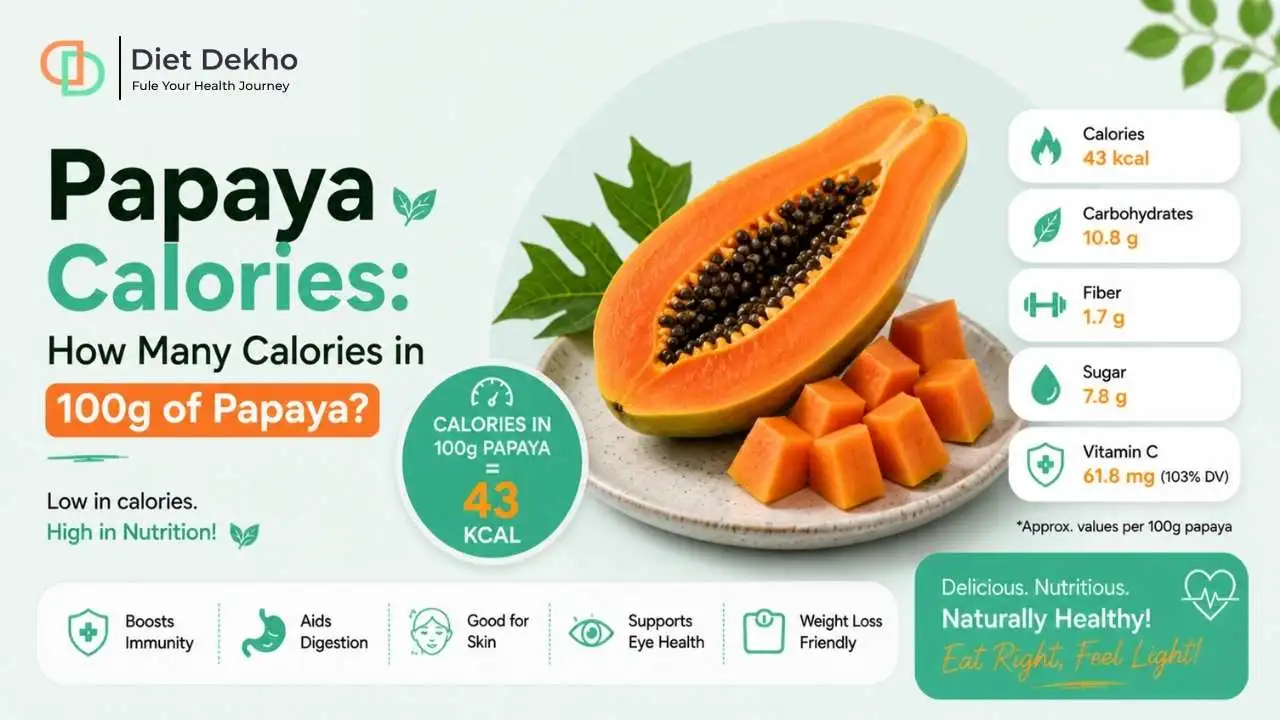
Imagine you are standing in your kitchen at 6:30 AM, the pressure cooker is whistling, and you are trying to remember if you took your sugar reading. You want to eat something that tastes good but won’t send your glucose levels on a roller coaster ride. This is exactly where understanding the calories of papaya becomes your secret weapon for a healthier, less stressful morning routine.
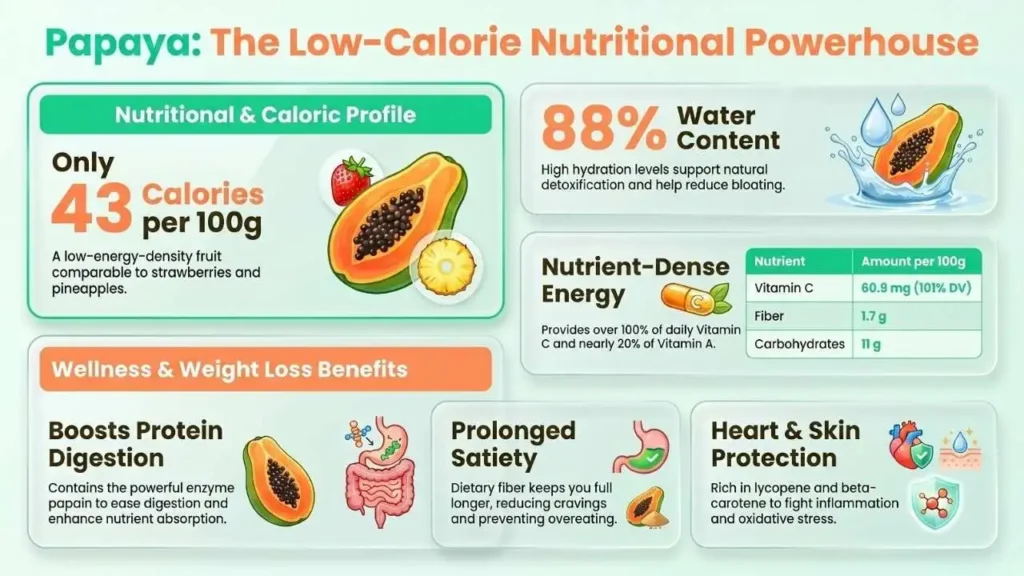
For a quick and reliable answer, a 100g serving of raw papaya contains approximately 43 calories, making it an exceptionally low-calorie, nutrient-dense choice for weight management and blood sugar control. This serving also provides about 1.7g of fiber and a massive 61mg of Vitamin C, helping you feel full and energized throughout a busy day without the heavy caloric load of traditional breakfast grains.
The Caloric Blueprint of a Tropical Superfruit
I know it is hard to find time to count every single calorie when you are juggling a career and a household. Let’s simplify this by looking at the energy profile of this vibrant fruit. When we talk about the calories of papaya, we are looking at a food that is mostly water-about 88% to be exact. This high water content is why you can eat a large portion without worrying about your waistline. The energy in a papaya comes primarily from natural sugars, but because these are packaged with fiber, your body processes them much differently than it would a spoonful of table sugar.
In the world of nutrition, we often look at the energy density of food. Papaya is considered a low-energy-density food, meaning it provides fewer calories relative to its weight. For a busy professional who might be sitting at a desk for eight hours, this is a dream come true. You get the physical sensation of a full stomach, which stops those pesky 11 AM cravings, but you haven’t overloaded your system with energy that you won’t use. What this means for your daily routine is that you can replace a medium-sized oily paratha (which can be 250 calories) with a huge bowl of papaya and still save over 150 calories while feeling even more satisfied.
The Indian Food Composition Tables (IFCT) 2017, which are the gold standard for nutritional data in India, confirm that these values are consistent across the country. Whether you buy your papaya from a local vendor in Delhi or a supermarket in Bangalore, the caloric impact remains reliably low. This consistency makes it a trustworthy staple for anyone trying to manage chronic conditions like diabetes or obesity without needing expensive, imported superfoods.
Understanding Standard Serving Sizes
Most of us don’t carry a kitchen scale in our pockets. I want to help you visualize what these numbers actually look like on your plate. If you take a standard measuring cup and fill it with one-inch cubes of ripe papaya, you are looking at about 145 grams of fruit. This single cup contains only 62 calories. Think about that for a second-an entire cup of sweet, refreshing fruit has fewer calories than a single thin slice of white bread.
| Serving Size | Weight (Grams) | Calories (kcal) |
| 100g Serving | 100 g | 43 kcal |
| 1 Cup (Diced 1 pieces) | 145 g | 62 kcal |
| 1 Cup (Mashed) | 230 g | 99 kcal |
| Small Papaya (Approx.) | 157 g | 68 kcal |
| Medium Papaya (Approx.) | 275 g | 119 kcal |
| Large Papaya (Approx.) | 781 g | 336 kcal |
| 1 Kilogram (Full fruit) | 1000 g | 390-430 kcal |
For a homemaker preparing snacks for the family, knowing that a medium papaya serves two to three people for about 40 calories each is a game-changer. It is a home-based solution that fits right into your existing shopping list. You don’t have to follow a textbook lecture on nutrition to see the value here; you just have to look at the volume on the plate versus the energy in the body.
The Mathematics of Energy in Papaya
While I promised to avoid medical jargon, a little bit of simple math can help us understand why the calories of papaya are so stable. The energy in any food is the sum of its macronutrients. In 100 grams of papaya, we have a very specific balance of carbohydrates, proteins, and fats.
Using the standard Atwater factors, we can calculate the energy content:
E = (Carbohydrates times 4) + (Protein times 4) + (Fat times 9)
For 100g of raw papaya, the values are approximately:
E = (10.82 g times 4) + (0.47 g times 4) + (0.26 g times 9)
E = 43.28 + 1.88 + 2.34 = 47.5 kcal
The small difference between the calculated 47.5 kcal and the reported 43 kcal usually comes from the way dietary fiber is handled in different nutritional databases. Since fiber is not fully digested, it contributes less energy than other carbohydrates. This is great news for you because it means your body is working harder to process the fruit than the fruit is giving you in excess energy.

Macronutrient Distribution: Why the Balance Matters
I know it is hard to keep track of fats and carbs, but let’s look at why this specific mix in papaya is so good for your heart and your waistline. The fat content in papaya is almost non-existent. At 0.26 grams per 100g, it is practically a fat-free food. For someone struggling with high cholesterol or trying to lose weight without the gym, this is a significant advantage. You are getting flavor and sweetness without the heavy saturated fats found in processed snacks.
The carbohydrate profile is also interesting. Out of the roughly 11 grams of carbs in a 100g serving, about 7.8 grams are sugars. Now, don’t let the word sugar scare you. These are natural sugars-glucose and fructose-which come with their own set of vitamins. More importantly, they are accompanied by nearly 2 grams of dietary fiber. This fiber is what makes the calories of papaya so special. It slows down the digestion of those sugars, ensuring you don’t get that sugar crash an hour after eating.
What this means for your daily routine is that papaya acts like a slow-release energy pill. Instead of the sharp spike and fall you might get from a sugary tea or a biscuit, papaya gives you a steady stream of energy. For a busy professional, this translates to better focus during that long morning meeting. For a homemaker, it means having the stamina to get through the morning chores without needing a nap before lunch.
| Macronutrient | Value per 100g | Daily Value (%DV) |
| Total Carbohydrate | 10.82 g | 4% |
| Dietary Fiber | 1.7 g | 7% |
| Total Sugars | 7.82 g | N/A |
| Protein | 0.47 g | 1% |
| Total Fat | 0.26 g | 0.3% |
| Saturated Fat | 0.08 g | 0.4% |

The Micronutrient Powerhouse: More Than Just Energy
Let’s simplify the vitamin conversation. Think of papaya not just as a fruit, but as a natural, edible multivitamin. While we are focusing on the calories of papaya, the real magic lies in what those calories carry into your bloodstream. For people who don’t have the time or interest in a 5-day-a-week gym routine, getting these nutrients through food is the most practical step you can take for your health today.
The Vitamin C Giant
Did you know that a single 100g serving of papaya provides over 100% of your daily Vitamin C needs? Specifically, it offers about 61mg to 62mg. If you eat a small papaya (157g), you are getting a massive 150% of your daily requirement. Vitamin C is not just for preventing colds; it is essential for making collagen, which keeps your skin looking young and helps your joints stay flexible. For a busy person, this is low-maintenance beauty and health care.
I know it’s hard to believe that something so simple can do so much, but Vitamin C is also a powerful antioxidant. It protects your cells from damage caused by pollution and stress. Every time you eat a bowl of papaya, you are sending a tiny army of antioxidants to repair your body while you focus on your work or your family. It is one of the easiest home-based solutions for long-term health.
Vitamin A and Eye Health
For professionals who spend hours staring at laptop screens or homemakers who are often working in varied lighting, eye health is a major concern. Papaya is rich in beta-carotene, which your body converts into Vitamin A. A 100g serving gives you about 47 micrograms of Vitamin A, which is vital for maintaining clear vision and preventing dry eyes.
The orange color of the papaya comes from these carotenoids, including lutein and zeaxanthin. These specific nutrients are known to protect the eyes from age-related damage. By incorporating this fruit into your morning routine, you are essentially giving your eyes an extra layer of protection against the digital strain of modern life.
| Vitamin | Amount per 100g | Daily Value (%DV) |
| Vitamin C | 61.2 mg | 68% – 101% |
| Vitamin A (RAE) | 47 μg | 5% |
| Beta-Carotene | 274 μg | N/A |
| Folate (B9) | 37 – 38 μg | 9% – 10% |
| Vitamin E | 0.3 mg | 2% |
| Vitamin K | 2.6 μg | 2% |
The Essential Minerals
We often forget about minerals, but they are the spark plugs of our body. Papaya is particularly rich in potassium, providing 182mg per 100g. For a non-gym audience, potassium is your best friend because it helps regulate blood pressure and prevents muscle cramps. If you find yourself feeling stiff after sitting for a long time, the potassium in papaya can help.
It also provides small but significant amounts of magnesium and calcium. Magnesium is often called the relaxation mineral because it helps soothe the nervous system and can even help you sleep better. When you look at the low calories of papaya combined with this mineral profile, it becomes clear why this fruit is so highly recommended by dietitians. It nourishes the body without over-fueling it.
| Mineral | Amount per 100g | Daily Value (%DV) |
| Potassium (K) | 182 mg | 4% – 5% |
| Magnesium (Mg) | 21 mg | 5% |
| Calcium (Ca) | 20 mg | 2% |
| Phosphorus (P) | 10 mg | 1% |
| Iron (Fe) | 0.25 mg | 3% |
| Sodium (Na) | 3 – 8 mg | 0.3% |

Papaya and Diabetes: A Safe and Sweet Solution
I know it’s hard when you are told to avoid all the things you love because of a diabetes diagnosis. The constant fear of a sugar spike can make eating feel like a chore. Let’s simplify this once and for all: you can eat papaya if you have diabetes. In fact, it might be one of the best fruits for you. The reason lies in two numbers: the Glycemic Index (GI) and the Glycemic Load (GL).
Managing the Glycemic Spike
The Glycemic Index tells us how fast a food raises blood sugar. Papaya has a medium GI, typically around 55 to 60. However, the Glycemic Load is what really matters for your daily routine. The GL takes the portion size into account. Because papaya is so high in water and fiber, a typical serving has a very low GL of about 5.5.
What this means for your daily routine is that papaya causes a gentle, slow rise in blood sugar rather than a dangerous spike. It allows you to enjoy something sweet without the guilt or the medical risk. Harvard Health and other authority sites often highlight that diets rich in such fruits are associated with better long-term blood sugar management.
Antioxidant Protection for Diabetics
Diabetes is often a condition of chronic inflammation and oxidative stress. Over time, high blood sugar can damage your blood vessels and nerves. This is where the antioxidants in papaya come into play. Flavonoids and Vitamin C help neutralize the free radicals that cause this damage.
Some research even suggests that fermented papaya preparations can help improve insulin sensitivity. While we always recommend whole fruit over supplements, the evidence is clear: the nutrients in papaya are working to protect your body from the complications of diabetes. It is a simple, home-based solution that you can start today.
| Fruit Metric | Value | Impact |
| Glycemic Index (GI) | 55 – 60 | Moderate |
| Glycemic Load (GL) | 5.5 | Low |
| Sugar per 100g | 7.8 g | Safe in moderation |
| Fiber per 100g | 1.7 g | Slows absorption |

The Gut Health Revolution: Digestion and Bloating
If you are a busy professional who often eats late or a homemaker who deals with occasional indigestion, papaya is about to become your best friend. There is a reason why your grandmother might have suggested a slice of papita after a heavy meal. It all comes down to a very special enzyme called papain.
The Power of Papain
Papain is a proteolytic enzyme, which is just a fancy way of saying it breaks down proteins. In the Indian diet, we eat a lot of proteins that can be tough on the stomach-things like paneer, pulses, and meats. Papain helps your stomach break these down much more efficiently. This reduces the time food sits in your gut, which is the main cause of that heavy, stone-in-the-stomach feeling.
Harvard-trained gastroenterologist Dr. Saurabh Sethi recently shared that papaya is one of the most effective fruits for soothing heartburn and keeping constipation in check. For a non-gym audience, improving your digestion is the fastest way to feel lighter and more energetic without having to run a marathon.
Relieving Bloating and Constipation
I know it’s hard to feel confident when you are dealing with a bloated stomach. Papaya has a natural diuretic effect and high fiber content that helps flush out excess water and waste. It essentially cleans your digestive tract. By making the calories of papaya a part of your breakfast, you are setting your digestive system up for success for the rest of the day.
What this means for your daily routine is less discomfort during work and more energy for your family in the evening. It is a practical, food-based solution for a very common and frustrating problem. No robotic medical jargon is needed to understand that a happy gut leads to a happy day.

Weight Loss for the Busy Person: The Volume Secret
Let’s be honest: most of us don’t have two hours a day to spend at the gym. This is why kitchen-based weight loss is the only sustainable way for busy people to stay fit. Papaya is the ultimate tool for this because of something called volume eating.
Feeling Full on Fewer Calories
The secret to losing weight without feeling hungry is to eat foods that take up a lot of space in your stomach but don’t add many calories to your daily total. Because the calories of papaya are so low-just 62 calories for a whole cup-you can eat a large, satisfying portion that physically fills you up.
When your stomach is full, it sends signals to your brain to stop the hunger hormones. If you compare this to a handful of nuts or a small biscuit, which might have 150 calories and leave you feeling empty, the choice is clear. Papaya lets you trick your hunger while providing your body with essential vitamins.
The Metabolism Boost
While we must be careful not to call anything a fat-burning miracle, some studies in animal models have shown that papaya juice can help reduce inflammation in fat cells and even inhibit enzymes that help the body store fat. While we need more human trials, the high water content and fiber definitely help boost your metabolic rate by keeping your system hydrated and efficient.
For someone who wants to shed a few kilos, replacing your evening tea-time snack with a bowl of papaya is one of the most effective moves you can make. It’s not about a transformative journey or leverage; it’s just a simple, practical step to a leaner you.
| Food Item | Calories per 100g | Feeling of Fullness |
| Papaya | 43 kcal | High |
| White Bread | 265 kcal | Low |
| Digestive Biscuit | 480 kcal | Very Low |
| Boiled Egg | 155 kcal | Medium |

Comparing Papaya with Other Popular Indian Fruits
When you go to the fruit market, it’s easy to get overwhelmed by all the choices. You might wonder if an apple is better than a papaya, or if the king of fruits-the mango-is too much for your diet. Let’s look at the numbers side-by-side so you can make an informed decision for your health goals.
Why Papaya Wins for Weight Loss
If your goal is to keep your calorie intake low, papaya is almost always the winner. A mango has nearly 50% more calories and twice the sugar of a papaya. While mangoes are delicious and healthy in their own right, if you are a busy person trying to manage your weight or your diabetes, papaya is the safer volume choice.
Bananas are another common breakfast staple. While they are great for a quick energy boost, they are much denser than papaya. One medium banana has about 95 to 105 calories, whereas the same weight of papaya would only be about 43 calories. What this means for your daily routine is that you can eat twice as much papaya for the same caloric cost as a banana.
| Fruit (100g) | Calories (kcal) | Sugar (g) | Fiber (g) |
| Papaya | 43 kcal | 7.8 g | 1.7 g |
| Apple (with skin) | 52 kcal | 10.4 g | 2.4 g |
| Mango | 60 kcal | 13.7 g | 1.6 g |
| Banana | 89 kcal | 12.2 g | 2.6 g |
| Grapes | 67 kcal | 16.0 g | 0.9 g |
| Guava | 68 kcal | 8.9 g | 5.4 g |
| Watermelon | 30 kcal | 6.2 g | 0.4 g |
As you can see, only watermelon is lower in calories, but it lacks the digestive enzymes and the high Vitamin C content that papaya offers. For a non-gym audience, papaya provides the best balance of low energy and high nutritional reward.

Cultural Context: Papaya in the Indian Home
In India, we have a long history with this fruit. We call it papita, and it has been part of our traditional medicine and daily meals for generations. But along with that history come some myths that I want to help you clear up. Understanding the taseer (effect) of food is important in our culture, but it’s equally important to look at the science.
The Myth of Heat and Pregnancy
I know it’s hard to ignore what our elders say, but let’s look at the facts. In India, papaya is often classified as a hot food. There is a common belief that it should be avoided during pregnancy because it can cause a miscarriage. Science actually supports a version of this: unripe (green) papaya contains high levels of latex, which can cause uterine contractions.
However, ripe papaya is generally considered safe in moderate amounts. That being said, if you are pregnant, it’s always best to be cautious and speak with your doctor. For everyone else, the heat of the papaya is actually a benefit-it’s what helps stimulate your digestion and metabolism in the morning.
A Local, Affordable Superfood
One of the best things about papaya is that it is available almost year-round in India and is usually very affordable. You don’t need to buy expensive imported berries to get your antioxidants. The calories of papaya come with a suite of nutrients that are just as powerful as any cutting-edge health food you see on social media. It is a local solution for local health challenges.

Practical Integration: How to Actually Eat More Papaya
I know it’s hard to find time for elaborate meal prep. If you’re a busy professional or a homemaker with a million things on your plate, you need solutions that take five minutes or less. Let’s look at how you can practically use the calories of papaya to your advantage every day.
The 5-Minute Breakfast Smoothie
If you’re running late for work, try this: blend one cup of ripe papaya with a little bit of water or coconut milk and a dash of cinnamon. Cinnamon is fantastic for blood sugar, and the papaya provides the fiber and vitamins. You don’t even need to add sugar because the fruit is naturally sweet. It’s a complete, low-calorie breakfast you can drink on your commute.
The Evening Office Snack
Instead of reaching for that third cup of chai and a biscuit at 4 PM, keep some diced papaya in a small container. Sprinkle it with a little black salt and roasted cumin powder. In India, we love this chaat style, and it’s actually very functional-the spices aid digestion while the fruit keeps your energy stable until you get home for dinner.
Choosing and Storing Your Papaya
I know it is frustrating when you buy a fruit and it’s either rock-hard or completely mushy.
- To Select: Look for skin that is mostly yellow with just a few streaks of green. It should feel firm but give slightly when you press it with your thumb.
- To Ripen: If you bought a green one, just put it in a brown paper bag and leave it on your kitchen counter for a day or two.
- To Store: Once it’s ripe, put it in the fridge. Cold papaya is much more refreshing and helps it last for another 3-4 days.

Scientific Deep Dive: What the Researchers Say
I want you to feel confident in these choices, so let’s look at some of the actual research from places like the National Institutes of Health (NIH) and various clinical studies. When we look at the calories of papaya, we are seeing a fruit that has been tested for its impact on real human health.
Cardiovascular Protection
Research published in PMC and highlighted by authority sites like Harvard indicates that the lycopene and Vitamin C in papaya can help prevent heart disease. These antioxidants prevent bad LDL cholesterol from oxidizing. When cholesterol oxidizes, it sticks to your artery walls. By keeping your intake of papaya consistent, you are essentially greasing the pipes of your cardiovascular system.
For a non-gym audience, this is vital. If you aren’t doing heavy cardio every day, your diet has to do the heavy lifting for your heart. Potassium also plays a role here by helping to relax your blood vessels and maintain healthy blood pressure.
Anti-Inflammatory Effects
Chronic inflammation is a silent problem for many busy people. It’s what makes you feel tired, gives you joint pain, and can lead to more serious diseases over time. Studies have shown that the enzymes and antioxidants in papaya can significantly reduce markers of inflammation in the body.
In animal studies, papaya has even been shown to reduce inflammation in fat cells. While humans are more complex, the underlying mechanism is the same: the nutrients in papaya help calm your immune system so it doesn’t overreact to stress.
| Study Focus | Key Finding | Source |
| Heart Health | Lycopene reduces oxidative stress in arteries | N/A |
| Digestion | Papain significantly aids protein breakdown | N/A |
| Weight Loss | High fiber intake predicts long-term weight success | N/A |
| Diabetes | Low GI/GL prevents blood sugar spikes | N/A |
Potential Risks and Who Should Be Careful
I want to be a supportive friend, which means being honest about when you should be careful. While papaya is a miracle for most, there are a few situations where you should pause.
Latex and Enzyme Allergies
As I mentioned before, if you are allergic to latex, you might have a cross-reaction to papaya. This is because the proteins in the fruit are similar to those in the rubber tree. If you ever feel itchy or get a rash after eating it, stop immediately and talk to your doctor.
Medication Interactions
If you are on blood thinners like warfarin, be aware that papaya can slightly increase the effect of your medication, which might lead to easier bruising. Also, if you are on medication for a thyroid condition or heart rhythm issues, it’s worth a quick chat with your physician to ensure the calories of papaya and its enzymes are a good fit for your specific prescription.
The Danger of Hypoglycemia
For my diabetic friends: because papaya is so good at helping lower blood sugar, if you are taking strong insulin or oral medications, there is a small risk that your sugar could go too low (hypoglycemia). Always monitor your readings when you start adding a new fruit to your routine. It’s about balance, not just reduction.

Frequently Asked Questions
1. Are the calories of papaya higher in very ripe fruit?
While the sugar content may feel more concentrated as the fruit softens, the actual caloric difference is minimal. A very ripe papaya might have slightly more accessible sugars, but for a 100g serving, the count remains around 43 calories. The biggest change is the flavor and the texture, not the energy impact.
2. Can I eat papaya at night?
Yes, you certainly can. Because the calories of papaya are low and it is easy to digest, it makes for a great light snack before bed. The magnesium it contains can actually help relax your muscles and prepare you for a better night’s sleep. Just keep the portion to a small bowl so you don’t have to wake up for the bathroom!
3. Are the seeds edible?
Yes, they are! They have a peppery, spicy taste. Many people in India use them as a natural remedy for gut parasites, though you should only eat a few at a time as they are very potent. They are also high in fiber, adding to the overall digestive benefits of the fruit.
4. How does papaya compare to an orange for Vitamin C?
Believe it or not, papaya often comes out on top. While an orange is famous for Vitamin C, a 100g serving of papaya provides about 61mg, which is comparable to or even slightly higher than many citrus fruits. Plus, papaya is much less acidic, making it gentler on your stomach if you suffer from acid reflux.
5. What is the best time to eat papaya for weight loss?
The best time is in the morning on an empty stomach. This allows the enzymes to work their magic on your digestive tract before you add other foods. It also helps stabilize your blood sugar right at the start of the day, which prevents cravings later on.
Conclusion: Your Small Step to a Bigger Health Goal
I know it’s hard to change your entire life overnight. But you don’t have to. Real health comes from the small, daily choices we make in our own kitchens. Understanding the calories of papaya is one of those small choices. It’s about choosing a fruit that loves you back-one that protects your heart, soothes your stomach, and keeps your blood sugar in check.
Whether you are a busy professional trying to keep your energy up or a homemaker looking after the wellness of your loved ones, papaya is a reliable, affordable, and scientifically-proven ally. You don’t need a gym membership or cutting-edge supplements. You just need a ripe papita, a sharp knife, and five minutes in the morning.
If you’re feeling overwhelmed by all the conflicting health advice out there, let us simplify things for you. You don’t have to do this alone.
Contact Us
We understand how overwhelming nutrition and weight loss information can feel. With so many opinions and confusing advice online, it’s easy to feel stuck or unsure about what to do next.
At Diet Dekho, you never have to figure it out alone. You can contact us anytime with any questions or concerns. Our expert dietitians are available 24/7 to guide, support, and help you stay on track. Whether your goal is weight loss or building healthier habits, we’re here to make the journey simpler and more sustainable for you.
Disclaimer
This blog is intended to help readers make healthier food choices. Your health should always be the top priority. Before starting any restrictive or special diet, especially if you have a medical condition or health concern, please consult a doctor or a qualified dietitian. Each body responds differently to food and lifestyle changes. Always choose what is safe and suitable for you.

Abhinav is the Founder of Diet Dekho, helping people manage weight and lifestyle health through simple, practical nutrition and personalized diet plans.