Sunita wakes up at 6:00 AM every day to the sound of her alarm in a quiet suburb of Pune. She rushes to the kitchen to prepare lunch boxes for her family while mentally checking off her to-do list for her teaching job. Like many people managing busy lives, she recently found out her blood sugar levels are creeping up. She often wonders if a protein rich diet veg is even possible without spending hours in the kitchen or eating foods she cannot recognize. Finding high-quality nutrition while juggling a household and a career is a challenge many face today.
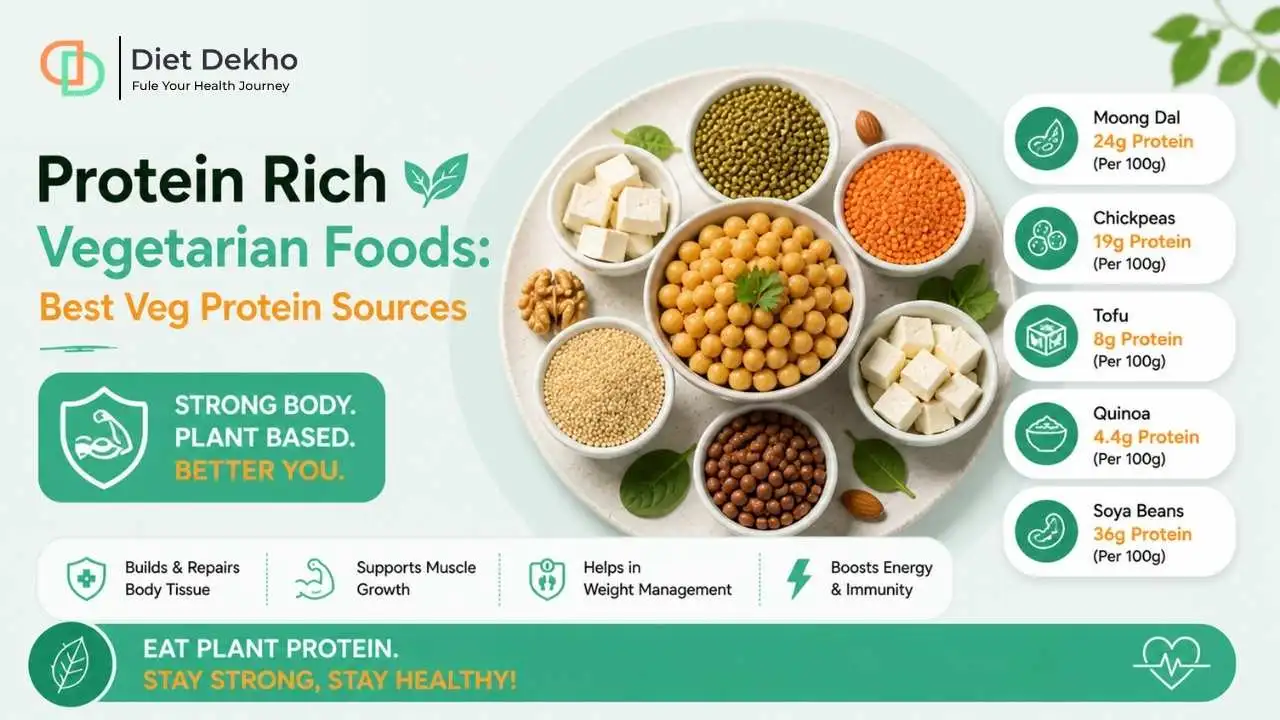
A protein rich diet veg consists of accessible Indian staples like lentils (dals), chickpeas (chana), paneer, and soya chunks. These foods provide essential amino acids when paired correctly, such as combining rice and dal. These sources stabilize blood sugar, support muscle repair, and keep you full longer, making them ideal for busy professionals and those managing diabetes.
The Modern Indian Nutritional Landscape and the Protein Gap
The state of nutrition in India has undergone a massive shift over the last few decades. We have moved from worrying about getting enough calories to worrying about the quality of those calories. While most households have enough food to eat, the balance of nutrients is often skewed toward carbohydrates. This cereal-heavy pattern is common in both rural and urban areas. Data from the National Family Health Survey (NFHS-5) shows that many Indians still struggle with protein deficiency.
| Nutritional Challenge | Percentage of Population/Children Affected | Significance |
| Child Stunting | 35.5% | Linked to chronic protein-energy malnutrition |
| Underweight Children | 32.1% | Closely tied to poor diet quality |
| Adult Obesity (Women) | 24% | Coexists with undernutrition (double burden) |
| Adult Obesity (Men) | 23% | Indicates calorie sufficiency but nutrient deficiency |
| Protein Deficiency | 70-80% | Widespread across various socioeconomic groups |
What this means for your daily routine is that simply feeling full after a meal does not mean your body has what it needs. Many of us rely on white rice or refined wheat as the main part of our plate. This provides energy but lacks the building blocks for immune resilience and metabolic health. I know it is hard to change deep-seated habits, but understanding this gap is the first step toward a healthier you.
Why Protein is the Silent Hero for Your Health
Protein is often talked about in the context of gym-goers and bodybuilders. However, it is vital for every single person, regardless of their activity level. It helps in cell regeneration and improves muscle density. For a homemaker or a teacher, protein provides the stamina to stand for hours and the mental clarity to manage complex tasks.
The National Institute of Nutrition (NIN) recently updated its guidelines in 2024. They suggest that about 56.4% of the total disease burden in India is due to unhealthy diets. By shifting toward a protein rich diet veg, we can significantly reduce the risk of chronic diseases like diabetes and heart issues. Let’s simplify how much you actually need.
Calculating Your Daily Protein Needs
It is easy to get lost in complex math, but the basic rule is quite simple. Most adults need about 0.83g of protein for every kilogram they weigh. If you weigh 60 kg, you should aim for about 50 grams of protein every day.
| Activity Level | Protein Requirement (g per kg of Body Weight) | Context |
| Sedentary | 0.83 | Office work, light household chores |
| Moderate | 1.0 – 1.2 | Regular walking, active lifestyle |
| Heavy | 1.2 – 1.5 | Manual labor or intense training |
What this means for your daily routine is that every meal needs to contribute. You cannot rely on a single bowl of dal to do all the heavy lifting. Spreading your protein intake across breakfast, lunch, and dinner helps your body absorb it better.
The Biochemical Synergy of Vegetarian Proteins
One common myth is that plant proteins are inferior because they are incomplete. It is true that many plant foods lack one or two essential amino acids. For example, rice is low in lysine but high in methionine. Dals are exactly the opposite.
When we combine these two, we create a complete protein profile. This is the beauty of the traditional Indian plate. A simple dish of khichdi or rajma-chawal provides the same quality of protein as animal sources. What this means for your daily routine is that you do not need expensive supplements. You just need smart pairings.
| Food Pairing | Missing Amino Acid in Grains | Missing Amino Acid in Pulses | Result |
| Rice + Dal | Lysine | Methionine | Complete Protein |
| Roti + Chana | Lysine | Methionine | Complete Protein |
| Idli + Sambar | Lysine | Methionine | Complete Protein |
I know it feels like a lot to remember, but your ancestors already figured this out. The ICMR recommends a 3:1 ratio of cereals to pulses to improve the protein quality of your meal. Let’s simplify this: for every three spoons of rice, try to have one big spoon of thick dal.
The Role of Bioavailability and Digestion
Not all protein you eat is absorbed. Some plant proteins have anti-nutrients that can block absorption. However, simple home methods like soaking, sprouting, and fermenting can fix this. Sprouting matki or moong increases the protein’s bioavailability and makes it easier for your gut to handle.
If you feel bloated after eating beans, try soaking them overnight and discarding the water. Adding ginger, garlic, and hing (asafoetida) to your curries also aids digestion. These small steps make a protein rich diet veg much more comfortable for your stomach.

Clinical Focus: Protein and Diabetes Management
For people like Sunita, managing blood sugar is the top priority. Research from the Harvard T.H. Chan School of Public Health shows that following a healthy plant-based diet can lower the risk of Type 2 diabetes by 23%. This is a huge finding that offers hope to many families.
The mechanism is quite interesting. Healthy plant foods like lentils and nuts improve insulin sensitivity. They also help reduce systemic inflammation. When you eat protein with fiber, it slows down the digestion of sugar. This prevents the sharp spikes that make you feel tired and hungry soon after eating.
| Diabetic-Friendly Protein | Glycemic Index (GI) | Benefit |
| Quinoa | 53 | High fiber, keeps sugar stable |
| Soy Chunks | Low | Extremely high protein, very low carb |
| Moong Dal | Low | Easy to digest, steady energy |
| Chickpeas | 28 | Low GI, high satiety |
What this means for your daily routine is that protein is your best friend in controlling cravings. Instead of a sugary biscuit with your tea, try a handful of roasted chana. It gives you the crunch you want without the sugar crash.
Fiber: The Essential Partner of Protein
In the vegetarian world, protein and fiber usually come together. This is a massive advantage for heart health. High-fiber foods like kidney beans and chickpeas help lower cholesterol levels. The 2024 NIN guidelines recommend 25-30g of fiber daily.
Choosing whole grains over refined ones is a simple way to meet this goal. For example, brown rice or millets like bajra have more fiber than white rice. This fiber acts like a broom for your digestive system and a shield for your blood sugar.

Exhaustive Guide to Vegetarian Protein Sources
Let’s look at the best foods you can find in your local market. I want to make sure you have plenty of options so you never get bored. Variety is the secret to staying on track with a protein rich diet veg.
The Power of Soy: Chunks, Tofu, and Tempeh
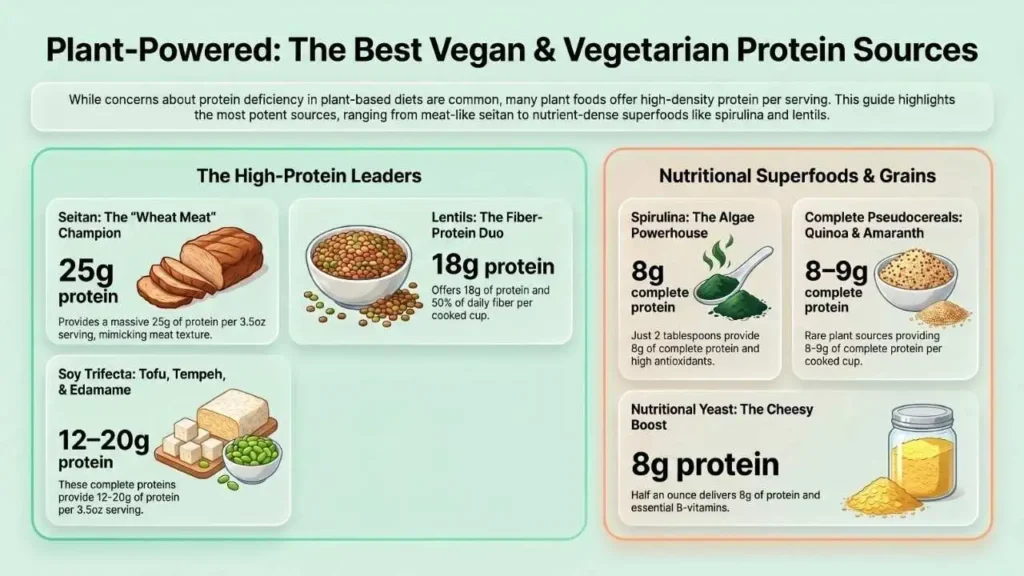
Soy is one of the few complete plant proteins. Soya chunks, often called vegetarian meat, are a nutritional powerhouse. They contain about 52% protein. They are also very affordable, making them a great choice for any budget.
| Soy Product | Protein per 100g | Best Use |
| Soya Chunks | 52g | Pulao, stir-fry, bhurji |
| Tofu | 8-10g | Stir-fry, salads, sandwiches |
| Tempeh | 19g | Tikka, wraps, curries |
| Soy Milk | 3-4g | Shakes, tea alternative |
What this means for your daily routine is that you can easily boost a standard meal. Adding 25g of soya chunks to your vegetable pulao adds about 13g of protein. That is a significant jump for very little extra effort.
Dals and Legumes: The Foundations
Indians eat dal daily, but we often don’t eat enough of it. Toor, moong, masoor, and urad are excellent sources of protein. Each cooked cup provides about 7g to 9g of protein.
Chickpeas (chana) and kidney beans (rajma) are even more protein-dense. A cup of cooked chickpeas has about 15g of protein. These are fantastic for keeping you full through a long afternoon of work.
| Pulse/Legume | Protein (per cooked cup) | Key Benefit |
| Lentils (Dal) | 18g (per cup) | Classic, versatile, rich in folate |
| Chickpeas (Chana) | 15g | Supports digestion and energy |
| Rajma | 15g | High in magnesium and antioxidants |
| Lobia (Black-eyed peas) | 13g | Easy to digest, good for heart |
I know it is tempting to just have a thin dal soup. To get the real benefits, try making your dal thicker. Use more dal and less water. This simple change can double your protein intake in a single meal.
Dairy: The Quick and Easy Source
If you consume dairy, paneer and curd are your best friends. Paneer is a favorite in Indian households and delivers about 18g of protein per 100g. It is rich in calcium and phosphorus, which are great for your bones.
Greek yogurt, or hung curd, is another excellent option. It is thicker and has more protein than regular dahi-about 10g per serving. It also provides probiotics, which keep your gut healthy and your immunity strong.
| Dairy Product | Protein Content | Suggested Serving |
| Paneer | 18-20g per 100g | 50-70g per meal |
| Greek Yogurt | 10g per 100g | 1 bowl |
| Regular Curd | 3-4g per 100g | 1 bowl |
| Milk | 8g per 250ml | 1 glass |
What this means for your daily routine is that dairy can be a quick fix. If you are too busy to cook, a bowl of curd with some flaxseeds or a few cubes of raw paneer can bridge the gap until your next meal.
Millets and Grains: Moving Beyond White Rice
The 2024 ICMR guidelines suggest that 50% of your cereal intake should come from whole grains. Millets like ragi, bajra, and jowar are nutritional goldmines. They have a lower glycemic index than white rice, which is crucial for managing diabetes.
Quinoa and amaranth (rajgira) are also gaining popularity. Quinoa is a complete protein and contains about 8g to 9g of protein per cup. Amaranth is gluten-free and very rich in iron.
| Grain/Millet | Protein per cooked cup | Best for |
| Quinoa | 8-9g | Substitutes for rice |
| Amaranth | 9g | Porridge or rotis |
| Ragi | 7g | Anemia and bone strength |
| Bajra | 6g | Long-lasting energy |
| Jowar | 8-10g | Blood sugar regulation |
What this means for your daily routine is that you can swap your regular roti for a jowar or bajra bhakri. These grains are more filling, so you might find you need to eat less to feel satisfied.

Maharashtrian Traditional Solutions
Since many busy professionals live in cities like Pune, let’s look at local solutions. Traditional Maharashtrian food is actually very well-designed for a protein rich diet veg. Dishes like matki usal and thalipith are perfect examples of balanced nutrition.
The Magic of Matki and Moong
Sprouted matki (moth beans) is a powerhouse. It is low in fat but high in protein and fiber. A bowl of matki usal provides about 13g of protein. Because it is sprouted, it doesn’t cause the same gas issues that some other beans might.
| Maharashtrian Dish | Key Protein Source | Why it’s Good |
| Matki Usal | Sprouted Moth Beans | High fiber, low GI |
| Pithla | Besan (Gram Flour) | Quick to make, decent protein |
| Thalipith | Multigrain Flour | Slow energy release |
| Danyachi Usal | Peanuts | Healthy fats and protein |
I know life in Pune can be hectic, but these dishes are surprisingly quick. You can sprout the beans over the weekend and store them in the fridge. On a busy Tuesday evening, a matki usal takes only 15 minutes to cook.
Millets in the Marathi Kitchen
Jowar and bajra are staples in Maharashtra for a reason. Jowar contains phytochemicals that help regulate how quickly sugar enters your blood. Pairing jowar roti with a baingan bharta or a dal creates a meal that is both comforting and scientifically sound for diabetes.

Meal Prepping for Busy Professionals and Homemakers
I know it is hard to find time to cook fresh every single day. The secret to maintaining a protein rich diet veg is preparation. If you have the right ingredients ready, you are much less likely to order unhealthy food.
The Weekend Strategy
Use your Sunday afternoon to do the heavy lifting. Chop your vegetables, boil your chickpeas, and prepare your sprouts. Having boiled rajma or chana in the fridge means you can toss together a salad or a quick curry in minutes.
- Batch Cook Grains: Cook a big batch of quinoa or brown rice. They stay good in the fridge for 2-3 days.
- Homemade Paneer: Making paneer at home is cheaper and ensures it is fresh. 4 liters of milk can give you about 600g of paneer.
- Nutrient Bowls: Think of your lunch as a bowl. Start with a grain, add a protein (tofu/paneer), and top with plenty of vegetables.
Portable Lunch Ideas for the Office
A high-protein lunch keeps your brain sharp and prevents the 3:00 PM energy crash. If your office doesn’t have a microwave, focus on salads or wraps.
- Sprouted Moong Salad: Mix sprouts with pomegranate, cucumber, and a bit of lemon. It stays fresh for hours.
- Paneer Bhurji Wraps: Use multigrain rotis to wrap some spicy paneer bhurji. It is easy to eat and very filling.
- Soya Chunk Pulao: This is a great vegetarian meat option that holds its flavor well in a lunchbox.
| Lunch Idea | Protein Content (approx) | Convenience Level |
| Moong Salad | 15-18g | No heating required |
| Paneer Bhurji + Roti | 20-22g | Microwave friendly |
| Dal Palak + Quinoa | 18g | Best for sustained energy |
What this means for your daily routine is that you can stop relying on canteen snacks. A little planning goes a long way in keeping your health on track.

Budgeting for Protein: 100g a Day on a Small Budget
There is a common belief that a protein rich diet veg is expensive. However, some of the best sources are actually the cheapest. Soya chunks, peanuts, and seasonal pulses are very budget-friendly.
| Budget Protein Source | Cost per Serving | Protein per Serving |
| Soya Chunks | ₹10 for 50g | 26g |
| Peanuts | ₹5 for 25g | 7g |
| Lentils (Dal) | ₹10 per serving | 15g |
| Curd/Buttermilk | ₹10 per serving | 8-10g |
A daily protein goal of 100g can be met for as little as ₹150 to ₹180. This includes both vegetarian and non-vegetarian options, but for vegetarians, the focus remains on soya, paneer, and dals. I know it’s hard to stay on budget, but choosing local, seasonal foods is the best way to save money while eating well.

Debunking Common Myths About Vegetarian Protein
In my 10 years of experience, I have heard many myths that stop people from reaching their goals. Let’s clear these up once and for all.
Myth 1: You can only get enough protein from meat.
The truth is that many legumes and pulses have as much protein as meat when measured by weight. Soya chunks actually have more protein per 100g than chicken or fish.
Myth 2: Plant proteins are incomplete and useless.
While some are incomplete, the traditional Indian habit of mixing grains and pulses solves this. You don’t need all amino acids in one bite; you just need them in the same day.
Myth 3: Too much protein will damage your kidneys.
For a healthy person, a high-protein diet is perfectly safe as long as you stay hydrated. This concern mostly applies to people who already have advanced kidney disease.
Myth 4: Protein is only for building muscle.
Protein is essential for your immune system, your skin, your hair, and your hormones. Even if you never step foot in a gym, your body needs it to function.

7-Day Sample Meal Plan for Busy Lives
Let’s put all this into practice. This plan is designed to be simple, using ingredients you can find in any Indian kitchen.
| Day | Breakfast | Lunch | Snack | Dinner |
| Mon | 2 Moong Dal Chillas | Chickpea Curry + 2 Rotis | Roasted Chana | Paneer Bhurji + 1 Roti |
| Tue | Oats Upma with Veggies | 2 Jowar Rotis + Mixed Dal | Sprouts Chaat | Lauki Kofta (Baked) + 1 Roti |
| Wed | Paneer Paratha + Curd | Quinoa Khichdi + Curd | Mixed Nuts (Almonds/Walnuts) | Soya Chunk Curry + 1 Roti |
| Thu | Vegetable Poha + Peanuts | Brown Rice + Dal + Veggies | 1 Glass Buttermilk | 2 Bajra Rotis + Baingan Bharta |
| Fri | 2 Besan Chillas | Tofu Curry + Cabbage Sabzi | Sprouts Salad | 1 Cup Dal + Brown Rice |
| Sat | Ragi Porridge | 2 Jowar Rotis + Chole | Roasted Makhana | Tofu Bhurji + 2 Rotis |
| Sun | Moong Dal Chilla | Rajma + Brown Rice | 1 Fruit + 2-3 Almonds | Mixed Veg Curry + 2 Ragi Rotis |
What this means for your daily routine is that you have a map. You don’t have to follow it perfectly every day, but having a plan reduces decision fatigue. It keeps you from grabbing a biscuit when you are tired.
Practical Steps to Start Today
I know it feels overwhelming to change everything at once. Let’s simplify this into three small steps you can take today.
- Add one protein to every meal: Whether it is a spoonful of seeds on your breakfast or a small bowl of curd with lunch, start small.
- Swap your afternoon snack: Replace your chai-biscuit habit with roasted peanuts or makhana.
- Upgrade your grain: Try mixing a bit of jowar or bajra into your regular wheat flour.
Every sentence in this guide is a practical step for you. You don’t need a textbook lecture; you just need to know which dal to buy and how to cook it. Your journey to a healthier, more energetic life starts with the very next thing you eat.

Frequently Asked Questions (FAQs)
How much protein should a diabetic include in a protein rich diet veg?
A person with diabetes should aim for about 0.8g to 1g of protein per kilogram of body weight. Protein helps control blood sugar by slowing down the digestion of carbohydrates and improving insulin response.
What are the best low-cost sources for a protein rich diet veg?
Soya chunks, peanuts, lentils (dals), and chickpeas are the most affordable options. Soya chunks provide 52g of protein per 100g and are very cheap, making them a must-have for budget-friendly healthy eating.
Can I get enough protein on a protein rich diet veg without supplements?
Absolutely. Most people can meet their requirements through whole foods like paneer, soy, lentils, and nuts. Supplements are generally only necessary for athletes or those with specific medical needs.
Which Maharashtrian foods are best for a protein rich diet veg?
Sprouted matki usal, thalipith (multigrain bread), and jowar bhakri are excellent. These traditional foods are high in fiber and protein, which help manage weight and blood sugar effectively.
Why is a protein rich diet important for busy professionals?
Protein provides sustained energy and prevents the brain fog that comes after heavy carb meals. It keeps you satiated longer, reducing the urge to snack on unhealthy office treats during the afternoon crash.
Conclusion
I know it is hard to find time for your health when everyone else depends on you. But remember, you cannot pour from an empty cup. Shifting toward a protein rich diet veg is one of the most loving things you can do for yourself and your family. It doesn’t require cutting-edge technology or a transformative journey-it just requires a few more lentils and a little less white rice.
Let’s simplify this together. You have the knowledge, the list of foods, and a plan to follow. Start with just one small change tomorrow morning. Your body will thank you for the extra support.
Need a personalized plan for your health?
Contact Us
We understand how overwhelming nutrition and weight loss information can feel. With so many opinions and confusing advice online, it’s easy to feel stuck or unsure about what to do next.
At Diet Dekho, you never have to figure it out alone. You can contact us anytime with any questions or concerns. Our expert dietitians are available 24/7 to guide, support, and help you stay on track. Whether your goal is weight loss or building healthier habits, we’re here to make the journey simpler and more sustainable for you.
Disclaimer
This blog is intended to help readers make healthier food choices. Your health should always be the top priority. Before starting any restrictive or special diet, especially if you have a medical condition or health concern, please consult a doctor or a qualified dietitian. Each body responds differently to food and lifestyle changes. Always choose what is safe and suitable for you.

Abhinav is the Founder of Diet Dekho, helping people manage weight and lifestyle health through simple, practical nutrition and personalized diet plans.