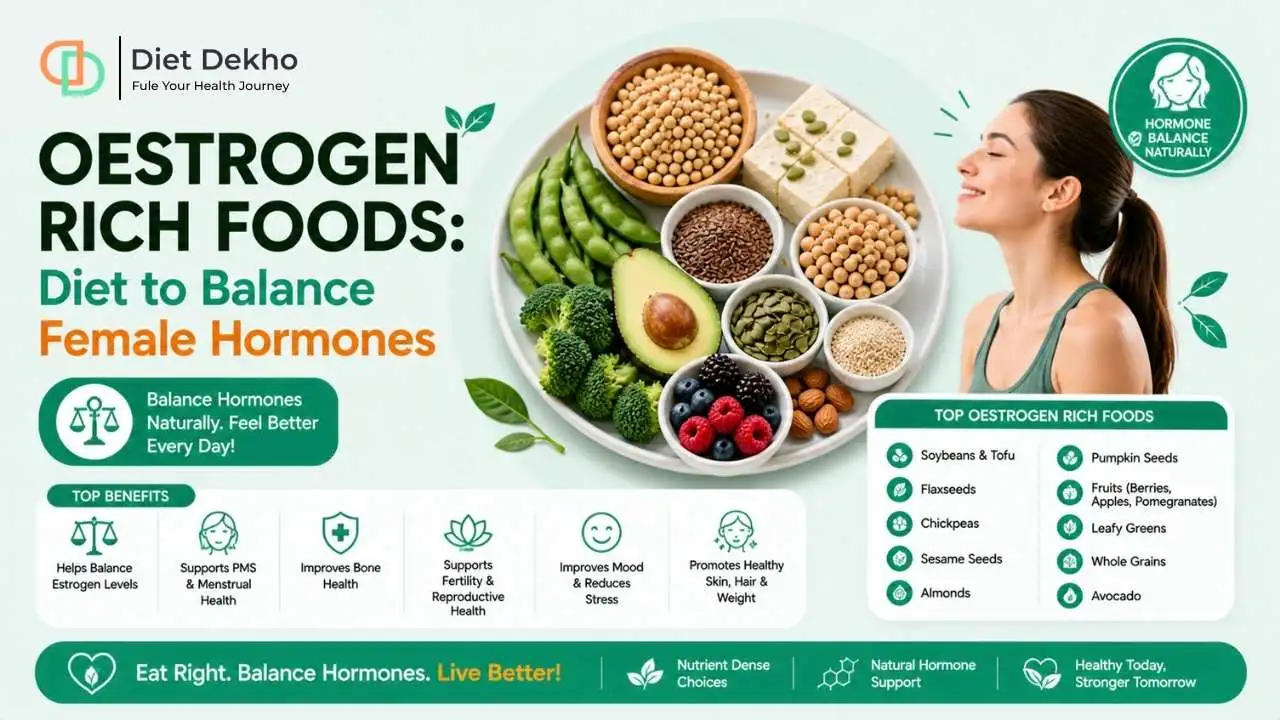
The experience of hormonal fluctuations often feels like a radio station stuck between two frequencies, creating static in daily energy and mood. For many, finding the right food rich in oestrogen is the first step toward clearing that noise and reclaiming a sense of metabolic balance and vitality.
A food rich in oestrogen, primarily containing phytoestrogens like isoflavones and lignans, includes soybeans, flaxseeds, sesame seeds, chickpeas, and cruciferous vegetables. These plant compounds naturally mimic or balance oestrogen levels in the female body, supporting bone density, cardiovascular health, and symptom relief during menopause and PCOS transitions when consumed as part of a balanced diet.
The Biological Architecture of Estrogen and Its Systemic Influence
Estrogen represents a class of steroid hormones that function as the primary architects of female physiological development and metabolic regulation. While the ovaries serve as the principal site of synthesis during the reproductive years, the adrenal glands and adipose tissue also contribute to the total circulating pool. The systemic reach of estrogen extends far beyond the reproductive tract, influencing the cardiovascular system, musculoskeletal integrity, and neurocognitive functions. Within the brain, estrogen modulates hypothalamic nuclei that control critical processes such as food intake, energy expenditure, and the distribution of white adipose tissue.
The hormone exists in three primary biological forms, each dominating different stages of a woman’s life cycle. Estradiol, chemically identified as 17-beta-oestradiol or E2, is the most potent form during the reproductive years and is responsible for regulating the menstrual cycle and maintaining bone density. Following the menopausal transition, the ovaries cease significant production, and Estrone (E1) becomes the predominant form, though it possesses significantly less biological activity. During pregnancy, the placenta produces Estriol (E3), which peaks in the third trimester to support fetal development and uterine growth.
The decline of these hormones, particularly during menopause, initiates a cascade of metabolic shifts. Estrogen deficiency is strongly linked to an increase in intra-abdominal body fat and a reduction in resting metabolic rate. At the cellular level, estrogen signaling through receptors like ERalpha and ERbeta is involved in maintaining insulin sensitivity and preventing the accumulation of lipids in the liver and skeletal muscle. When this signaling is disrupted, the risk for metabolic syndrome, type 2 diabetes, and cardiovascular disease increases significantly.

The Epidemiological Burden of Hormonal Imbalance in India
The prevalence of hormonal disorders among Indian women has reached a critical threshold, necessitating targeted nutritional interventions. Research conducted by the ICMR PCOS Task Force across a diverse community-dwelling population of 8,993 Indian women revealed that the national prevalence of Polycystic Ovary Syndrome (PCOS) ranges from 7.2% to 19.6% depending on the diagnostic criteria applied. The study identified that phenotype C and phenotype D are the most common manifestations in the Indian demographic, often accompanied by severe metabolic aberrations.
| Metabolic Indicator in Indian PCOS Patients | Prevalence Percentage |
| Dyslipidemia | 91.9% |
| Obesity | 43.2% |
| Nonalcoholic Fatty Liver Disease (NAFLD) | 32.9% |
| Metabolic Syndrome | 24.9% |
| Hypertension | 8.3% |
In addition to PCOS, thyroid dysfunction presents a significant challenge. National Family Health Survey (NFHS-V) data indicates that self-reported goitre or thyroid disorders have risen to 2.9% among women. This increase is particularly pronounced in urban areas and among women in higher wealth quintiles, suggesting a strong correlation between lifestyle shifts and endocrine disruption. Regional data highlights that states like Kerala (8,696 per 100,000) and Jammu and Kashmir (6,809 per 100,000) report the highest incidence rates, while the transition from iodine deficiency to iodine replete status in India is hypothesized to have spurred autoimmune thyroid dysfunctions.
Furthermore, nutritional deficiencies exacerbate these hormonal imbalances. Approximately 55% of Indian women of reproductive age suffer from low levels of essential nutrients, specifically iron, Vitamin D, and Vitamin B12. These gaps in nutrition contribute to worsened premenstrual syndrome (PMS) symptoms and irregular menstrual cycles, which are increasingly common among younger populations who consume high amounts of refined carbohydrates and processed snacks.

Mechanisms of Phytoestrogens and Estrogen Receptor Interaction
Phytoestrogens are plant-derived dietary compounds that possess a structural similarity to 17-beta-oestradiol, allowing them to interact with the human endocrine system. This interaction is primarily mediated through their ability to bind to estrogen receptors, ERalpha and ERbeta. Unlike synthetic hormones, phytoestrogens often demonstrate a higher affinity for ERbeta, which is predominantly located in the intestinal mucosa, bone, and vascular endothelium, where it exerts protective and anti-proliferative effects.
The biological response to phytoestrogens is dual-natured, acting as both weak agonists and antagonists. In a high-estrogen environment, such as the reproductive years, phytoestrogens compete with endogenous estrogen for receptor sites, effectively blocking stronger hormonal signals and potentially reducing the risk of hormone-sensitive cancers. Conversely, in the low-estrogen environment of menopause, these compounds act as weak estrogens, providing sufficient signaling to alleviate vasomotor symptoms like hot flashes and night sweats.
| Phytoestrogen Class | Primary Food Sources | Mechanism of Action |
| Isoflavones | Soybeans, Chickpeas, Lentils | High affinity for ERbeta; improves glycemic control. |
| Lignans | Flaxseeds, Sesame, Whole Grains | Metabolized into enterolignans by gut bacteria. |
| Coumestans | Alfalfa sprouts, Bean sprouts | Supports bone density and mineralization. |
| Stilbenes | Red grapes, Blueberries | Activates Sirt1 and antioxidant pathways. |
The conversion of these compounds into bioactive metabolites is heavily dependent on the health of the intestinal microflora. For instance, plant lignans like pinoresinol and secoisolariciresinol are converted into the enterolignans enterodiol and enterolactone by specific gut bacteria. This highlights the necessity of maintaining gut health to maximize the benefits of any food rich in oestrogen.

Soy and Legumes: The Gold Standard for Isoflavones
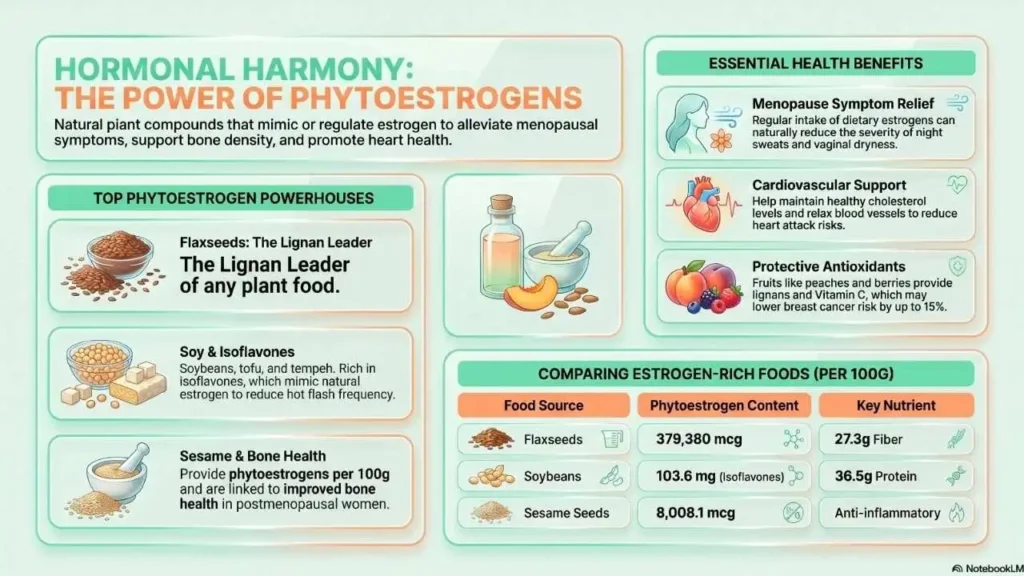
Soybeans are uniquely concentrated in isoflavones, primarily genistein and daidzein, making them the most widely studied food rich in oestrogen. In the Indian diet, soy can be integrated through various forms, ranging from traditional fermented products like miso and tempeh to versatile staples like tofu and soy milk. These foods provide a complete protein profile, essential for maintaining muscle mass during the menopausal transition when sarcopenia becomes a risk.
Clinical evidence supports the safety and efficacy of soy consumption. Population studies in Asian countries, where soy intake is typically one to two servings daily, consistently show lower rates of breast and prostate cancers. Furthermore, isoflavones have been shown to improve cardiovascular risk markers and glycemic control in postmenopausal individuals.
| Soy Product | Isoflavone Content (mg per serving) | Serving Size |
| Miso | 59 mg | 1/2 cup |
| Soybeans (Boiled) | 47 mg | 1/2 cup |
| Tempeh | 37 mg | 3 ounces |
| Soy Milk | 30 mg | 8 ounces |
| Tofu | 20 mg | 3 ounces |
Despite historical concerns, current research clarifies that soy does not raise breast cancer risk and may, in fact, lower it by blocking more potent endogenous estrogens from attaching to breast cells. The American Heart Association and major cancer research institutions indicate that whole soy foods are safe for most individuals, though they recommend caution regarding highly processed soy isolates found in some protein supplements. More detailed information on soy’s health impacts can be found through resources at Harvard Health and the National Institutes of Health.

Seeds and Nuts: The Lignan Powerhouses
Seeds represent a highly accessible and nutrient-dense way to support hormonal health. Flaxseeds are the richest known source of lignans, containing concentrations roughly 800 times higher than other plant foods. These seeds must be ground to be adequately digested and their nutrients absorbed. Beyond their lignan content, flaxseeds provide alpha-linolenic acid (an omega-3 fatty acid) and significant amounts of fiber, which helps regulate blood sugar and supports the excretion of excess hormones through the digestive tract.
Sesame seeds, or til, are a traditional staple in Indian cuisine and are particularly effective for postmenopausal women. Studies have shown that consuming 50 grams of sesame seed powder daily for five weeks can increase estrogen activity and improve blood lipid profiles. They are also excellent sources of calcium, magnesium, and zinc, all of which are critical for bone health and progesterone production.
| Seed Type | Key Phytoestrogen | Secondary Nutrients |
| Flaxseeds | Lignans | Omega-3, Fiber |
| Sesame Seeds | Lignans | Calcium, Zinc, Vitamin E |
| Pumpkin Seeds | Coumestans | Zinc, Magnesium |
| Sunflower Seeds | Coumestans | Healthy Fats, Vitamin E |
Nuts such as pistachios, walnuts, and almonds also contribute to the total phytoestrogen intake. Walnuts are specifically noted for their high omega-3 content, which helps reduce the inflammation associated with menstrual cramps and PCOS. Cashews are rich in magnesium, which is essential for combating the brain fog and sleep disturbances often reported during perimenopause.

Cruciferous Vegetables and the Metabolism of Estrogen
Vegetables from the Brassicaceae family, including broccoli, cauliflower, cabbage, and kale, provide a unique mechanism for hormonal balance. They contain indole-3-carbinol, a compound that modulates estrogen metabolism by favoring the production of good estrogen metabolites over those that promote cell proliferation and cancer growth. Regular consumption of these vegetables assists the liver in its detoxification processes, which is vital for clearing excess hormones and managing symptoms of PMS and estrogen dominance.
| Cruciferous Vegetable | Key Phytoestrogen | Health Benefit |
| Broccoli | Secoisolariciresinol | Anti-cancer, fiber-rich |
| Cabbage | Coumestrol | Improves bone density |
| Cauliflower | Secoisolariciresinol | Supports liver detox |
| Kale | Lignans | High in Vitamin K and antioxidants |
For busy professionals and homemakers, these vegetables are easily incorporated into traditional Indian dishes like sabzis or parathas. Their high fiber content also aids in stabilizing blood sugar levels, a critical factor for the 24.9% of Indian women with PCOS who also suffer from metabolic syndrome.

Traditional Indian Superfoods and the Ayurvedic Approach
Ayurveda views hormonal health through the lens of tissue rejuvenation and the balance of vital energies. Traditional Indian medicine has long utilized Rasayana therapies to delay degenerative changes and support vitality.
Shatavari and Ashwagandha: The Female Adaptogens
Shatavari (Asparagus racemosus) is the most revered herb for the female reproductive system in Ayurveda. It contains steroidal saponins that support natural estrogen production and act as a galactagogue for lactating mothers. Clinical validation by the Ministry of Ayush and CCRAS focuses on Shatavari’s role in alleviating menopausal discomfort and restoring hormonal stability.
Ashwagandha is an adaptogen that primarily targets the hypothalamic-pituitary-adrenal (HPA) axis. By regulating cortisol production, Ashwagandha helps prevent the hormonal hijack where chronic stress depletes the precursors needed for sex hormone synthesis. This is particularly relevant for Indian women facing high levels of urban stress, where cortisol-induced insulin resistance often worsens PCOS symptoms.
Moringa and Amla: The Modern Superfoods
Moringa, or drumstick, is frequently termed the miracle tree in Indian health circles. It is exceptionally rich in iron and Vitamin C, which are necessary for blood health and hormonal metabolic pathways. For women with PCOS and thyroid issues, moringa supports detoxification and reduces systemic inflammation. Amla (Indian gooseberry) provides a concentrated source of antioxidants that nourish the adrenal glands and help regulate the endocrine system.

The Role of Millets and Whole Grains in Glycemic Control
Given that many hormonal imbalances are rooted in insulin resistance, the choice of carbohydrates is fundamental. Traditional Indian millets like Ragi (Finger Millet), Bajra (Pearl Millet), and Jowar (Sorghum) offer a low glycemic index and high fiber content compared to white rice and refined flour.
| Millet Type | Glycemic Index (GI) | Nutritional Highlight |
| Ragi | 35 | High calcium and iron |
| Jowar | Low to Moderate | Gluten-free, rich in antioxidants |
| Bajra | 55 | High protein and fiber |
| Foxtail Millet | Low | Rich in magnesium |
These grains are not merely poor people’s food as once perceived; they are ancestral superfoods that stabilize blood sugar levels. Stable insulin levels prevent the ovaries from overproducing testosterone, thereby reducing symptoms like hirsutism (unwanted hair growth) and acne in PCOS patients. Wheat bran is another significant source of lignans and can be added to regular flour to increase the phytoestrogen content of daily rotis.

Strategic Spices and Herbs: The Metformin of Nature
Common Indian spices contain bioactive compounds that mimic the action of modern pharmaceuticals. Cinnamon, for instance, has been shown to reduce fasting glucose levels and improve insulin sensitivity by up to 20%, earning it the nickname nature’s metformin. Turmeric, specifically its active compound curcumin, reduces inflammatory markers by 25-30% and supports liver detoxification, which is essential for hormone clearance.
Fenugreek seeds (methi) are traditionally used to improve glucose tolerance and regulate menstrual cycles. Soaking these seeds overnight and consuming them in the morning is a common and effective practice for managing insulin resistance. Spearmint tea is another targeted intervention, proven to reduce free testosterone levels by up to 30% in women with hirsutism.

Metabolic Reprogramming: Insulin Resistance and Weight Management
For postmenopausal women, accelerated weight gain-predominantly central adiposity-is driven by a declining resting metabolic rate and an unfavorable redistribution of fat. This transition amplifies the risk of insulin resistance and metabolic syndrome. Effective dietary frameworks must therefore prioritize protein and fiber to maintain lean muscle mass and prevent sarcopenia.
Current evidence-based guidelines suggest a protein intake of 1.1-1.5 grams per kilogram of body weight for postmenopausal women. High-quality sources include legumes, lean meats, and dairy. Furthermore, the Fat First rule-consuming healthy fats like almonds or avocados before carbohydrates-helps reduce the speed of gastric emptying and prevents the sharp glucose spikes that drive hormonal disruption.
| Nutrient | Recommended Intake | Key Source |
| Calcium | 1,200 mg | Dairy, Leafy Greens, Ragi |
| Vitamin D | 800-2,000 IU | Sunlight, Fatty Fish, Eggs |
| Magnesium | 320 mg | Nuts, Seeds, Whole Grains |
| Fiber | 25-30g | Whole Grains, Vegetables |
Practical Dietetic Hacks for the Modern Lifestyle
Navigating a busy professional or domestic schedule requires smart cooking methods rather than restriction. The traditional Indian thali already provides a blueprint for hormonal wellness when balanced correctly, with 50-60% complex carbohydrates, 15% protein, and 20-30% healthy fats.
10-Minute Estrogen-Rich Snack Options
- Nutty Power Bites: A combination of dates, ground flaxseeds, and walnuts provides iron, lignans, and healthy fats to stabilize mid-afternoon energy crashes.
- Roasted Makhana (Fox Nuts): High in magnesium and protein, these are superior alternatives to processed chips for managing cortisol and insulin.
- Sprouts Chaat: Combining moong dal sprouts with chopped onions, tomatoes, and lemon juice offers a protein bomb rich in folate and Vitamin C.
- Besan Chila Bites: Chickpea flour pancakes are portable, high in fiber, and keep blood sugar steady throughout the morning.
The Circadian Rhythm of Eating
Timing is as critical as content. Aligning meals with the body’s internal clock supports hormonal harmony. Eating earlier dinners bridges the gap between metabolic health and hormonal rhythm, allowing cortisol levels to fall and melatonin-the hormone that protects egg quality-to rise. This practice also aids in liver detoxification, as the body can focus on cleanup rather than active digestion during sleep.
Clinical Considerations and Safety Profiles
While a diet rich in food rich in oestrogen is beneficial for most, individual variation is significant. The effectiveness of phytoestrogens depends on age, health status, and the specific gut microflora of the consumer. For individuals with a history of estrogen-sensitive cancers, it is imperative to consult a healthcare provider, although population studies generally support the protective nature of dietary soy and lignans.
Furthermore, while these foods act as powerful hormone boosters, they cannot replace medical treatment for diagnosed conditions like severe hypothyroidism or clinical infertility. A collaborative approach involving a registered dietitian and a physician ensures that nutritional interventions complement medical protocols safely.

Conclusion: Synthesizing Nutritional Strategies for Balance
Hormonal balance in the modern Indian context requires a dual approach: reintegrating ancestral wisdom through millets and Ayurvedic herbs while applying contemporary science regarding insulin sensitivity and phytoestrogen mechanisms. For the busy professional or homemaker, the path to balance does not lie in extreme restriction but in consistent, small swaps-choosing Ragi over white rice, adding flaxseeds to a smoothie, or opting for a fat-first meal structure.
The prevalence of PCOS and thyroid issues in India underscores a systemic need for better metabolic health, which starts with a diet high in fiber, rich in plant-based estrogens, and low in refined sugars. By viewing food as a targeted tool for self-care rather than just fuel, women can navigate the various transitions of life-from menstruation to menopause-with vitality and metabolic resilience.
Frequently Asked Questions
What is the best food rich in oestrogen for females?
Soybeans and ground flaxseeds are the most potent sources. Soy contains isoflavones like genistein, while flaxseeds are the richest dietary source of lignans. Both compounds help mimic and balance natural oestrogen levels to support bone and heart health.
Can diet alone fix a hormonal imbalance?
While a diet high in phytoestrogens and fiber can significantly improve symptoms of PCOS and menopause, it should be part of a holistic approach including stress management and adequate sleep. For diagnosed medical conditions, dietary changes should support, not replace, medical treatment.
How much soy is safe to consume daily?
Most experts recommend one to two servings of whole soy foods daily, such as half a cup of edamame or 100g of tofu. This provides roughly 25-50mg of isoflavones, which is associated with reduced cancer risk and improved heart health.
Are there specific Indian foods for menopause?
Yes. Traditional Indian superfoods like Shatavari, Ragi (finger millet), and sesame seeds are highly effective. Shatavari supports oestrogen production, while Ragi provides the calcium needed to combat post-menopausal bone density loss.
Start your personalized hormone-balancing journey today:
Contact Us
We understand how overwhelming nutrition and weight loss information can feel. With so many opinions and confusing advice online, it’s easy to feel stuck or unsure about what to do next.
At Diet Dekho, you never have to figure it out alone. You can contact us anytime with any questions or concerns. Our expert dietitians are available 24/7 to guide, support, and help you stay on track. Whether your goal is weight loss or building healthier habits, we’re here to make the journey simpler and more sustainable for you.
Disclaimer
This blog is intended to help readers make healthier food choices. Your health should always be the top priority. Before starting any restrictive or special diet, especially if you have a medical condition or health concern, please consult a doctor or a qualified dietitian. Each body responds differently to food and lifestyle changes. Always choose what is safe and suitable for you.

Abhinav is the Founder of Diet Dekho, helping people manage weight and lifestyle health through simple, practical nutrition and personalized diet plans.