Do you remember the comforting scent of a fresh, puffing chapati filling your childhood kitchen? For many of us, that simple flatbread is more than just a side dish; it is the heart of every home-cooked meal. However, if you are currently managing diabetes or trying to lose weight, you might feel a bit of carb-guilt every time you reach for one. I know it’s hard to find time to research every nutrient, but understanding the nutrition in roti is the first step toward reclaiming your plate without losing your tradition. Let’s simplify this together so you can enjoy your meals with confidence.
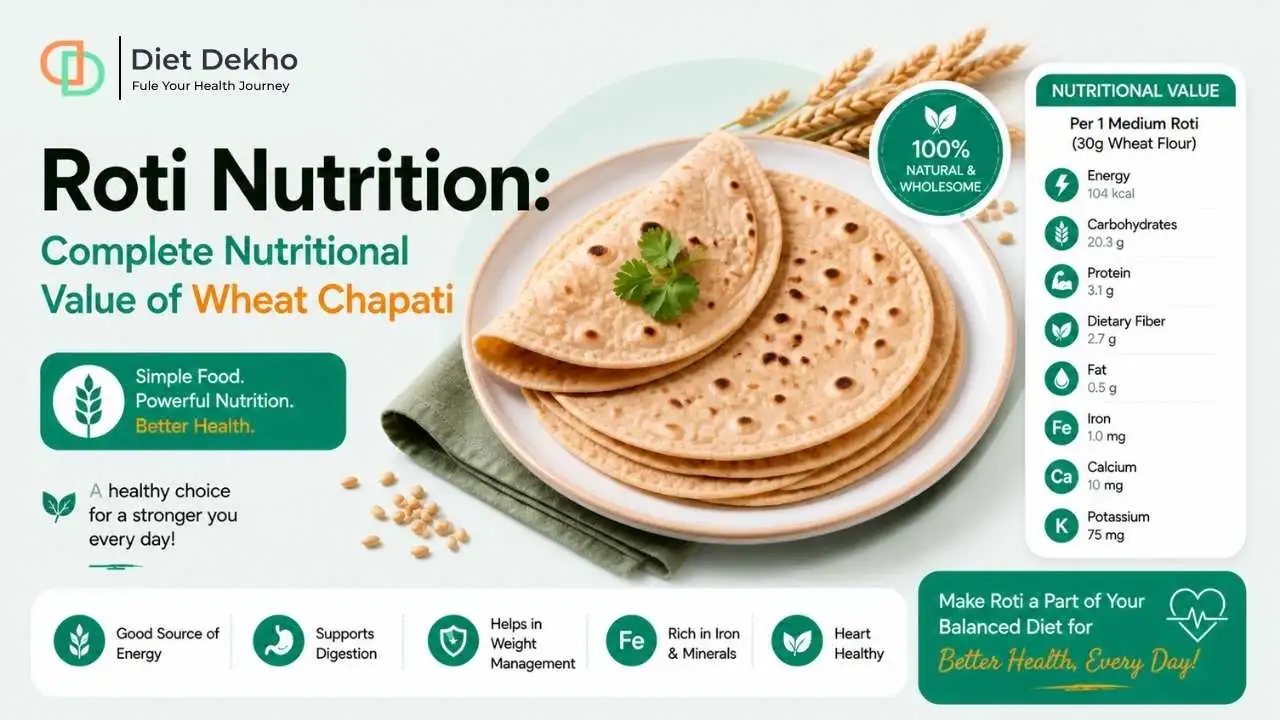
One medium-sized whole wheat roti (40g) provides 120 calories, 3.2g of protein, and 3.6g of dietary fiber. Because of its low glycemic index (41-45), the nutrition in roti is ideal for managing blood sugar. This profile ensures a steady release of energy without the sharp insulin spikes caused by refined flours.
The Structural Foundation of the Whole Wheat Grain
To truly appreciate the nutrition in roti, we must first look at the wheat kernel itself. Nature has designed this grain as a complete nutritional package. Specifically, every kernel consists of three distinct layers: the bran, the germ, and the endosperm. While most commercial white breads remove the outer layers, traditional Indian atta is stone-milled to keep these layers intact. This integrity is exactly what makes the roti a superior source of daily energy.
Why the Bran Layer is Your Best Friend
The bran is the multi-layered outer skin of the kernel. Primarily, it serves as the main reservoir for dietary fiber. In addition to fiber, this layer houses essential B vitamins and minerals like iron and zinc. Furthermore, phytochemicals found in the bran act as natural antioxidants that protect your body from cellular damage. Consequently, when you consume a whole wheat roti, you are eating a protective shield rather than just empty starch.
The Life-Giving Power of the Germ
Deep inside the kernel lies the germ, which is the embryo of the seed where life begins. It is remarkably nutrient-dense, containing healthy fats and Vitamin E. The germ provides the concentrated energy needed for a plant to grow. For you, these healthy oils support brain health and skin vitality. Finally, the endosperm is the largest part of the grain, providing the starchy carbohydrates and proteins that give the roti its structure. By keeping all three parts together, we ensure a balanced metabolic response.

Macronutrient Analysis: More Than Just Carbohydrates
Many people mistakenly view the roti as a carb-heavy food. However, the macronutrient profile is surprisingly balanced. A standard roti provides a steady mix of fuel, repair materials, and digestive support. Because the calories in a single chapati are manageable, it fits perfectly into most dietary plans. For busy professionals, this balance is crucial because it prevents the mid-afternoon fatigue that often follows a heavy rice meal.
| Nutrient | Amount per Medium Roti (40g) | Amount per 100g |
| Calories | 120 kcal | 300 kcal |
| Protein | 3.2g | 7.9g |
| Carbohydrates | 23g | 58g |
| Dietary Fiber | 3.6g | 9g |
| Total Fat | 2g | 5g |
The Underestimated Power of Plant Protein
The protein content in a roti is often overlooked. For instance, one medium roti provides about 3.2 grams of plant-based protein. While it is not a complete protein on its own, it pairs perfectly with lentils (dal). This combination creates a complete amino acid profile, which is a fundamental strategy for vegetarians to maintain muscle mass. For the non-gym audience, this steady protein intake supports daily metabolic functions and keeps you feeling strong.
The Glycemic Advantage for Diabetes Management
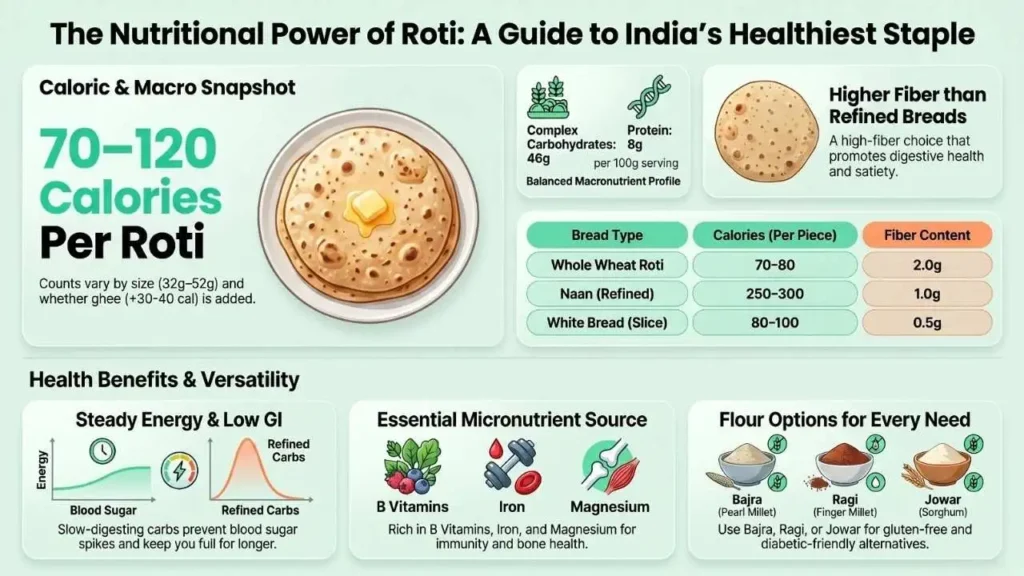
For those living with diabetes, the Glycemic Index (GI) is a vital metric. It measures how quickly a food raises blood sugar levels. While high GI foods cause rapid spikes and crashes, whole wheat roti has a GI of approximately 41 to 45. This places it firmly in the low GI category. In comparison, white bread has a GI of 75. This difference is largely due to the fiber content found in the bran.
How Fiber Protects Your Pancreas
The fiber in a roti acts as a physical barrier. Specifically, it slows down the action of digestive enzymes. This leads to a gradual absorption of glucose into the bloodstream. Harvard Health researchers emphasize that this entire package is protective. As a result, it prevents the body’s insulin-making machinery from being overworked. If you are looking for immediate solutions, switching from white rice to roti is a powerful move for better satiety and long-term glucose control.
Why Whole Grain Integrity Matters
Merely being a whole grain-based food does not always guarantee a lower GI. The method of processing and food structural integrity play a huge role. For example, finely ground commercial flours may raise blood sugar faster than stone-milled atta. Therefore, I always recommend choosing Choker-Sahit or bran-retained atta. Research shows that wheat bran specifically can lower fasting glucose levels significantly.

Micronutrients: The Invisible Power of the Chapati
Beyond macros, the nutrition in roti includes a matrix of essential minerals. These micronutrients support everything from bone health to immunity. Because whole wheat is a natural source of magnesium, phosphorus, and iron, it provides nutrients often lost in refined flours like maida. Magnesium is particularly important for metabolic health because it helps regulate insulin sensitivity and blood pressure.
| Mineral | Content per 100g Roti | Daily Value % |
| Iron | 2.2 mg | 28% |
| Magnesium | 56 mg | 13% |
| Phosphorus | 158 mg | 23% |
| Potassium | 196 mg | 6% |
| Manganese | 1.7 mg | 76% |
Essential Minerals for Daily Vitality
Iron is a critical nutrient found in wheat that supports the production of hemoglobin. This helps your blood carry oxygen to your organs, keeping you energetic. For busy homemakers managing entire families, ensuring iron intake is vital to combat fatigue. Additionally, manganese supports bone formation and blood clotting. These minerals are delivered in a form that is easy for the body to recognize and use.
Vitamins for Energy Metabolism
Whole wheat is a reliable source of B-complex vitamins. These vitamins act as the spark plugs of your metabolism by helping convert carbs into energy. A roti provides Vitamin B1 (Thiamine), B2 (Riboflavin), and B3 (Niacin). Thiamine is particularly important as an antioxidant that helps neutralize free radicals. Consequently, you get a slow burn of energy that prevents the mental fog associated with blood sugar crashes. Furthermore, Vitamin E found in the germ protects your heart and skin.
Comparative Analysis: Roti vs. Rice
The debate between roti and rice is common in Indian households. While both have their place, they impact the body differently. For instance, white rice is often easier to digest but has a much higher GI (70-90). This means it can leave you feeling hungry much sooner. In contrast, roti is higher in fiber and protein, which provides better satiety. This makes it a superior choice for weight management.
Swapping Grains for Better Health
Researchers at Harvard suggest that swapping white rice for whole grains is highly beneficial. In fact, it could lower the risk of Type 2 diabetes by as much as 36%. This is a significant statistic for the Indian population where rice is a daily staple. By transitioning to roti, you can stabilize your metabolic patterns. What this means for your daily routine is better weight control and a reduced risk of heart disease.

Expert Guidelines: The 2024 ICMR-NIN Recommendations
The Indian Council of Medical Research (ICMR) recently updated its guidelines in 2024. A major focus was the whole grain gap in the Indian diet. Currently, the average Indian consumes only 10% of the recommended whole grain amount. Therefore, the new goal is to have at least 50% of your total cereal intake come from whole grains. This shift is aimed at curbing the rise of obesity and diabetes.
Managing Portions with the NIN Plate
The 2024 guidelines also emphasize portion control. Specifically, a balanced plate should consist of half fruits and vegetables. Only one-quarter should be dedicated to cereals like roti. This NIN Plate ensures dietary diversity and prevents over-reliance on carbohydrates. For a homemaker, this is a simple visual guide for serving healthy meals that provide the fiber your family needs.
Practical Hacks for Busy Professionals
I know it’s hard to find time to knead fresh dough every morning. However, there are ways to keep your rotis healthy and fresh. Using lukewarm water for kneading makes the dough softer. This allows you to make soft rotis without adding excess oil. If you must store dough, use an airtight container. Brushing the surface with a tiny bit of ghee prevents it from turning black or drying out.
The Science of Stored Dough
Refrigerated dough is safe for 24 to 36 hours. Interestingly, there is even a scientific benefit to old starch. When starch cools, it undergoes a process called retrogradation. This creates resistant starch that acts like fiber in the gut. Consequently, it feeds your healthy gut bacteria and lowers the GI even further. For a professional who meal preps, your yesterday’s dough might actually be better for your blood sugar today.
Homemaker’s Secrets: Fortifying the Dough
You can easily increase the nutrition in roti with simple kitchen additions. For example, adding ground flaxseeds or chia seeds provides Omega-3 fatty acids. These healthy fats are essential for heart health and reducing inflammation. Furthermore, flaxseeds add a significant amount of soluble fiber. This helps in lowering cholesterol and managing blood sugar levels.
Adding Protein with Sattu and Besan
Another great hack is adding sattu or besan (chickpea flour). Sattu provides 20g of protein per 100g and has a very low GI (30-35). Mixing it into your atta makes your rotis much more filling and protein-dense. Additionally, adding vegetable purees like spinach or methi (fenugreek) leaves adds iron and folate. These small changes make every bite more nutrient-dense for your family without extra cooking time.

Addressing the Gluten and Sensitivity Myth
Gluten has received a lot of negative press recently. However, for most people, wheat is not the enemy. In fact, true Celiac disease affects only 1% of the Indian population. Recent research suggests that many who feel sensitive to gluten are actually reacting to FODMAPs. These are fermentable carbohydrates that can cause bloating in sensitive guts. Properly kneading and resting the dough can help break down some of these compounds.
Consulting the Professionals
If you suspect a sensitivity, please consult a professional before cutting out wheat. Rigidly avoiding gluten can lead to nutritional deficiencies and increased costs. Whole wheat rotis provide a complex nutrient bundle that is hard to replace. For the general audience, the benefits of whole grain fiber far outweigh the risks. Let’s simplify this by focusing on gut health first by adding curd or ajwain to your meal.

Satiety and Weight Management Strategies
The key to weight loss is not elimination but moderation. Roti is excellent for weight loss because its high fiber content prevents the urge to snack. For those who don’t go to the gym, managing calories through satiety is vital. Because of this, a meal of two rotis with a large bowl of dal and sabzi is highly effective for weight control.
Ideal Daily Roti Portions
| Goal | Recommended Roti Intake | Companion Foods |
| Weight Loss | 3 – 4 Rotis per day | High Fiber Vegetables, Dal |
| Weight Maintenance | 4 – 6 Rotis per day | Balanced Protein, Salad |
| Sedentary Lifestyle | 2 – 3 Rotis per day | Light Protein, Curd |
Timing Your Carbohydrates
Nutritionists suggest that timing also matters. Specifically, lunch is the best time for a heavier roti meal when your metabolism is high. For dinner, one or two smaller rotis are sufficient. It is best to avoid eating heavy rotis late at night to prevent acidity and bloating. This disciplined approach helps in maintaining a healthy BMI over time and aligns with your body’s natural rhythm.
The Role of Traditional Ghee
Ghee is an integral part of the Indian diet. While it is high in calories, it has unique benefits. For instance, ghee contains fat-soluble vitamins and butyric acid, which supports gut health. In moderation, a little ghee can actually lower the glycemic index of your roti by slowing down digestion. However, the 2024 ICMR guidelines recommend using all oils and fats in moderation.
A light brush of ghee, about half a teaspoon, is generally fine. Specifically, you should avoid deep-frying or making heavy parathas every day. For a professional with a desk job, excess saturated fat can lead to weight gain. Think of ghee as a flavor enhancer and a nutrient carrier. When used wisely, it adds a layer of satisfaction that prevents overeating later in the day.

Frequently Asked Questions
1. Is roti better than bread for a diabetic person?
Yes, whole wheat roti is significantly better than most store-bought breads. Specifically, commercial breads often contain hidden sugars, preservatives, and refined flour. A homemade roti is a clean, whole-grain source of complex carbohydrates. Its lower glycemic index (41-45) ensures that your blood sugar stays stable throughout the day.
2. How many calories are in a roti with ghee?
A medium dry roti has about 120 calories. Adding one teaspoon of ghee adds approximately 40 to 50 calories, bringing the total to around 160-170 calories. While ghee is healthy, it is calorie-dense. Therefore, if you are on a weight loss journey, it is best to limit ghee or use a very light brush.
3. Can I eat roti at night if I want to lose weight?
Absolutely. Roti is high in fiber and keeps you full, which prevents late-night hunger. However, the key is to eat dinner at least 3 hours before sleeping. Limit yourself to 1 or 2 rotis and pair them with light, easily digestible vegetables or a small bowl of dal.
4. Why is my roti sometimes hard to digest?
If you feel bloated, it might be due to the fiber or fructans in wheat. To make roti easier on the gut, add a pinch of ajwain (carom seeds) or hing (asafetida) to the dough. Additionally, kneading with warm water and letting the dough rest for 20 minutes helps in making the rotis softer and easier for your system to process.
5. Does multigrain roti have more protein than plain wheat?
Generally, yes. By adding flours like besan (chickpea), soy, or sattu, you increase the total protein content and improve the amino acid profile. Multigrain rotis also have a lower glycemic index, making them excellent for muscle maintenance and blood sugar control.
Conclusion and Actionable Steps
The humble roti is a nutritional powerhouse that has stood the test of time. It provides the fiber, protein, and minerals needed for a healthy life. For those managing diabetes, it is a reliable ally that ensures steady blood sugar. You do not need to look for trendy superfoods when the solution is already in your kitchen. Instead, focus on the quality of your flour and the balance of your plate.
Start today by replacing refined flour with 100% whole wheat atta. Additionally, add a tablespoon of ground flaxseeds to your dough for a heart-healthy boost. Pair your rotis with plenty of green vegetables and lean protein. This simple routine can transform your metabolic health. It is a sustainable way to eat that honors both your culture and your body.
Contact Us
We understand how overwhelming nutrition and weight loss information can feel. With so many opinions and confusing advice online, it’s easy to feel stuck or unsure about what to do next.
At Diet Dekho, you never have to figure it out alone. You can contact us anytime with any questions or concerns. Our expert dietitians are available 24/7 to guide, support, and help you stay on track. Whether your goal is weight loss or building healthier habits, we’re here to make the journey simpler and more sustainable for you.
Disclaimer
This blog is intended to help readers make healthier food choices. Your health should always be the top priority. Before starting any restrictive or special diet, especially if you have a medical condition or health concern, please consult a doctor or a qualified dietitian. Each body responds differently to food and lifestyle changes. Always choose what is safe and suitable for you.
[NIH Link: https://pmc.ncbi.nlm.nih.gov/articles/PMC8778110/]
[Harvard Link: https://nutritionsource.hsph.harvard.edu/what-should-you-eat/whole-grains/]

Abhinav is the Founder of Diet Dekho, helping people manage weight and lifestyle health through simple, practical nutrition and personalized diet plans.