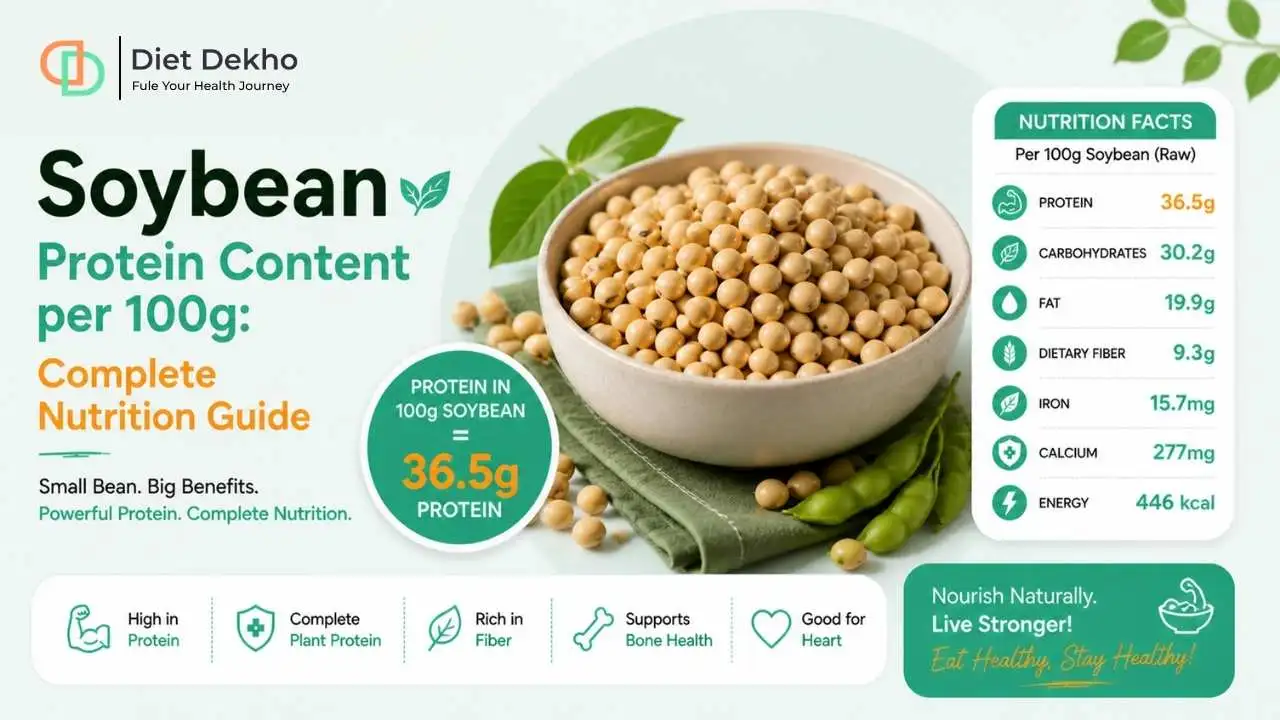
Have you ever returned home after a long day, feeling completely drained, only to realize your dinner lacks the fuel your body actually needs? For many busy professionals and homemakers, the struggle to find high-quality, affordable protein is real. Specifically, when you are managing diabetes or a hectic schedule, the soybean protein content per 100g becomes a vital number that can simplify your entire dietary routine.
How much protein is in soybeans?
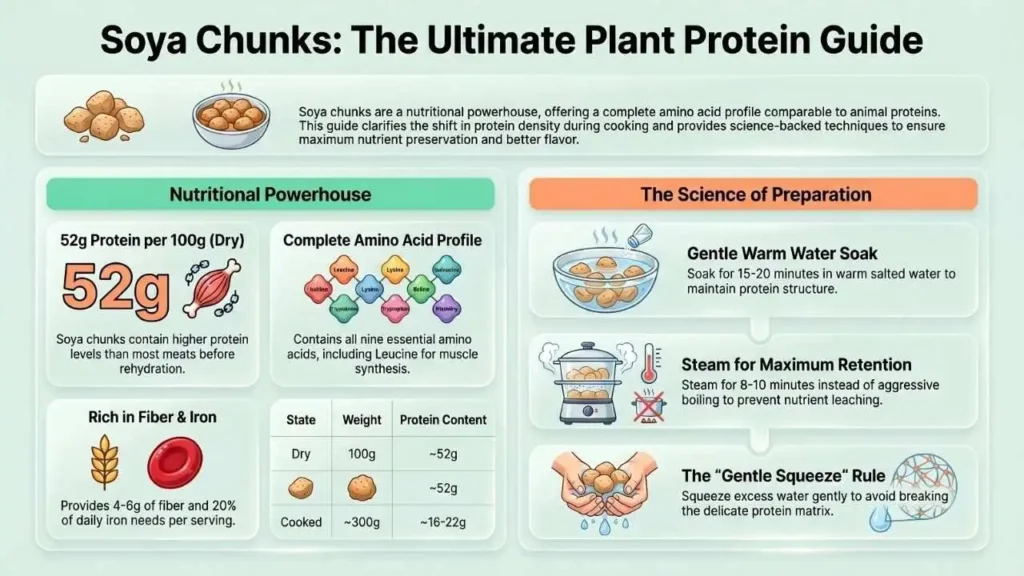
In its raw, dry form, the soybean protein content per 100g ranges from 36 to 40 grams. However, dry soya chunks offer a more concentrated 52 grams of protein per 100g. Once you boil or cook them, the protein content adjusts to approximately 16-18 grams per 100g because the beans absorb water weight.
Why Soybean Protein Content per 100g Matters for You
I know it is hard to keep track of macros when you are juggling work and family. Consequently, many of us default to cereal-heavy diets that leave us feeling tired. Let’s simplify this: your body needs protein to repair muscle, support immunity, and keep your hair and skin healthy. Because soybeans are a complete protein, they provide all nine essential amino acids that your body cannot make on its own .
The Difference Between Raw, Cooked, and Chunks
Understanding the numbers helps you plan better meals without the guesswork. Therefore, you should note how the state of the soybean changes its nutritional density.
- Raw Soybeans: These contain about 36-40g of protein. While impressive, we rarely eat them raw .
- Soya Chunks (Dry): These are the champions of the pantry. They provide a massive 52g of protein per 100g.
- Boiled Soybeans: After soaking and boiling, the protein stays the same, but the weight triples. Thus, 100g of cooked beans provides about 16.6g to 18g of protein .
| Form of Soy | Protein per 100g | Best For |
| Dry Soya Chunks | 52g | Maximum protein for minimum cost |
| Raw Soybeans | 36-40g | Home-made soy flour or roasting |
| Boiled Soybeans | 16-18g | Salads, Sundals, and Curries |
| Tofu (Hard) | 8-15g | Stir-fries and sandwiches |
A Lifesaver for Diabetes Management
If you are living with diabetes, you likely worry about blood sugar spikes after every meal. Fortunately, soybeans offer a unique metabolic buffer. They have a very low Glycemic Index (GI) of around 15 to 20 .
How Soy Stabilizes Blood Sugar
When you consume soy, the high protein and fiber content slows down the absorption of sugar into your bloodstream. Moreover, research suggests that bioactive compounds called isoflavones may improve your insulin sensitivity . This means you get steady energy throughout the afternoon instead of that dreaded sugar crash that makes you reach for biscuits or tea.
Fiber: The Silent Partner
While soya chunks are protein powerhouses, they only contain about 1g of fiber per 100g. On the other hand, whole boiled soybeans provide about 6g of fiber . For the best results in managing your blood sugar, I recommend pairing your soya chunks with fiber-rich vegetables like spinach, beans, or carrots.

Soy vs. Paneer: The Great Indian Debate
In many Indian households, paneer is the king of vegetarian protein. However, if you are watching your weight or heart health, soya chunks might actually be a better teammate.
- Protein Density: Soya chunks provide nearly three times the protein of paneer on a dry-weight basis.
- Fat Content: Paneer is delicious, but it often contains 20-25g of fat per 100g, much of which is saturated. Soya chunks, meanwhile, contain less than 1g of fat.
- Cost Factor: Let’s be practical-soya chunks are significantly more affordable than high-quality paneer. Consequently, they allow you to hit your protein goals without stretching your monthly budget .
Addressing the Silent Crisis in India
Did you know that nearly 60% of urban Indians are protein-deficient?. A massive nationwide survey revealed that 74% of us don’t even know how much protein we should be eating daily.
Why We Are Falling Short
Most of us rely on cereal-heavy diets, where 50% to 75% of our protein comes from rice or wheat. While these grains are staples, they don’t provide the complete amino acid profile your body needs for optimal health. Specifically, Dr. Vishakha Shivdasani warns that this silent epidemic leads to muscle loss, weak immunity, and cognitive decline. By integrating the soybean protein content per 100g into your daily rotis or curries, you can bridge this gap easily.

Heart Health and the 3% Effect
Harvard Health and the American Heart Association (AHA) have studied soy extensively. They found that replacing animal proteins with soy can lower your bad LDL cholesterol by about 3% to 4% .
The Displacement Strategy
The real magic happens when you use soy to replace less healthy options. For instance, if you swap a fatty meat curry for a soya chunk masala, you remove saturated fat and cholesterol while adding fiber and minerals . The National Institutes of Health (NIH) also notes that soy is naturally cholesterol-free and rich in heart-healthy polyunsaturated fats.

Clearing the Confusion: Hormones and Thyroid
I hear this concern often: Will soy affect my hormones? Let’s look at the science to put your mind at ease.
Phytoestrogens vs. Estrogen
Soy contains isoflavones, which are phytoestrogens. However, these are not the same as the estrogen in the human body. Clinical trials consistently show that moderate soy consumption does not affect testosterone levels in men or cause hormonal issues in women.
Tips for Thyroid Patients
If you take thyroid medication (like Levothyroxine), you don’t need to banish soy. Instead, simply wait about 4 hours after taking your medicine before eating soy products. This ensures the protein doesn’t interfere with your medication’s absorption.

Practical Ways to Cook Soy (For the Busy Professional)
You might have tried soya chunks before and disliked the beany smell or spongy texture. Let’s fix that with a few dietitian-approved tricks.
- The Squeeze and Rinse Method: Boil your soya chunks for 8-10 minutes. Then, rinse them in cold water and squeeze them as hard as you can. Repeating this twice removes the frothy water that carries the bitter smell .
- Upgrade Your Roti: You can mix 10% to 15% soy flour with your regular wheat atta. This small change doubles the protein in your daily chapatis without changing the taste.
- The 10-Minute Soya Sundal: For homemakers looking for a healthy snack, try tempering boiled soybeans with mustard seeds, curry leaves, and a little coconut. It is a traditional South Indian snack that is incredibly satisfying.

Conclusion: Your Next Steps
The soybean protein content per 100g makes it one of the most powerful tools in your kitchen. Whether you are managing diabetes, trying to lose weight, or simply wanting more energy for your kids, soy offers a research-backed, affordable solution.
Let’s start today: Try replacing one cereal-based snack with a handful of boiled soybeans or adding soya chunks to your favorite vegetable curry. If you want a personalized plan that fits your specific health goals and busy lifestyle, we are here to help.
Take charge of your health now. Click here to fill out our consultation form and let’s build a stronger, healthier you together!

Frequently Asked Questions (FAQs)
Q1: What is the soybean protein content per 100g in soya chunks?
Dry soya chunks are incredibly dense, providing approximately 52 grams of protein per 100g. This makes them one of the highest vegetarian protein sources available in India.
Q2: Can I eat 100g of soya chunks every day?
While safe, 100g of dry chunks provides a very large amount of protein (52g). For most people, a serving of 25-35g (dry) per day is more than enough to supplement a balanced diet .
Q3: Is soy protein better than whey for weight loss?
Both are excellent. However, soy protein is a whole-food source that provides fiber and is often more affordable. It also has a lower GI, which is particularly beneficial for those managing blood sugar levels.
Q4: Does boiling soybeans reduce their protein?
No, boiling does not destroy the protein. However, because the beans absorb water, the protein per 100g of the final cooked product will be lower (around 16-18g) compared to the raw dry beans.
Q5: Are soya chunks good for heart patients?
Yes. Soya chunks are cholesterol-free and very low in saturated fat. They contain isoflavones that can help lower bad LDL cholesterol by about 3% to 4%.
Contact Us
We understand how overwhelming nutrition and weight loss information can feel. With so many opinions and confusing advice online, it’s easy to feel stuck or unsure about what to do next.
At Diet Dekho, you never have to figure it out alone. You can contact us anytime with any questions or concerns. Our expert dietitians are available 24/7 to guide, support, and help you stay on track. Whether your goal is weight loss or building healthier habits, we’re here to make the journey simpler and more sustainable for you.
Disclaimer
This blog is intended to help readers make healthier food choices. Your health should always be the top priority. Before starting any restrictive or special diet, especially if you have a medical condition or health concern, please consult a doctor or a qualified dietitian. Each body responds differently to food and lifestyle changes. Always choose what is safe and suitable for you.

Abhinav is the Founder of Diet Dekho, helping people manage weight and lifestyle health through simple, practical nutrition and personalized diet plans.