Do you often feel like you are running a marathon just to get through your daily chores while worrying if your family is getting enough nutrition? I know it is hard to find time for complicated meal prep, but checking a soya chunks nutrition chart might be the simplest step you take for your health today.
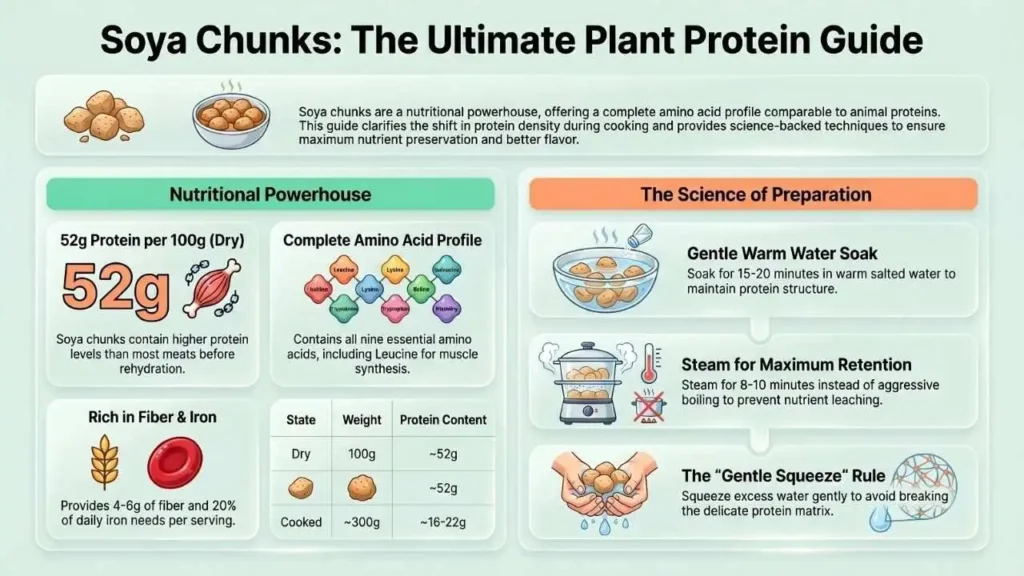
A soya chunks nutrition chart reveals that these nuggets provide about 52 g of protein per 100 g, making them a superior plant-based source for vegetarians. With a low glycemic index of 15-20, they support stable blood sugar levels and weight loss. Rich in fiber and minerals, they are ideal for heart health and muscle repair.
I know it feels like our traditional meals are perfect, but recent studies tell a different story about our daily plates. Research from the Indian Council of Medical Research and the National Institute of Nutrition shows that nearly 40% of people in India are not meeting their daily protein needs. What this means for your daily routine is that while you might feel full, your body is often missing the essential building blocks for repair and energy.
Our diets have become very heavy on carbohydrates, which now make up about 62% of our daily calories. This shift happened slowly as we relied more on white rice, milled grains, and added sugars for quick energy. Unfortunately, this imbalance is one of the main reasons we see so many cases of diabetes and fatigue in our communities. In urban areas, the protein deficit is even more noticeable, with about 44% of people falling short of what their bodies require.
Let us simplify why this is happening. For many of my clients, protein-rich foods like nuts, seeds, or specialized dairy can be expensive or time-consuming to prepare. Cultural preferences also play a big role, as many of us avoid meat or eggs. This is why finding an affordable, easy-to-cook option is so important for a busy professional or a homemaker looking to protect their family.
Why protein is the foundation of your energy
I often tell my friends that protein is not just for people who want to build big muscles at the gym. It is actually the main worker in every cell of your body. If you are feeling tired by mid-afternoon or noticing that your hair and skin look a bit dull, it might be your body asking for more protein. It helps build your immune system and keeps your hormones in check.
For someone managing diabetes, protein is even more critical. When you eat a meal that has a good amount of protein, it slows down how fast your body absorbs sugar. This prevents those sudden spikes that make you feel shaky or tired. Think of protein as a stabilizer that keeps your internal engine running smoothly throughout a long, hectic day.
The data from the National Family Health Survey is quite a wake-up call, showing that 73% of households are not getting enough of this nutrient. Whether you are a parent trying to ensure your children grow well or a professional trying to stay sharp, closing this gap is a priority. Soya chunks, often called the vegetarian’s meat, offer a simple and effective way to do this without breaking the bank.

Deep dive into the soya chunks nutrition chart
Let us look closely at the soya chunks nutrition chart to see what makes this food so special compared to other common vegetarian options. When we talk about protein density, very few foods can compete with these nuggets in their dry form. They are essentially a concentrated version of the soybean, with the oil removed and the nutrition packed tight.
Comparative nutrition per 100g dry weight
| Food Item | Protein (g) | Total Fat (g) | Fiber (g) | Calories (kcal) |
| Soya Chunks | 52 g | 0.5 g | 13 g | 345 kcal |
| Paneer | 18 g | 20 g | 0 g | 265 kcal |
| Whole Moong Dal | 24 g | 1.2 g | 16 g | 347 kcal |
| Eggs (Boiled) | 13 g | 11 g | 0 g | 155 kcal |
What this means for your daily routine is that you can get a massive protein boost with very little fat. For example, if you eat just 25-30 g of dry chunks, you are already getting about 13-15 g of protein. That is roughly the same as eating two large eggs, but without the cholesterol or the hassle of boiling them.

The difference between dry and cooked portions
I know it can be confusing when you see different numbers on food labels or websites. The most important thing to remember is that soya chunks are like sponges. When you soak them in water, they absorb about three times their weight. So, while 100 g of dry chunks has 52 g of protein, 100 g of the finished, cooked dish will have about 16-18 g of protein.
This is because the water adds weight but does not take away any of the protein. It is just more spread out. If you start with a small handful of dry nuggets, you are still getting all that protein, even if they look much bigger on your plate after cooking. This makes it a very filling food, which is a great secret for weight management because you feel like you are eating a large meal for very few calories.

Soya as a complete protein for vegetarians
One thing I often have to explain to my clients is the idea of a complete protein. Most plant foods like lentils or beans are missing one or two of the essential amino acids your body needs. Soya is different. It is one of the rare plant sources that contains all nine essential amino acids in the right proportions. This is why the World Health Organization and other experts give it a high-quality score.
In technical terms, soy protein has a PDCAAS score of 1.0, which is the same as the protein found in milk or egg whites. For you, this means you don’t have to worry about mixing different grains and pulses in every single meal just to get a balanced protein intake. Whether you are using it in a quick stir-fry or a traditional curry, your body gets exactly what it needs to repair muscles and keep your skin healthy.
Managing diabetes with smart dietary choices
If you are one of the many people in India managing blood sugar levels, soya chunks can be your best friend in the kitchen. I know it’s hard to find time to cook separate meals, so finding something the whole family can eat is a relief. Soya chunks have a very low glycemic index, which is a measure of how quickly a food raises your blood sugar. While white rice might be as high as 70, soya chunks sit comfortably between 15 and 20.
This slow release of energy is exactly what a person with diabetes needs. It means your blood sugar stays steady instead of spiking and then crashing, which is what causes that feeling of exhaustion. Research even shows that the bioactive compounds in soy, like isoflavones, might help your body become more sensitive to insulin. This helps your cells use sugar more effectively, which is the ultimate goal of diabetes management.

The role of fiber in blood sugar control
Let us simplify how fiber helps you. Soya chunks are packed with about 13 g of fiber per 100 g. This fiber acts like a net in your digestive system, catching sugar and slowing down its entry into your blood. It also helps you feel full, so you are less likely to reach for a sugary snack an hour after your meal.
For my clients who are busy professionals, having a lunch that includes soya chunks means they can stay focused through their afternoon meetings without needing that extra cup of tea and biscuits. It is a practical way to manage your health while you are on the go. Combining these chunks with vegetables like spinach or capsicum only adds to the fiber benefit, making your meal even more supportive of your blood sugar goals.
Heart health and the cholesterol factor
I know many of us worry about our heart health as we get older. Soya chunks are naturally cholesterol-free and contain almost no saturated fat. Replacing even a few meals of high-fat paneer or red meat with these nuggets can significantly lower your intake of bad fats. This is a simple change that can have a big impact on your arteries and blood pressure over time.
Expert research from institutions like Harvard and the NIH has shown that soy protein can help lower LDL cholesterol, which is the kind that tends to build up in our blood vessels. The isoflavones in soy act as antioxidants, helping to reduce inflammation in your body. For a homemaker looking to cook heart-healthy meals for her spouse and elders, soya chunks are an easy and affordable tool to have in the pantry.
Weight management for busy schedules
I know it is hard to find time for the gym when you have a full schedule. The good news is that what you eat has a huge impact on your weight. Soya chunks are perfect for weight loss because they are high in protein but low in calories. Protein takes more energy for your body to digest than carbohydrates, which means you are actually burning a few more calories just by eating them.
The high satiety of soya chunks is their biggest advantage. When you eat protein and fiber together, your brain gets a strong signal that you are full. This helps prevent overeating and random snacking throughout the day. If you are trying to lose weight, replacing your heavy potato-based dishes with a soya chunk stir-fry can help you see results without feeling like you are starving.
Strengthening bones as we age
One thing we often forget to talk about is our bone health. For women, especially as we approach menopause, our bones can become weaker. Soya chunks offer about 350 mg of calcium and a good amount of magnesium, both of which are essential for keeping your bones strong. In fact, for vegetarians who might not be drinking enough milk, soya chunks provide a much-needed mineral boost.
The plant compounds in soy also help by acting a bit like estrogen, which is the hormone that protects our bones. This can be particularly helpful in preventing conditions like osteoporosis. Including a small serving of these nuggets in your weekly menu is a great way to ensure you stay mobile and strong as the years go by. It is a proactive step you can take right from your kitchen.

Addressing the myths about thyroid health
I hear this concern a lot from my clients who have thyroid issues. Let us break down the science simply. While soy does contain compounds called goitrogens, they are only a problem if you have a severe iodine deficiency or if you eat massive, unrealistic amounts of soy. For most people with thyroid concerns, eating soya chunks in moderation is perfectly safe.
The key is timing. If you take thyroid medication like levothyroxine, it is best not to eat soy at the same time you take your pill. Simply wait about 4 hours after taking your medicine before having your favorite soya dish. This ensures your body absorbs the medication properly while still allowing you to enjoy the high-protein benefits of soy. As always, if you are unsure, having a quick chat with your doctor is a great way to put your mind at ease.
Hormonal balance and the soy estrogen myth
You might have heard someone say that soy can mess with your hormones or cause issues for men. I want to reassure you that this is largely a myth. Soy contains phytoestrogens, which are plant-based compounds that are much weaker than the estrogen produced by the human body. They do not have the same effect as animal hormones.
For women, these compounds can actually be very helpful, especially during menopause, as they may help reduce hot flashes and mood swings. For men, studies have shown that normal amounts of soy do not lower testosterone or cause feminine traits. You would have to eat kilograms of soy every single day for it to even potentially cause an issue. A standard portion of 25-30 g a few times a week is balanced and healthy for everyone.

Soya chunks and the uric acid question
If you struggle with high uric acid or gout, you might have been told to avoid beans and soy. However, recent research has changed how we look at this. While some foods like red meat and organ meats are very high in purines that can trigger gout, soy products like tofu and soya chunks do not seem to have the same effect.
In many studies, people who ate more soy actually had a lower risk of gout. This is likely because soy helps the body excrete uric acid more efficiently. If you are worried about uric acid, focus more on reducing sugar and red meat, and feel free to enjoy moderate amounts of soy as a healthy protein alternative. It is always a good idea to drink plenty of water when increasing your protein intake to help your kidneys work their best.
Mastering the art of prepping soya chunks
I know some people find soya chunks a bit rubbery or bland. Let me share a few secrets to make them delicious every time. The most important step is the soak. Always use hot water with a generous pinch of salt. This ensures the seasoning goes all the way to the center of the nugget. Let them sit for at least 15 minutes until they are soft and plump.
Once they are soft, you must squeeze out all that water. Imagine the chunk is a sponge; if it is already full of plain water, it cannot soak up the flavors of your spices. After a good squeeze, you can even rinse them once in cold water and squeeze again to remove any lingering soy smell. Now they are ready to be marinated or tossed directly into your masala base.
Quick recipes for the busy professional
When you are short on time, you need meals that come together in minutes. Here are a few ideas that my clients love.
Soya Keema Matar Bhurji
This is a great replacement for egg bhurji. Simply pulse your soaked and squeezed soya chunks in a blender for 10 seconds until they are crumbled. Sauté them with some green peas, onions, and basic spices. It is a perfect, protein-packed breakfast that you can eat with toast or a roti.
Instant Pot Soya Curry
For those days when you come home exhausted, the Instant Pot or pressure cooker is your best friend. Toss in a quick onion-tomato paste, your squeezed soya chunks, and a cup of water. Pressure cook for just 2 minutes. By the time you have changed into comfortable clothes, your dinner is ready. Adding a dollop of curd at the end makes it creamy and even more nutritious.

Snacks for the homemaker and kids
I know how hard it is to keep kids away from unhealthy snacks. Soya chunks can be turned into a healthy treat that even children will enjoy. Try making Crispy Soya Nuggets by coating your squeezed chunks in a little besan or rice flour and air-frying or shallow-frying them. Sprinkle some chaat masala on top, and you have a high-protein snack that beats a bag of chips any day.
For a lighter option, a Soya and Sprouts Salad is refreshing and filling. Just mix boiled soya pieces with some moong sprouts, chopped cucumber, and a squeeze of lemon. It is a great way to stay hydrated and energized during the hot afternoon hours. These small changes to your snack routine can make a huge difference in your family’s overall health.
Finding the right portion size for you
So, how much should you actually eat? I usually recommend starting with about 25-30 g of dry soya chunks. This is about a small bowl’s worth. It gives you a great protein boost without being too heavy for your digestion.
Daily soya intake guide
| Person Type | Dry Weight (g) | Protein Content (g) |
| Busy Homemaker | 25 g | 13 g |
| Professional (Active) | 35 g | 18 g |
| High-Energy Worker | 50 g | 26 g |
Remember, balance is key. You don’t need to eat soya in every meal. Try including it 2-3 times a week and rotate it with other proteins like dal, chickpeas, and low-fat dairy. This keeps your meals interesting and ensures you are getting a wide variety of vitamins and minerals.
Digestion tips for sensitive stomachs
I know some people find that soya chunks can cause a bit of gas or bloating. This is often because they are so high in fiber and protein, which can be a bit heavy for a sensitive gut. To help with this, always ensure you soak them thoroughly and cook them well. Adding warming spices to your recipe can also make a big difference.
Spices like ginger, cumin, and hing are not just for flavor; they actually help your body break down the protein and fiber more easily. If you are new to eating soya chunks, start with a smaller portion and gradually increase it as your body gets used to the extra fiber. Drinking plenty of water throughout the day is also essential for keeping your digestion moving smoothly.
Why soya chunks are a budget-friendly choice
I know how the cost of living seems to go up every month. One of the best things about soya chunks is how affordable they are. If you compare the price of a packet of soya chunks to the price of paneer or chicken, you will see that you are getting much more protein for every rupee you spend.
This makes it an excellent choice for families who want to eat healthily without overspending. Since they have a long shelf life, you can buy them in bulk and always have a high-quality protein source ready in your pantry. It is a simple way to protect both your health and your wallet at the same time.
The environmental benefit of choosing soy
I often think about the future we are leaving for our children. Choosing plant-based proteins like soya chunks is also a kind choice for the planet. Producing soy requires much less water and land than producing animal-based proteins. By including more soy in your diet, you are making a small but meaningful contribution to a more sustainable world.
It is a beautiful thing when a choice that is good for your body is also good for the environment. As a dietitian, I love recommending foods that nourish you in more ways than one. Soya chunks truly are a modern superfood that honors our traditional vegetarian roots while providing the strength we need for today’s fast world.
Transitioning to a high-protein lifestyle
I know it can feel like a lot to change your diet all at once. My advice is to take it one step at a time. Maybe this week, you can try replacing one potato-heavy dinner with a soya chunk curry. Or next time you are feeling hungry in the afternoon, try a handful of roasted soya chunks instead of biscuits.
These small shifts add up over time. You will start to notice that you have more energy, your blood sugar is more stable, and you feel stronger in your daily activities. I have seen this happen for so many of my friends and clients, and I know it can happen for you too. You deserve to feel your best, and good nutrition is the simplest path to get there.
Final thoughts for your journey
I know your days are long and you are doing so much for everyone around you. Taking a moment to check a soya chunks nutrition chart and prioritize your own health is not selfish; it is necessary. When you are healthy and energized, you can take better care of your family and excel in your work.
Soya chunks are a simple, powerful, and affordable tool that you can start using today. Whether you are managing diabetes or just want to feel more vibrant, let these humble nuggets help you reach your goals. I am here to support you, and I can’t wait to hear how these small changes help you feel better every day.
Frequently Asked Questions
Is a soya chunks nutrition chart reliable for weight loss?
Yes, it is very reliable. A soya chunks nutrition chart shows that they are high in protein and fiber while being low in fat. This combination helps you stay full for longer and supports a healthy metabolism, making them a great addition to any weight loss plan.
How does the soya chunks nutrition chart help in diabetes?
The soya chunks nutrition chart highlights the low carbohydrate and high fiber content of these nuggets. This means they have a low glycemic index, which is essential for preventing blood sugar spikes and managing diabetes effectively.
Can I find a soya chunks nutrition chart for cooked versions?
Most charts show the dry weight, but you can estimate that 100 g of cooked chunks has about one-third of the protein of dry chunks because of water absorption. This usually means around 16-18 g of protein per 100 g of cooked food.
What are the main points in a soya chunks nutrition chart for heart health?
The most important points are the zero cholesterol and very low saturated fat levels. A soya chunks nutrition chart also shows they are rich in isoflavones, which help lower bad cholesterol and support overall cardiovascular wellness.
Are there any side effects mentioned in a soya chunks nutrition chart?
A nutrition chart itself won’t show side effects, but excessive intake can sometimes lead to bloating or gas due to high fiber. It is always best to stick to moderate portions of 25-30 g and drink plenty of water.
Contact Us
We understand how overwhelming nutrition and weight loss information can feel. With so many opinions and confusing advice online, it’s easy to feel stuck or unsure about what to do next.
At Diet Dekho, you never have to figure it out alone. You can contact us anytime with any questions or concerns. Our expert dietitians are available 24/7 to guide, support, and help you stay on track. Whether your goal is weight loss or building healthier habits, we’re here to make the journey simpler and more sustainable for you.
Disclaimer
This blog is intended to help readers make healthier food choices. Your health should always be the top priority. Before starting any restrictive or special diet, especially if you have a medical condition or health concern, please consult a doctor or a qualified dietitian. Each body responds differently to food and lifestyle changes. Always choose what is safe and suitable for you.

Abhinav is the Founder of Diet Dekho, helping people manage weight and lifestyle health through simple, practical nutrition and personalized diet plans.