Have you ever found yourself staring at a vegetable cart in the middle of a busy Mumbai street, wondering if that orange tuber could actually help you manage your blood sugar? Using sweet potatoes advantages in your daily meals might seem counterintuitive for someone with diabetes, but as your dietitian, I want to show you why these humble roots are metabolic superstars.
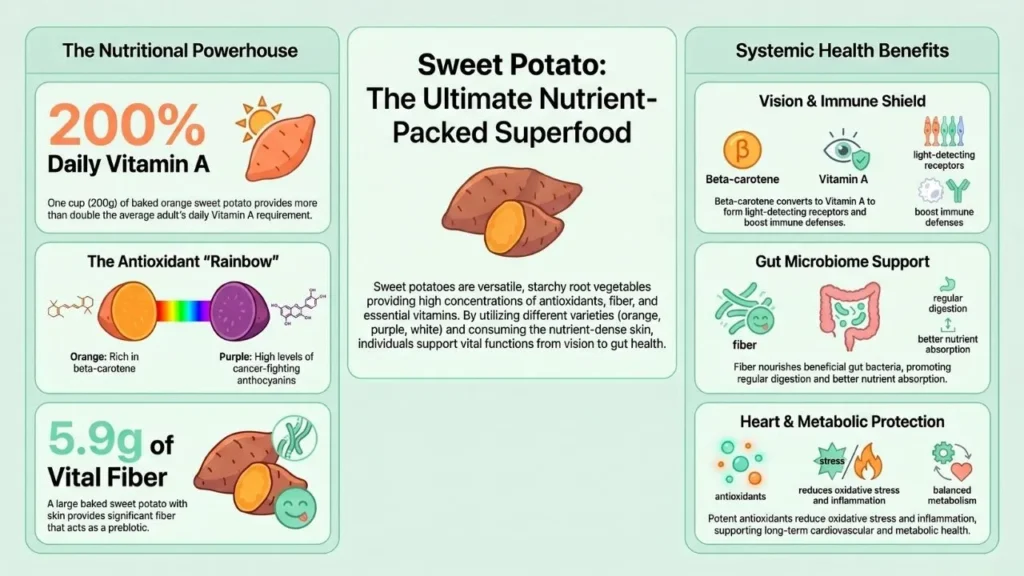
Sweet potatoes offer 12 amazing health advantages, including stabilized blood sugar, improved heart health, and enhanced immunity. Rich in fiber and Vitamin A, sweet potatoes advantages stem from a low glycemic index when boiled, making them a safe, nutrient-dense choice for diabetics, busy professionals, and those seeking weight loss.
The Nutritional Reality of Shakarkandi in the Indian Kitchen
I know it is hard to find time to cook elaborate meals when you are balancing a career and a household, but let’s simplify this together. In India, we have always known the sweet potato as shakarkandi, a reliable companion during our religious fasts or a quick street-side snack during the cold winters. What we often miss is the sheer density of nutrition hidden beneath that dusty, purple or orange skin.
When we compare the sweet potato to its more common cousin, the white potato, the differences are striking for anyone concerned about their waistline or their glucose levels. A medium-sized sweet potato provides roughly 112 calories, with practically no fat and a generous 3.9 grams of fiber. For a busy professional, this means sustained energy that does not lead to a mid-afternoon crash.

Nutritional Comparison: Sweet Potato vs. White Potato
| Nutrient (per 100g) | Sweet Potato | White Potato | Health Impact for Diabetics |
| Calories | 90 kcal | 92 kcal | Similar energy density |
| Dietary Fiber | 3.3 g | 2.1 g | Sweet potato offers better satiety |
| Vitamin A | 107% DV | 0.1% DV | Sweet potato is superior for immunity |
| Vitamin C | 22% DV | 14% DV | Sweet potato aids skin and repair |
| Glycemic Index | 44 (Boiled) | 80+ | Sweet potato is safer for blood sugar |
What this means for your daily routine is that swapping your regular aloo for shakarkandi is not just a flavor change; it is a fundamental upgrade to your metabolic health. While the calories are similar, the way your body processes these two vegetables is worlds apart. The high fiber content in sweet potatoes acts like a slow-release valve for energy, preventing the sharp insulin spikes that we want to avoid.

Advantage 1: Stabilizing Blood Sugar and Reversing Prediabetes
I want to talk to you about something that came out in a very important report recently from Apollo Hospitals. They found that 1 in 5 Indians under the age of 30 is now prediabetic. That is a staggering number. If you are in your 30s or 40s and struggling with your energy levels, it is possible your body is already signaling for help. This is where sweet potatoes advantages really shine for our community.
Despite having sweet in the name, sweet potatoes are actually a smart carb. When you boil them, they have a low to medium glycemic index (GI) of around 44 to 55. In contrast, a white potato acts like a sugar bomb with a GI of 80 to 90. The slow-release starches in shakarkandi digest gradually, which helps your body maintain a steady level of glucose rather than a chaotic surge.
The Role of Manganese in Carbohydrate Metabolism
One of the lesser-known heroes in the sweet potato is manganese. A single serving can provide up to 43% of your daily value. Manganese is a critical co-factor for enzymes that help your body metabolize carbohydrates correctly. For my clients who are managing Type 2 Diabetes, I explain that manganese acts like a little helper for your insulin, making it easier for your body to process the sugar you eat without needing to overproduce hormones.
I know the word starch can be scary when you are watching your sugar, but let’s look at it differently. Sweet potatoes contain something called resistant starch. This type of starch does not get broken down in your small intestine; instead, it travels to your colon and feeds your good gut bacteria. This process helps improve your insulin response over time, meaning your body actually gets better at managing sugar the more you include these healthy fibers in your diet.

Advantage 2: Weight Loss and Beating Belly Fat
If you are a homemaker or a professional who doesn’t have two hours to spend at the gym, your biggest tool for weight management is what you put on your plate. Many of my clients find that they reach for snacks around 4 PM because their lunch didn’t keep them full. This is where the fiber in sweet potatoes becomes your best friend. With nearly 4 grams of fiber in every medium tuber, it physically takes up space in your stomach and takes longer to digest.
Research published in Nutrition and Diabetes even showed that people who replaced some of their regular meals with a sweet potato-based formula saw significant reductions in body weight, BMI, and even fat mass compared to those who just followed a calorie-restricted diet. What this means for your daily routine is that you can eat a satisfying amount of food without the guilt of high-calorie refined grains.
How Sweet Potatoes Influence Fat-Burning Hormones
There is a fascinating hormone in your body called adiponectin. It is responsible for regulating fat metabolism and helping your body break down stubborn belly fat. Studies have shown that compounds in sweet potatoes can actually stimulate the production of this hormone. By eating shakarkandi, you are not just eating a vegetable; you are sending a signal to your fat cells to start moving.
| Component | Function in Weight Loss | Everyday Benefit |
| Water Content | 77% water by weight | Naturally hydrating and filling |
| Soluble Fiber | Pectin (15-23% of fiber) | Slows digestion and prevents snacking |
| Insoluble Fiber | Cellulose/Lignin (77-85%) | Improves gut movement and de-bloats |
| Resistant Starch | Prebiotic effect | Reduces fat storage signals |
For those of you who find it hard to resist sweets, the natural sweetness of a roasted sweet potato can be a lifesaver. It satisfies that craving for sugar without the inflammatory effects of processed chocolate or mithai. I often suggest my clients try a boiled sweet potato with a pinch of cinnamon-the cinnamon further helps with blood sugar, and the combination feels like a decadent dessert.

Advantage 3: Heart Health and Blood Pressure Control
I often tell my friends that our hearts are like high-performance engines; they need the right mineral balance to keep running smoothly. In India, where hypertension is becoming a common household name, the potassium and magnesium in sweet potatoes are vital. One medium sweet potato offers about 540 mg of potassium, which is around 15% of what you need for the day.
Potassium is essential because it helps your body flush out excess sodium through your urine. If you have been eating a lot of processed or salty foods, potassium is the reset button for your blood pressure. It also helps relax the walls of your blood vessels, which reduces the overall strain on your cardiovascular system.
Homocysteine and Vitamin B6
Another critical factor for your heart is a chemical called homocysteine. High levels of this chemical have been linked to an increased risk of heart attacks and strokes. Sweet potatoes are a great source of Vitamin B6, which your body uses to break down homocysteine. By regularly including sweet potatoes advantages in your diet, you are providing your heart with a protective shield against arterial damage.
I want you to imagine your arteries as clear pipes. Over time, stress and poor diet can make these pipes brittle or clogged. The antioxidants in sweet potatoes-like beta-carotene and Vitamin C-act as a cleaning crew, neutralizing the free radicals that cause inflammation in your blood vessels. This is especially important for my Non-Gym Audience who might have stiffer arteries due to a more sedentary lifestyle.

Advantage 4: Gut Health and the Prebiotic Powerhouse
I know how frustrating it is to deal with bloating and irregular digestion after a long day of sitting at a desk. Your gut is like a garden, and it needs the right fertilizer to grow healthy bacteria. Sweet potatoes contain two types of fiber: soluble and insoluble. Your body cannot digest either, but your gut bacteria can.
Specifically, the antioxidants in purple sweet potatoes have been shown to promote the growth of Bifidobacterium and Lactobacillus species. These are the good guys that help you digest food more efficiently, boost your mood, and keep your immune system strong. When these bacteria ferment the fiber from your shakarkandi, they create short-chain fatty acids that literally fuel and repair the cells of your intestinal lining.
Addressing the Heavy Stomach Feeling
If you find that regular potatoes make you feel heavy or gassy, you will be pleasantly surprised by sweet potatoes. The soluble fiber, like pectin, softens your stool, while the insoluble fiber adds bulk, making bathroom trips more regular and less of a struggle. For a busy professional, a healthy gut means more energy and less brain fog throughout the day.
| Fiber Type | Percentage in Sweet Potato | Benefit to You |
| Soluble Fiber | 15 – 23% | Softens stool and manages cholesterol |
| Insoluble Fiber | 77 – 85% | Adds bulk and prevents constipation |
What this means for your daily routine is that a small bowl of boiled sweet potato with a squeeze of lemon and a dash of rock salt can be a gentle, effective way to keep your digestive system on track. It’s a traditional Indian remedy that science now fully supports.

Advantage 5: Immune System Support through Vitamin A
With seasonal changes in India often bringing coughs and colds, keeping your immunity high is a priority for every homemaker. You might be surprised to learn that one single sweet potato can give you over 100% of your daily required Vitamin A. This vitamin is not just for your eyes; it is a critical component of your body’s defense system.
Vitamin A helps maintain the health of your mucous membranes, particularly in your gut. I like to think of these membranes as the security guards of your body. They are the first line of defense that stops germs and pathogens from entering your bloodstream. When you are deficient in Vitamin A-which a significant portion of the Indian population is-your security guards are essentially asleep on the job.
The Beta-Carotene to Vitamin A Conversion
The orange color of the sweet potato comes from beta-carotene, an antioxidant that your body converts into Vitamin A as needed. Because this conversion happens naturally, it is much safer than taking high-dose synthetic supplements. For my busy professionals who spend long hours in air-conditioned offices, this Vitamin A boost is essential for keeping the respiratory tract healthy and resistant to infections.
I recommend eating your sweet potatoes with a little bit of healthy fat-like a spoonful of curd or a few roasted peanuts. Since Vitamin A is fat-soluble, this small addition ensures that your body can actually absorb and use all that immune-boosting goodness. It’s a simple step that makes a world of difference for your family’s health.

Advantage 6: Vision Protection and Long Screen Hours
Whether you are a professional glued to a laptop or a homemaker managing things via a smartphone, our eyes are under constant strain. The high concentration of beta-carotene in sweet potatoes is perhaps their most famous benefit for a reason. Vitamin A is used by your eyes to form light-detecting receptors, which are essential for seeing at night and preventing dry eyes.
In some parts of India, Vitamin A deficiency is a leading cause of preventable blindness in children. While most of us are not at risk of total blindness, low levels of this vitamin can lead to night blindness or a general decline in vision quality as we age. The antioxidants in purple sweet potatoes, called anthocyanins, add an extra layer of protection by shielding your eye cells from the damage caused by blue light and environmental stress.
Preventing Macular Degeneration
As we get older, we become more vulnerable to age-related macular degeneration (AMD), which is a common cause of vision loss. Studies have shown that a diet rich in beta-carotene and Vitamin A can significantly lower your risk of developing this condition. For my Non-Gym Audience, focusing on these nutrient-dense eye foods is one of the easiest ways to invest in your long-term independence and quality of life.
| Sweet Potato Variety | Primary Nutrient for Eyes | Specific Benefit |
| Orange-Fleshed | Beta-Carotene | Forms light-detecting receptors; prevents night blindness |
| Purple-Fleshed | Anthocyanins | Protects cells from oxidative damage |
| White-Fleshed | Vitamin C | Supports the health of blood vessels in the eyes |
Think of shakarkandi as internal sunglasses for your eyes. By eating it regularly, you are providing the raw materials your eyes need to repair themselves from the daily wear and tear of screen time.

Advantage 7: Brain Health and Improving Memory
I know how it feels to have brain fog when you’re trying to manage a million things at once. Interestingly, the same antioxidants that give purple sweet potatoes their vibrant color-anthocyanins-are also incredible for your brain. Animal studies have suggested that these compounds can reduce inflammation in the brain and prevent free radical damage, which may help improve your memory and focus.
Specifically, these antioxidants may help enhance spatial memory, which is your brain’s ability to keep track of information and navigate your surroundings. For a busy professional, this translates to better concentration during meetings and a sharper mind when tackling complex tasks.
The Gut-Brain Axis Connection
We mentioned gut health earlier, but it is important to remember that your gut and your brain are constantly talking to each other through the gut-brain axis. A healthy gut microbiome, supported by the fiber in sweet potatoes, helps produce neurotransmitters like serotonin, which regulates your mood. When your gut is happy, your brain is usually calmer and more resilient to stress.
| Brain-Boosting Nutrient | Source | Role in Cognitive Function |
| Anthocyanins | Purple Sweet Potato | Reduces inflammation and improves memory |
| Complex Carbohydrates | All Sweet Potatoes | Provides steady glucose for brain fuel |
| Vitamin B6 | All Sweet Potatoes | Helps produce neurotransmitters like serotonin |
What this means for your daily routine is that choosing a sweet potato for lunch instead of a heavy, refined-flour meal can prevent that post-lunch slump. It keeps your brain fueled with a steady stream of energy, allowing you to stay productive and clear-headed until you wrap up your day.

Advantage 8: Anti-Cancer Properties and Cellular Protection
I don’t like to use scary medical jargon, but it’s important to know that the food we eat can act as a natural shield for our cells. Sweet potatoes contain a variety of antioxidants that protect your DNA from damage. Test-tube studies have shown that anthocyanins in purple sweet potatoes can actually slow the growth of certain types of cancer cells, including those found in the breast, colon, and stomach.
While we are still learning how these effects translate to humans, the general consensus among nutrition experts is that a diet high in colorful, antioxidant-rich vegetables is one of the best ways to reduce long-term risk. The peel of the sweet potato is particularly rich in these protective compounds, which is why I always tell my friends: wash them well, but keep the skin on!.
The Power of Purple Sweet Potatoes
If you can find purple sweet potatoes in your local market, grab them! They have been found to contain up to three times the antioxidants of blueberries. These antioxidants help neutralize free radicals-unstable molecules that are like tiny internal vandals causing damage to your tissues over time.
For my homemakers and busy professionals, including shakarkandi in your family meals is a simple, proactive way to support everyone’s long-term health. It’s not about being perfect; it’s about adding these power foods whenever you can.

Advantage 9: Stress Relief and the Anti-Stress Mineral
I know life can be overwhelming, but did you know that sweet potatoes can actually help you chill out? They are a fantastic source of magnesium, often called the anti-stress mineral. Magnesium plays a huge role in helping your nervous system relax and reducing feelings of anxiety and irritability.
When we are stressed, our bodies tend to use up magnesium more quickly, which can lead to muscle tension and even higher blood pressure. Eating magnesium-rich foods like sweet potatoes helps replenish these stores, supporting a sense of calm during those chaotic moments of your day.
Serotonin: The Feel-Good Hormone
The complex carbohydrates in sweet potatoes also help your brain produce serotonin. Unlike simple sugars that give you a quick high followed by a crash, the slow-release carbs in shakarkandi provide a stable rise in serotonin levels. This helps induce a feeling of tranquility and emotional stability, making it much easier to handle a demanding boss or a restless toddler.
| Nutrient | Benefit for Stress | Practical Effect |
| Magnesium | Regulates stress response | Reduces muscle cramps and anxiety |
| Vitamin B6 | Supports neurotransmitter synthesis | Improves mood and alleviates PMS symptoms |
| Potassium | Balances blood pressure | Prevents the physical racing feeling of stress |
Instead of reaching for a sugary biscuit when you’re stressed, try a piece of warm, boiled sweet potato. It gives your body exactly what it needs to balance your mood from the inside out.

Advantage 10: Deep, Restful Sleep Naturally
If you’re tossing and turning at night, your dinner might be the key. Sweet potatoes are often described as nature’s sleep aid. They help you sleep in several ways: the complex carbs help your body absorb tryptophan, which then gets converted into melatonin-the hormone that tells your brain it’s time to sleep.
Additionally, the potassium in sweet potatoes helps prevent those annoying leg cramps that might wake you up in the middle of the night. For my busy professionals who find it hard to switch off their brains, the combination of magnesium and Vitamin B6 in sweet potatoes helps stimulate the production of GABA, a neurotransmitter that calms nerve activity and helps you relax into a deep slumber.
Timing Your Sweet Potato for Sleep
I usually suggest eating a small portion of sweet potato about 3-4 hours before bed. This gives your body enough time to trigger those sleep-promoting reactions. A favorite evening snack among my clients is half a baked sweet potato with a tiny bit of almond butter and a sprinkle of cinnamon-it feels like a treat but acts like a natural supplement.
| Sleep Phase | How Sweet Potato Helps | Scientific Link |
| Falling Asleep | Triggers serotonin/melatonin release | Complex carb insulin response |
| Staying Asleep | Prevents blood sugar crashes | Slow-digesting starches/fiber |
| Muscle Relaxation | Calms the nervous system | High Magnesium/Potassium content |
What this means for your daily routine is that a simple addition to your dinner can replace the need for over-the-counter sleep aids, helping you wake up feeling refreshed rather than groggy.
Advantage 11: Glowing Skin and Anti-Aging
Who doesn’t want healthy, radiant skin? I often tell my friends that the best skincare starts on your plate. Sweet potatoes are packed with beta-carotene, which your body can actually use as a natural sunscreen from the inside out. It helps protect your skin cells from the damage caused by the harsh Indian sun, preventing premature wrinkles and fine lines.
The Vitamin C in shakarkandi is also crucial for producing collagen, the protein that keeps your skin firm and elastic. As we get older, our collagen production naturally slows down, so giving your body the raw materials it needs to build more is the best anti-aging strategy there is.
A Simple DIY Sweet Potato Face Mask
I know you’re busy, but if you have an extra 10 minutes on a Sunday, try this: mash a tablespoon of boiled sweet potato with a few drops of almond oil and a pinch of turmeric. Apply it to your face for 10 minutes. The Vitamin A and Vitamin C will brighten your skin and soothe any inflammation, leaving you with a dewy fresh look without the expensive salon bill.
| Skin Concern | Sweet Potato Nutrient | How it Helps |
| Wrinkles/Aging | Beta-carotene & Vit C | Boosts collagen and protects from UV |
| Dark Spots | Vitamin C | Inhibits melanin overproduction |
| Acne/Inflammation | Vitamin B6 & Anthocyanins | Reduces sebum and calms redness |
| Dryness | Water content (77%) | Hydrates skin from within |
Think of sweet potatoes as a beauty food that works while you eat. It’s a much more sustainable and effective approach than just applying creams to the surface.
Advantage 12: Versatility and Ease for the Busy Life
Let’s be honest: the best health advice is the one you can actually follow. I love sweet potatoes because they are so incredibly easy to prepare. For my busy professionals, you can literally wash a sweet potato, poke it with a fork, and microwave it for 5-7 minutes. Boom! You have a nutritious base for a meal.
In the Indian kitchen, we have so many ways to enjoy sweet potatoes advantages. You can make a quick Shakarkandi Chaat by tossing boiled cubes with lemon, chaat masala, and roasted peanuts. Or, if you want a warm side dish, you can make a simple Sweet Potato Sabzi with mustard seeds and curry leaves in less than 15 minutes.
Simple Ways to Include Sweet Potatoes Today
- In your Roti: Mash boiled sweet potato into your atta for soft, orange-hued rotis that your kids will love.
- As a Toast Topping: Instead of butter, spread mashed sweet potato on your morning toast with a sprinkle of chili flakes.
- A Healthy Kheer: Grate sweet potatoes and cook them with milk and a little cardamom for a low-sugar dessert.
- The Curd Bowl: Mix warm boiled cubes with thick curd and roasted cumin-it’s the perfect post-workout or quick lunch bowl.
What this means for your daily routine is that you don’t need fancy ingredients or hours of prep time. Sweet potatoes adapt to your life, whether you’re running between work calls or managing a busy household.
FAQ: Your Questions Answered
Q1: Are sweet potatoes advantages safe for someone with high blood sugar?
Yes, absolutely! When boiled or steamed, sweet potatoes have a low to medium glycemic index (44-55), which means they release sugar slowly into the blood. This prevents the sharp spikes caused by white potatoes or white rice. Just remember to keep your portion to one medium tuber.
Q2: Can I eat sweet potatoes for weight loss if I don’t exercise?
Yes. Because they are high in fiber and water, they keep you full for longer, which naturally reduces your calorie intake. They also help balance hormones like adiponectin that regulate fat burning. They are an ideal Non-Gym solution for weight management.
Q3: Is the skin of the sweet potato edible?
Not just edible-it’s the best part! The skin contains up to ten times more antioxidants than the flesh and a huge portion of the fiber. Just make sure to scrub them well under running water before cooking.
Q4: Which is better: orange or purple sweet potatoes?
Both are amazing! Orange ones are higher in Vitamin A (for immunity and eyes), while purple ones are higher in antioxidants (for brain and heart health). The best approach is to rotate them so you get the benefits of both.
Q5: How should I cook them to get the most benefits?
Boiling is the winner! Research shows that boiling for 20 minutes with the lid on preserves 92% of the nutrients and keeps the glycemic index low. Avoid deep-frying, as it destroys the antioxidants and adds unhealthy fats.
Conclusion: Start Your Journey Today
I know that changing your diet can feel like a huge mountain to climb, but it really starts with one small choice. Replacing one starchy side dish with a boiled sweet potato this week is a step toward better blood sugar, a healthier heart, and more energy for the people you love. You don’t have to be perfect; you just have to be consistent.
Let’s simplify your path to health. If you’re feeling stuck or need a plan tailored specifically to your lifestyle and health goals, I am here to help.
Ready to take the next step?
Contact Us
We understand how overwhelming nutrition and weight loss information can feel. With so many opinions and confusing advice online, it’s easy to feel stuck or unsure about what to do next.
At Diet Dekho, you never have to figure it out alone. You can contact us anytime with any questions or concerns. Our expert dietitians are available 24/7 to guide, support, and help you stay on track. Whether your goal is weight loss or building healthier habits, we’re here to make the journey simpler and more sustainable for you.
Disclaimer
This blog is intended to help readers make healthier food choices. Your health should always be the top priority. Before starting any restrictive or special diet, especially if you have a medical condition or health concern, please consult a doctor or a qualified dietitian. Each body responds differently to food and lifestyle changes. Always choose what is safe and suitable for you.

Abhinav is the Founder of Diet Dekho, helping people manage weight and lifestyle health through simple, practical nutrition and personalized diet plans.