
Do you often notice a lingering dullness in your skin after a long week? Or perhaps you see more hair on your comb than usual during your morning routine? I know it’s hard to find time for yourself, but these signs often mean your body is fighting environmental stress. Finding a consistent vitamin e rich source is not just about looking good; it is a biological necessity. By choosing the right foods, you can build a shield against the pollution and metabolic stress that we all face every day.
A high-quality vitamin e rich source includes plant-based oils, nuts, seeds, and leafy greens. These foods provide alpha-tocopherol, the most active form of Vitamin E. It protects your cell membranes from oxidative damage. Regular consumption supports skin hydration, strengthens hair follicles, and may improve insulin sensitivity in diabetic individuals by reducing systemic inflammation.
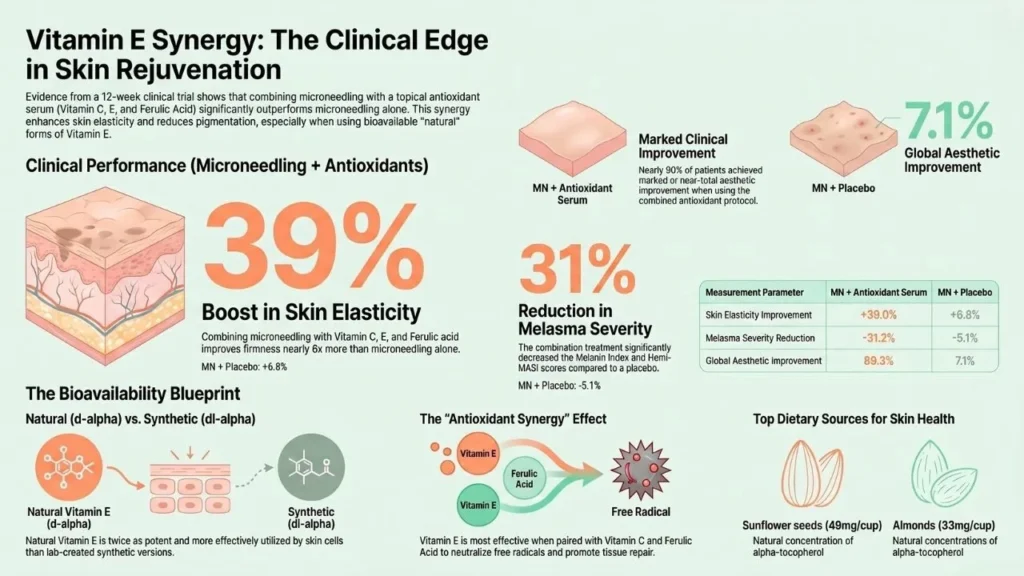
Understanding the Vitamin E Family and Its Bioavailability
The term Vitamin E actually describes a family of eight distinct fat-soluble molecules. Plants synthesize these molecules, which we divide into four tocopherols and four tocotrienols. We identify them using the Greek letters alpha, beta, gamma, and delta. While many Indian diets contain high amounts of gamma-tocopherol from soybean oil, your body prefers alpha-tocopherol. Specifically, your liver uses a specialized transport protein called alpha-TTP to distribute this specific form to your tissues while it excretes the others.
| Vitamin E Form | Molecular Classification | Human Biological Activity | Common Dietary Origins |
| alpha-Tocopherol | Tocopherol | 100% (Primary form) | Wheat germ oil, sunflower seeds, almonds. |
| gamma-Tocopherol | Tocopherol | Lower concentration | Soybean oil, corn oil. |
| alpha-Tocotrienol | Tocotrienol | Neuroprotective roles | Palm oil, rice bran oil. |
| delta-Tocopherol | Tocopherol | Food stability | Various seed oils. |
The Antioxidant Shield and Your Lipid Defense
Vitamin E serves as your body’s primary fat-soluble antioxidant. Within your cell membranes, it acts as a chain-breaking warrior. This means it stops the cycle of lipid peroxidation, where free radicals attack the fats in your cells. When a free radical (Rbullet) interacts with a fatty acid (LH), it creates damage. Vitamin E (TOH) donates a hydrogen atom to stop this reaction:
LOObullet + TOH rightarrow LOOH + TObullet
This process preserves your cell structure. For my friends managing diabetes, this protection is vital. Your body often produces more reactive oxygen species (ROS) due to high blood sugar. Consequently, eating a vitamin e rich source daily helps neutralize this internal rusting before it causes long-term damage.
How Your Skin Receives Vitamin E Naturally
Your skin has a very unique way of using Vitamin E. Instead of receiving it directly from the blood, your skin relies on its oil glands. The nutrient accumulates in these sebaceous glands first. Then, it travels to the surface within your natural oils or sebum. This explains why the oily parts of your face often stay more hydrated and protected than your arms.
The Sebum Secret for Skin Glow
You might think oily skin is a nuisance, but it is actually a defense mechanism. Research shows a significant lag time in this delivery system. After you eat a vitamin e rich source, it takes about seven days for the levels in your skin oils to change. Therefore, consistency matters more than a single high-dose meal. If you want a healthy glow, you must nourish your skin from the inside every single day.

Photoprotection and Environmental Stressors
The Vitamin E in your skin acts as the first line of defense against the world. Exposure to UV rays and city pollution rapidly drains your antioxidant reserves. While Vitamin E is not a substitute for sunscreen, it neutralizes the free radicals that sun exposure creates. This is especially important for busy professionals who commute through urban traffic every day.
What this means for your daily routine is that environmental exposure creates a constant drain. If you don’t replenish these stores, your skin loses its repair capacity. This leads to dryness, fine lines, and increased sensitivity. Let’s simplify this: your diet acts as an internal repair kit that fixes the damage the sun and pollution cause during your workday.
The Power of Synergy: Vitamin C and Zinc
Vitamin E does not work alone. One of the most important friendships in nutrition is the bond between Vitamin E and Vitamin C. When Vitamin E neutralizes a radical, it becomes inactive. However, Vitamin C has the amazing ability to recharge Vitamin E back into its active form.
| Nutrient | Role in Synergy | Common Indian Source |
| Vitamin E | Neutralizes lipid radicals | Sunflower seeds, Almonds. |
| Vitamin C | Regenerates Vitamin E | Amla, Citrus fruits, Guava. |
| Zinc | Enhances oil gland function | Pumpkin seeds, Chickpeas. |
To maximize your results, try pairing these together. For example, squeeze a lemon over your salad or have an amla with your morning nuts. This simple trick amplifies the protection available to your skin and hair follicles.

Improving Hair Follicle Strength and Growth
Many people ask me about hair thinning, especially those with high-stress jobs. Vitamin E helps your hair through two main paths: scalp circulation and structural protection. By reducing stress in the scalp, it keeps the tiny blood vessels healthy. Better blood flow ensures that proteins and minerals reach the hair root. This is the secret to preventing thinning and supporting strong growth.
Furthermore, Vitamin E helps seal the hair cuticle. Think of the cuticle as the protective scales on each hair strand. When heat or chemicals damage these scales, your hair looks dull and brittle. A consistent vitamin e rich source provides the fats needed to keep these scales flat and hydrated. This results in smoother hair that is less prone to split ends.
Managing the Diabetic Landscape in India
For my clients managing Type 2 Diabetes, Vitamin E is a clinical ally. Chronic high blood sugar accelerates free radical production, which leads to systemic stress. This stress damages your blood vessels and contributes to complications like nerve damage. Functional Nutritionist Mugdha Pradhan notes that correcting micronutrient deficiencies is a key part of returning the body to a balanced metabolic state.
Research shows that diabetic patients often have lower Vitamin E levels because their bodies use it up so quickly. Meta-analyses suggest that while Vitamin E might not drop your fasting sugar overnight, it can significantly improve HbA1c levels over time. For the Indian population, which has a high genetic risk for metabolic issues, this nutrient is a strategic tool for managing inflammation.
Your Quick Guide to Nuts and Seed Sources
Nuts and seeds are the most concentrated tools for your health. For a busy professional, these are easy to carry and eat during a commute. Almonds are a staple in our kitchens and provide a massive 25.63 mg of Vitamin E per 100g serving.
| Seed or Nut (1 Ounce / 28g) | Vitamin E Content (mg) | Percent of Daily Value (DV) |
| Sunflower Seeds (Dry Roasted) | 7.4 mg | 49% |
| Almonds (Dry Roasted) | 6.8 mg | 45% |
| Hazelnuts (Dry Roasted) | 4.3 mg | 29% |
| Peanuts (Dry Roasted) | 2.2 mg | 15% |
| Pine Nuts (Chilgoza) | 1.5 mg | 10% |
Even a small handful can meet nearly half of your daily needs. For those with diabetes, these sources are perfect because they also offer healthy fats and fiber. This combination helps stabilize your blood sugar while delivering a powerful antioxidant punch.

Choosing the Right Cooking Oils
In most Indian homes, cooking oil provides the bulk of our Vitamin E. While all oils contain fat, their nutrient profiles differ. Wheat germ oil is the world’s most potent vitamin e rich source, but it is delicate. You should use it as a finishing oil rather than for high-heat frying.
Smart Cooking Tips for Nutrient Retention
Vitamin E is sensitive to extreme heat and light. To keep your oils healthy, store them in dark bottles in a cool cupboard. When you cook, try to sauté or steam rather than deep-fry. This preserves the delicate molecules.
| Cooking Oil (1 Tablespoon) | Vitamin E Content (mg) | Suitability for Indian Cooking |
| Wheat Germ Oil | 20.3 mg | Finishing oil only. |
| Sunflower Oil | 5.6 mg | Good for daily cooking. |
| Safflower Oil | 4.6 mg | Neutral and heart-healthy. |
| Rice Bran Oil | 4.4 mg | High smoke point. |
| Mustard Oil | 2.5 mg | Traditional and flavorful. |
Using these oils for your daily meals ensures that the Vitamin E is ready for your body to absorb. For homemakers, choosing a high-quality mustard or sunflower oil is a practical, budget-friendly way to protect the whole family.
Low-Calorie Options: Leafy Greens
Green leafy vegetables are famous for iron, but they are also a great vitamin e rich source. Spinach (Palak) provides about 2 mg of Vitamin E per 100g. While this is lower than nuts, we usually eat greens in larger volumes. Think of dishes like Palak Paneer or Dal Palak as your beauty food.
Mustard greens (Sarson ka Saag) are another winter favorite. They provide Vitamin E alongside high levels of Vitamin C. This natural pairing ensures the nutrients work effectively. For my non-gym audience, these greens offer a way to support skin elasticity without the extra calories found in oils.

Fruit-Based Sources for Metabolic Balance
Fruits are not usually the primary source of Vitamin E, but some varieties are quite helpful. Avocado is the leader, containing about 2.1 mg per 100g. In India, we have easier access to mangoes and papayas, which also give your intake a modest boost.
| Fruit (100g) | Vitamin E (mg) | Key Benefit for Skin/Hair |
| Avocado | 2.1 mg | Repairs the skin barrier. |
| Kiwi | 1.5 mg | Boosts collagen. |
| Mango | 0.9 mg | Helps cell regeneration. |
| Papaya | 0.7 mg | Detoxifies the scalp. |
For a busy person, a slice of papaya is a perfect mid-morning snack. If you have diabetes, keep your fruit portions moderate. Their fiber content makes them much safer than processed snacks.
Traditional Indian Superfoods
Our traditional diet has many hidden gems that enhance Vitamin E. Curry leaves (Kadi Patta) are a great example. They are full of antioxidants that strengthen hair roots. For homemakers, adding plenty of curry leaves to your tadka is a time-tested secret for hair health.
Similarly, Kalonji (Black Nigella seeds) contains a compound called thymoquinone. This works with Vitamin E to reduce scalp inflammation and support your metabolism. Even Amla, while not high in Vitamin E itself, is the key that recharges it. These traditional foods create a holistic system that supports your body from every angle.

Daily Requirements for the Indian Population
The ICMR and NIN have set guidelines specifically for our needs. For a healthy adult man, the goal is about 10 mg of alpha-tocopherol daily. Women need between 7.5 and 10 mg.
| Group | ICMR RDA (mg/day) | Why You Need It |
| Adult Male | 10 mg | Protects against city toxins. |
| Adult Female | 7.5 – 10 mg | Maintains skin and hormones. |
| Pregnant people | 15 mg | Supports fetal protection. |
| Lactating Mothers | 19 mg | Enriches breast milk. |
You can easily meet these goals with a balanced diet. A handful of almonds, a spinach dish, and cooking with sunflower oil will put you well over the target without needing expensive pills.

Practical Tips for Your Busy Life
The biggest hurdle for most professionals is time. I always tell my clients that health must be easy to maintain. Keep a jar of roasted sunflower seeds on your desk. This creates a passive way to get your vitamin e rich source during a long meeting.
Instead of eating biscuits with your tea, try roasted peanuts or Makhana. These provide the healthy fats your body needs to transport Vitamin E. If you often eat out, choose spinach-based dishes or tomato-based gravies. The oil in these gravies actually helps your body absorb the vitamin more efficiently.
Simple Kitchen Hacks for Homemakers
If you manage the family kitchen, small changes make a big difference. Soak your almonds overnight to help the body absorb the nutrients better. You can also add flaxseeds or sesame seeds to your homemade ladoos for an extra antioxidant boost.
Try making a fresh green chutney with coriander, mint, and peanuts. This is a concentrated vitamin e rich source that tastes great with every meal. Adding a splash of lemon juice to the chutney ensures the Vitamin C is there to make the Vitamin E work harder.

Topically Applying Vitamin E Safely
While eating your nutrients is best, topical application has its place. Vitamin E can penetrate the skin to provide immediate relief for dry patches. This is very useful for treating minor burns or acne scars.
However, topical oil cannot replace a good diet. Dietary Vitamin E protects every cell in your body, not just the surface. For the best results, use a combined approach. Eat your Vitamin E-rich foods daily and use a drop of oil for localized skin or scalp treatments when needed.
Avoiding the Risks of High-Dose Supplements
It is tempting to think more is always better. However, Vitamin E is fat-soluble, so your body stores the excess. Very high levels can interfere with blood clotting. This is a major risk if you take blood thinners or daily aspirin.
Most people who eat whole foods like spinach and nuts never have to worry about this. It is almost impossible to overdose on Vitamin E from a natural vitamin e rich source. This is why I always recommend food over supplements. Whole foods provide the right balance of fiber and minerals that your body knows how to handle.
Conclusion: Small Steps for Long-Term Vitality
Healthy skin and hair do not happen overnight. For my friends managing diabetes or busy careers, the key is consistency. By choosing a vitamin e rich source daily, you give your body the tools to fight the daily rusting of your cells.
Whether you choose soaked almonds, curry leaves, or the right cooking oil, these small steps add up. Vitamin E is more than a beauty ingredient; it is a shield for your metabolic health. It keeps your skin strong, your hair vibrant, and your body resilient against the challenges of a busy life.

Frequently Asked Questions (FAQs)
What is the best vitamin e rich source for daily hair growth?
Almonds and sunflower seeds are excellent choices. Almonds provide fats for shine, while sunflower seeds improve scalp circulation and follicle strength.
How can a person with diabetes include Vitamin E safely?
Focus on low-glycemic foods. Spinach, methi, walnuts, and sunflower seeds are perfect. They provide antioxidants without causing sugar spikes.
Can Vitamin E actually help reduce skin wrinkles?
Yes, it protects collagen from damage caused by pollution and UV rays. By supporting your skin’s moisture barrier, it naturally softens the appearance of fine lines.
Is it better to eat Vitamin E or apply it to my skin?
Eating it is more effective for long-term health. Dietary Vitamin E protects your whole body. However, topical application is a good supplement for treating dry spots.
Are there side effects to taking too much Vitamin E?
Dietary sources are perfectly safe. However, high-dose supplements can cause bleeding issues. Always consult a professional before starting pills.
For a personalized plan that fits your busy schedule and health goals, connect with our team at Diet Dekho

Contact Us
We understand how overwhelming nutrition and weight loss information can feel. With so many opinions and confusing advice online, it’s easy to feel stuck or unsure about what to do next.
At Diet Dekho, you never have to figure it out alone. You can contact us anytime with any questions or concerns. Our expert dietitians are available 24/7 to guide, support, and help you stay on track. Whether your goal is weight loss or building healthier habits, we’re here to make the journey simpler and more sustainable for you.
Disclaimer
This blog is intended to help readers make healthier food choices. Your health should always be the top priority. Before starting any restrictive or special diet, especially if you have a medical condition or health concern, please consult a doctor or a qualified dietitian. Each body responds differently to food and lifestyle changes. Always choose what is safe and suitable for you.

Abhinav is the Founder of Diet Dekho, helping people manage weight and lifestyle health through simple, practical nutrition and personalized diet plans.